
Tabelog 100 #86
Our verdict
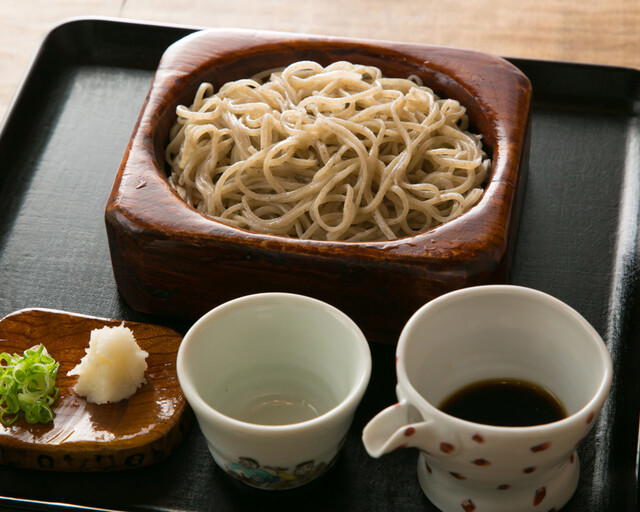
Takeyabu Kashiwa honten places Kashiwa’s soba tradition in a formal, unhurried register: buckwheat noodles, sake-led drinking, tatami and sunken seating, and a meal rhythm closer to a rural house restaurant than a station-side noodle stop. Recognition on Tabelog 100 Soba EAST 2025, a 32-seat room, private-room options, and course-only reservations put it in the serious soba tier for Chiba rather than the casual lunch bracket.

Pearl is the En Primeur Club membership app, where members save venues, book tables and use the concierge.
The menu
What to order
- Tempura soba with vegetable and shrimp kakiage
- Seiro soba
- Inaka seiro soba
- Nishin soba
- Soba-gaki
The approach to a serious soba meal in Kashiwa is quieter than the quick counter ritual many travellers associate with noodles. The setting matters less as spectacle than as a frame for focus: a meal built around buckwheat noodles, seasonal restraint, and unhurried attention. In that context, Takeyabu Kashiwa honten belongs to the older Japanese idea of soba as a dining occasion, not merely a fast bowl between trains.
Kashiwa’s restaurant scene splits cleanly between daily-use specialists and destination meals. A visitor can eat simply and well at noodle or curry counters, then shift into a different register for a more deliberate Japanese meal. For a wider map of the city, start with Our full Kashiwa restaurants guide; the same planning frame extends to Our full Kashiwa hotels guide, Our full Kashiwa bars guide, Our full Kashiwa wineries guide, and Our full Kashiwa experiences guide.
Soba treated as a seated ritual, not a station snack
Japan’s soba culture has two speeds. One is brisk, democratic, and often eaten quickly. The other is slower: noodles become the centre of a sequence, with the table’s rhythm and the restraint of the kitchen framing the bowl. Takeyabu Kashiwa honten sits firmly in the second camp. The category is soba, but the dining grammar is closer to a composed Japanese meal than to a commuter noodle stop.
The pricing underlines that distinction. Lunch is listed at JPY 5,000 to JPY 5,999, while dinner is listed at JPY 10,000 to JPY 14,999, a level that separates it from Kashiwa’s most casual everyday meals. In the same city, AYUBOWAN, Bunsai Ka, Curry no Mise Bombay Honten, Mendokoro Nishio, and zoe's help show the breadth of local dining. That comparison is useful: this is not about hunger alone, but about choosing a meal with ceremony, pacing, and a narrower culinary focus.
The trust signal is substantial. Selection for Tabelog Hyakumeiten in 2025 places the restaurant among recognised soba addresses, and a Tabelog score of 3.75 gives the listing a clear external marker. In a category where regulars often judge noodle texture, broth, timing, and service rhythm closely, that recognition is a meaningful reason to plan ahead rather than treat the meal as an afterthought.
The room shapes the meal as much as the noodles
The experience is best understood through pacing rather than through a checklist of amenities. Soba in this mode depends on attention: time for the table to settle, time for the meal to feel deliberate, and time for the final noodle course to land as the point of the visit rather than a quick finish. Takeyabu Kashiwa honten’s appeal is that it asks diners to treat soba with the seriousness usually reserved for more formal Japanese genres.
That reading also helps avoid the wrong expectation. This is not positioned as a casual snack stop simply because the menu centres on noodles. It is a specialist soba address in Kashiwa with a recognised 2025 listing and a price range that signals a more considered meal. Families, solo diners, and groups should confirm practical details directly with the restaurant, but the editorial reason to go is the same: buckwheat noodles treated as the main event.
Planning matters because the restaurant occupies a more purposeful tier of Kashiwa dining. The verified location can be kept simple: Kashiwa. Travellers should check current access, opening details, and reservation conditions before going, since those operational points can change and are not the core reason to choose the address. The stable facts are the soba focus, the 2025 recognition, the listed budget, and the restaurant’s standing within the city’s dining map.
How to place it within Kashiwa's dining map
Kashiwa is not a single-note dining city. Its appeal comes from the spread: specialist local restaurants, regional Japanese formats, and casual counters that serve residents first. Other Kashiwa dining rooms and lower-spend noodle or curry addresses show the daily side of the market. Takeyabu Kashiwa honten belongs to the slower, planned side, where the meal is arranged around soba’s sequence and the table has a stronger sense of occasion.
For travellers building a broader Japan food itinerary, the distinction is useful. A Kashiwa soba meal plays differently from other Japanese dining rooms, compact urban cafés, casual counters, or destination restaurants elsewhere. It also differs from other regional specialists because the reason to visit is not a broad tasting-menu narrative or a fashionable crossover format, but the focused pleasures of buckwheat noodles handled with care in Kashiwa.
The editorial case is simple: choose this address when the point of the meal is soba as ritual. The evidence is not a celebrity chef narrative or a theatrical tasting format; it is the combination of recognised 2025 soba credentials, a Tabelog score of 3.75, and a price tier that asks diners to treat buckwheat noodles with the seriousness usually reserved for sushi, tempura, or kaiseki.
Frequently asked questions
Is Takeyabu Kashiwa honten okay with children?
Family and child-specific policies are not part of the verified venue facts here, so confirm directly with the restaurant before visiting with children. The reliable planning point is that Takeyabu Kashiwa honten is a soba specialist in Kashiwa.
What should I expect atmosphere-wise at Takeyabu Kashiwa honten?
Expect the meal to be framed around soba rather than a quick snack stop.
What does dinner at Takeyabu Kashiwa honten typically cost?
Pricing at Takeyabu Kashiwa honten is listed as dinner: JPY 10,000 - JPY 14,999; lunch: JPY 5,000 - JPY 5,999.
When can I go to Takeyabu Kashiwa honten?
Current opening hours are not part of the verified venue facts here. Check directly with Takeyabu Kashiwa honten before planning a visit.
What's Takeyabu Kashiwa honten's location?
Kashiwa.
What's Takeyabu Kashiwa honten best at?
Its focus is soba. The trust signal is clear: Tabelog Hyakumeiten recognition in 2025 and a Tabelog score of 3.75. The price range, JPY 5,000 to JPY 5,999 at lunch and JPY 10,000 to JPY 14,999 at dinner, places it in a serious specialist tier.
Where It Fits
Comparable venues by cuisine and price in the same metro.
| Venue | Cuisine | Price | Awards | Notes |
|---|---|---|---|---|
| Takeyabu Kashiwa hontenThis venue (the venue you are viewing) | Traditional handmade soba & tempura | $30–50 | Tabelog 100 #86 | Not listed |
| chukaryouriogiwara | Chinese Course Dining | Not listed | Tabelog 100 #73 | Kashiwa Station area |
| Chuka Soba Sakaeda | Japanese Ramen | $10–20 | Tabelog 100 #83 | Kashiwa |
| Bunsai Ka | Modern Cantonese-led Chinese with Hong Kong sweets | $50–100 | Tabelog 100 #20 | Kashiwa |
| 66 | American Burgers | Not listed | Tabelog 100 #87 | Kashiwa |
| Anbai | Tonkatsu & Beefsteak | $20–30 | Tabelog 100 #94 | Kashiwa |
Recognition history
Dated appearances from independent guides and award organizations, with the underlying list record or original source where available.
Tabelog 100 #86 · No. 86
Tabelog · Tabelog 100 - Soba - EAST - 2025
Continue exploring
More in Kashiwa
Restaurants in Kashiwa
All restaurants in Kashiwa →


Bars in Kashiwa
Browse all →


Details
- Scenic
- Rustic
- Cozy
- Whimsical
- Classic
- Date Night
- Business Dinner
- Group Dining
- Solo
- Special Occasion
- Casual Hangout
- Waterfront
- Garden
- Design Destination
- Standalone
- Panoramic View
- Local Sourcing
- Farm To Table
- Waterfront
- Garden
- A La Carte
- Tasting Menu
- Set Menu
- Pescatarian Friendly
Current opening hours
- Monday
- 11:30 AM–7 PM
- Tuesday
- 11:30 AM–7 PM
- Wednesday
- 11:30 AM–7 PM
- Thursday
- 11:30 AM–7 PM
- Friday
- 11:30 AM–7 PM
- Saturday
- 11:30 AM–7 PM
- Sunday
- 11:30 AM–7 PM
Hours can change for holidays and private events. Hours as of .
A tranquil, slightly otherworldly space reached via stone steps and traditional gates, with views over Lake Tega and bamboo groves; often described as whimsical and Studio Ghibli-like, with the feel of a classic countryside soba house rather than a city restaurant.