
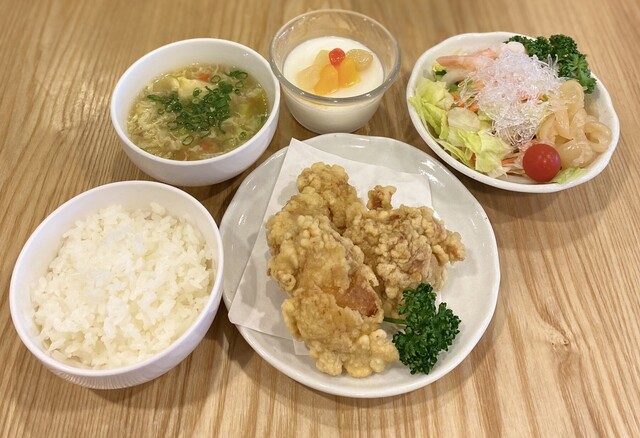
Takeo Gohan brings Sosa’s rural cafeteria culture into sharper focus: modest pricing, small scale, and a sourcing-led sensibility rather than urban tasting-menu performance. Its 2026 Tabelog 100 Diner selection places a 16-seat Chiba café-cafeteria in a national conversation usually dominated by larger city dining rooms.
Pearl is the En Primeur Club membership app — saves, bookings, and concierge access live there. Same editors, same standards.
- Address
- 千葉県匝瑳市生尾114-2
- Phone
- +81479748488
- Website
- takeogohan.com
 Saves & bookings on Pearl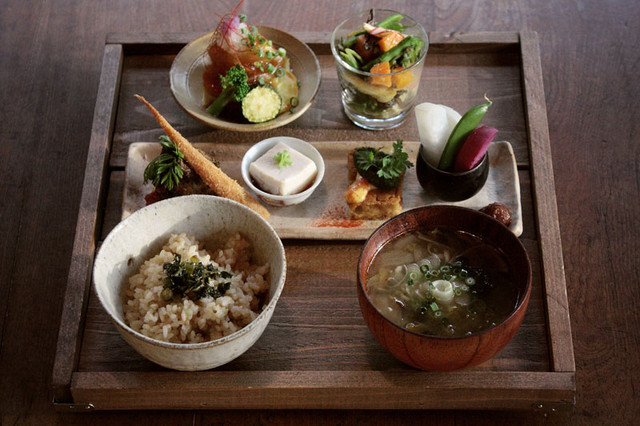
The approach to a rural Japanese cafeteria changes the tempo before the meal begins. Sosa is not a city of grand dining entrances; its food culture sits closer to fields, station roads, family errands, and places where lunch is the main event rather than a prelude to evening service. In that setting, Takeo Gohan reads as part of a broader Chiba tradition: small rooms, daytime rhythm, and cooking that depends on proximity to ingredients more than theatrical presentation.
That matters because Japan’s diner category is often misunderstood by visitors chasing counter sushi or kaiseki. The stronger examples are not trying to imitate fine dining. They compress regional habits into an accessible format: cafeteria, café, set-meal logic, and a room scaled for regulars as much as destination diners. Takeo Gohan’s inclusion in the 2026 Tabelog 100 Diner list gives that genre a measurable signal, especially for a Sosa address outside the usual Tokyo-Kyoto travel corridor.
A Chiba cafeteria where sourcing carries the argument
Ingredient sourcing is the serious thread here. Chiba’s food identity has always been broader than the Tokyo-facing seafood shorthand suggests. The prefecture produces vegetables, rice, peanuts, dairy, and coastal ingredients, while its smaller towns support dining rooms that work at a scale where local supply can shape the plate. A cafeteria-café format makes sense in this environment: it can turn seasonal produce and everyday staples into lunch without the ceremony or cost structure of a formal dégustation.
The price band reinforces the point. At JPY 1,000 to JPY 1,999, this is not luxury dining disguised as rural minimalism. It sits in a category where value is judged by ingredient clarity, portion logic, and consistency. Compared with out-of-metro peers such as Imakyu Honten or Unagi Kappou Yamada, both listed at higher spending bands, this address occupies a lighter, lunch-driven lane. HOME OF MOTHERS sits lower on price, while unagi specialists such as Unasen operate in a different protein-led tradition. Those comparisons help define the decision: this is for a relaxed Sosa meal with café-cafeteria structure, not a splurge around a single prestige ingredient.
The Tabelog score of 3.55 is useful context but not the whole story. Japanese user-rating culture tends to be conservative, and regional restaurants outside major tourist flows often accrue attention slowly. The stronger trust signal is the 2026 Tabelog 100 Diner selection, announced in April 2026, because the category narrows the field to restaurants that represent everyday Japanese dining at a high level of consistency. For travelers mapping serious casual food beyond the capital, that distinction is more revealing than a generic popularity metric.
The room favors daytime regularity over urban performance
Format is small enough to affect the meal. With 16 seats and a tatami room, the experience belongs to Japan’s intimate casual dining tradition rather than the high-volume café model. That scale also explains why the meal is better understood as a planned stop within Sosa, not a casual add-on after sightseeing. The room’s family-friendly facilities, including a nursing room and diaper-changing station, point to a local clientele using the restaurant as part of daily life rather than as a special-occasion stage.
There is an editorial lesson in that ordinariness. Premium travel coverage often overcorrects toward rarity, but Japan’s diner culture rewards attention to places that make lunch feel regionally specific without demanding ceremony. A small cafeteria in Sosa can teach a visitor more about local eating patterns than another city-center reservation where the format has been polished for inbound demand. Here the interest is not spectacle; it is the way a low-price, small-seat-count operation can carry a prefectural food identity with discipline.
That also changes who should prioritize it. A diner building a Chiba itinerary around markets, coastal drives, or countryside towns will understand the logic immediately. A traveler staying in Tokyo with one free lunch and no interest in regional detours should be more selective. Takeo Gohan belongs in a Sosa plan, not as a trophy commute. For broader planning, Our full Sosa restaurants guide places it alongside other local dining options, while Our full Sosa hotels guide, Our full Sosa bars guide, Our full Sosa wineries guide, and Our full Sosa experiences guide help turn the meal into a fuller city plan.
How it fits into Japan's casual-dining map
The useful comparison is not with Tokyo’s high-end counters but with Japan’s broader casual spectrum. A diner can move from beef-led regional meals such as -Grilled beef Sukiyaki- KAMAKURA TANUKIAN 鎌倉 たぬき庵 in Kamakura to seafood-and-grill formats such as . 鮪と炭火焼き うお炭 秋葉原店 in Tokyo, café addresses such as .cafe in Osaka, and regional specialists such as .know in Kumamoto or (Shoku) Vietnam in Kawasaki. The point is not sameness; it is how Japan’s casual category absorbs local habits, imported formats, and neighborhood demand without needing a single national template.
Other entries sharpen that map further: [Curry Senmon Ten] Maruyama Kyoju. in Sapporo shows the strength of single-category cooking; [ki:] in Kyoto suggests a more design-conscious register; #肉といえば松田 奈良本店 in Kashihara and 1/3 HAMBURGER FACTORY in Kanazawa occupy meat-led lanes; 1000 in Yokohama and 1000mヒュッテ 1000m Hut in Kutchan show how city and mountain settings bend casual dining in different directions. Even Japanese food abroad, from Jōdo Saké Bar in Los Angeles to Onigiri Time in Pasadena, underlines the same truth: simple formats become serious when sourcing, scale, and purpose align.
The restaurant’s appeal is therefore precise. It is a compact Sosa cafeteria-café with national diner recognition, modest spend, and a local-use room that makes sense in agricultural Chiba. The editorial reason to go is not novelty. It is to see how Japan’s everyday dining category can carry regional confidence at lunch, without borrowing the visual language of luxury restaurants.
Fast Comparison
Comparable venues by cuisine and price in the same metro.
| Venue | Cuisine | Price | Notes |
|---|---|---|---|
| Takeo GohanThis venue — the venue you are viewing | Japanese cafeteria & café | $$ | Not listed |
| たんたん亭 本店 | Traditional Japanese Ramen | $$ | Hamadayama |
| らぁめん家 69'N' ROLL ONE 赤坂本店 | Chicken Clear Soy Ramen | $$ | Akasaka |
| 千畳敷センター | Japanese Seaside Seafood | $$ | 深浦町 |
| Kuroyuri (黒百合) | Traditional Kanazawa Oden Izakaya | $$ | Kanazawa Station |
| Kumo | Hokkaido Izakaya | $$ | Niseko Hirafu |
Recognition history
Dated appearances from independent guides and award organizations, with the underlying list record or original source where available.
Tabelog 100 #70 · No. 70
Tabelog · Tabelog 100 - Diner - 2026
Continue exploring
More in Sosa
At a Glance
- Cozy
- Quiet
- Rustic
- Family
- Solo
- Casual Hangout
- Standalone
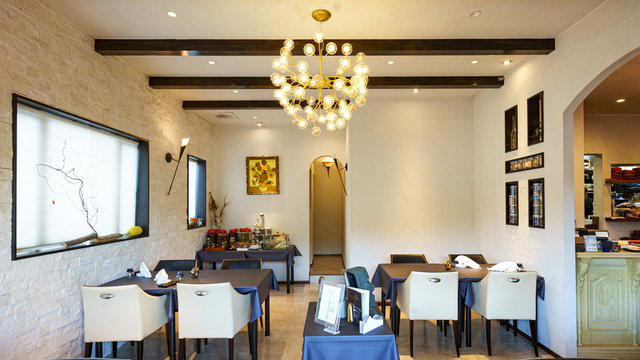
Small and homely with a relaxed, quiet atmosphere; reviews and photos depict a simple rustic interior typical of a local cafeteria, giving a cozy, neighborhood hidden-gem feel rather than a polished modern café.