
Tachinomiya Shiraishi sits in Osaka’s Umeda stand-up drinking culture, where speed, proximity to the station, fish-led plates, and sake matter more than ceremony. Its Tabelog 100 Tachinomi 2025 selection places it inside a serious value category: casual in format, selective enough to reward a planned detour.
Pearl is the En Primeur Club membership app — saves, bookings, and concierge access live there. Same editors, same standards.
- Address
- 9-26 Kakudacho, Kita Ward, Osaka, 530-0017, Japan
- Phone
- +81 6-6484-9125
- Website
- tabelog.com
 Saves & bookings on Pearl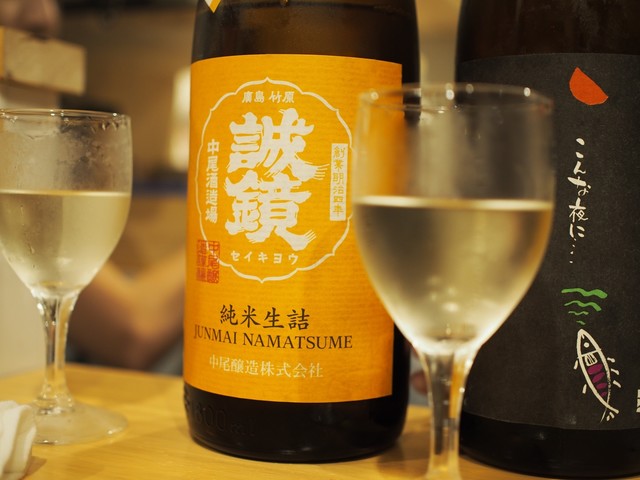
Umeda’s eating streets work at commuter tempo: shutters half-open before the office crowd has fully dispersed, counter space measured in elbows, and a style of drinking built for people who know how to order without turning dinner into theatre. Tachinomiya Shiraishi belongs to that Osaka tradition. The appeal is not luxury signalling; it is compression. A stand-up bar can put the emphasis on turnover, sake, fish, and small-plate decision-making, stripping away the padding that often inflates a night out.
That makes the value proposition unusually clear. In Osaka, inexpensive food can mean many things: a bun grabbed between trains, udon before a meeting, okonomiyaki after work, curry at a quick counter. Tachinomi is different because the format asks for drinking rhythm as much as appetite. The meal is assembled rather than staged, and the better examples feel closer to an adult canteen than a restaurant performance.
Umeda tachinomi, judged by value rather than polish
Osaka’s casual dining reputation often gets flattened into street-food shorthand, but Umeda has a sharper working grammar. Around the station, price-sensitive specialists compete on narrow strengths: the speed of a counter, the reliability of a single category, the ability to feed or pour quickly without wasting space. In that context, Tachinomiya Shiraishi’s stand-up-bar format is not a quirk. It is the operating logic.
The Tabelog 100 Tachinomi 2025 selection is the main trust signal here. For a category built on low ceremony, recognition matters because it separates a serious drinking counter from a merely convenient one. The listing also points to two useful anchors: fish as the food emphasis and sake as the drink lane. Those details matter more than a long chef narrative. The reader is not being asked to buy into a personality; the decision is whether a fish-and-nihonshu tachinomi belongs in an Osaka plan otherwise crowded with noodles, bread, dumplings, pizza, and formal dining.
Compared with nearby casual benchmarks, the format sits in a different lane. Okonomiyaki Kiji Honten occupies the griddle-and-batter end of Umeda value dining. Kokoro ni Amai Anpanya Umeda ten, Umeda Kamatake Udon, Curry Shop MASARA, and ECHIRE MARCHE AU BEURRE each answer a narrower hunger: bread, udon, curry, butter-rich pastry. A stand-up sake bar asks for a slower ordering cadence and a more flexible appetite. It is less about solving lunch and more about controlling an evening: a drink, a fish-led plate, another pour if the room is moving well.
Fish, sake, and the economics of standing up
The economics of tachinomi are part of the pleasure. Standing changes how people spend time. It discourages the long table occupation that pushes restaurants toward higher minimums, and it rewards compact menus, quick decisions, and repeat ordering. When the kitchen focus is fish and the drink focus is sake, the format makes particular sense: cold, warm, grilled, simmered, or otherwise simple preparations can sit naturally beside nihonshu without requiring a full-course structure.
There is also a cultural point here. Osaka has long valued dining that feels socially porous: counters where solo drinkers, office pairs, and small groups can share the same room without the etiquette burden of a formal reservation dinner. Tachinomi sharpens that instinct. It is democratic, but not careless. The better versions depend on discipline because the room gives operators fewer places to hide: no soft chairs, no drawn-out service choreography, no decorative pacing to disguise weak buying or bland drinks.
Tachinomiya Shiraishi opened in 2019, which places it in the newer generation of Osaka stand-up bars rather than the postwar nostalgia bracket often attached to the genre. That timing is useful. The modern tachinomi customer is not only looking for cheap drinks; many are choosing low-friction specialization over higher-priced dining rooms. A Tabelog-recognized example in Umeda fits that shift neatly: casual enough for a spontaneous evening, selective enough to justify crossing the station area rather than settling for the nearest chain.
How to fit it into an Osaka food itinerary
The cleanest way to use this address is as an early-evening or second-stop drinking meal, not as the centrepiece of a long tasting-menu night. The stand-up format suits travellers who want Osaka’s working food culture without turning every meal into a reservation project. It also pairs well with a broader day in Kita: coffee or bakery earlier, a quick specialty lunch, then tachinomi when the city’s after-work rhythm starts to take over.
For readers mapping a fuller Osaka run, the contrast is the point. A day could move from .cafe or 52CHO-ME BAKERY into a snack from 551 Horai (551蓬莱), then toward a more deliberate dinner at a canto (Italian) or 99 Pizza Napoletana Gourmet. The restaurant works because it does not try to compete with those categories on comfort or duration. It competes on concentration.
That concentration also makes it a useful counterweight to destination dining fatigue. Osaka rewards appetite, but too much planning can flatten the city into a checklist. A stand-up sake bar restores some improvisation while retaining enough editorial credibility to avoid random selection. The Tabelog 100 Tachinomi 2025 nod, the fish focus, and the sake emphasis give the visit a defined reason. The rest is about timing, tolerance for standing, and whether the traveller wants Osaka at counter height rather than behind a white tablecloth.
For wider planning, see Our full Osaka restaurants guide, Our full Osaka hotels guide, Our full Osaka bars guide, Our full Osaka wineries guide, and Our full Osaka experiences guide. For broader Japan and sake-adjacent context, compare -Grilled beef Sukiyaki- KAMAKURA TANUKIAN 鎌倉 たぬき庵 in Kamakura. 鮪と炭火焼き うお炭 秋葉原店 in Tokyo.know in Kumamoto, (Shoku) Vietnam in Kawasaki, [Curry Senmon Ten] Maruyama Kyoju. in Sapporo, [ki:] in Kyoto, Jōdo Saké Bar in Los Angeles, and Onigiri Time in Pasadena.
Similar Picks
Nearby venues at a similar price tier for orientation.
| Venue | Cuisine | Price | Notes |
|---|---|---|---|
| Tachinomiya ShiraishiThis venue — the venue you are viewing | Japanese Tachinomi Stand‑Up Bar | $ | Not listed |
| Kyu Yam Tei Nakanoshima youkan | Japanese spice curry house | $ | Kita |
| Ebishi | Soba noodle shop | $ | Chūō |
| Toki Ya | Tsukemen ramen shop | $ | Yodogawa |
| Hana | Okonomiyaki & teppan comfort food | $ | Miyakojima |
| Teishokudo Kongoseki | Japanese Curry & Teishoku | $ | Chūō |
Recognition history
Dated appearances from independent guides and award organizations, with the underlying list record or original source where available.
Tabelog 100 #78 · No. 78
Tabelog · Tabelog 100 - Tachinomi - 2025
Continue exploring
More in Osaka
Restaurants in Osaka
Browse all →




Bars in Osaka
Browse all →




Hotels in Osaka
Browse all →



Wineries in Osaka
Browse all →
At a Glance
- Lively
- Energetic
- Cozy
- Classic
- After Work
- Casual Hangout
- Solo
- Late Night
- Standalone
- Sake Program
- Beer Program
Current opening hours
- Monday
- 4–11 PM
- Tuesday
- 4–11 PM
- Wednesday
- 4–11 PM
- Thursday
- 4–11 PM
- Friday
- 4–11 PM
- Saturday
- 3–11 PM
- Sunday
- 3–10 PM
Hours can change for holidays and private events. Last verified .