
Osaka’s tachinomi culture is moving beyond beer crates and quick pours into tighter, design-conscious formats. Tachinomi Bakery Urapane belongs to that shift: a standing bakery, wine bar, and Italian-leaning counter in Utsubohonmachi, selected for Tabelog 100 Tachinomi 2025, with a compact format that rewards small groups and focused drinking rather than long formal dining.
Pearl is the En Primeur Club membership app — saves, bookings, and concierge access live there. Same editors, same standards.
- Address
- 大阪府大阪市西区靱本町1-9-18
- Phone
- +81664768984
- Website
- panena.jp
 Saves & bookings on Pearl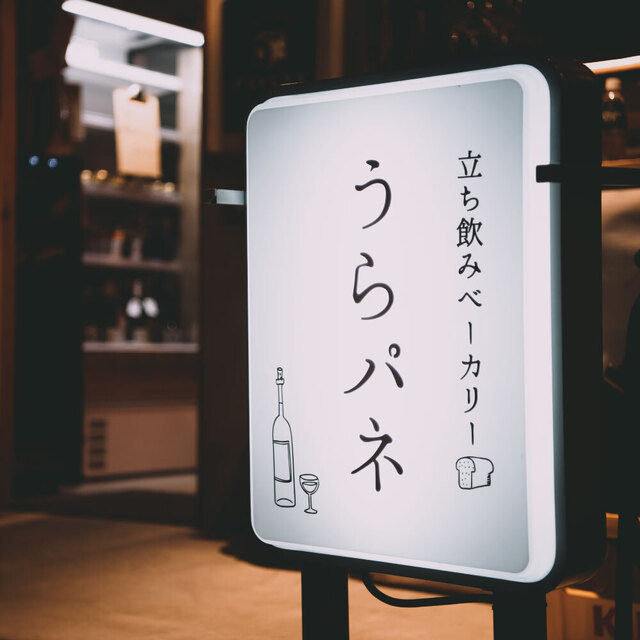
Approaching the Utsubo Park side of Hommachi, the mood changes from office-grid Osaka to something slower and more residential: small restaurants, wine-led counters, and rooms built for people who want dinner without ceremony. Tachinomi culture has always been about compression, but the newer Osaka version is less about drinking fast and more about spending carefully. A standing counter can now carry a serious wine program, Italian cues, and bakery logic without turning into a full restaurant.
Tachinomi Bakery Urapane sits inside that newer category. The useful way to read it is not as a bakery with drinks attached, but as a standing wine bar where bread is part of the structure. That matters in Osaka, a city with deep snack-and-drink habits, because it reframes the tachinomi format around pairing, portion control, and lower-commitment dining. The Tabelog 100 Tachinomi 2025 selection gives it a clear public signal in a category where the difference between a casual stop and a destination counter can be hard to judge from the street.
A standing bakery-bar format with wine discipline
Osaka’s drinking culture has long valued informality: kushikatsu counters, izakaya clusters, market-side seafood, and late-night rooms where the bill stays controlled. The tachinomi format sharpens that instinct. Standing service shortens the meal, reduces the pressure to order heavily, and puts more weight on sequencing: a glass, something salty or bread-based, another pour if the room allows it. In that sense, the format has an environmental modesty built into it. It encourages smaller orders, fewer table turns built around long coursed dining, and less excess than a full tasting-menu structure.
The bakery component makes the sustainability angle more concrete without needing grand claims. Bread is not garnish here; it is part of the drinking architecture, supported by an appetizer-bread charge that includes refills. In Japan, where many premium counters build value through scarcity and precision, this is a different kind of restraint: familiar product, tight space, and a menu logic that can carry wine without relying on heavy portions. The category listing, stand-up bar, wine bar, and Italian, places the room closer to Osaka’s casual European-influenced drinking counters than to the city’s formal Italian restaurants.
That distinction matters when comparing the neighborhood. Utsubohonmachi Gaku points toward Japanese dining at a higher spend level, while Porta Nuova occupies a more conventional Italian price rhythm across lunch and dinner. Kanmichi Pakutei belongs to a more expensive dining tier, and gastroteka bimendi brings Spanish reference points into the same broader Osaka appetite for wine-friendly small plates. Against that set, Tachinomi Bakery Urapane reads as the leaner decision: compact, drink-led, and built around a counter economy rather than the assumptions of a seated dinner.
Utsubohonmachi suits the low-ceremony Osaka dinner
Utsubohonmachi has become useful precisely because it is not Namba or Umeda. The area pulls in office workers, park walkers, and residents who prefer neighborhood-scale dining over station-front volume. Hommachi’s business density gives the after-work crowd, while Utsubo Park softens the surrounding streets. Restaurants here do not need to perform Osaka stereotypes; they can be narrower, quieter, and more specific.
That is why a 20-seat structure with 14 standing-bar places and a single private-room component makes sense in this part of the city. The room is scaled for short conversations and controlled ordering, not banquet behavior. A sommelier signal pushes the wine program above the usual casual-bar baseline, and the presence of cocktails keeps the format flexible for mixed groups. The fish emphasis also keeps the food side from reading as generic wine-bar filler, though the appeal remains format-led rather than chef-led.
The useful editorial comparison is with the wider Osaka dining map. For bakery and café context, .cafe and 52CHO-ME BAKERY show how bread culture appears outside formal restaurant structures. For casual Osaka food identity, 551 Horai (551蓬莱) operates at a completely different scale, built around citywide familiarity rather than counter intimacy. For Italian-leaning comparison, 99 Pizza Napoletana Gourmet and a canto (Italian) help place Urapane within Osaka’s broader appetite for European formats adapted to Japanese pacing.
Who should choose this counter
This is a smart choice for travelers who already understand that Osaka dining is not only about large meals. The sharper move is to build an evening across formats: a standing wine stop, a neighborhood counter, then a late bar or a walk back through Hommachi. A place like this works particularly well when dinner needs to stay flexible, when a group is small, or when wine matters more than a long menu. It is less suited to diners who want a seated, slow, multi-course restaurant experience.
The practical strength is concentration. The format keeps decision-making tight: small party, short service window, compact room, wine and cocktails available, and a public award marker from 2025. In a city where casual excellence often hides behind ordinary facades, the Tabelog 100 Tachinomi selection is a useful filter, not a guarantee of personal taste. It tells the reader that this is operating inside a recognized national category for standing bars, which is exactly the category that matters here.
Readers mapping the wider city can cross-reference Our full Osaka restaurants guide, Our full Osaka hotels guide, Our full Osaka bars guide, Our full Osaka wineries guide, and Our full Osaka experiences guide. For broader Japan and international counter-format context, see -Grilled beef Sukiyaki- KAMAKURA TANUKIAN 鎌倉 たぬき庵 in Kamakura. 鮪と炭火焼き うお炭 秋葉原店 in Tokyo.know in Kumamoto, (Shoku) Vietnam in Kawasaki, [Curry Senmon Ten] Maruyama Kyoju. in Sapporo, [ki:] in Kyoto, Jōdo Saké Bar in Los Angeles, and Onigiri Time in Pasadena.
A Quick Peer Check
Comparable options at the same price tier.
| Venue | Cuisine | Price | Notes |
|---|---|---|---|
| Tachinomi Bakery UrapaneThis venue — the venue you are viewing | Italian Bakery Bar | $$ | Not listed |
| Pargolo | Italian Pizzeria | $$ | Konohana |
| Mashica | Italian Izakaya with Natural Wines | $$ | Nishi |
| La Barcaccia | Neapolitan Pizza & Italian Wine Bar | $$$ | Kita |
| Trattoria Cielo | Casual Italian Trattoria | $$ | Yodogawa |
| ALBALONGA | Seasonal Italian Fine Dining | $$$ | Chūō |
Recognition history
Dated appearances from independent guides and award organizations, with the underlying list record or original source where available.
Tabelog 100 #71 · No. 71
Tabelog · Tabelog 100 - Tachinomi - 2025
Continue exploring
More in Osaka
Restaurants in Osaka
Browse all →




Bars in Osaka
Browse all →



Hotels in Osaka
Browse all →




Wineries in Osaka
Browse all →
At a Glance
- Cozy
- Trendy
- Intimate
- Lively
- After Work
- Solo
- Casual Hangout
- Late Night
- Standalone
- Natural Wine
- Beer Program
- Street Scene
Daytime bakery energy shifts into a relaxed adult standing bar atmosphere at night, with a stylish, intimate feel centered on bread, wine, and small plates.