
Star Wine List
Our verdict
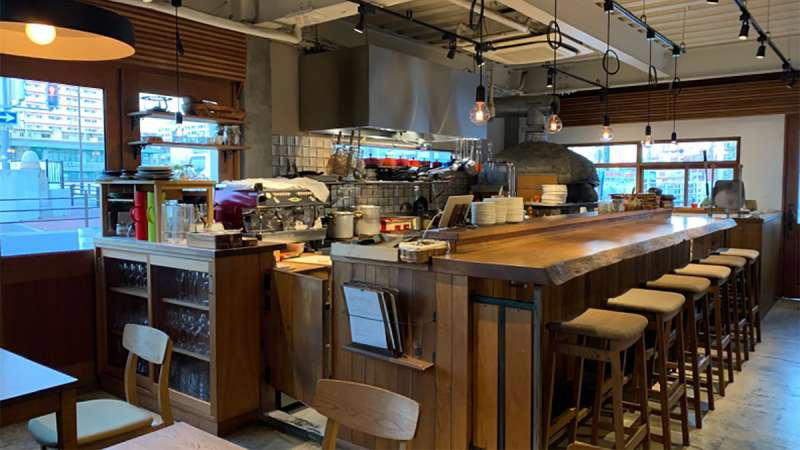
A pizzeria occupying a full building in Osaka's Chidoribashi area, Pargolo sits in Konohana Ward on the city's western edge, directly in front of the train station. It operates in a category that remains rare in Japan's western cities, Italian pizza with suburban roots and genuine local following, and rewards visitors who look beyond central Osaka's established dining belt.

Pearl is the En Primeur Club membership app, where members save venues, book tables and use the concierge.
Where Osaka's Pizza Scene Lands Outside the Centre
Osaka's dining reputation rests on a dense central corridor: Namba, Shinsaibashi, Minami, the long counter restaurants of Fukushima and Kitashinchi. The city's most-discussed tables, kaiseki rooms such as Taian and Kashiwaya Osaka Senriyama, or the French-influenced tasting menus at HAJIME, La Cime, and Fujiya 1935, are all positioned within easy reach of the city's main transport and hotel spine. Pargolo is not. It occupies a full building in Chidoribashi, a residential pocket inside Konohana Ward on the western fringe, roughly between the industrial harbour and the more visited Tsuruhashi and Fukushima neighbourhoods. That address is a deliberate signal. Venues that choose low-rent peripheral locations in Japanese cities generally do so because the product, not the postcode, is meant to carry the room.
The geography matters here for a practical reason too. Konohana Ward is not on most visitor itineraries, and the area around Chidoribashi retains the texture of a working Osaka neighbourhood rather than a dining destination. That context shapes what Pargolo is and what it is not. It is not a concept restaurant designed for the Namba tourist belt. It sits in the tradition of Japanese operators who import a foreign culinary form, in this case, Italian pizza, and embed it locally enough that the primary audience is the neighbourhood itself. That pattern appears across Japan's mid-sized cities, from specialist ramen shops in outer Fukuoka wards to the French producers in rural Nagano that put places like Bleston Court Yukawatan on serious itineraries.
The Building, the Address, the Approach
The most concrete data point available for Pargolo is also its most useful planning detail: the restaurant occupies an entire building in Chidoribashi, and that building sits directly in front of the train station. In Japan, that specific kind of address, a freestanding structure with immediate transit access, tends to signal a degree of operational permanence and confidence. Operators in outer wards who take a full building rather than a single floor or a shared dining room are usually running a volume-capable operation with enough local repeat business to justify the space. Compare that with the tight eight-to-twelve seat counter format common at Osaka's higher-tier Japanese restaurants, or the controlled tasting-menu rooms favoured by the city's Michelin-starred French houses. Pargolo occupies a different register entirely: more accessible, more casual in intake, and structured around a product, pizza, where the craft shows in the dough, the temperature management, and the sourcing rather than in ceremony.
For visitors to the Kansai region who are already planning stops in Kyoto (where Gion Sasaki anchors the higher end) or Nara (home to the European-Japanese crossover of akordu), Pargolo reads as the kind of detour that a regional itinerary can absorb easily. Chidoribashi station makes the logistics direct: no transfer complexity, no cab required from a main interchange. The commitment is time rather than navigation.
Planning the Visit: What to Know Before You Go
This is a meaningful practical gap. In Japan, even mid-range neighbourhood restaurants can operate reservation systems that fill weeks ahead, particularly on weekends, when suburban dining venues draw local families alongside any visitors who have done enough research to find them. The absence of an English-language web presence is not unusual for this category of Osaka restaurant, but it does mean that walk-in risk is real and worth treating as such.
Visitors arriving from central Osaka should expect a commute rather than a short taxi ride. Konohana Ward is accessible on the Osaka Metro Chuo Line, with Chidoribashi station providing direct access. The surrounding neighbourhood offers little of the gallery or retail infrastructure that tends to cluster around dining destinations in Namba or Kitahama, so the visit is better treated as a dedicated trip rather than part of a wider afternoon circuit. That kind of single-purpose commitment is normal for the Japanese dining culture in which Pargolo operates: the product is the reason, and the surrounding area does not need to do additional work.
What the building-level operation and the pizza format do suggest is a price point significantly below the ¥¥¥ and ¥¥¥¥ tier occupied by the kaiseki and tasting-menu rooms that anchor Osaka's most-reviewed dining. In that sense, Pargolo sits in a category that complements rather than competes with the city's formal dining tier. Visitors who have already committed to an evening at a kaiseki counter or a French tasting menu can use a lunch visit to Chidoribashi as productive counterpoint: the craft of serious Neapolitan or Italian-influenced pizza is a different technical discipline from a multi-course Japanese progression, and Japan's leading pizza producers take the raw material, flour, fermentation, fire, with the same granular attention the country applies to its own culinary forms.
Italian Pizza in Japan: The Wider Pattern
Japan has developed one of the most technically serious pizza cultures outside of Italy. Osaka, Tokyo, and Fukuoka all have pizzerias that train under Italian producers, import specific flour types, and manage fermentation periods that rival what dedicated producers in Naples invest. That category is distinct from the domestic fast-food pizza market and from the novelty-topping localisation common in chain restaurants. Suburban operations like Pargolo fit a specific sub-pattern: the specialist producer who does not need a central address because the product has built its own local gravity over time. The parallel outside Japan appears in places like Emeril's in New Orleans or the neighbourhood-anchor dining tradition in cities where a single strong product earns cross-city travel without major-street positioning. Technically focused pizza in outer-ward Japan follows the same logic.
For visitors already familiar with the formal upper tier of Japanese dining, the tasting counter culture documented through venues like Harutaka in Tokyo or Goh in Fukuoka, or the broader international reference points of Le Bernardin in New York City, a detour to a suburban Japanese pizzeria offers a different kind of reading of how seriously this country treats imported culinary craft. The discipline is the same; the format and price register are not.
For a full picture of Osaka's dining range, including the higher-tier kaiseki and European tasting-menu rooms that represent the city's most competitive category, see our full Osaka restaurants guide. Visitors planning a wider Kansai stay can also consult our Osaka hotels guide, our Osaka bars guide, our Osaka wineries guide, and our Osaka experiences guide to complete the picture across the city's different hospitality categories. Pargolo, for its part, represents the suburban specialist tier: a full-building operation in a working neighbourhood, accessible by train, and building the kind of local credibility that central Osaka's most visible tables do not need to try to replicate.
Frequently asked questions
Is Pargolo Michelin-listed?
Pargolo has received recognition including: Pargolo is a lovely pizzeria with a whole building in Chidoribashi, in the outskirts of Osaka city. Even though it's in the suburbs, it is easy to visit, since it's right in front of the train station....
What's the address for Pargolo?
Pargolo is located at 1 Chome-1-39 Shikanjima, Konohana Ward, Osaka, 554-0014, Japan, Osaka.
What's the best thing to order at Pargolo?
Japan's most serious pizzerias typically commit to either Neapolitan or Roman styles, often with locally sourced toppings alongside Italian imports. Visiting without a fixed agenda and ordering according to what the kitchen recommends that day is the most reliable approach at venues of this type.
Should I book Pargolo in advance?
The restaurant is in Chidoribashi, directly in front of the train station in Konohana Ward, making a walk-in visit straightforward to attempt. Arriving early or outside peak lunch and dinner windows gives you the best chance of being seated without a prior booking. Check the venue's official channels for the latest details.
What do critics highlight about Pargolo?
Available documentation describes Pargolo as a notable pizzeria occupying an entire building in Chidoribashi, with its suburban Osaka location and station-front accessibility called out as practical advantages. The whole-building format in an outer ward rather than a central dining district is the detail that recurs in editorial references. No Michelin star or 50 Best listing is documented for Pargolo at this time.
Can Pargolo adjust for dietary needs?
No dietary accommodation policy is recorded in Pargolo's available data. Italian-format pizzerias in Japan frequently offer some flexibility on toppings, and staff at venues in Osaka's dining scene are generally accustomed to fielding requests in person.
Is Pargolo easy to reach from central Osaka by train?
Yes. Pargolo sits at 1 Chome-1-39 Shikanjima in Konohana Ward, directly in front of Chidoribashi station, which places it on a straightforward rail connection from Osaka's central wards. Despite being outside the Namba-Shinsaibashi corridor, the station-front address removes any ambiguity around access. Chidoribashi is on the Hanshin Namba Line, linking it to both Osaka and Kobe.
Budget and Context
Comparable venues nearby, for context on price, style, and recognition.
| Venue | Cuisine | Price | Awards | Notes |
|---|---|---|---|---|
| PargoloThis venue (the venue you are viewing) | Italian Pizzeria | Not listed | Star Wine List | Not listed |
| Raindrop | Modern Italian-Japanese Wine Bar | $20–30 | Star Wine List | Chūō, Modern Italian-Japanese Wine Bar |
| 99 Pizza Napoletana Gourmet | Authentic Neapolitan Pizza | $30–50 | Tabelog 100 #44 | Sakai Ward, Authentic Neapolitan Pizza |
| RUGGERI | Authentic Italian Gelato & Sweets | $1–10 | Tabelog 100 #66 | Naniwa, Authentic Italian Gelato & Sweets |
| Chiara | Italian Trattoria | Not listed | Tabelog 100 #43 | Tennōji, Italian Trattoria |
| Pasania | Okonomiyaki with Natural Wines | Not listed | Star Wine List | Kita, Okonomiyaki with Natural Wines |
Recognition history
Dated appearances from independent guides and award organizations, with the underlying list record or original source where available.
Star Wine List
Star Wine List
Continue exploring
More in Osaka
Restaurants in Osaka
All restaurants in Osaka →


Bars in Osaka
All bars in Osaka →

Hotels in Osaka
All hotels in Osaka →



Wineries in Osaka
Browse all →
Details
- Cozy
- Casual Hangout
- Natural Wine
- Natural Wine
- A La Carte
Current opening hours
- Monday
- 12–1:30 PM, 6–8:30 PM
- Tuesday
- Closed
- Wednesday
- Closed
- Thursday
- 12–1:30 PM, 6–8:30 PM
- Friday
- 12–1:30 PM, 6–8:30 PM
- Saturday
- 12–1:30 PM, 6–8:30 PM
- Sunday
- 12–1:30 PM, 6–8:30 PM
Hours can change for holidays and private events. Hours as of .
Cozy and welcoming with warm hospitality in a two-story building.