
Taberna La Montillana sits on Calle San Álvaro in Córdoba's historic centre, earning a White Star recognition from Star Wine List in early 2025 for its wine program. The taberna format places it squarely in the tradition of Andalusian neighbourhood drinking and eating culture, where the glass and the plate are inseparable. For visitors tracking Córdoba's wine-forward dining scene, it merits attention alongside the city's broader tavern circuit.
 Discover on Pearl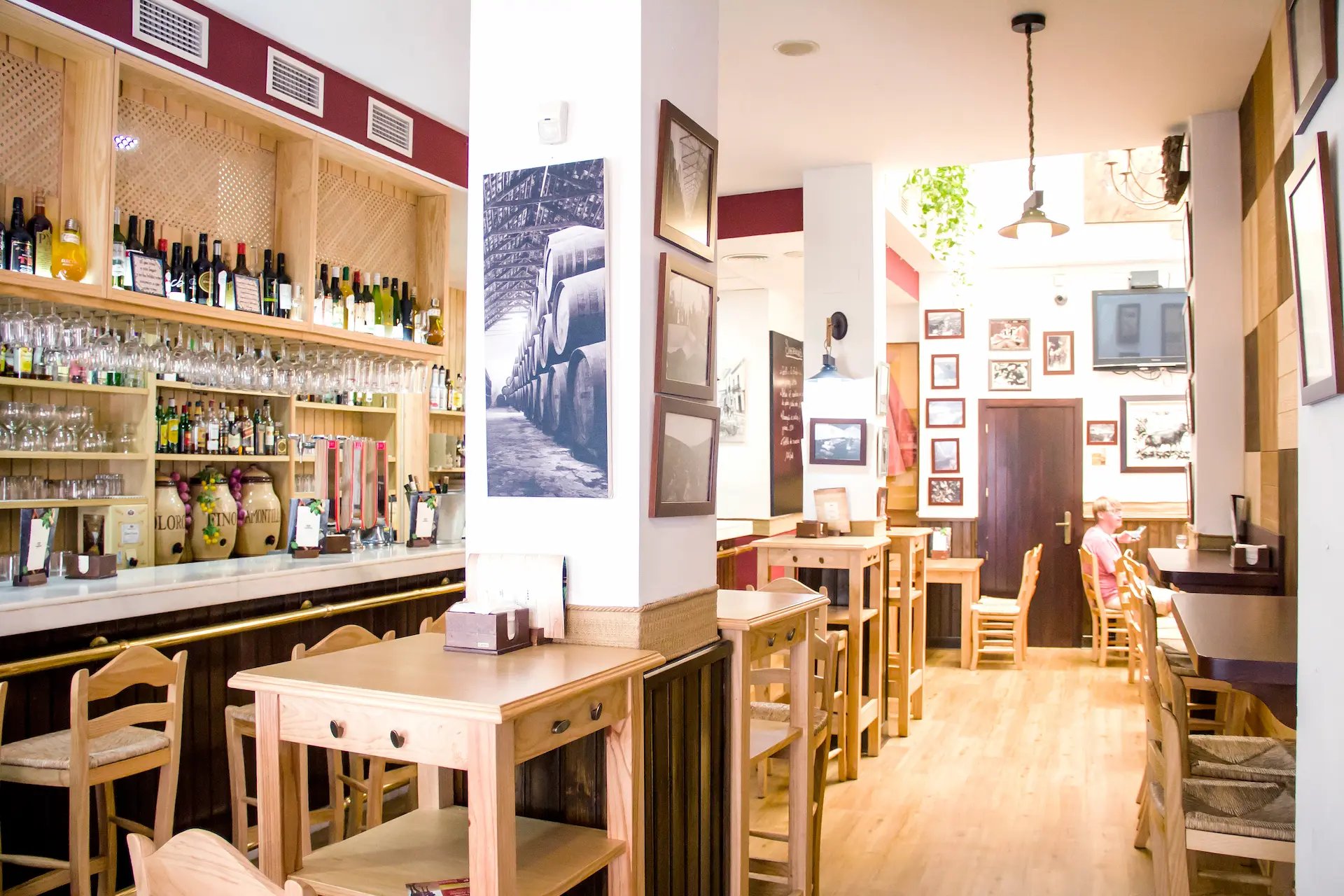
Where Andalusian Tavern Culture Meets Serious Wine
Calle San Álvaro, a short walk from the Mezquita-Catedral de Córdoba, is the kind of street that rewards slow walking. The buildings are low, the signage modest, and the tabernas along this stretch operate on a logic that predates modern restaurant culture: you drink first, you eat because of what you're drinking, and the sourcing of both follows from what the land around Andalusia produces. Taberna La Montillana operates in this tradition, at number 5 on the street, and the name itself signals its orientation. Montilla, the town roughly 45 kilometres south of Córdoba in the Denominación de Origen Montilla-Moriles, produces the fino and amontillado-style wines that define this corner of Andalusia. A taberna bearing that name is making a declaration about where it stands.
Montilla-Moriles and the Wine Identity Behind the Name
Andalusian wine culture is frequently flattened in popular understanding into Sherry, but the Montilla-Moriles D.O. operates on its own terms. The Pedro Ximénez grape dominates here, and unlike Jerez, the wines are often naturally fortified to strength without added alcohol, owing to the extreme heat of the region's clay and limestone soils during harvest. The range runs from dry, bracing finos to the dense, oxidative amontillados and olorosos that pair with the cured meats, aged cheeses, and salted fish that have structured Andalusian table culture for centuries. A taberna anchored to this tradition is making choices about sourcing that are older than any contemporary wine list concept: the producers are local, often small, and operating within a D.O. that receives a fraction of the international attention directed at Jerez. Star Wine List awarded Taberna La Montillana a White Star in January 2025, a recognition that indexes the seriousness of the wine program within a publication focused specifically on wine-led venues. That credential places the taberna in a distinct tier of Córdoba's drinking culture, separate from the broader restaurant scene represented by the city's creative cooking establishments.
Ingredient Logic in the Andalusian Tavern Format
The editorial angle that matters most at a venue like this is sourcing, and in the taberna format, sourcing is structural rather than incidental. The food that appears on the bar or at the table is not the menu of a restaurant that happens to have wine; it is the selection of a wine venue that uses food to extend the drink. That means the ibérico-derived products, the olives, the anchovy-dressed salads, and the fried fish that populate Andalusian bar culture here come loaded with regional logic. Córdoba sits at the intersection of several Andalusian production zones: the olive groves of the Subbética to the southeast supply some of Spain's most cited extra virgin oils, the Pedroches valley to the north produces ibérico pork under its own D.O., and the coastal access to the Atlantic supports the salted and preserved fish traditions that run through the interior bar culture as far north as Seville. A taberna working within this supply geography does not need to describe its sourcing philosophy; the geography does the work.
Córdoba's competitive set at this level is instructive. The city's most discussed restaurants, including Noor and Choco, operate at €€€€ price points with tasting menus that position themselves against Spain's creative cooking circuit, the same circuit that includes El Celler de Can Roca in Girona, DiverXO in Madrid, and Azurmendi in Larrabetzu. Then there is the mid-tier of regional cooking houses like Casa Pepe de la Judería and Casa Rubio, which serve traditional Córdoban dishes in settings calibrated for the tourist circuit. The taberna format sits outside both of these categories. It is not competing with the tasting menu houses, and it is not primarily a tourist accommodation. Its audience is the person who understands that the real argument for Andalusian food culture is made in the smaller, less formatted venues where the wine list is the point and the food exists to honour it.
The Taberna in Córdoba's Broader Dining Context
Spanish food culture has been well documented internationally, with the Basque country and Catalonia drawing the most sustained critical attention. Venues like Arzak in San Sebastián, Cocina Hermanos Torres in Barcelona, and Aponiente in El Puerto de Santa María occupy the register of internationally recognised Spanish cooking. Córdoba operates differently. Its food identity is older, slower to modernise, and more dependent on the accumulated logic of Moorish-influenced cooking traditions, Roman-era olive culture, and the preservation techniques that define Andalusian pantry culture. The taberna as a format carries that history without aestheticising it. When a publication focused specifically on wine recognises a Córdoban taberna, the signal is that the wine program has achieved a level of curation and seriousness that extends beyond local habit. That is what the White Star from Star Wine List registers, and it is why Taberna La Montillana appears in any serious account of Córdoba's wine-led venues.
For those planning around Córdoba's dining circuit more broadly, Arbequina offers modern cuisine at a comparable price tier, while the full range of the city's options is covered in our full Córdoba restaurants guide. Drinking culture beyond the taberna circuit is mapped in our full Córdoba bars guide. Those extending a trip further across Andalusia or into Spain's wider wine geography will find useful context in our full Córdoba wineries guide and our full Córdoba experiences guide. Accommodation options are covered in our full Córdoba hotels guide.
Planning Your Visit
Taberna La Montillana is at Calle San Álvaro, 5, in Córdoba's Centro district, within walking distance of the Mezquita quarter. Given that this is a traditional taberna format rather than a reservation-driven restaurant, timing your visit for the early evening, when the local after-work drinking culture activates the city's bar circuit, tends to produce the most coherent experience. Phone and website details are not currently listed in our database; the venue is leading confirmed through local tourism contacts or on arrival. For visitors cross-referencing Córdoba against other wine-forward venues in the international record, comparison points like Le Bernardin in New York City or Emeril's in New Orleans illustrate the global range of wine recognition programs, though the taberna format represents an entirely different category of experience.
Frequently Asked Questions
Comparable Spots, Quickly
These are the closest comparables we have in our database for quick context.
| Venue | Cuisine | Price | Awards | Notes |
|---|---|---|---|---|
| Taberna La Montillana | Taberna La Montillana is a restaurant in Córdoba, Spain. It was published on Sta… | This venue | ||
| Choco | Creative | €€€€ | Michelin 1 Star | Creative, €€€€ |
| Noor | Modern Spanish - Moorish, Modern Dutch, Creative | €€€€ | Michelin 3 Star | Modern Spanish - Moorish, Modern Dutch, Creative, €€€€ |
| Casa Pepe de la Judería | Regional Cuisine | €€ | Regional Cuisine, €€ | |
| El Envero | Modern Cuisine | €€ | Modern Cuisine, €€ | |
| Garum 2.1 Bistronómic Tapas Bar | Andalusian | €€ | Andalusian, €€ |
Need a table?
Our members enjoy priority alerts and concierge-led booking support for the world's most difficult tables.
Get Exclusive Access