Tabelog 100 #34
Our verdict
A compact yoshoku address in Issha, kitchen NOMU places Nagoya’s suburban dining culture in sharper focus: everyday Western-influenced Japanese cooking treated with enough seriousness to earn repeat Tabelog 100 recognition. The draw is not spectacle but category discipline, especially hamburger steak within a family-friendly, counter-equipped room that feels local before it feels destination-driven.

Pearl is the En Primeur Club membership app, where members save venues, book tables and use the concierge.
The menu
What to order
- Hamburger steak
- Fried shrimp
- Crab cream croquettes
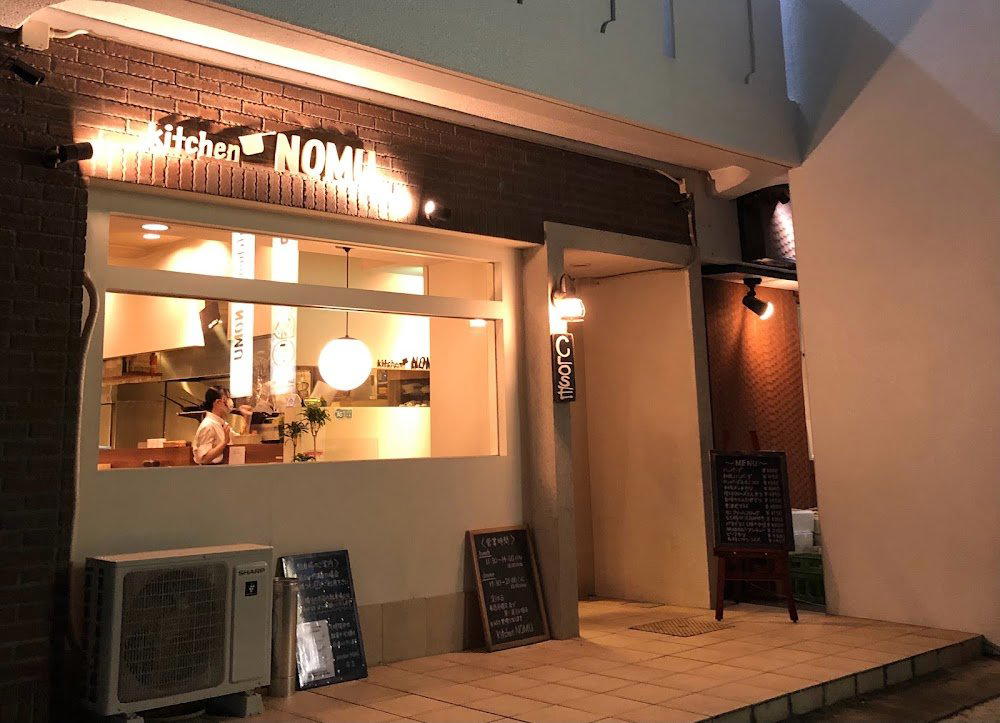
kitchen NOMU is not where Nagoya performs for visitors. It sits within the city’s everyday dining fabric, with local errands and the quieter rhythm that often protects Japan’s more useful restaurants from becoming tourist theatre. In that setting, yoshoku makes sense. The genre was built on adaptation: Western forms translated through Japanese kitchens, then absorbed into ordinary dining rather than preserved as imported novelty.
kitchen NOMU belongs to that Nagoya register. Its category is yoshoku, with hamburger steak called out specifically, and its recognition includes Tabelog Hyakumeiten recognition in 2025. That matters because yoshoku is easy to underestimate from abroad. It does not carry the ceremonial vocabulary of sushi or kaiseki, yet the stronger examples depend on consistency, sauce work, grill timing, and a clear sense of what comfort food can become when handled with discipline.
For readers mapping the city, this is a different Nagoya from the city’s more polished central dining rooms. EP Club’s broader city coverage is useful for that split: Our full Nagoya restaurants guide tracks the dining field, while Our full Nagoya hotels guide, Our full Nagoya bars guide, Our full Nagoya wineries guide, and Our full Nagoya experiences guide help separate central convenience from more locally rooted eating.
Yoshoku in Nagoya, not downtown theatre
Japan’s yoshoku tradition rewards restaurants that know when not to overcomplicate the plate. The cooking sits between domestic nostalgia and restaurant craft: familiar shapes, sauces with weight, and a dining style that can serve a broad local audience without changing identity. In Nagoya, where familiar local signatures tend to dominate outside attention, a recognised yoshoku room widens the picture of what the city eats when it is not explaining itself to outsiders.
The comparison set underlines the point. In Nagoya, coffee specialists, bakeries, yoshoku rooms, and higher-priced dining coexist without forming a single visitor-facing strip. coffee Kajita and baguette rabbit occupy lighter daytime territory, With moves into a different spend bracket, and BHANCHA GHAR shows how local demand can support non-Japanese casual dining at modest prices. Against that spread, kitchen NOMU reads as a middle-register address: more purposeful than a convenience meal, less formal than a special-occasion room, and anchored in a cuisine category with a clear local audience.
That middle position is where yoshoku often does its strongest work. Hamburger steak is not a luxury code word; it is a test of repetition. The appeal lies in whether a kitchen can make a familiar dish feel resolved rather than merely comforting. Tabelog Hyakumeiten recognition indicates category recognition, not a one-season burst of attention. For a traveller, that is the signal to read: this is not a chef biography story, nor a tasting-menu chase. It is a Nagoya restaurant whose category has been judged seriously within the yoshoku field.
What the room signals about the meal
The format should be read through the category rather than through fine-dining theatre. Yoshoku is practical by nature: it can be polished without becoming stiff, and it can feel familiar without becoming casual in the careless sense. kitchen NOMU’s listed focus on yoshoku and hamburger steak gives the meal a clear frame, while the published budget places it in an accessible Nagoya range rather than a trophy-reservation tier.
The local-dining context should be read carefully. In Japan, worthwhile restaurants are often outside obvious visitor patterns without needing to be treated as secrets. Nagoya gives the meal its frame: the point is to eat in the city through a genre where repeat custom and consistency matter. That distinction is important for premium travellers. Not every worthwhile reservation needs theatre, rare ingredients, or a view. Some reveal a city through how ordinary genres are protected, polished, and kept accessible.
For broader calibration, Nagoya’s restaurant field stretches across casual specialists and more formal rooms. Other Nagoya dining rooms show how varied the city’s contemporary dining map has become. The more useful comparison is not fame, but function: where a restaurant sits between daily use, specialist recognition, and travel-worthy detour.
How to place it within a Japan itinerary
Yoshoku is often a better lens on modern Japan than visitors expect. It shows how imported forms were domesticated, then judged on Japanese terms. That makes kitchen NOMU a smart counterpoint to sushi counters, tempura rooms, and kappo meals elsewhere in an itinerary. It also pairs well with the kind of cross-city eating that values category specificity: meals chosen not because they are internationally famous, but because they clarify a local genre, a city habit, or a form of everyday craft that travellers can otherwise miss.
The editorial verdict is measured but clear. This is a category-driven Nagoya meal rather than a trophy reservation. The case for going rests on place, genre, and Tabelog Hyakumeiten recognition: a Nagoya yoshoku address with hamburger steak at its centre, useful for travellers who want the city beyond its most obvious signatures. Treat it as a calibrated local detour, not a grand occasion, and it makes stronger sense.
Frequently asked questions
How do I find kitchen NOMU?
kitchen NOMU is located in Nagoya.
What does dinner at kitchen NOMU typically cost?
Pricing at kitchen NOMU is listed as Dinner: JPY 3,000 - JPY 3,999; Lunch: JPY 1,000 - JPY 1,999.
How hard is it to get a table at kitchen NOMU?
With Tabelog Hyakumeiten recognition in 2025 and a listed lunch budget of JPY 1,000 - JPY 1,999, advance planning is sensible.
What do critics highlight about kitchen NOMU?
The strongest signals are formal rather than flashy: Tabelog Hyakumeiten recognition in 2025, a yoshoku and hamburger steak focus, and a Nagoya location.
Accolades, Compared
Comparable venues side-by-side for orientation.
| Venue | Cuisine | Price | Awards | Notes |
|---|---|---|---|---|
| kitchen NOMUThis venue (the venue you are viewing) | Yoshoku (Japanese-style Western) & Hamburger Steak | $20–30 | Tabelog 100 #34 | Not listed |
| Link | Japanese Sake Bar & Izakaya | Not listed | Tabelog 100 #13 | Naka |
| Yakiniku Tomiya | Japanese Yakiniku | $30–50 | Tabelog 100 #61 | Naka |
| Nagano Meijitei | Nagano Sauce Katsudon | $10–20 | Not listed | Nagano Station |
| Shabushabu Creative Izakaya Butagin Sakae ten | Lettuce Shabu-Shabu & Pork Izakaya | $30–50 | Tabelog 100 #56 | Naka |
| 虹霓 | japanese | Not listed | Tabelog 100 #13 | Nishi |
Recognition history
Dated appearances from independent guides and award organizations, with the underlying list record or original source where available.
Tabelog 100 #34 · No. 34
Tabelog · Tabelog 100 - Yoshoku - EAST - 2025