Sushi Yasaka
On the Upper West Side, Sushi Yasaka occupies a neighbourhood where serious Japanese dining has quietly taken hold alongside the area's more prominent steakhouses and European restaurants. The restaurant draws a regular local crowd and destination visitors alike, operating in a part of Manhattan where the sushi counter tradition carries more weight than the address might initially suggest.
Pearl is the En Primeur Club membership app — saves, bookings, and concierge access live there. Same editors, same standards.
- Address
- 251 W 72nd St, New York, NY 10023
- Phone
- +12124968460
- Website
- yasaka.nyc
- Directions
- Get directions
 Saves & bookings on Pearl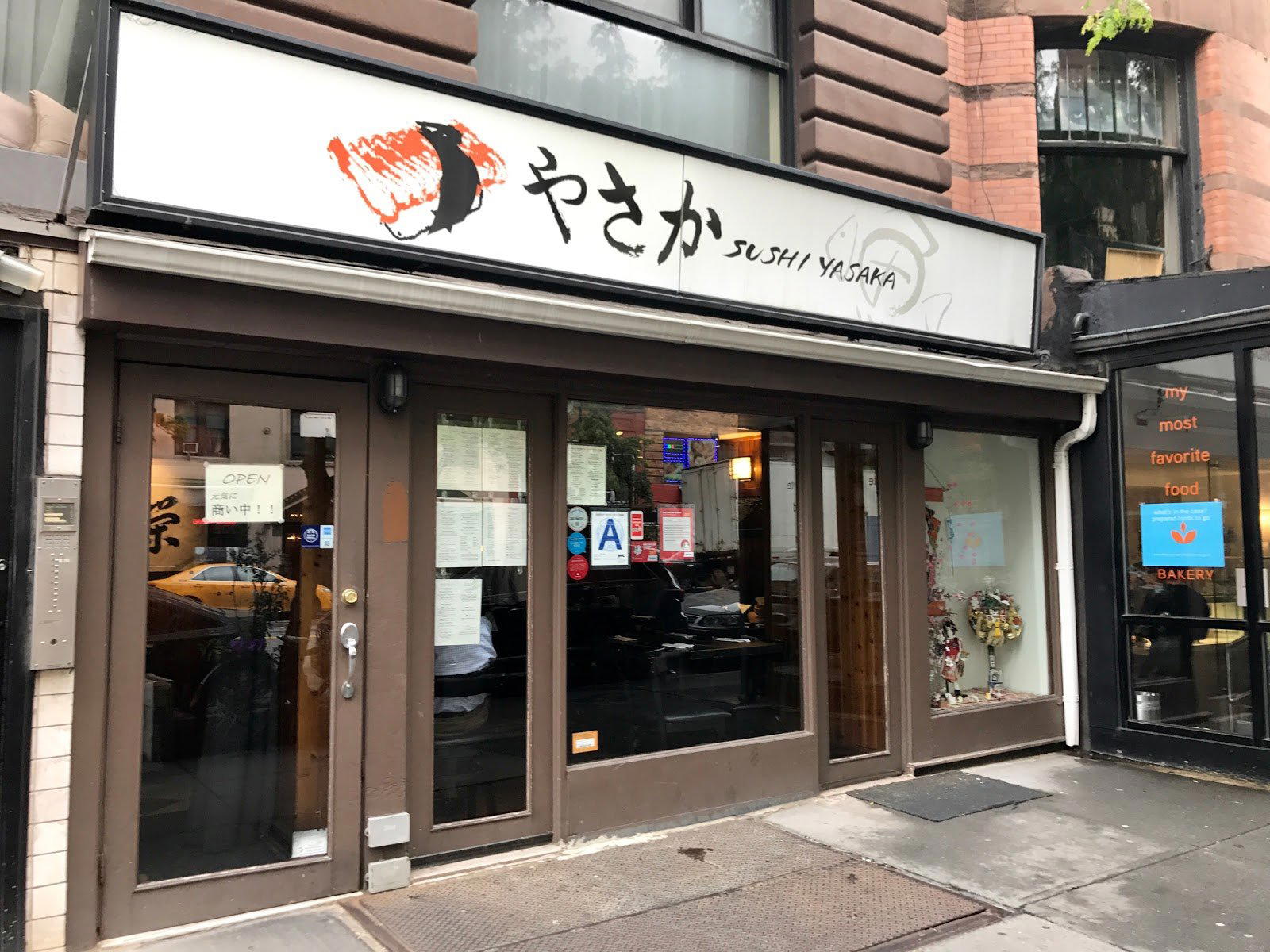
Upper West Side, and What the Address Actually Means
West 72nd Street sits a long way from Midtown's high-density restaurant corridor, and that distance shapes everything about how Sushi Yasaka functions. The Upper West Side has never been New York's most obvious location for serious Japanese dining, that gravity has historically pooled around Midtown East, the East Village, and more recently, pockets of the Lower East Side. But neighbourhood sushi in Manhattan operates on its own logic. A counter that anchors itself in a residential district rather than a tourist-facing block builds a different kind of clientele: one that returns regularly, knows the rhythm of the room, and treats the meal as a local institution rather than a special-occasion destination.
This is the context in which Sushi Yasaka should be understood. Not as an outlier on the west side of Central Park, but as part of a pattern visible in cities with deep Japanese dining cultures: the neighbourhood counter that quietly earns its reputation without the promotional infrastructure of a Midtown address. Compared to the high-octane formality of Masa in the Time Warner Center, or the technically exacting tasting menus at Atomix and Jungsik New York in Midtown South, a West Side sushi counter operates at a different register, closer in spirit to the kind of place that rewards proximity and repeat visits over destination dining theatrics.
The Sushi Counter Tradition on the West Side
The Upper West Side's dining character has long been defined by a mix of long-running neighbourhood institutions and the kind of restaurants that serve a highly educated, food-literate residential population without chasing the media cycle. That population tends to know what it wants from a sushi counter: fish sourced with care, rice that holds its temperature and seasoning through a full omakase sequence, and a room that doesn't require the guest to perform enthusiasm. The format rewards consistency over novelty.
In New York's broader sushi scene, the distance between tiers is pronounced. The leading omakase counters, many of them in Midtown or the East Village, now charge upward of $400 per person for dinner, with some approaching the $600 range at venues like Masa, which has held a position as among the more expensive restaurants in the United States for years. Neighbourhood counters occupy a different bracket, priced and positioned for the resident who wants serious fish rather than a spectacle. The distinction matters: the two formats are not in competition. They serve different moments in a diner's life.
Sushi Yasaka's location on West 72nd Street places it squarely in neighbourhood counter territory, geographically and conceptually. The street itself connects Broadway to Riverside Drive and runs through one of the Upper West Side's most densely populated residential stretches. The foot traffic is local. The expectations, accordingly, are consistent rather than theatrical.
How the Upper West Side Shapes the Experience
Dining on the Upper West Side rewards a different kind of attention than Midtown or Downtown. The neighbourhood's restaurant culture tends toward depth over breadth: fewer venues competing for the same table-turning economics, more regulars who have eaten at the same counter dozens of times. For a sushi restaurant, that environment is not incidental, it is the condition that allows a kitchen to develop a relationship with its supply chain and its guests simultaneously.
The West 72nd Street corridor also benefits from proximity to Riverside Park and the residential density of the streets between Broadway and West End Avenue. Dinner here tends to start earlier and move at a pace set by the neighbourhood rather than by convention. That timing suits sushi: the format is at its leading when the room isn't rushing toward a second seating and the fish can be handled without the pressure of peak-hour volume.
For visitors staying elsewhere in Manhattan, the Upper West Side requires a deliberate trip, which is worth framing correctly. The subway ride from Midtown takes under ten minutes on the 1, 2, or 3 train, with stops at 72nd Street on Broadway directly adjacent to the restaurant's address. The distance is logistical, not experiential.
Where Sushi Yasaka Sits in the City's Wider Scene
New York's Japanese dining scene has grown considerably more stratified over the past decade. At one end, hyper-formal omakase counters with reservation queues stretching months ahead and prix-fixe prices that rival the tasting menus at Le Bernardin or Per Se. At the other, neighbourhood sushi restaurants that serve a consistent, sourced product to a local clientele without the ceremony. For readers exploring EP Club's full New York City restaurants guide, understanding that spectrum is useful context before making a reservation anywhere.
The neighbourhood counter tier is not a consolation prize. In cities like Tokyo and Osaka, the distinction between the high-ceremony counter and the trusted neighbourhood restaurant is not a hierarchy, it is a different format for a different occasion. New York has been slow to absorb that framing, partly because the city's food media has historically concentrated attention on stronger examples from the market and the recently opened. The Upper West Side's relative distance from that media churn is, in this reading, an asset rather than a liability.
For reference points elsewhere in the United States: the idea of a serious restaurant anchored in a residential neighbourhood rather than a high-profile dining district is visible in cities like San Francisco, where Lazy Bear built its identity partly through neighbourhood positioning, and in the farm-integrated model of Blue Hill at Stone Barns in Tarrytown, which requires guests to leave the city entirely. The West 72nd Street address is neither as remote as the latter nor as destination-coded as the former, it sits in a productive middle ground.
Planning a Visit
The restaurant is located at 251 W 72nd St, New York, NY 10023, directly accessible from the 72nd Street station on the 1, 2, and 3 subway lines. Reservations: Recommended. Dress: Casual. Budget: About $40 per person.
How It Stacks Up
Comparable venues nearby, for context on price, style, and recognition.
| Venue | Cuisine | Price | Notes |
|---|---|---|---|
| Sushi YasakaThis venue — the venue you are viewing | Traditional Japanese Sushi | $$ | Not listed |
| IPPUDO NY | Hakata-Style Tonkotsu Ramen | $$ | East Village |
| Uminoie | Homestyle Japanese Izakaya | $$ | East Village |
| Amber | Japanese Sushi with Pan-Asian Fusion | $$ | Upper East Side-Carnegie Hill |
| Hori | Authentic Japanese Izakaya | $$ | East Midtown-Turtle Bay |
| PacRim Sushi & Asian Cuisine | Japanese Sushi and Asian Fusion | $$ | East Midtown-Turtle Bay |
Continue exploring
More in New York City
Restaurants in New York City
Browse all →
Bars in New York City
Browse all →
Hotels in New York City
Browse all →





At a Glance
- Cozy
- Intimate
- Date Night
- Casual Hangout
- Sake Program
- Local Sourcing
Current opening hours
- Monday
- 12–2:45 PM, 5:15–9:45 PM
- Tuesday
- 12–2:45 PM, 5:15–10 PM
- Wednesday
- 12–2:45 PM, 5:15–10 PM
- Thursday
- 12–2:45 PM, 5:15–10 PM
- Friday
- 12–2:45 PM, 5:15–10:15 PM
- Saturday
- 12–2:45 PM, 5:15–10:15 PM
- Sunday
- 12–2:45 PM, 5:15–9:45 PM
Hours can change for holidays and private events. Last verified .
Polished yet inviting atmosphere in a cozy, casual setting ideal for sushi-loving couples.