SUSHARK
Our verdict
On South MacDill Avenue in Tampa's Ballast Point corridor, SUSHARK occupies a dining register where Japanese-influenced seafood technique meets Florida's coastal ingredient base. The address places it among a cluster of serious independent restaurants that have shifted the city's culinary center of gravity southward over the past decade. For visitors orienting to Tampa's current dining scene, it belongs on the shortlist alongside the city's other destination independents.

Pearl is the En Primeur Club membership app, where members save venues, book tables and use the concierge.
South MacDill and the Southward Shift in Tampa Dining
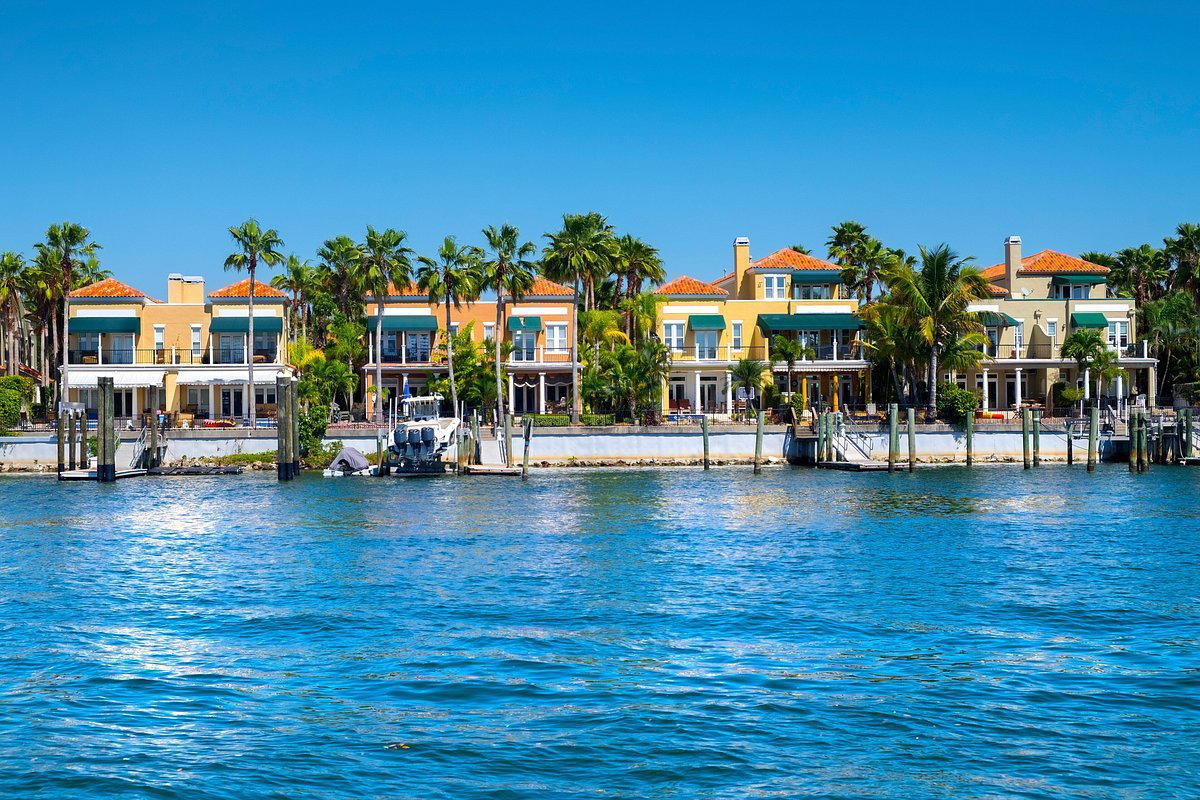
Tampa's most consequential restaurant openings of the last several years have not clustered downtown or in Ybor City, the neighborhoods that once defined the city's dining identity. Instead, they have appeared along South MacDill Avenue and the surrounding Ballast Point and Palma Ceia corridors, a quieter, residential stretch that has quietly accumulated a peer group of independent restaurants operating at the top of the local market. SUSHARK, at 4019 S MacDill Ave, sits inside that geographic shift. Understanding its address is the first piece of useful intelligence for a visitor trying to map Tampa's current dining scene accurately.
This part of the city functions differently from the Riverwalk or Hyde Park Village. There is no foot traffic to sustain a mediocre operation, no tourist volume to pad covers. The restaurants that have taken root here Ebbe (Contemporary), Koya (Japanese), Kōsen (Japanese), Lilac (Mediterranean Cuisine), and Rocca (Italian) among them, draw on a local clientele that knows what it wants and returns regularly. That context shapes what SUSHARK has to be to survive and earn a following in this zip code.
The Japanese Seafood Register in a Florida Context
Florida occupies an unusual position in American seafood dining. The state has access to Gulf and Atlantic species that the rest of the country either cannot source fresh or pays a significant premium to import. Grouper, snook, amberjack, stone crab, and Florida spiny lobster are not exotic here, they are the baseline. What distinguishes the better restaurants operating in a Japanese-influenced seafood register is not the ingredient availability but the decision about how to treat those local species: whether to impose classical Japanese preparation orthodoxy or to treat the Japanese technique as a framework that can accommodate Gulf Coast material.
That tension has produced some of the more interesting seafood restaurants in American cities with strong Japanese dining scenes, from Providence in Los Angeles to Le Bernardin in New York City, where French rigor rather than Japanese, but the underlying question is the same: how much does the technique bend toward the local product, and how much does the local product adapt to the technique? Tampa's geographic position makes that question more pointed than in most American cities. The Gulf is not a backdrop here. It is a supply chain.
Where SUSHARK Sits in the Tampa Competitive Set
Tampa's Japanese dining tier has deepened considerably. At the serious end of the spectrum, Koya and Kōsen represent the omakase and kaiseki-adjacent formats that have migrated from coastal Japanese dining capitals into secondary American markets over the past decade. Those formats carry their own pricing logic: the counter is small, the booking window is long, and the cost per head reflects a different set of operational economics than an à la carte Japanese restaurant.
SUSHARK on South MacDill enters a different part of that conversation, one that intersects with the city's broader appetite for chef-driven seafood without the full ceremony of an omakase format. The name itself signals something: a compression of categories, an identity that is legible without being generic. In a city where our full Tampa restaurants guide tracks an increasingly differentiated dining scene, that kind of positioning clarity matters. Visitors comparing across the Japanese and seafood categories in Tampa will find SUSHARK occupying a distinct register from both the fine-dining Japanese counters and the casual sushi roll operations that fill the middle of the market.
What the Wine Program Signals About Ambition
In American seafood-forward restaurants, the wine list has become a reliable proxy for overall kitchen ambition. Restaurants operating at a serious level tend to build their cellars around producers that complement rather than compete with delicate fish preparations: Burgundy whites, aged Champagne, Austrian Grüner Veltliner, structured Alsatian Riesling, and, increasingly, skin-contact whites that can hold their own against the fat of fatty fish. At the more sophisticated end of the American fine dining spectrum, at Single Thread Farm in Healdsburg, Blue Hill at Stone Barns in Tarrytown, or Addison in San Diego, the cellar is as deliberate as the menu. The sommelier's choices communicate the kitchen's point of view as clearly as any dish.
For SUSHARK, specific list details are not yet available through public channels, but the broader context is relevant for any visitor calibrating expectations. Restaurants in the South MacDill corridor have generally moved away from the formula wine lists that dominated Tampa dining a decade ago. The independents that have taken hold here tend to build programs with more intention, shorter, better-sourced, with at least one staff member who can speak to the pairings without defaulting to Sauvignon Blanc as the universal seafood answer. Whether SUSHARK's program meets that bar is worth investigating directly on a visit. It is, in any case, the right question to ask when sitting down.
The broader American fine dining reference points, Alinea in Chicago, The French Laundry in Napa, Atomix in New York City, have made cellar depth a non-negotiable component of a serious tasting experience. Even restaurants operating below that price ceiling now understand that the wine program is part of the editorial statement. Tampa's better independents have absorbed that lesson. A visitor spending time on South MacDill will encounter wine lists with more personality than the city's reputation might suggest.
Planning a Visit
SUSHARK is located at 4019 S MacDill Ave, in a part of Tampa that requires a car or rideshare from downtown. The South MacDill corridor is not a walkable dining district in the conventional sense, it is a destination strip, which means planning logistics before arrival rather than improvising. Given the density of strong independents in this stretch, it is worth coordinating a visit to SUSHARK alongside an evening that includes drinks or a second stop at a nearby option.
For visitors building a broader Tampa itinerary, the South MacDill cluster represents the clearest concentration of the city's current independent dining energy. Compare what is happening here with the Riverwalk's more hotel-anchored dining and the contrast tells you something useful about where Tampa's culinary investment is actually landing right now. Our full Tampa restaurants guide maps the broader scene for those arriving without a fixed itinerary.
Frequently asked questions
What dish is SUSHARK famous for?
Should I book SUSHARK in advance?
Advance booking is advisable for any serious independent on the South MacDill corridor. Tampa's better independents in this part of the city operate without the tourist-volume cushion that keeps downtown restaurants available on short notice. If you are planning a visit on a weekend or as part of a fixed itinerary, contacting the restaurant ahead of time is the practical approach. The city's dining scene at this tier, comparable in seriousness to restaurants like Ebbe and Lilac, does not leave much room for walk-ins at peak hours.
What is SUSHARK known for?
SUSHARK is understood as part of Tampa's southward dining shift, a cluster of chef-driven independents on and around South MacDill Avenue that operate above the city's mid-market average. Its name signals a Japanese and seafood-oriented identity, placing it in a distinct register from both the omakase-format Japanese counters (Koya, Kōsen) and the broader casual sushi market in the city.
How does SUSHARK handle allergies?
Phone and website information for SUSHARK has not been confirmed, so the most reliable approach is to contact the restaurant directly before your visit, particularly given that seafood-focused menus can present specific cross-contamination considerations. Tampa's better independents in this tier generally take dietary requests seriously, but confirming specifics in advance is always the right protocol.
Should I splurge on SUSHARK?
What can be said is that the South MacDill corridor, where SUSHARK is located, functions as Tampa's current address for restaurants that charge in line with the quality of their ingredients and technique, not the tourist-area premium that inflates some downtown menus. If you are already spending at the level of Rocca or Ebbe during a Tampa visit, SUSHARK belongs in that same deliberate-spending bracket rather than a compromise option.
Is SUSHARK a good option for a wine-focused dinner in Tampa?
Tampa's independent restaurant scene on South MacDill has generally moved toward more considered wine programs over the past several years, and a Japanese-seafood-oriented restaurant in this corridor would logically pair leading with whites that complement delicate fish preparations, Burgundy, Champagne, Austrian, and Alsatian producers being the reference points at serious American seafood restaurants. For a broader sense of how Tampa's independent dining scene handles the wine question, our full Tampa restaurants guide provides useful comparative context.
Recognition Snapshot
Comparable venues nearby, for context on price, style, and recognition.
| Venue | Cuisine | Price | Notes |
|---|---|---|---|
| SUSHARKThis venue (the venue you are viewing) | Modern Japanese Sushi Fusion | $30–50 | Not listed |
| Ro | Modern Japanese Sushi | Not listed | Hyde Park |
| Kobé Japanese Steakhouse - New Tampa | Japanese Teppanyaki Steakhouse | $30–50 | Richmond Place |
| Hales Blackbrick | Modern Sichuan Chinese | $50–100 | Courier City-Oscawana |
| Battery | Modern American Steakhouse & Bourbon Bar | $50–100 | Gilchrist's A W Oak Grove |
| M. Bird | Modern American Small Plates with Tropical Influences | $30–50 | Tampa Heights |