Ebbe

1 Michelin Star
Our verdict
Ebbe holds consecutive Michelin stars for 2024 and 2025, making it one of a small number of restaurants in Tampa earning that recognition back to back. Chef Donovan Cooke leads a contemporary program at 1202 N Franklin St that sits at the upper end of the city's fine dining tier, where the price point is $$$$ but the credential-to-cost ratio compares favorably against single-star peers in larger American markets.

Pearl is the En Primeur Club membership app, where members save venues, book tables and use the concierge.
The menu
What to order
- Beet roulade
- Turbot with sturgeon caviar
- Braised oxtail with foie gras
Tampa's Fine Dining Tier and Where Ebbe Sits Within It
Tampa's fine dining scene has changed shape faster than most mid-sized American cities over the past several years. A cluster of restaurants holding Michelin recognition now occupies the best of the market, and that group is meaningfully diverse: Koya holds a star in Japanese cuisine, Lilac operates in the Mediterranean register, and Rocca earns its recognition at a lower price point in Italian. Ebbe, Chef Donovan Cooke's contemporary room at 1202 N Franklin St, holds consecutive Michelin stars for 2024 and 2025, which makes it one of the few addresses in the city with back-to-back recognition at that level. In a market where Michelin only began evaluating Tampa relatively recently, that consistency carries real weight.
The broader context matters for anyone deciding how to spend at this price tier. A $$$$ dinner in Tampa does not carry the same baseline assumption as the same spend at Le Bernardin in New York City or The French Laundry in Napa, where the surrounding market density means a single star is table stakes for dozens of restaurants. Here, a sustained single-star contemporary kitchen is a shorter list, and Ebbe sits near the best of it. For value-minded diners thinking about what a starred dinner actually buys outside of gateway cities, the calculus is direct: comparable cooking ambition, markedly less competition for reservations, and prices that tend to undercut equivalent programs in denser markets.
The Room on North Franklin
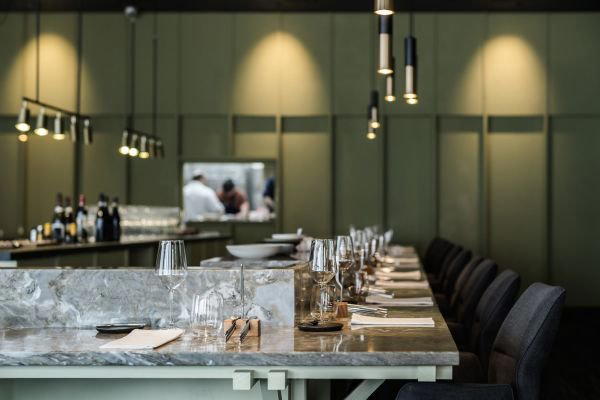
North Franklin Street runs through downtown Tampa in a corridor that has absorbed considerable investment as the city's hospitality infrastructure has matured. The physical address at 1202 N Franklin places Ebbe inside that evolution, in a part of the city where a serious restaurant can hold a downtown position without the tourist-district noise that shapes the experience elsewhere. Approaching the room, the register is deliberately composed rather than expressive, the kind of space where the food is meant to do the talking. Contemporary fine dining at this level in American cities has largely moved away from the formality theater of the 1990s and toward interiors that are controlled without being stiff. Ebbe operates in that mode.
The dining experience at this tier in Tampa benefits from the city's relative informality as a market. The strictures that govern pacing and atmosphere at comparable programs in Chicago, where Alinea occupies an entirely different cultural category, or in San Francisco, where Lazy Bear has built a loyal and highly specific audience, are lighter here. That does not mean the experience is casual, but it does mean the room operates without the weight of decades of critical consensus telling diners how to feel before they arrive.
The Contemporary Format and What It Delivers
Contemporary cuisine as a category has become expansive to the point of near-meaninglessness in some markets, but at the Michelin-starred end of the format, it tends to coalesce around a specific set of commitments: seasonal sourcing logic, technical precision applied without overt showmanship, and a menu architecture that gives the kitchen room to make editorial decisions rather than simply execute classical templates. These are the parameters within which Ebbe operates, and Donovan Cooke's program has earned recognition twice against that standard.
The comparison that illuminates the value proposition most clearly is not necessarily with restaurants in the same city but with contemporary single-star programs across the country. Single Thread Farm in Healdsburg and César in New York City represent different expressions of what contemporary fine dining can mean at the starred level; Jungsik in Seoul demonstrates how the same formal category can carry radically different regional character. Ebbe's position in this broader conversation is as a kitchen earning sustained recognition in a market that does not generate outsized critical attention, which is itself an argument for the cooking's substance rather than its surroundings.
Diners at this price point are not inclined to leave forgiving reviews when the experience falls short.
The Value Case for Starred Dining Outside Gateway Cities
Argument for spending $$$$ at a Michelin-starred contemporary table in Tampa rather than waiting for a trip to a gateway city is, at its core, a question of what you are actually paying for. In New York or San Francisco, a significant portion of the cost at any comparable restaurant reflects real estate, labor markets, and the premium attached to operating in a city where competition for every reservation is fierce. That compression is absent in Tampa. The cooking ambition and the recognition that validates it are present; the market surcharge is not.
For travelers already in Tampa for other reasons, that calculus becomes even cleaner. On Swann, Haven, and Ponte represent alternative high-end options in the market, but none carries the consecutive-star validation that Ebbe now holds. For a visitor building a single serious dinner into a Tampa itinerary, that distinction matters. The Michelin star is not a guarantee of a transcendent experience, but it is a reliable signal that the kitchen has been evaluated by a third party whose standards do not vary by geography.
Booking logistics in Tampa's starred tier are notably more accessible than in equivalent programs elsewhere. Restaurants like Emeril's in New Orleans benefit from decades of name recognition and tourist traffic that creates a specific booking dynamic. Ebbe, operating in a younger starred market, has not yet accumulated that kind of demand backlog. That accessibility is a material part of the value equation.
Tampa's Broader Dining and Hospitality Context
Ebbe is one data point in a city building a more serious hospitality infrastructure across categories. The Japanese tier, represented by both Koya and Kōsen, has its own starred recognition. The bar program in the city has developed considerably. Visitors planning around Ebbe as the anchor of a Tampa dining trip will find that the surrounding options support a two- or three-day food-focused itinerary with less compromise than the city's size might suggest. Our full Tampa restaurants guide maps the broader field, while our Tampa hotels guide, bars guide, wineries guide, and experiences guide cover the rest of the city's premium tier.
Planning a Dinner at Ebbe
Ebbe is located at 1202 N Franklin St, Tampa, FL 33602, in the downtown corridor. The price tier is $$$$ across the board, consistent with the starred contemporary category in the American market. Given that Michelin recognition typically accelerates demand even in markets where it is newly established, booking in advance is advisable, particularly on weekends, though the lead time required here is unlikely to approach the months-ahead windows common in New York or Chicago.
Frequently asked questions
What part of town is Ebbe in?
Ebbe is located at 1202 N Franklin St, Tampa, FL 33602, Tampa.
What's the pricing like at Ebbe?
Pricing at Ebbe is listed as $$$$.
What distinctions does Ebbe have?
Ebbe has received recognition including: Michelin 1 Star (2025); Michelin 1 Star (2024).
What's the must-try dish at Ebbe?
Chef Donovan Cooke operates within the contemporary format, where the menu shifts with season and sourcing. The most reliable move is to book and let the kitchen guide the direction.
Similar Picks
A short peer table to compare basics side-by-side.
| Venue | Cuisine | Price | Awards | Notes |
|---|---|---|---|---|
| EbbeThis venue (the venue you are viewing) | Nordic-Inspired Fine Dining | $200–300 | 1 Michelin Star | Not listed |
| Koya | Modern Japanese Omakase | $200–300 | 1 Michelin Star | Japanese |
| Bern’s Steak House | Classic Dry-Aged Steaks | $100–150 | Michelin Plate · World's Best Steaks 50 Best #48 | Steakhouse |
| Columbia | Spanish-Cuban | $50–100 | Michelin Plate · Wine Spectator Best of Award of Excellence | Cuban |
| Rocca | Modern Italian Fine Dining | $50–100 | 1 Michelin Star · Star Wine List | Italian |
| Lilac | Modern Mediterranean Fine Dining | $200–300 | Michelin Plate · Star Wine List | Mediterranean Cuisine |
Recognition history
Dated appearances from independent guides and award organizations, with the underlying list record or original source where available.
Michelin 1 Star
Michelin
Full recognition history (3 entries)
Michelin 1 Star
Michelin
Michelin 1 Star
Michelin
Continue exploring
More in Tampa
Restaurants in Tampa
All restaurants in Tampa →
Details
- Modern
- Elegant
- Intimate
- Sophisticated
- Minimalist
- Date Night
- Special Occasion
- Chefs Counter
- Open Kitchen
- Extensive Wine List
- Local Sourcing
- Tasting Menu
- Counter Dining
Current opening hours
- Monday
- Closed
- Tuesday
- 5–11 PM
- Wednesday
- 5–11 PM
- Thursday
- 5–11 PM
- Friday
- 5–11 PM
- Saturday
- 5–11 PM
- Sunday
- Closed
Hours can change for holidays and private events. Hours as of .
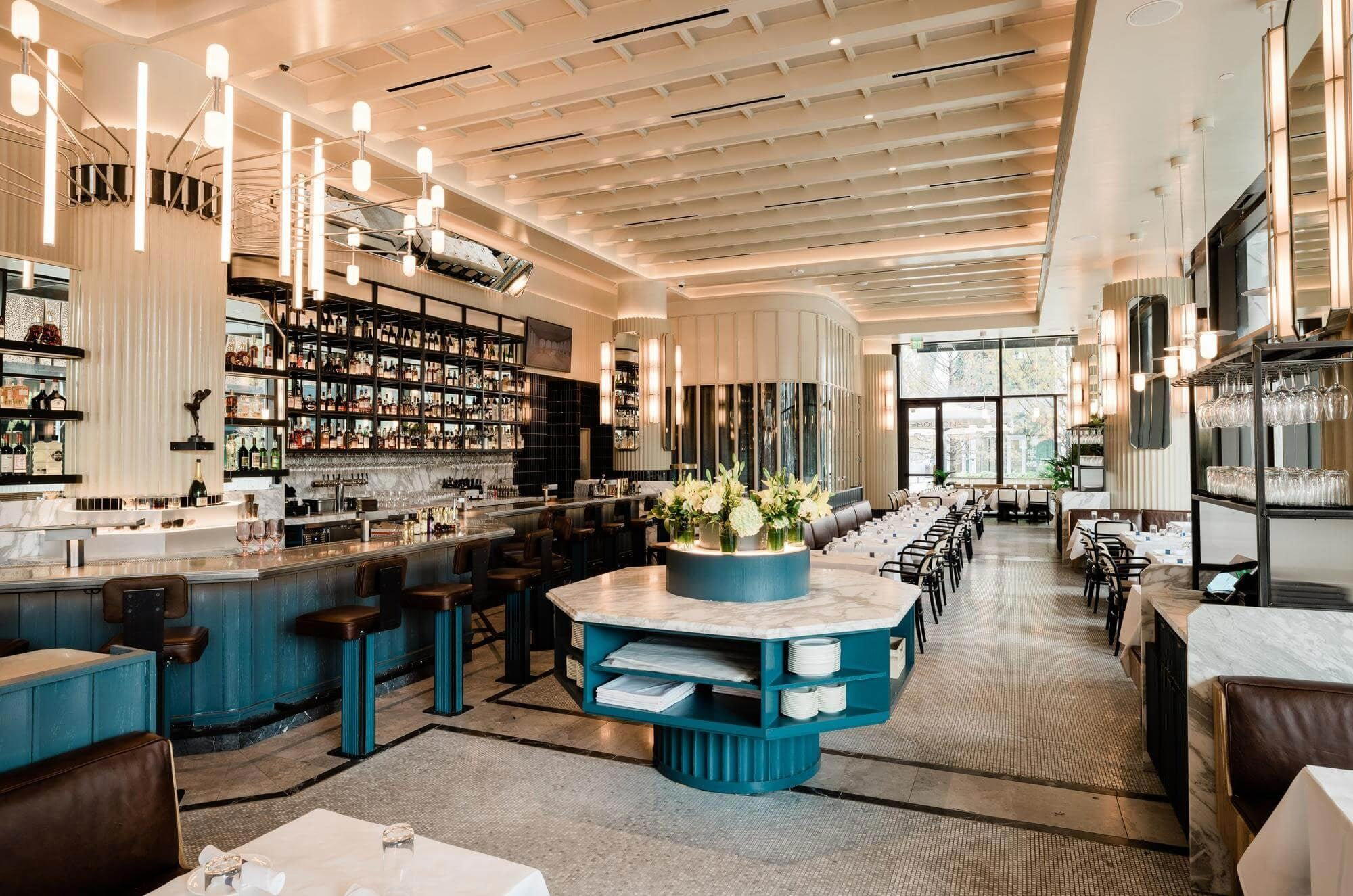
Sleek, contemporary, and minimalist Scandinavian-inspired space dominated by a U-shaped marble bar, described as calm, quiet, refined, and intimate for food-focused conversation.