
Tabelog 100 #95
Our verdict
Sundubu Chige Tang puts Korean stew culture into Amagasaki’s value-driven dining conversation rather than the premium Kansai tasting-menu lane. Its Tabelog Asian cuisine / Ethnic cuisine WEST “Tabelog 100” selections in 2022, 2023, and 2024 give a modestly priced Korean specialist unusual visibility in a city better known to visitors as a practical stop between Osaka and Kobe.

Pearl is the En Primeur Club membership app, where members save venues, book tables and use the concierge.
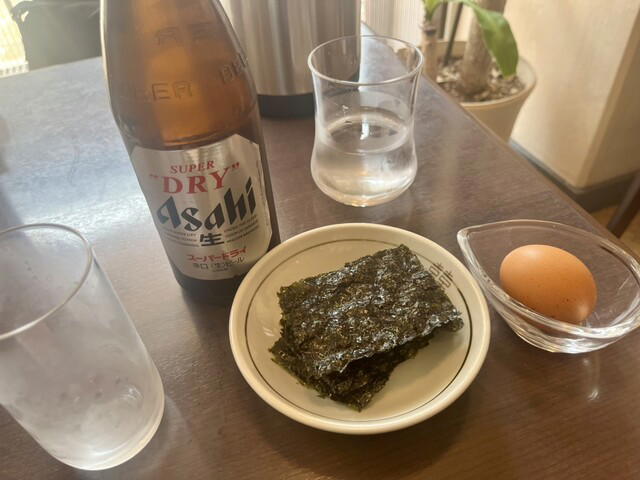
Amagasaki does not stage dinner theatrically. The area reads as working Kansai: everyday streets, local traffic, and restaurants built for repeat use rather than destination drama. That setting matters for Korean stew. Sundubu is not ceremonial in Japan’s dining hierarchy; it is comfort food shaped by heat, tofu, broth, rice, and the discipline of keeping a narrow proposition consistent enough that locals return without a special occasion.
Amagasaki’s dining strength sits in this middle register. The city has serious value kitchens across everyday genres, but rarely with the polish attached to central Osaka or Kobe dining rooms. That makes recognition in the 2024 Tabelog Hyakumeiten more than decoration. A Korean restaurant in the JPY 1,000–1,999 band competes on clarity: the bowl, the set, the heat level, the supporting rhythm, and whether the meal feels complete without moving into a higher spend.
Korean stew in Amagasaki is about sourcing logic, not luxury theatre
Sundubu chige depends on ingredient hierarchy. Soft tofu anchors the dish, but success comes from the balance around it: stock with depth, aromatics that survive heat, additions where used, and rice that turns stew into a meal. In Japan, Korean restaurants often sit between two expectations: the directness of a canteen bowl and the abundance of grill-adjacent dining. A focused sundubu meal sits apart from both, because the central question is not variety but whether the kitchen can make a compact format hold attention across repeat visits.
Sundubu Chige Tang is listed as Korean and was selected for Tabelog Hyakumeiten in 2024. That recognition is the signal. Tabelog’s Hyakumeiten selections tend to reward durable local credibility, not just media visibility, and the category context places Korean cooking beside other strong everyday traditions. Within that field, a Korean restaurant in Amagasaki occupies a different lane from more expansive dining. The appeal is concentration.
The sourcing angle is cultural too. Sundubu in Japan draws on Korean technique while adapting to Japanese expectations of set-meal neatness, portion control, and lunch efficiency. The tofu must carry softness without disappearing; the broth must feel structured rather than blunt; the add-ins must integrate rather than decorate. Those are not luxury markers, but they separate a merely hot bowl from one that earns repeat traffic.
For readers mapping Amagasaki by genre, the comparison is useful. Butanohoshi works in the ramen lane at a similar spend, while Honkaku Sanuki Udon Honoka points to the city’s noodle-value side. Other Amagasaki dining rooms round out the picture of a place where focused, sub-luxury restaurants can matter as much as formal dining. The broader local reading is not about direct culinary analogy but about the city’s stronger meals often being category-specific rather than showy.
The value tier is the critical context
Price changes how this restaurant should be judged. At JPY 1,000–1,999 for lunch and dinner, Korean cooking competes with ramen, udon, curry, casual Chinese, and set meals, not hotel dining or chef-counter formats. That sharpens the award recognition. A restaurant in this bracket cannot rely on wine pairing, architectural drama, or luxury ingredients. It has to make the basic decision feel right: this meal, in Amagasaki, at this spend.
The room’s practical signals should be read through the same value lens. This is best understood as a regular dining format rather than corporate entertaining or destination ceremony. The experience is a focused meal built around the kitchen’s Korean category, not a long evening of progression and service choreography.
Amagasaki can be overlooked by visitors focused only on larger Kansai hubs. For dining, that is a mistake. The city rewards specificity: udon specialists, ramen specialists, Korean kitchens, and local restaurants with clear audiences. Visitors chasing only central-city names miss how Kansai’s everyday food intelligence works beyond the major hubs. Sundubu Chige Tang fits that pattern because it asks for narrower attention. The point is not breadth; it is whether a Korean restaurant can hold its place among stronger everyday addresses while staying in an everyday price band.
How to place it in an Amagasaki eating day
This address makes sense when Amagasaki itself is part of the plan, not an afterthought. The restaurant is in Amagasaki, and it is better paired with a city-led day than inserted into an overly tight itinerary. The lunch-and-dinner budget range suits either a compact midday meal or a low-key evening around one main dish category.
Practical planning belongs in the decision. Details such as current opening patterns, payment methods, access, and reservation handling should be checked directly before going. Those considerations reinforce the restaurant’s local, practical character: arrive prepared, keep the meal focused, and do not treat the setting like a trophy reservation. The stronger advice is to approach it as a compact Korean meal rather than a drawn-out dining event.
For a wider Amagasaki read, start with our full Amagasaki restaurants guide, then use the city guides for context beyond the table: Amagasaki hotels, Amagasaki bars, Amagasaki wineries, and Amagasaki experiences. Readers comparing casual Japanese and Korean formats farther afield can also look more generally at modest restaurants in other cities. The useful comparison is not cuisine-for-cuisine equivalence, but how modest formats reveal sourcing choices, repetition, and local demand.
Frequently asked questions
Where do I go for Sundubu Chige Tang?
Amagasaki.
Is Sundubu Chige Tang more mid-range or high-end?
Pricing at Sundubu Chige Tang is listed as JPY 1,000 - JPY 1,999 JPY 1,000 - JPY 1,999.
What are Sundubu Chige Tang's hours?
Specific hours are not provided here. Check the venue's official channels for the latest schedule before visiting.
What is Sundubu Chige Tang known for?
It is known for Korean cooking in Amagasaki and its selection for Tabelog Hyakumeiten in 2024. The price sits at JPY 1,000–1,999 for lunch and dinner, which places it in a casual dining bracket rather than a special-occasion tier.
Can Sundubu Chige Tang handle vegetarian requests?
Those details are not published. The safest reference point is its Korean-focused kitchen in Amagasaki, with phone contact listed as 06-7651-0003. Check the venue's official channels for the latest details.
Fast Comparison
Comparable venues by cuisine and price in the same metro.
| Venue | Cuisine | Price | Awards | Notes |
|---|---|---|---|---|
| Sundubu Chige TangThis venue (the venue you are viewing) | Korean Sundubu Specialty | $1–10 | Tabelog 100 #95 | Not listed |
| Dairen | Chinese | $10–20 | Tabelog 100 #45 | Tsukaguchi |
| Ramen Senmon Nagomi Mukonosou ten | Ramen counter near Mukonoso Station | $10–20 | Tabelog 100 #56 | Mukonoso |
| Nord | Okonomiyaki & Teppanyaki Izakaya | $10–20 | Tabelog 100 #66 | Tachibana |
| Honkaku Sanuki Udon Honoka | Traditional Sanuki udon | $1–10 | Tabelog 100 #59 | Amagasaki |
| Nagomi (和海) | Specialty Ramen | $10–20 | Tabelog 100 #26 | Mukogawa |
Recognition history
Dated appearances from independent guides and award organizations, with the underlying list record or original source where available.
Tabelog 100 #95 · No. 95
Tabelog · Tabelog 100 - Asian cuisine / Ethnic cuisine - WEST - 2024
Continue exploring
More in Amagasaki
Restaurants in Amagasaki
All restaurants in Amagasaki →



Bars in Amagasaki
Browse all →




Hotels in Amagasaki
Browse all →




Wineries in Amagasaki
Browse all →
Details
- Cozy
- Classic
- Casual Hangout
- Solo
- Group Dining
- Standalone
- A La Carte
Current opening hours
- Monday
- 11:30 AM–3 PM, 5–10 PM
- Tuesday
- 11:30 AM–3 PM, 5–10 PM
- Wednesday
- Closed
- Thursday
- 11:30 AM–3 PM, 5–10 PM
- Friday
- 11:30 AM–3 PM, 5–10 PM
- Saturday
- 11:30 AM–3 PM, 5–10 PM
- Sunday
- 11:30 AM–3 PM, 5–10 PM
Hours can change for holidays and private events. Hours as of .
A relaxed, spacious, no-smoking Korean restaurant with a cozy, unpretentious atmosphere.