
A compact Ohatsu Tenjin chicken specialist with counter seating, nabe, yakitori, sake, shochu, and wine in the mix. Its 2025 Tabelog 100 selection for chicken cuisine places it in Osaka’s serious poultry conversation rather than the casual skewer-and-beer tier, with sourcing and format doing much of the editorial work.
Pearl is the En Primeur Club membership app — saves, bookings, and concierge access live there. Same editors, same standards.
- Address
- 大阪府大阪市北区曽根崎2-9-19
- Phone
- +81668092080
- Website
- tabelog.com
- Directions
- Get directions
 Saves & bookings on Pearl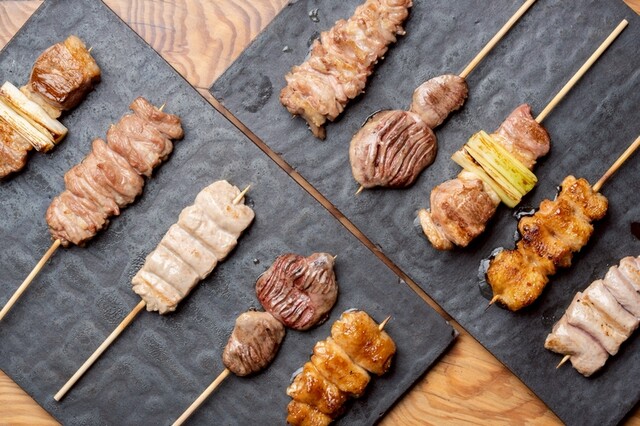
The approach to Ohatsu Tenjin’s back streets changes the register of Umeda dining. Department-store food halls and station restaurants sit nearby, but the alleys around the shrine favor smaller rooms, later meals, and restaurants built around a narrow craft. Here, chicken is not a secondary category to beef, sushi, or ramen. It is the central argument.
Osaka has always been fluent in casual eating, but its sharper poultry counters ask a different question: how much range can one ingredient carry? At sumibi yaki tori kamo jin Ohatsu tenjin ten, the answer runs through chicken dishes, nabe, and yakitori rather than a broad izakaya spread. That narrower frame matters. In a city where dinner can easily become a parade of snacks, a poultry-led room forces attention back onto cuts, heat, broth, and pacing.
Chicken as the main event, not the supporting act
Japan’s yakitori tradition is built on thrift, anatomy, and fire: different parts of the bird handled as distinct ingredients rather than folded into a single idea of “chicken.” Osaka’s version often sits between counter craft and neighbourhood sociability, less formal than Tokyo’s high-ticket omakase counters but often more disciplined than a general drinking room. The presence of nabe alongside skewers widens the format without losing the poultry focus, giving the meal a second register: grill work for immediacy, hot pot for shared pacing.
The restaurant’s selection for Tabelog 100 Chicken Cuisine in 2025 gives it a clear external marker inside that category. Tabelog’s Hyakumeiten lists are not luxury rankings in the Michelin sense; they are more useful as category maps, especially for genres that rarely travel well in English-language restaurant coverage. For visitors, that distinction is helpful. This is not a white-tablecloth signal. It is a clue that the kitchen belongs in a citywide conversation about chicken cookery.
Sourcing is the quiet test of this kind of restaurant. Poultry-focused cooking has less room for camouflage than a broad izakaya menu: poor texture, careless butchery, or indistinct broth show quickly. A chicken-led menu also changes the drinking logic. Sake and shochu are natural companions, while a wine list, when treated seriously, points to a room thinking beyond the default highball rhythm. The listed drinks span sake, shochu, and wine, which puts the meal closer to a composed dinner than a quick skewer stop.
Where it sits in Umeda's price-and-format spectrum
Umeda can be misleading for food travelers because convenience and quality overlap unevenly. Station-adjacent dining ranges from transit snacks to serious counters, and Ohatsu Tenjin’s back lanes add a shrine-side intimacy that differs from the commercial polish of Grand Front and the underground malls. This room’s 27-seat scale, counter seating, and private-use option for small groups place it in the compact specialist tier, not the mass-market Umeda tier.
Within the local comparison set, it occupies a middle lane. Stand Tiger Lily and Kita Sambor sit in a lower-cost drinking bracket; Osaka Mentetsu belongs to a cheaper noodle rhythm; Yakiniku fujimoto Umeda ohatsu tenjin ten moves toward beef-focused dinner spending; Osaka Teppanyaki Kobe Beef TATARA signals a more expensive teppanyaki occasion. A poultry counter in this band is useful precisely because it does not chase the ceremonial language of beef or sushi. It suits a diner who wants craft, a drink list with range, and a room small enough for the cooking format to matter.
The opening date in 2024 also matters in context. Osaka’s dining scene is not short on inherited institutions, but new specialist rooms have been competing hard for attention around Umeda, especially in categories that serve locals after work as much as visitors. A 2025 category selection so soon after opening gives the restaurant a sharper signal than longevity alone would provide.
How to read the experience before choosing it
This is a better fit for diners who want a focused chicken dinner than for anyone trying to sample every Osaka cliché in one night. The format rewards appetite for poultry in several expressions: grilled skewers, hot pot, and related chicken dishes. It also rewards a willingness to eat in a compact room where counter culture and small-group dining shape the pace. Private rooms are not part of the setup, so the experience is closer to a close-quarters urban restaurant than a sealed-off occasion space.
The smoke policy is unusually relevant for international travelers: the second floor is non-smoking, while the third floor allows smoking. That split can affect the meal more than any menu category, especially for diners sensitive to tobacco. The restaurant also asks guests to avoid strong perfume, a practical request that makes sense in a room built around charcoal, broth, and drink pairing rather than heavy sauces.
For wider Osaka planning, it pairs naturally with a broader look at Our full Osaka restaurants guide, especially if the trip also includes casual staples such as 551 Horai (551蓬莱), bakery stops like 52CHO-ME BAKERY, coffee at .cafe, Italian at a canto (Italian), or pizza at 99 Pizza Napoletana Gourmet. City context also improves with Our full Osaka hotels guide, Our full Osaka bars guide, Our full Osaka wineries guide, and Our full Osaka experiences guide.
Readers comparing Japanese dining categories beyond Osaka can use the same lens across -Grilled beef Sukiyaki- KAMAKURA TANUKIAN 鎌倉 たぬき庵 in Kamakura. 鮪と炭火焼き うお炭 秋葉原店 in Tokyo.know in Kumamoto, (Shoku) Vietnam in Kawasaki, [Curry Senmon Ten] Maruyama Kyoju. in Sapporo, [ki:] in Kyoto, Jōdo Saké Bar in Los Angeles, and Onigiri Time in Pasadena: narrower concepts usually reveal more about sourcing, format, and intent than longer menus do.
Fast Comparison
Comparable venues side-by-side for orientation.
| Venue | Cuisine | Price | Notes |
|---|---|---|---|
| sumibi yaki tori kamo jin Ohatsu tenjin tenThis venue — the venue you are viewing | Japanese Yakitori & Duck Hot Pot | $$ | Not listed |
| カドヤ食堂 本店 | Classic Osaka Chuukasoba Ramen | $$ | Nishi-Ku / Nishi-Nagahori |
| Fukutaro (福太郎) | Osaka Okonomiyaki & Negiyaki | $$ | Sennichimae |
| Ramen Chonmage Osaka Tenroku | Japanese Ramen | $$ | Tenjinbashi |
| Niku Ryori PINE | Meat-focused Japanese standing bar | $$ | Kita |
| yacipoci | Modern Japanese standing bar (izakaya-style) | $$ | Chūō |
Recognition history
Dated appearances from independent guides and award organizations, with the underlying list record or original source where available.
Tabelog 100 #78 · No. 78
Tabelog · Tabelog 100 - Chicken cuisine - 2025
Continue exploring
More in Osaka
Restaurants in Osaka
Browse all →




Bars in Osaka
Browse all →


Hotels in Osaka
Browse all →



Wineries in Osaka
Browse all →
At a Glance
- Cozy
- Quiet
- Sophisticated
- Elegant
- Casual Hangout
- Group Dining
- Business Dinner
- Special Occasion
- After Work
- Standalone
- Chefs Counter
- Sake Program
- Sommelier Led
- Beer Program
- Local Sourcing
An understated, tucked-away restaurant with a calm, elegant second-floor atmosphere and a more relaxed third floor that can accommodate smoking.