
Relais Chateaux Award
Our verdict
On a 100-acre private estate outside Jaisalmer, SUJÁN The Serai draws on the region's royal caravan heritage to frame one of Rajasthan's most considered desert hospitality experiences. The kitchen, led by Chef Rawal Singh Bhati, works within a spice tradition rooted in the Thar's arid pantry.

Pearl is the En Primeur Club membership app — saves, bookings, and concierge access live there. Same editors, same standards.
- Address
- W7JF+GXC, Bherwa, Jhabra, Rajasthan 345001, India
- Phone
- +91 11 4617 2700
- Website
- thesujanlife.com
- Directions
- Get directions
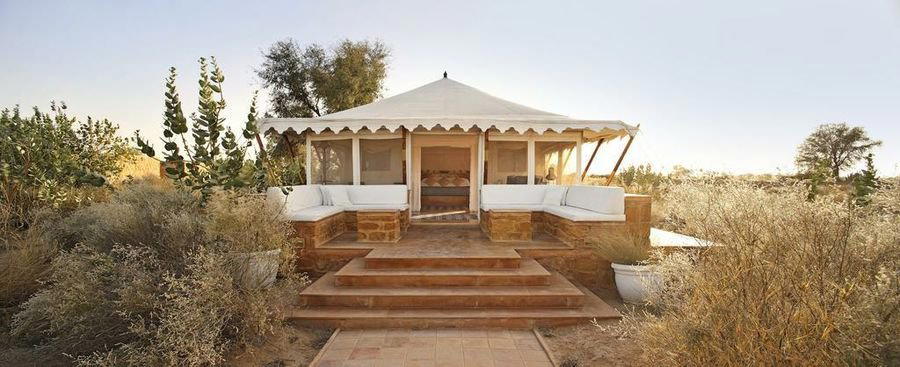
Where the Thar Desert Sets the Table
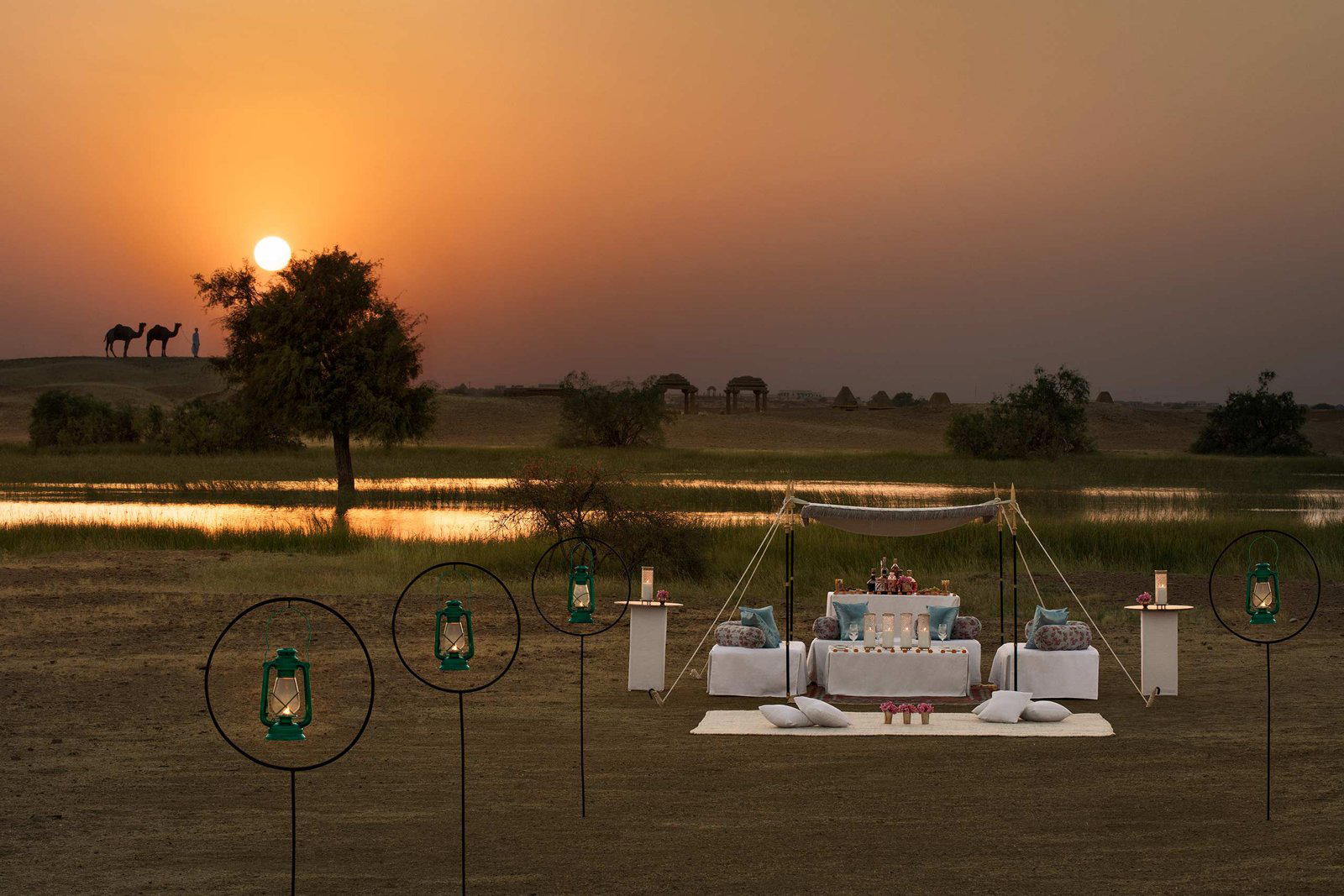
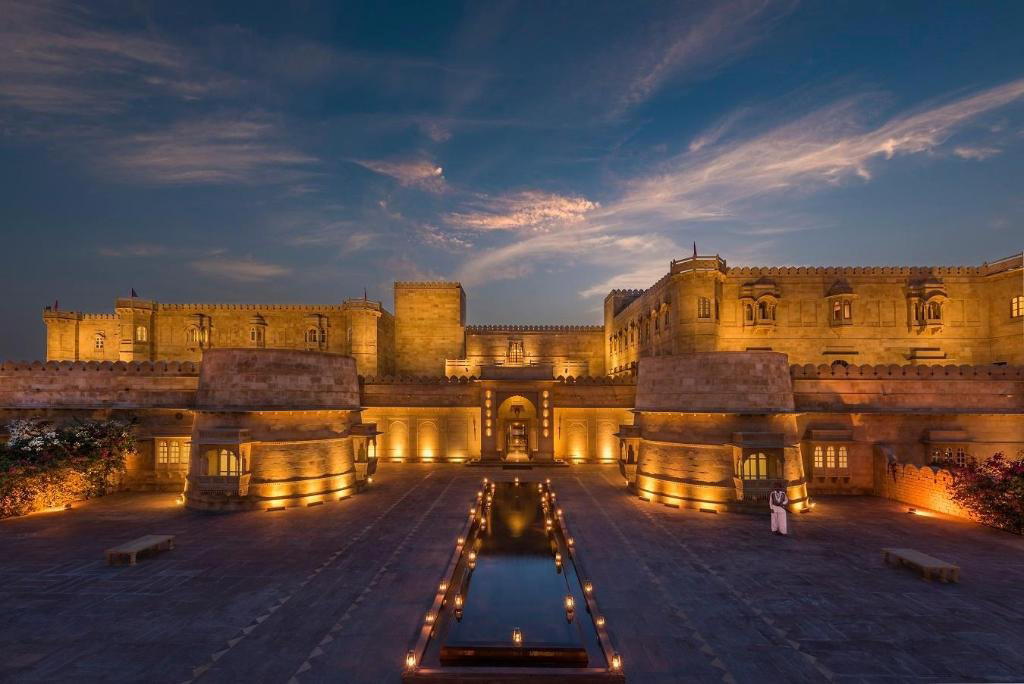
Approaching SUJÁN The Serai across open scrubland on the fringes of Jaisalmer, the first signal is the scale of the silence. The 100-acre private estate sits within Rajasthan's Thar Desert, and the property draws directly on the tradition of royal caravanserais — those grand waystation encampments that once anchored trade and court travel across the subcontinent's arid interior. That reference is not decorative; it shapes how the property organises space, how it moves guests through the day, and how it frames the cooking that emerges from its kitchen. The elegant desert tents, the garden spa, the deliberate absence of urban density: all of it positions the experience against the backdrop of a long-standing regional practice of luxury in the open.
For context on the broader premium desert camp category across Rajasthan, see our full Chandan hotels guide and our full Chandan experiences guide.
The Spice Architecture of the Thar Kitchen
Rajasthani cooking has always been shaped by scarcity and ingenuity. In a region where fresh produce was historically scarce and water precious, the spice rack became the primary source of complexity. The cuisine that emerged from desert courts and caravan kitchens is defined not by subtlety but by layering: whole spices tempered in ghee at the start of a dish, ground masalas folded in at different stages, and dried aromatics bloomed in hot oil to release compounds that fresh ingredients cannot. The result is a cuisine of considerable depth, where a single preparation can carry the character of cumin, coriander, dried red chillies, and asafoetida simultaneously without any one element overwhelming the others.
At SUJÁN The Serai, Chef Rawal Singh Bhati works within this tradition. The kitchen's connection to local spice architecture is a structural fact of the cuisine rather than a styling choice. Dishes in this register, like the slow-cooked preparations associated with the royal households of Jaisalmer and the surrounding region, depend on the patient extraction of spice through heat and fat. The laal maas tradition, for instance, which defines festive and prestige cooking across western Rajasthan, relies on dried mathania chillies that deliver colour and a measured heat without the sharp capsicum bite of fresh varieties. Ker sangri, a preparation of desert berries and dried beans, achieves its character entirely through the spice tempering that opens the dish. These are not garnishes; they are the architecture.
Comparable depth in spice-forward Indian cooking can be found at Dum Pukht in New Delhi, where the dum technique similarly builds flavour through sealed, slow heat, and at Adaa at Falaknuma Palace in Hyderabad, which positions Nizami spice traditions within a palace hospitality context. The comparison is instructive: both venues embed the cooking in its historical context, as The Serai does here in the Thar.
The Caravan Tradition as Hospitality Framework
The caravan camp reference at SUJÁN The Serai is grounded in a specific regional history. The great trading routes connecting Central Asia to the Gujarat ports and the Gangetic plains passed through Jaisalmer, and the caravanserais that serviced them were not rough shelters but complex social and commercial infrastructures. They carried cooks, spice traders, and court retinues. The meals prepared within them drew on the provisions of the caravan itself, which is to say, dried and preserved ingredients, whole spices that survived long transport, and techniques like smoking and sealing that extended shelf life. That tradition is the direct ancestor of the desert cooking still practised in this region.
Within India, the comparison set is narrower: properties that combine serious culinary programming with estate-scale design in heritage-adjacent settings. Chandni in Udaipur and Jamavar Delhi each occupy related territory in the courtly Indian cuisine register, though neither operates within a comparable desert-camp spatial format.
Positioning Within Jaisalmer's Dining Scene
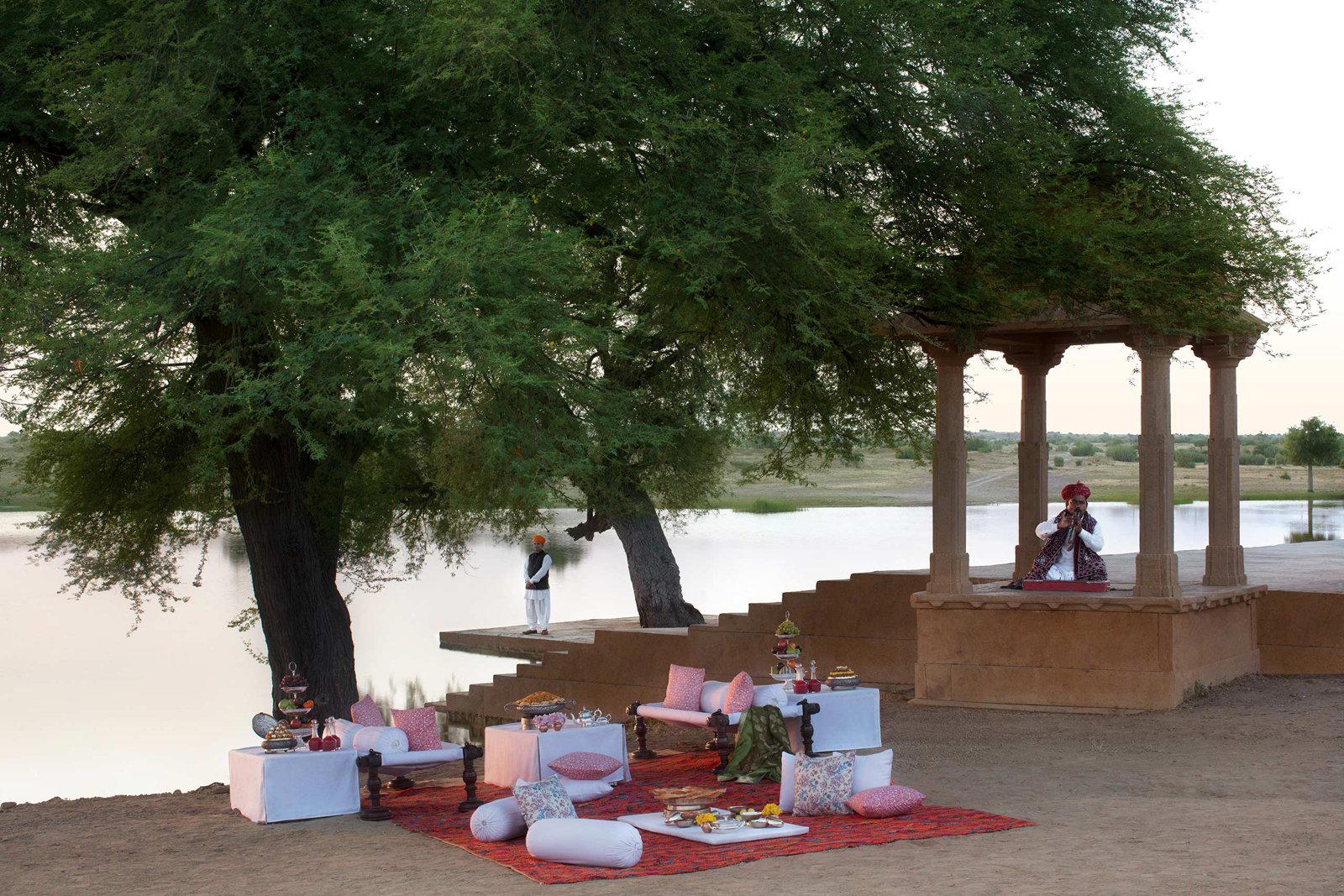
Jaisalmer's dining options split roughly into two categories: the city's rooftop and haveli restaurants oriented around the fort and its tourist corridors, and the estate-based dining of the larger camp properties on the desert periphery. SUJÁN The Serai sits firmly in the second category, with the kitchen operating as an integrated part of a full residential experience rather than as a standalone restaurant. This is a meaningful distinction. The cooking is calibrated to the pace of a multi-day stay, to sunsets over open desert, and to the particular appetite that develops when the nearest alternative is a significant drive away. For guests comparing options, the Dining Tent in Jaisalmer represents a point of reference within the same format category.
For Indian cuisine across a wider range of contexts and settings, our full Chandan restaurants guide maps the broader picture. Those seeking destination cooking in other parts of India might consider Farmlore in Bangalore, The Table in Mumbai, or Naar in Kasauli for contrast across different regional registers. Further afield, Bomras in Anjuna, Baan Thai in Kolkata, da Susy in Gurugram, Izumi Bandra in Mumbai, and Jamavar at Leela Palace in Bangalore illustrate the range of premium dining available across the country.
Planning Your Visit
The property is accessed via the address at Bherwa, Jhabra, in Rajasthan, with direct contact available through the Relais & Châteaux network at serai@relaischateaux.com or by telephone at +91 11 4617 2700, and full details on the SUJÁN Life website at thesujanlife.com/the-serai. Jaisalmer is served by its own airport, with flight connections from Delhi and Mumbai; the drive from the city centre to the estate takes approximately 45 minutes across open desert road. The winter months, from October through February, are the primary season for Rajasthan desert travel, when daytime temperatures are manageable and the nights carry the kind of cold that makes a fire-lit dinner in a desert tent feel exactly appropriate. Travel in March or April is possible but the heat rises sharply. The garden spa and the 100-acre estate grounds reward a minimum two-night stay; the cooking programme is designed around the rhythm of a longer visit rather than a single meal. For bar programming and beverages in the region, our full Chandan bars guide and our full Chandan wineries guide provide additional context.
Frequently asked questions
What is the atmosphere like at SUJÁN The Serai, Jaisalmer?
The atmosphere is shaped primarily by the desert setting and the property's caravan-camp framework. Elegant desert tents arranged across a 100-acre private estate create a sense of contained remoteness rather than resort density. Evenings in the Thar, with temperatures dropping and the sky unobstructed by city light, are the defining atmospheric condition here.
What is the signature dish at SUJÁN The Serai, Jaisalmer?
No single dish is confirmed by the available record, and it would be a disservice to speculate. What the kitchen's identity does confirm is a commitment to Rajasthani cuisine as practised under Chef Rawal Singh Bhati, which means preparations rooted in the spice traditions of the Thar: tempered whole spices, dried-chilli-based gravies, and desert-specific ingredients like ker and sangri. The cooking sits within a long regional tradition rather than a modern creative framework, and that tradition is itself the defining culinary signature.
Is SUJÁN The Serai, Jaisalmer suitable for children?
Estate-format properties of this type generally accommodate families, and the 100-acre grounds offer considerable space for children. That said, the property's positioning at the upper tier of Rajasthan desert hospitality, with pricing that reflects Relais & Châteaux membership and a premium camp format, means it is primarily designed around the adult guest experience. Families travelling to Jaisalmer with children in tow should confirm specific arrangements directly with the property via the contact details above before booking.
Side-by-Side Snapshot
Comparable venues nearby, for context on price, style, and recognition.
| Venue | Cuisine | Price | Awards | Notes |
|---|---|---|---|---|
| SUJÁN The Serai, JaisalmerThis venue — the venue you are viewing | Rajasthani Indian with Western options | $100–150 | Relais Chateaux Award | Not listed |
| Mynt | Pure Vegetarian Indian | Not listed | Not listed | Vrindavan |
| Omya | Modern Indian Fine Dining | $100–150 | Not listed | Lodhi Road |
| Cabanas at JW Lounge | Al fresco Mediterranean tapas & cocktails | $20–30 | Not listed | Aerocity |
| Aanch | North-West Frontier North Indian | $10–20 | Not listed | Niranjanpur |
| Chandni | Traditional Indian Fine Dining | $50–100 | Not listed | Lake Pichola waterfront |
Recognition history
Dated appearances from independent guides and award organizations, with the underlying list record or original source where available.
Relais Chateaux Award
Relais Chateaux
Continue exploring
More in Chandan
Restaurants in Chandan
Browse all →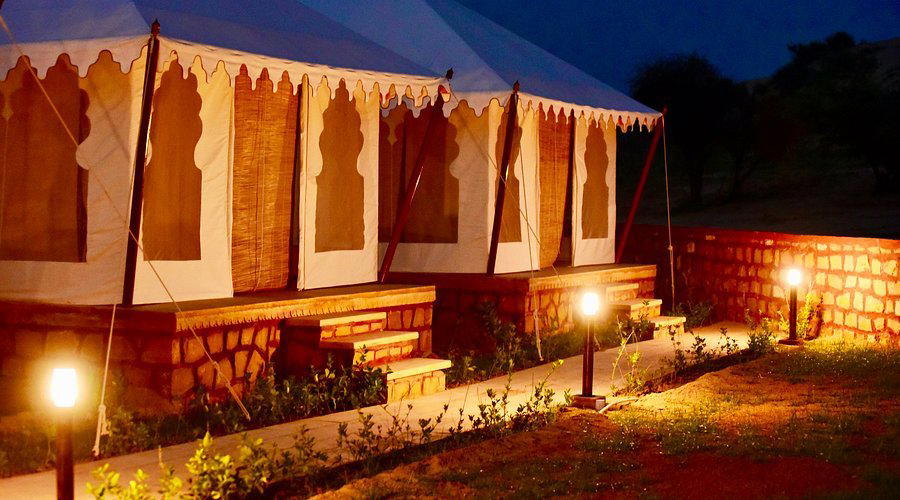


Bars in Chandan
Browse all →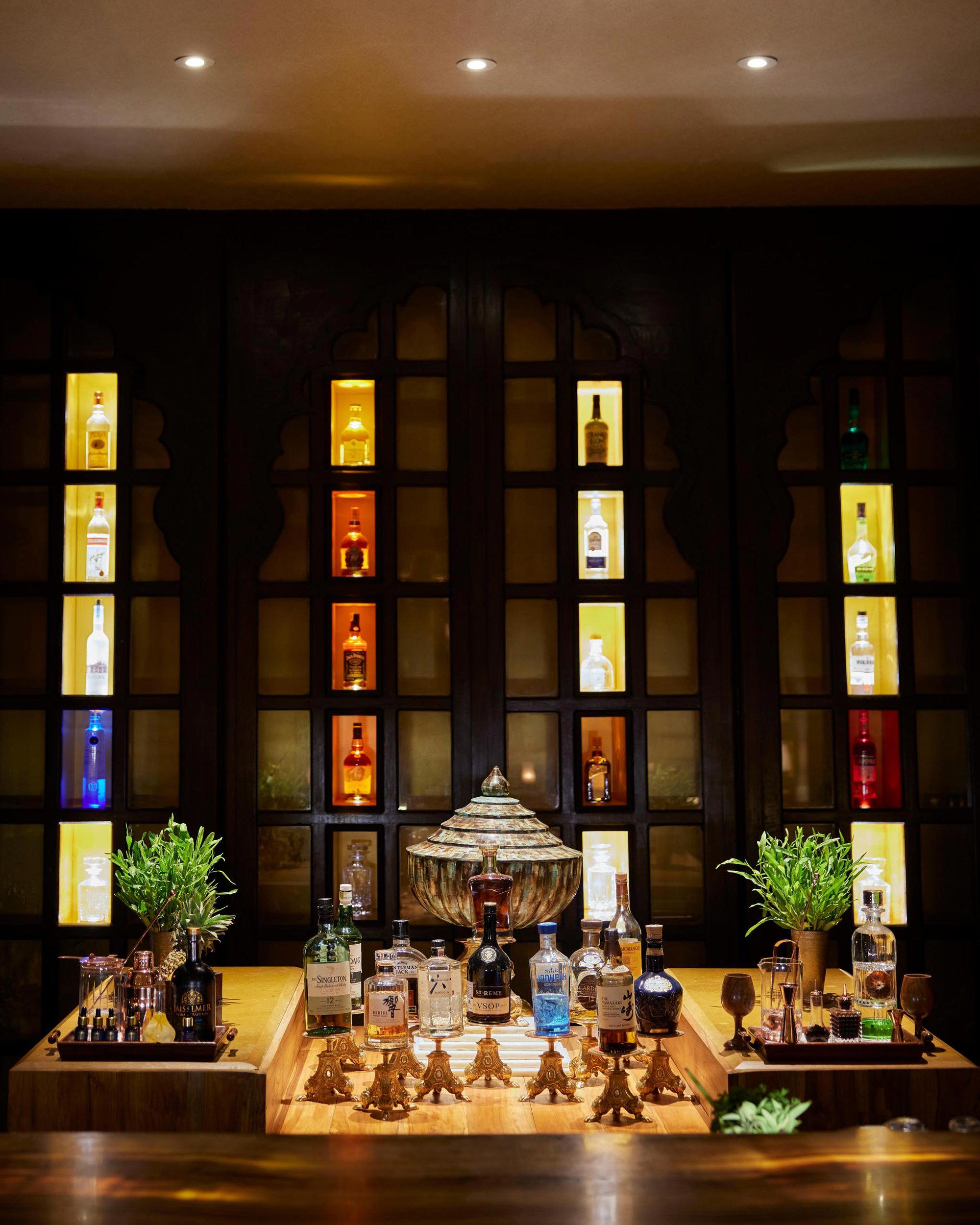
Hotels in Chandan
Browse all →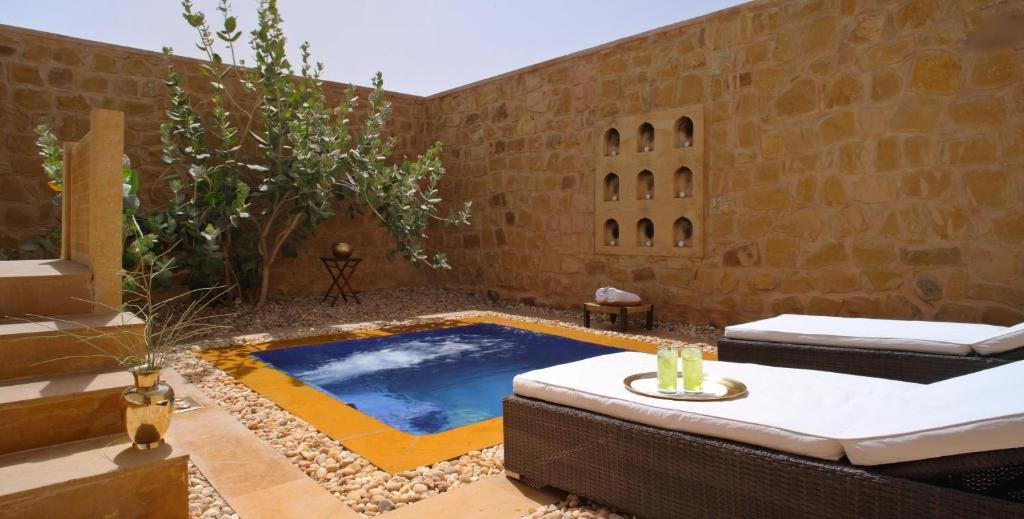
Details
- Romantic
- Scenic
- Elegant
- Rustic
- Intimate
- Ornate
- Special Occasion
- Date Night
- Celebration
- Hotel Restaurant
- Private Dining
- Craft Cocktails
- Farm To Table
- Local Sourcing
- A La Carte
- Cocktails
- Vegetarian Friendly
Peaceful oasis with serene desert surroundings, campfires, and classy décor creating a calm, luxurious atmosphere.