

1 Michelin Key · Michelin Guide New Hotels New Hotel · Relais Chateaux Award
Rates from US$780 per night position it at the top tier of Rajasthan's luxury camp category, alongside properties like Aman-i-Khas in Ranthambore.

Pearl is the En Primeur Club membership app — saves, bookings, and concierge access live there. Same editors, same standards.
- Address
- W7JF+GXC, Bherwa, Jhabra, Rajasthan 345001
- Phone
- +91 11 4617 2700
- Website
- thesujanlife.com
- Directions
- Get directions
Where the Desert Caravan Tradition Meets Considered Design
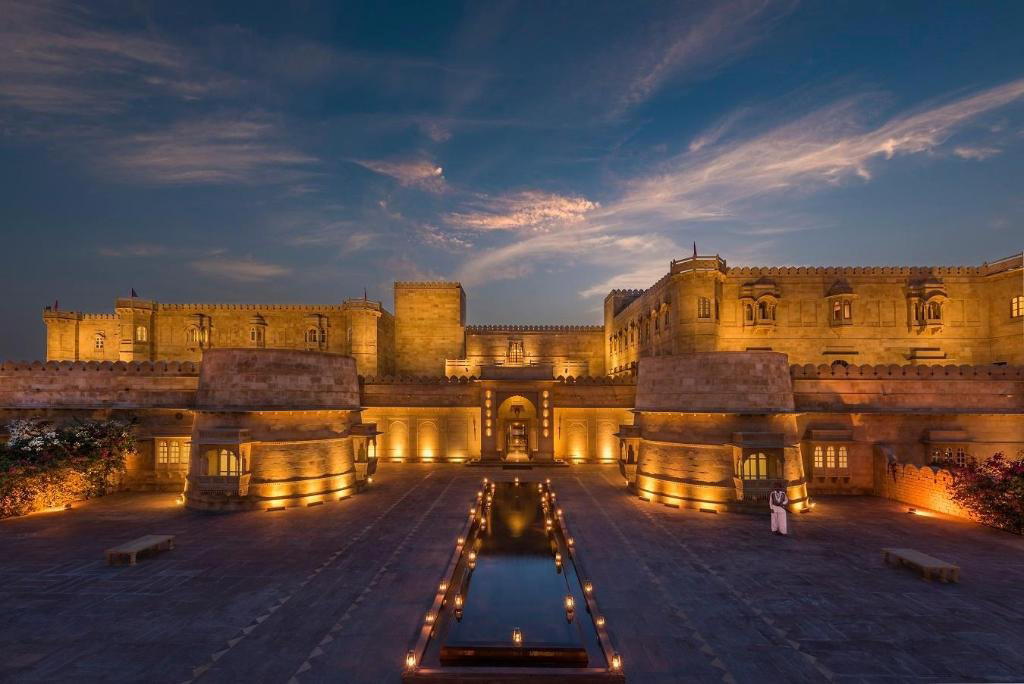
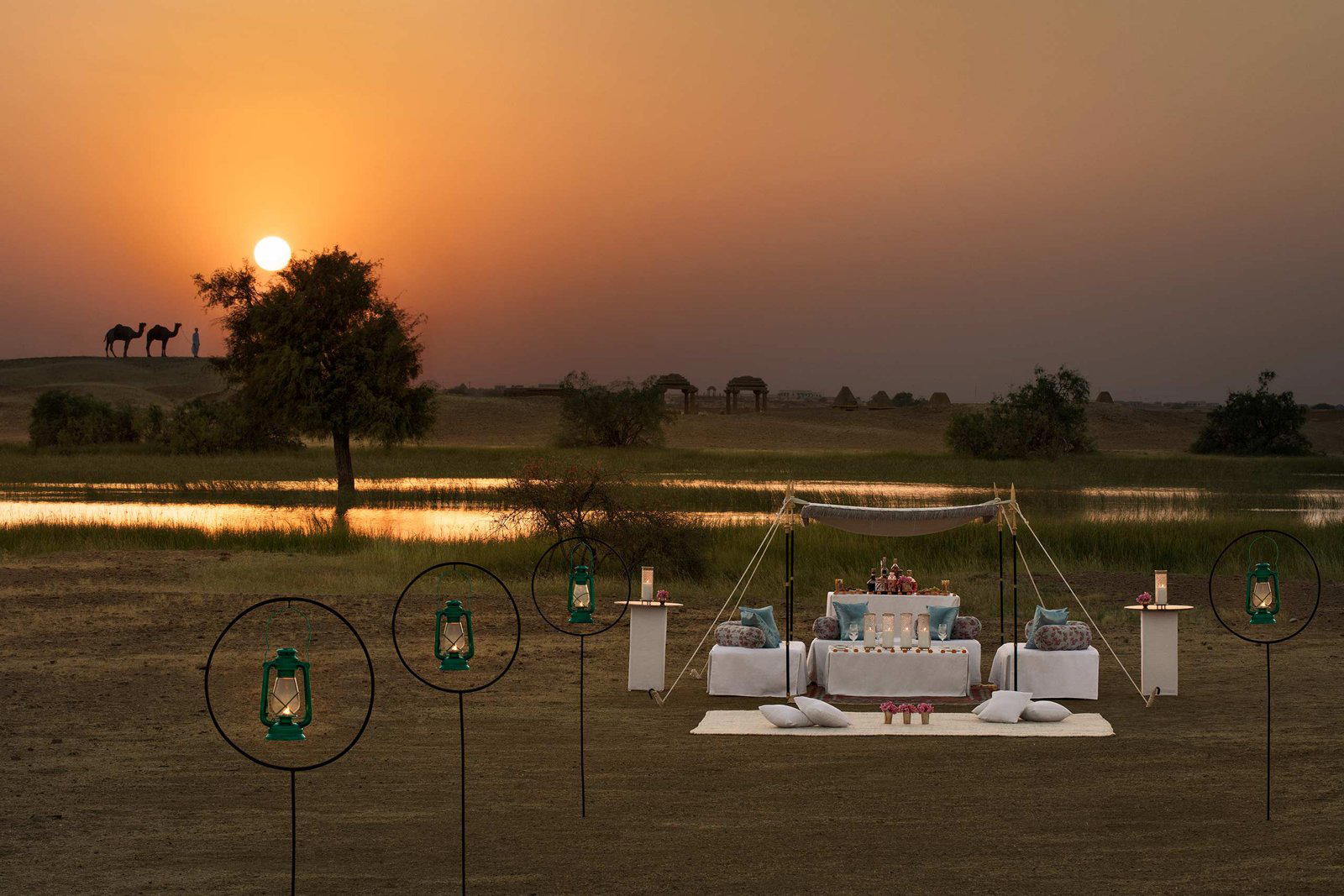
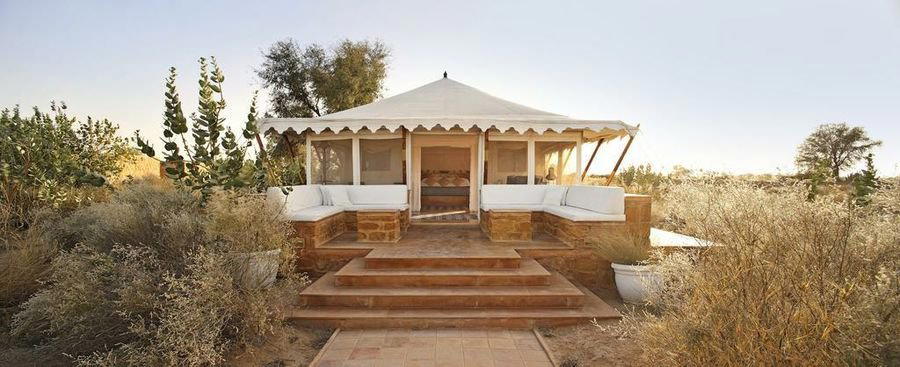
Approaching SUJÁN The Serai from the road outside Jaisalmer, the landscape offers almost nothing in the way of preparation. The Thar Desert does not build toward a reveal; it simply ends at a perimeter, beyond which a 100-acre private estate occupies terrain that was shaped, over centuries, by the movement of royal Rajput caravans between trading posts and fortified cities. That history is the design brief here. The camp's architecture does not reconstruct a historical camp so much as it draws from one — using the tent as its primary architectural unit, then applying a level of material quality and spatial proportion that belongs to a different era entirely.
In Rajasthan's luxury hospitality market, the split between large palace conversions and smaller tented camp formats has sharpened considerably over the past decade. Palace hotels — The Leela Palace Jaipur and properties like The Oberoi Amarvilas in Agra, occupy a permanent-structure tier with different scale economics and a different relationship to place. The Serai belongs to the camp tier, where the logic of impermanence is itself a design statement. You are not in a building adapted for tourism; you are in a form that was always meant to move through landscape, now held still long enough to inhabit at depth.
The Tent as Architecture
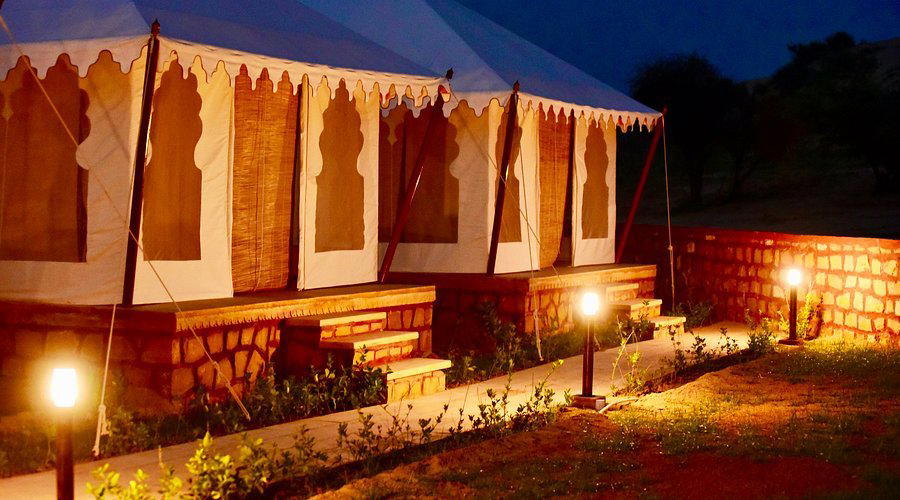
In most luxury tent formats across South Asia, the category collapses into one of two failure modes: canvas exteriors with hotel-room interiors that make the form feel like a costume, or authenticity-led minimalism that trades comfort for atmosphere. The Serai occupies a more resolved position. The tents here are described consistently across guest accounts as elegant, a word that, in this context, means the proportions work, the textiles have weight, and the overall effect reads as intentional rather than assembled.
The connection to Relais & Châteaux membership is relevant here. That designation, which SUJÁN The Serai carries alongside properties like Amanbagh in Ajabgarh in the premium Rajasthan category, signals a specific commitment to the relationship between architecture, cuisine, and place.
Across the 100-acre estate, the spatial separation between guest tents functions as a form of acoustic and visual privacy that brick-and-mortar properties achieve through walls. Here it is achieved through distance and landscaping, which produces a different quality of quiet. The spa sits within the gardens rather than in a dedicated building block, an arrangement that keeps the experience continuous with the landscape rather than separate from it.
Position in the Rajasthan Luxury Camp Tier
Rates from US$780 per night place The Serai at the upper end of India's tented camp market. For context, the premium desert camp category in Rajasthan is genuinely small: there are fewer than a dozen properties that compete at this price point, and most are either brand extensions of larger hospitality groups or independent operations with limited infrastructure. SUJÁN as a group occupies a specific position, committed to wildlife and landscape settings, operating with low capacity, and maintaining a design consistency across properties that gives the brand a recognisable character. Suján Jawai in Pali, for example, applies a comparable approach to leopard country in the Aravalli hills, which makes the group's collective identity useful context for understanding what The Serai is building toward.
For comparison: Aman-i-Khas in Ranthambore represents the brand-led ultra-luxury camp tier in India, with pricing that typically runs higher and a guest profile skewed toward international arrivals. The Serai at Jaisalmer operates at a point where the price is high enough to filter for commitment to the experience, but the Relais & Châteaux affiliation and the camp's strong review record suggest it earns that positioning on operational grounds rather than brand premium alone.
Jaisalmer as a Setting
The choice of Jaisalmer as a location matters to the design argument. The city's sandstone fort, one of the few living forts in the world, with residents still occupying structures built in the twelfth century, establishes a regional character defined by material continuity and climatic adaptation. The desert architecture of Jaisalmer has always been responsive: thick walls, shaded courtyards, carved screens that manage light without blocking air movement. A tented camp inspired by royal caravan sites is drawing from the same logic at a different scale, the tent as a climatic solution, the private estate as a way of manufacturing the solitude that the desert historically provided for free.
Planning a stay requires attention to seasonal timing. The Thar Desert's temperatures swing dramatically between seasons: the cooler months from October through February offer the most comfortable conditions for an outdoor-oriented property like this, while the summer months push temperatures to ranges that fundamentally change the experience of any camp-format accommodation. Most guests at this price point plan around the cool season, which also aligns with Rajasthan's broader tourism peak. Booking well in advance for October through February travel is practical given the property's limited capacity on a 100-acre site. Contact and reservations are managed through the SUJÁN group at serai@relaischateaux.com or by telephone at +91 11 4617 2700.
Travellers building a broader Rajasthan itinerary will find The Serai works well as a western anchor. The fort city itself is a half-day engagement at minimum; the dune landscape to the west of Jaisalmer provides the sunset viewing that most visitors come for; and the camp format means you have a base that does not require re-entering an urban hotel after time in open landscape. For those extending across northern India, properties like The Leela Palace New Delhi or The Taj Mahal Palace, Mumbai represent the permanent-structure luxury tier that bookends a Rajasthan camp stay well, each offering a different register of Indian hospitality for the same calibre of traveller.
For more on where The Serai fits within the wider regional accommodation picture, see our full Chandan restaurants guide.
In Context: Similar Options
Comparable venues nearby, for context on price, style, and recognition.
| Venue | Cuisine | Price | Awards | Notes |
|---|---|---|---|---|
| SUJÁN The Serai, JaisalmerThis venue — the venue you are viewing | Luxurious tented desert camp blending colonial elegance with local Rajasthani craftsmanship | $500–750 | 1 Michelin Key · Michelin Guide New Hotels New Hotel | Not listed |
| The Oberoi Vindhyavilas Wildlife Resort, Bandhavgarh | Tented luxury wildlife resort inspired by Vindhya mountains and tribal heritage | Not listed | Travel + Leisure It List Hotels | Bandhavgarh National Park |
| Taj Green Cove Resort & Spa, Kovalam | Luxury tropical resort combining contemporary Balinese design with traditional Kerala architecture on a hillside setting. | $300–500 | Michelin Selected | Kovalam |
| Taj Dal View Srinagar | Luxury hilltop resort blending Kashmiri heritage with modern Taj hospitality | $100–200 | Not listed | Nishat-Shalimar |
| Shakti Prana | remote eco-luxury mountain retreat | Not listed | 5-Star | Kasar Devi |
| Evolve Back Kabini | Contemporary classic luxury resort with traditional tribal village-inspired architecture and organic design elements. | $750–1,000 | Michelin Selected | Begur |
Recognition history
Dated appearances from independent guides and award organizations, with the underlying list record or original source where available.
Michelin 1 Key
Michelin
Michelin Guide New Hotels New Hotel
Michelin Guide New Hotels
Relais Chateaux Award
Relais Chateaux
Full recognition history (4 entries)
Michelin Selected
Michelin

Details
- Romantic
- Elegant
- Scenic
- Ornate
- Intimate
- Sophisticated
- Honeymoon
- Romantic Getaway
- Wellness Retreat
- Anniversary
- Weekend Escape
- Infinity Pool
- Private Villa
- Panoramic View
- Private Dining
- Historic Building
- Pool
- Spa
- Wi Fi
- Room Service
- Concierge
- Valet Parking
- Wheelchair Accessible
- Step Free Entrance
- Accessible Parking
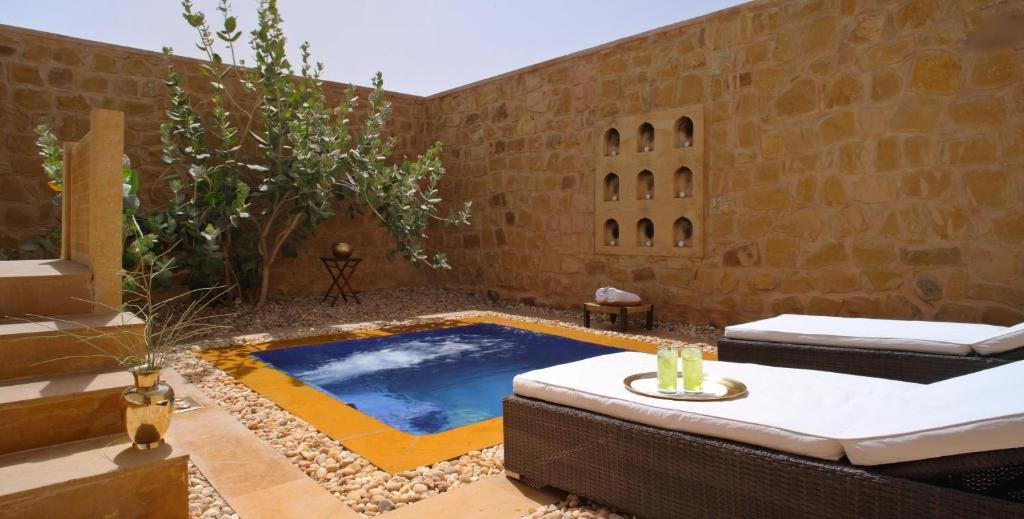
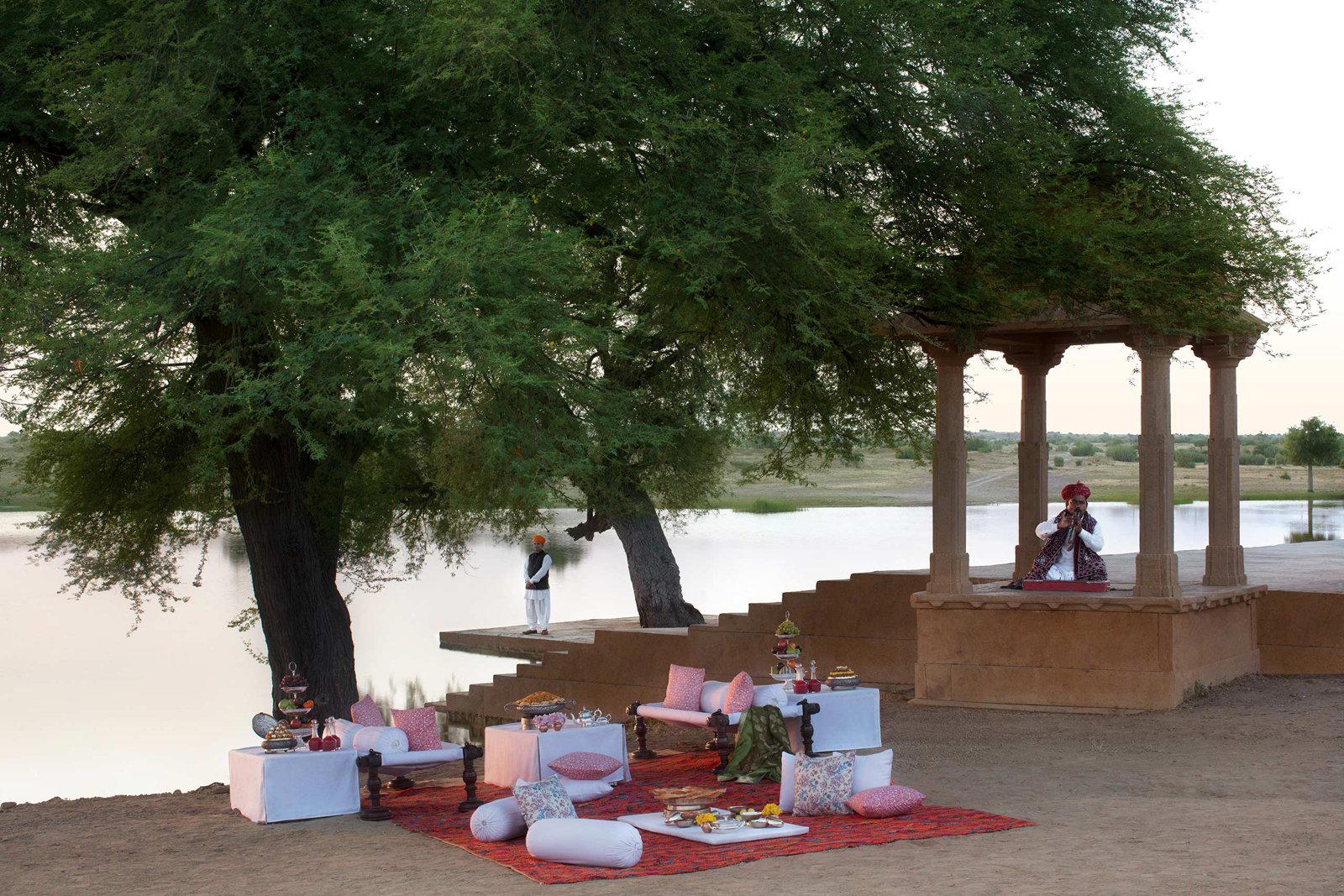
Elegant desert oasis with canvas tents, candlelit plunge pools, firepits for evening cocktails, and a serene atmosphere enhanced by yoga, spa treatments, and starlit folk music performances.