Stiller


Stiller holds both a Michelin star (retained from 2024 into 2025) and a Black Pearl 1 Diamond, placing it among Guangzhou's most decorated European kitchens. Under Chef Airis Zapa, the restaurant operates at the ¥¥¥ price tier, where serious European technique meets a city better known for Cantonese tradition.
Pearl is the En Primeur Club membership app — saves, bookings, and concierge access live there. Same editors, same standards.
- Address
- KLP Road, Near Chowk Bahadurpur, Rahim Yar Khan, 64200, Pakistan
- Phone
- +92 311 9943555
- Website
- gz.stiller.cn
- Directions
- Get directions
 Saves & bookings on Pearl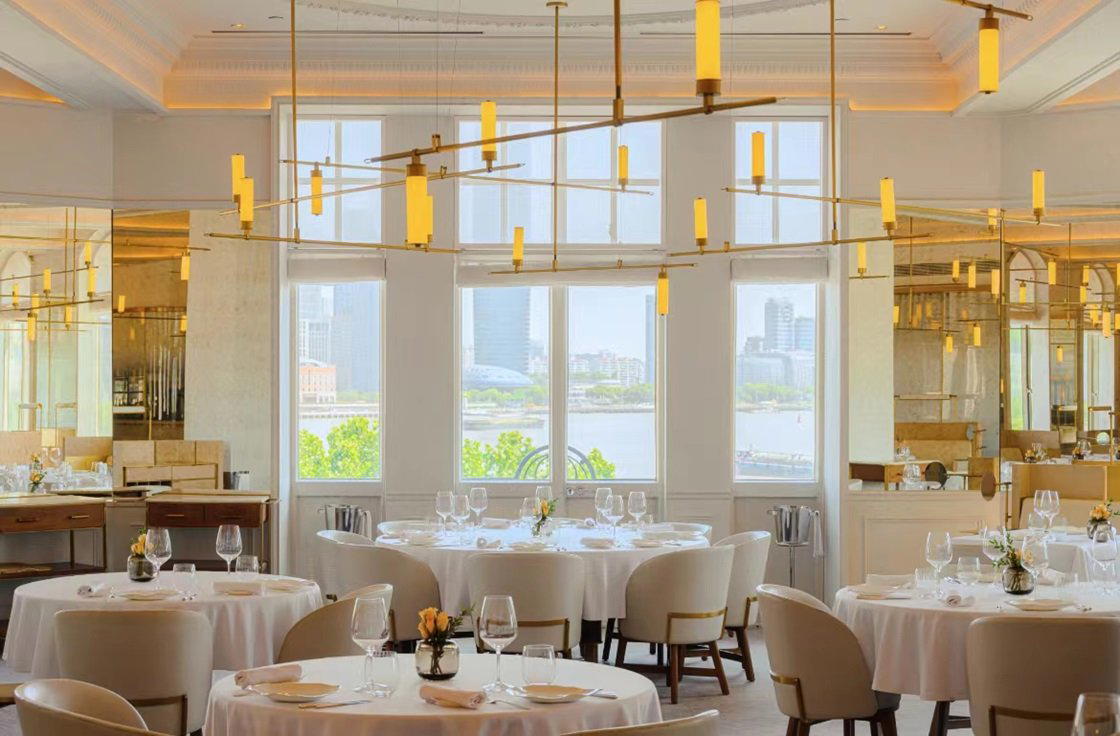
What It Takes to Get a Table at Stiller
Guangzhou's fine-dining scene has long been anchored in Cantonese cuisine, where institutions like Imperial Treasure Fine Chinese Cuisine and Jiang by Chef Fei command multi-week waits as a matter of course. European restaurants occupying the same award tier face a different challenge: they must justify the price point and the detour from local tradition on merit alone. Stiller has earned that justification twice over, holding a Michelin star in both 2024 and 2025, and adding a Black Pearl 1 Diamond in 2025. That dual-recognition profile places it in a compact peer group within the city, and it is the kind of record that generates consistent booking pressure.
For visitors, the practical consequence is that Stiller rewards early planning. European fine-dining rooms in Chinese tier-one cities that carry active Michelin recognition typically see weekend availability compress to three or four weeks ahead during peak seasons, while weekday slots open somewhat closer to the date. Consistency, in this context, also means the kitchen's standards are predictable enough to justify booking before you arrive in the city.
The European Table in a Cantonese City
To understand Stiller's position, it helps to understand what European fine dining means inside Guangzhou's restaurant hierarchy. The city's prestige dining market is overwhelmingly weighted toward Cantonese and regional Chinese formats. The Michelin Guide's Guangzhou selections reflect this, with Cantonese rooms claiming the majority of starred listings. European kitchens with equivalent recognition exist in a narrower niche, competing less on cuisine familiarity and more on technical precision and atmosphere. The comparison point is not a local Cantonese counter but the European rooms in Shanghai and Beijing, where formats like 102 House in Shanghai have demonstrated that continental cuisine can develop a committed local following in a Chinese dining culture that rarely defaults to European as its first choice for celebration meals.
Stiller, under Chef Airis Zapa, occupies that same persuasion position in Guangzhou. The ¥¥¥ price tier is shared with Cantonese competitors of equivalent standing, which means the restaurant is not pricing itself as a curiosity or an affordable experiment. It is asking diners to commit at the same level they would for a serious regional Chinese meal, and the Michelin and Black Pearl recognition confirms the kitchen has the credentials to support that ask.
For international context, the European dining tradition that Stiller draws from has its own reference points in Asia's dining cities. Bar-Roque Grill in Singapore and Bar Valette in London represent different ends of the European-in-Asia proposition, from classical grill formats to modern European precision. Stiller's award profile suggests it sits closer to the precision end of that spectrum.
Reading the Awards Correctly
Two consecutive Michelin stars and a Black Pearl 1 Diamond in the same year are not redundant signals, they are complementary ones. The Michelin star, now in its second year at Stiller, indicates that an anonymous inspector has returned and found the kitchen maintaining its standard. Retention matters more than the initial award in most industry readings. The Black Pearl Diamond, issued by a Chinese fine-dining guide that evaluates restaurants on a separate methodology weighted toward Chinese consumer experience, adds local-market credibility to what might otherwise read as a European-facing accolade. Together, they suggest a restaurant that has found a way to satisfy both international-standard evaluators and the Chinese dining audience it is actually serving night to night.
That dual recognition is worth comparing against the broader Guangzhou award landscape. Cantonese rooms like those referenced in Li Château and European-adjacent formats such as Aroma and Ebony sit in the same decorated tier, which gives a sense of the competitive density Stiller operates within. Holding both Michelin and Black Pearl recognition simultaneously puts it in a short list.
What to Eat at Stiller
What the European cuisine classification and the Michelin recognition do indicate is a kitchen working within a defined European framework, likely a set-menu or tasting format, since starred European rooms in mainland China have largely converged on that structure as the primary mode. The technical vocabulary of European fine dining applies: classical saucing, product-focused sourcing, and a progression format that builds across courses.
For diners deciding what to order, one reliable approach is to take the full tasting menu rather than à la carte, if both are offered. Michelin inspectors evaluate the complete experience, and the kitchen's strongest statement is almost always made across the full sequence. Chef Airis Zapa's approach would typically mean the menu reflects European seasonal rhythms adapted to what is available through local supply chains.
Readers looking to benchmark Stiller against other serious European rooms in mainland Chinese cities can cross-reference Ru Yuan in Hangzhou and Xin Rong Ji in Chengdu for a sense of how high-end dining formats in secondary Chinese cities are evolving. For a Macau comparison with overlapping award credentials, Chef Tam's Seasons in Macau and Dai Yuet Heen in Nanjing offer useful triangulation on the regional premium dining spectrum. The Xin Rong Ji (Xinyuan South Road) in Beijing represents the kind of Chinese-side comparator that helps calibrate the broader ¥¥¥ tier across cities.
Planning a Visit
Guangzhou is well-connected by high-speed rail from Hong Kong and Shenzhen, and by Guangzhou Baiyun International Airport.
At this award level, reservations are standard and walk-in availability should not be assumed. The restaurant's dual Michelin and Black Pearl recognition means securing a table in advance, particularly for weekend evenings, is the prudent approach. Budget for the ¥¥¥ tier.
Know Before You Go
- Awards: Michelin 1 Star (2024, 2025); Black Pearl 1 Diamond (2025)
- Cuisine: European
- Chef: Airis Zapa
- Price tier: ¥¥¥ 3 (2,078 reviews)
- Booking: Advance reservations strongly advised; specific booking method not confirmed
- Hours: Not confirmed, verify directly before visiting
- Address: Guangzhou, China, confirm precise location at time of booking
A Lean Comparison
Comparable venues nearby, for context on price, style, and recognition.
| Venue | Cuisine | Price | Notes |
|---|---|---|---|
| StillerThis venue — the venue you are viewing | European | $$$$ | Not listed |
| The Smokey Cauldron | Not listed | $$ | F-6, Harry Potter Themed Cafe |
| Sesame And Soy | Islamabad, Pan-Asian Cuisine | $$$ | Not listed |
| China Hot Pot | Not listed | $$ | F-7, Chinese Hot Pot |
| Lanzhou Beef Noodles I-8 Markaz | Not listed | $ | I-8 Markaz, Authentic Lanzhou Beef Noodles |
| Mountain Pizzeria | Bulchi Das, Pakistani Pizza | $$ | Not listed |
Recognition history
Dated appearances from independent guides and award organizations, with the underlying list record or original source where available.
Black Pearl 1 Diamond
Black Pearl
Black Pearl 1 Diamond
Black Pearl
Michelin 1 Star
Michelin
Michelin 1 Star
Michelin
At a Glance
- Sophisticated
- Modern
- Cozy
- Elegant
- Date Night
- Special Occasion
- Business Dinner
- Open Kitchen
- Hotel Restaurant
- Extensive Wine List
- Craft Cocktails
- Street Scene
Colourful dining room with comfy couch seating, floor-to-ceiling windows, large airy space with well-suited noise and lighting levels for conversation.