Straits
Straits brings Southeast Asian-inflected cooking to Santana Row, San Jose's most polished retail and dining corridor. The address at 333 Santana Row places it among the district's more ambitious restaurant options, where the crowd skews toward Silicon Valley professionals seeking something beyond the familiar. The kitchen's orientation toward the straits-connected cuisines of Singapore and the surrounding region makes it a distinctive presence in a South Bay dining scene dominated by Mexican, Portuguese, and South Asian options.
Pearl is the En Primeur Club membership app — saves, bookings, and concierge access live there. Same editors, same standards.
- Address
- 333 Santana Row #1100, San Jose, CA 95128
- Phone
- +14082466320
- Website
- straitsrestaurants.com
- Directions
- Get directions
 Saves & bookings on Pearl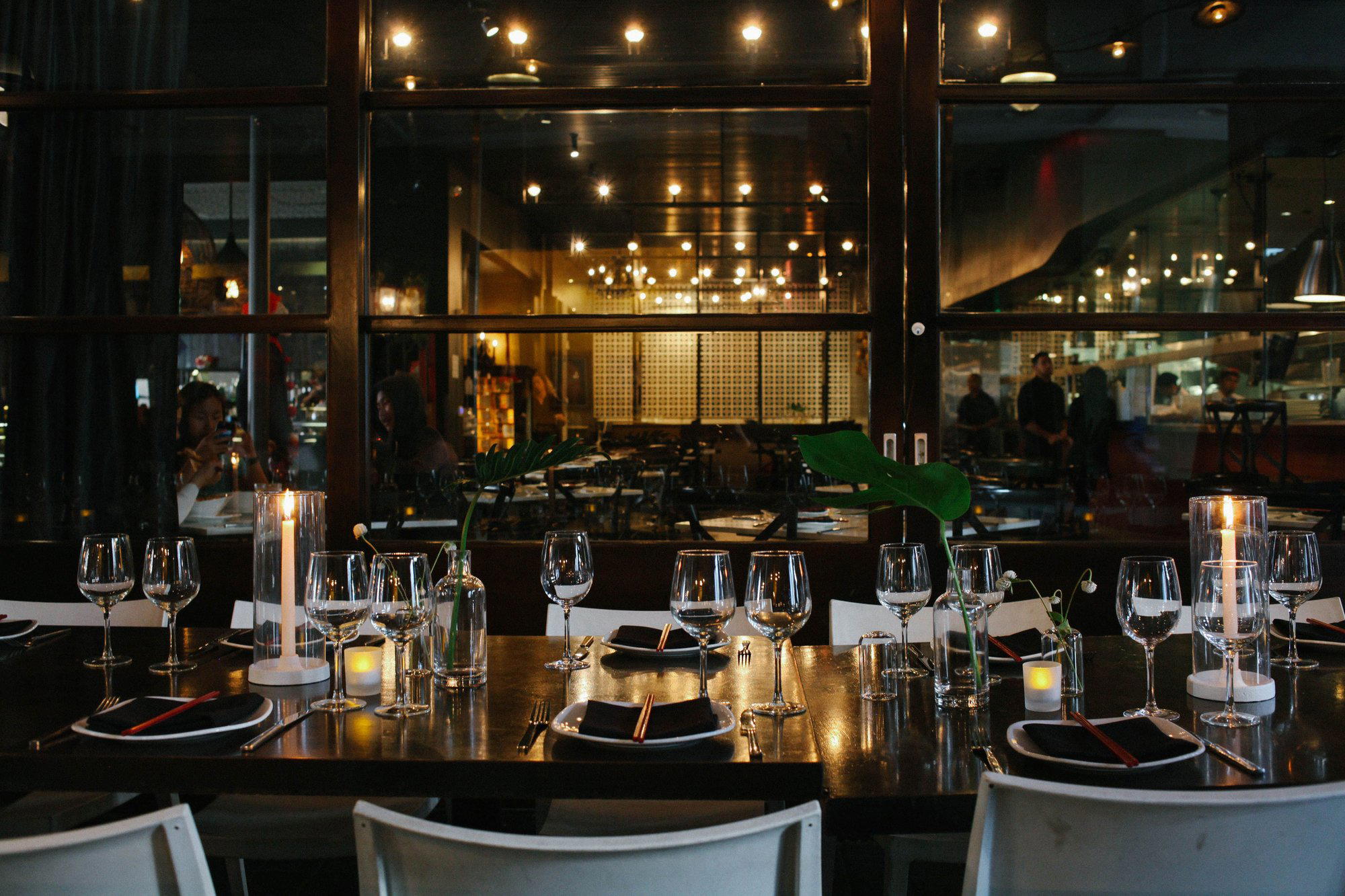
Santana Row and the Question of Ambition
San Jose's dining scene has spent the better part of two decades catching up to its economic weight. The city sits at the heart of one of the wealthiest metro areas on earth, yet its restaurant culture has historically punched below that weight, with notable exceptions clustered around a handful of corridors. Santana Row is particularly deliberate of those corridors: an open-air retail and hospitality district designed to concentrate spending and foot traffic in a way that supports higher-ticket dining concepts. Straits, at 333 Santana Row, occupies that kind of address, one where the surroundings set a certain expectation before you push open the door.
The physical approach matters here. Santana Row operates more like a stage set than a traditional street, with wide pedestrian lanes, curated shopfronts, and the low hum of a crowd that arrived with leisure time and disposable income. Restaurants in this environment compete as much on atmosphere as on cooking, and the better ones understand that the two are inseparable. The context shapes the meal, and the meal has to earn its place in that context.
Southeast Asian Cooking in a South Bay Frame
The cuisine category Straits works within, loosely organized around the food cultures of Singapore and the straits-connected region, occupies a specific and underserved niche in the South Bay. The broader San Jose dining scene is shaped by its demographics: strong Mexican options across multiple price tiers (Luna Mexican Kitchen at the accessible end, more specialist options further afield), a Portuguese corridor anchored by Adega at the summit of the market and Alma de Amón at more approachable price points, and a solid base of South and Southeast Asian cooking across the broader South Bay. What the scene has historically lacked is a Southeast Asian concept positioned at the upper end of the market, where sourcing discipline and cooking precision are the story rather than speed and value.
Singaporean food, in its most serious form, draws on Chinese, Malay, Indian, and Peranakan cooking traditions in a way that resists easy categorization. It is a cuisine built on layered flavor profiles, aromatic foundations that take considerable time to develop, and a deep tradition of hawker-level precision that has migrated into more formal restaurant formats globally. In cities like New York and London, that migration has produced some genuinely ambitious cooking. The South Bay has the population base to support a version of that ambition; the question is whether the market demands it.
The Sustainability Angle: Sourcing in a Cuisine Built on Specificity
Southeast Asian cooking poses particular challenges for any restaurant with serious sustainability commitments. The cuisine's flavor architecture depends heavily on specific ingredients: galangal, lemongrass, pandan, dried shrimp, particular varieties of chili. Many of these have historically been imported rather than sourced regionally, which creates friction for kitchens trying to reduce their supply-chain footprint. The restaurants that have navigated this most successfully, including Single Thread Farm in Healdsburg and Blue Hill at Stone Barns in Tarrytown (working in different cuisines but facing analogous sourcing-specificity tensions), tend to resolve it by building direct relationships with growers rather than working through conventional distribution.
California's agricultural infrastructure actually offers more options here than most U.S. markets. The Central Valley and coastal growing regions produce Southeast Asian aromatics at commercial scale, driven in part by demand from the state's large Vietnamese, Cambodian, and Hmong farming communities. A restaurant in San Jose with genuine sourcing ambition has access to a supply network that a comparable concept in, say, Chicago or Washington would have to work much harder to replicate. Whether that infrastructure is being used thoughtfully is the kind of detail that separates a restaurant with sustainability as a stated value from one where it shapes actual procurement decisions.
The broader trend in fine-casual and upmarket casual dining in the U.S. has moved decisively toward provenance transparency: telling the guest where the protein came from, naming the farm on the menu, signaling the reasoning behind seasonal substitutions. Restaurants like Providence in Los Angeles and Addison in San Diego have demonstrated that this transparency can coexist with serious cooking at high price points. For a Southeast Asian concept operating in an affluent corridor, aligning the cuisine's inherent complexity with a clear sourcing narrative is one of the more compelling brand positions available.
Santana Row's Competitive Set
Within the immediate geography of Santana Row and the surrounding Westside San Jose neighborhood, the competitive set is varied but not deep at the upper end. Antipastos by DeRose and Augustine represent the Italian-leaning end of the neighborhood's dining options, while Back A Yard Caribbean Grill holds a distinct position in the more casual tier. The absence of strong competition in the Southeast Asian upmarket segment is both an opportunity and a challenge: there is no established reference point in the neighborhood for what this cuisine should cost or how it should be presented at a premium level.
That positioning question matters more in a corridor like Santana Row than it would in a city with a more established fine-dining culture. Diners in this environment are often comparing across cuisine types rather than within a single tradition, which means the restaurant has to make its value proposition legible to someone who might otherwise be choosing between this and a well-regarded Italian or Japanese option down the street. One effective way to do that, in the current market, is through cooking that is visibly disciplined and sourcing that is clearly articulated.
Planning a Visit
Straits sits at 333 Santana Row #1100 in San Jose's 95128 zip code. Santana Row has structured parking adjacent to the retail corridor, which makes arrival by car direct; the district also sits within reasonable distance of the VTA light rail network for those approaching from downtown San Jose or the Caltrain corridor.
Cuisine and Recognition
Comparable venues nearby, for context on price, style, and recognition.
| Venue | Cuisine | Price | Notes |
|---|---|---|---|
| StraitsThis venue — the venue you are viewing | Singaporean Asian Fusion | $$ | Not listed |
| Curry Pizza House - San Jose | Indian Fusion Pizza | $$ | Mirassou Vineyards |
| Sushi Confidential San Jose | Modern Japanese Sushi | $$ | St. James Park |
| Smoking Pig BBQ | Southern BBQ | $$ | 10th-Commercial |
| Hunan Taste | Authentic Hunan Chinese | $$ | Hyde Park |
| Antipastos by DeRose | Italian Deli | $$ | Toyon |
Continue exploring
More in San Jose
Restaurants in San Jose
Browse all →
Bars in San Jose
Browse all →
Hotels in San Jose
Browse all →




At a Glance
- Trendy
- Modern
- Sophisticated
- Lively
- Group Dining
- Date Night
- Celebration
- Casual Hangout
- Open Kitchen
- Craft Cocktails
Current opening hours
- Monday
- 11 AM–10 PM
- Tuesday
- 11 AM–10 PM
- Wednesday
- 11 AM–11 PM
- Thursday
- 11 AM–11 PM
- Friday
- 11 AM–11 PM
- Saturday
- 11 AM–11 PM
- Sunday
- 11 AM–10 PM
Hours can change for holidays and private events. Last verified .
Chic, contemporary atmosphere with warm tropical Asian elements and lively nightlife vibe.