Hunan Taste
Our verdict
Hunan Taste on North 4th Street sits inside San Jose's working-class immigrant dining corridor, where the cooking follows the heat-forward, smoke-inflected logic of Hunan province rather than the sweeter Cantonese register that dominated earlier Bay Area Chinese kitchens. Regulars return for the chile-braised preparations and the kind of familiarity that builds over repeated visits to a neighbourhood institution.

Pearl is the En Primeur Club membership app — saves, bookings, and concierge access live there. Same editors, same standards.
- Address
- 998 N 4th St, San Jose, CA 95112
- Phone
- (408) 295-1186
- Hours
- Mon–Thu 11 AM–2 PM, 4–7:30 PMFri–Sat 11 AM–2 PM, 4–8 PMSun Closed
- Website
- hunantastecatogo.com
- Directions
- Get directions
- Booking
- Book on the venue's website
North 4th Street and the Logic of Hunan Cooking in San Jose
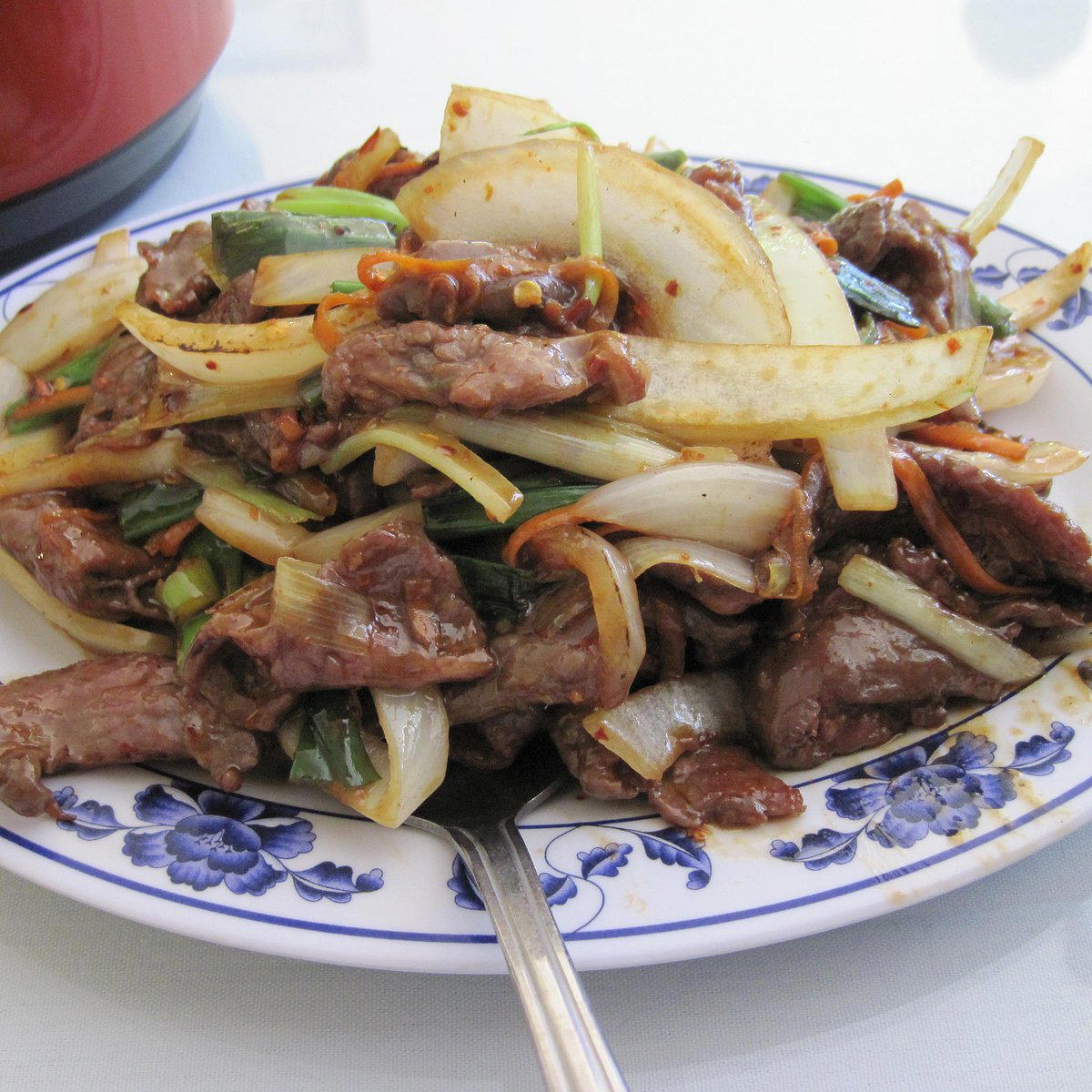
San Jose's North 4th Street corridor has long operated on a different register from the city's higher-profile dining destinations. The stretch around 998 N 4th is dense with immigrant-run kitchens serving cuisines that don't require press validation to maintain full dining rooms. Among Chinese restaurants in the South Bay, the dominant historical presence has been Cantonese, with its preference for cleaner broths, restrained spice, and dim sum formats. Hunan cooking breaks from that in almost every direction: the cuisine runs toward dried chiles, fermented black beans, smoked and cured pork, and a heat that doesn't dissipate quickly. Hunan Taste is part of a smaller cohort of Bay Area restaurants that serve this regional tradition rather than a pan-Chinese approximation of it.
Provincially specific Chinese restaurants occupy a particular niche in American cities. They tend to attract a core of diners from the relevant province or region, who use the restaurant as a calibration tool, alongside a secondary group of adventurous eaters who have moved past the gateway dishes of more generalized Chinese-American menus. Both groups tend to return. The regulars at places like Hunan Taste are not especially interested in trend cycles or seasonal menu updates in the fine-dining sense; they are interested in consistency, in the dish being the same as last time, and in the kind of institutional familiarity that makes a neighbourhood restaurant feel irreplaceable.
What the Regulars Know
The logic of a loyal clientele at a regional Chinese restaurant is different from the loyalty that forms around a tasting-menu counter. At the latter, regulars return partly for the evolution, the new course, the chef's current obsession. At a place like Hunan Taste, regulars return because change is not the point. The value proposition is repeatability: the same chile oil intensity, the same preparation method on the braised pork, the same combination of textures in a cold dish. This is not a limitation; it is the architecture of the cuisine. Hunan cooking is one of the Eight Great Traditions of Chinese cuisine, and its defining characteristics, the use of dried and fresh Facing Heaven chiles, the prevalence of smoked and cured meats, and the liberal use of fermented black bean paste, are not flourishes to be rotated seasonally. They are structural.
In San Jose's dining context, this positions Hunan Taste differently from the city's more celebrated addresses. Restaurants like Adega (Portuguese) operate in the fine-dining tier with corresponding price points and formal service expectations. Alma de Amón and Antipastos by DeRose occupy mid-tier neighbourhood positions with their own loyal followings. Augustine and Back A Yard Caribbean Grill add to the breadth of the city's immigrant and independent dining culture. Hunan Taste sits at a different price register and with different expectations on both sides of the table.
The Unwritten Menu and What It Signals
At regionally specific Chinese restaurants with established regulars, there is frequently an operational gap between what appears on the printed menu and what experienced diners actually order. This is not unique to Hunan cooking; it applies across provincial Chinese traditions. Regulars at Sichuan restaurants know to ask about off-menu cold preparations; regulars at Shanghainese spots often have specific requests tied to season or availability. The unwritten menu at a place like Hunan Taste is likely to include preparations that require some foreknowledge to request and some culinary context to appreciate. Smoked pork belly, often cured in-house or sourced from a specialist supplier, is a signature of the tradition. Steamed fish head with chopped chile is another preparation that defines the Hunan canon and requires a diner willing to engage with the dish on its own terms.
This is the register at which the regulars operate. They are not ordering from the laminated page; they are ordering from accumulated knowledge, from conversations with staff, and from the muscle memory of dozens of visits. That dynamic is what distinguishes a neighbourhood institution from a restaurant that simply happens to be in a neighbourhood.
Hunan in the Bay Area Context
The broader Bay Area Chinese dining scene has grown substantially more differentiated over the past two decades. Sichuan cooking established a strong foothold first, driven by Chengdu-trained cooks opening in the Richmond District of San Francisco and in suburban clusters across the East Bay and South Bay. Hunan, which shares some structural similarities with Sichuan (both are chile-forward, both use fermented condiments extensively) but diverges sharply in technique and flavour profile, has followed a slower path to wider recognition. Where Sichuan's mala numbing-spice profile proved immediately legible to non-Chinese diners, Hunan's smoke and ferment-driven heat is a slightly more acquired register.
This means that restaurants serving genuine Hunan cooking in American cities often have a tighter, more committed customer base and less crossover traffic from casual experimenters. It also means they tend to be more price-accessible than their Sichuan counterparts at the same quality tier, partly because the market is smaller and the restaurants are not optimizing for maximum throughput of curious newcomers. For San Jose diners already familiar with the regional distinctions in Chinese cooking, this makes Hunan Taste a more specific destination than a generalist Chinese restaurant operating in the same price bracket would be. You can find an overview of where it sits within the city's broader dining options in our full San Jose restaurants guide.
For reference on how the very best of the American fine-dining tier operates, the gap is considerable. Restaurants like Le Bernardin in New York City, Alinea in Chicago, The French Laundry in Napa, or Lazy Bear in San Francisco operate on entirely different economic and experiential logic. So do Single Thread Farm in Healdsburg, Providence in Los Angeles, Addison in San Diego, Blue Hill at Stone Barns in Tarrytown, The Inn at Little Washington, Atomix in New York City, Emeril's in New Orleans, and 8 1/2 Otto e Mezzo Bombana in Hong Kong. Hunan Taste is not competing in that register, nor does it need to.
Planning a Visit
Hunan Taste is located at 998 N 4th St in San Jose's North SoFA and Japantown-adjacent corridor, a part of the city that rewards exploration on foot if you are already in the area.
Frequently asked questions
Is Hunan Taste a family-friendly restaurant?
Regional Chinese restaurants on San Jose's North 4th Street corridor tend to draw multigenerational tables, and Hunan Taste fits that pattern. The format is casual and the menu covers enough ground to accommodate varied preferences across age groups. It is not a destination designed around a children's menu, but nothing about it excludes families.
What is the atmosphere like at Hunan Taste?
The setting is a neighborhood dining room on North 4th Street in San Jose's Japantown-adjacent corridor, closer in register to a working local restaurant than to a polished dining destination. Expect a practical, unfussy room where the focus is on the food rather than the decor. The clientele skews toward regulars who know the kitchen well.
How does Hunan Taste differ from other Chinese restaurants in the Bay Area?
While Sichuan cooking has dominated the Bay Area's regional Chinese expansion over the past two decades, Hunan cuisine occupies a less crowded space in the market. Located at 998 N 4th St in San Jose rather than in the higher-profile dining corridors of San Francisco or the South Bay's larger commercial strips, Hunan Taste serves a cuisine style that Bay Area diners encounter less frequently than Cantonese or Sichuan. That relative scarcity, combined with a loyal local clientele, gives the restaurant a different standing than its more widely represented peers.
What do people recommend at Hunan Taste?
At regionally specific Chinese restaurants with an established local following, the dishes worth ordering often circulate by word of mouth rather than appearing prominently on the printed menu. Hunan cooking is characterized by dry heat and cured ingredients rather than the numbing spice associated with Sichuan, so dishes involving smoked pork, pickled vegetables, or chile-forward sauces are core to the tradition. Asking staff directly about what the kitchen does particularly well is the most reliable approach.
Pricing, Compared
Comparable venues nearby, for context on price, style, and recognition.
| Venue | Cuisine | Price | Notes |
|---|---|---|---|
| Hunan TasteThis venue — the venue you are viewing | Authentic Hunan Chinese | $20–30 | Not listed |
| Sino | Asian Fusion with Dim Sum | $30–50 | Santana Row, Asian Fusion with Dim Sum |
| Mango Garden | Chinese-Malaysian | Not listed | Naglee Park, Chinese-Malaysian |
| Vito's Trattoria | Authentic Sicilian Trattoria | $30–50 | Metro/Airport, Authentic Sicilian Trattoria |
| Mezcal | Authentic Oaxacan Regional Mexican | $20–30 | Historic District, Authentic Oaxacan Regional Mexican |
| Iguanas Home Of The Burritozilla | Mexican Burritos | Not listed | South Campus, Mexican Burritos |