
Black Pearl 1 Diamond
Our verdict
Stone Sal Restaurant and Bar sits in Nanshan, Shenzhen's most internationally oriented district, and holds a 2025 Black Pearl 1 Diamond, a recognition that places it firmly in the city's upper tier of destination dining. The address on Taizi Road positions it within a neighbourhood where global technique and local produce frequently converge, and the restaurant-bar format signals a deliberate blurring of the line between serious eating and considered drinking.

Pearl is the En Primeur Club membership app, where members save venues, book tables and use the concierge.
The menu
What to order
- Rangers Valley Beef Steak
- Sauce-grilled Octopus
- Ribeye Steak
- Truffle Fries
Where Nanshan Puts Global Technique to Work
Shenzhen does not carry the culinary mythology of Guangzhou or the historical weight of Beijing, but that absence of convention is precisely what has made its restaurant scene one of the more interesting in southern China over the past decade. In Nanshan, the district that houses the headquarters of Tencent, DJI, and a significant share of China's tech export economy, the dining vocabulary has evolved alongside its residents: internationally trained, globally travelled, and largely uninterested in nostalgic regionalism for its own sake. Stone Sal Restaurant and Bar is a Modern Steakhouse at 20-21 Taizi Rd, 20, Nanshan, Shenzhen. It sits inside that context.
The Black Pearl Guide, launched by Meituan-Dianping in 2018, functions as China's most widely cited domestic fine-dining benchmark, applying criteria that weight both culinary execution and overall guest experience. A 1 Diamond designation in the 2025 edition places Stone Sal in company with a tier of Shenzhen addresses that have achieved consistent recognition rather than single-year novelty. For comparison, venues such as Ensue (Innovative Cuisine) and AVANT occupy Shenzhen's recognised fine-dining tier, and Stone Sal's inclusion in the same awards cycle positions it as a serious participant in that conversation.
The Technique-Product Intersection That Defines This Address
The editorial angle that makes Stone Sal worth examining closely is one that runs through the most interesting restaurants currently operating in China's southern cities: the deliberate collision of imported culinary method with indigenous Chinese ingredients. This is not fusion in the older, imprecise sense of the word. It is something more disciplined, the application of European or globally sourced technique (sauce construction, dry-ageing, fermentation precision, high-heat protein cookery) to ingredients that carry genuine regional identity.
Restaurants that work at this intersection tend to attract attention from guides like the Black Pearl precisely because the execution is harder to fake than either straight European cooking or direct Cantonese. The margin for error is narrow: the technique must serve the ingredient rather than dominate it, and the ingredient must be specific enough to justify the approach. In broader China, venues operating in this space include addresses like Xin Rong Ji (Xinyuan South Road) in Beijing, 102 House in Shanghai, and Ru Yuan in Hangzhou, all of which have built reputations around the tension between tradition and refinement. Stone Sal appears to be working a version of that same tension from its Shenzhen base.
The restaurant-and-bar format at Stone Sal is worth reading as an intentional signal rather than a commercial compromise. Some of the most technically interesting addresses in this tier, including Fumée in Shenzhen and venues like Atomix in New York City, have demonstrated that a thoughtful drinks program does not dilute culinary ambition; it extends it. A bar component that takes fermentation, regional spirits, or tea-based beverages seriously can amplify the local-ingredient story that the kitchen is telling.
Shenzhen's Place in the Wider Southern China Circuit
Visitors arriving in Shenzhen from Hong Kong, Guangzhou, or further afield often underestimate the depth of its restaurant scene relative to those cities. Guangzhou retains the institutional authority on Cantonese cooking, and Hong Kong still commands greater international recognition in the fine-dining press. But Shenzhen's Nanshan district has developed a concentration of ambitious, internationally oriented restaurants that competes with any second-tier dining city in the region. CHI CHING CHIU CHOI and China Lodge represent different points on the same arc, the city building out a dining identity distinct from its neighbours rather than derivative of them.
For travellers building a southern China itinerary that includes Macau or Guangzhou, the regional context is useful. Chef Tam's Seasons in Macau and Imperial Treasure Fine Chinese Cuisine in Guangzhou operate in adjacent culinary territory, and Stone Sal's Black Pearl recognition places it in comparable company at the Shenzhen end of that circuit. The contrast between Guangzhou's deep Cantonese institutional framework and Shenzhen's more hybrid, technique-forward approach is instructive: they are different answers to the same question about what southern Chinese cooking looks like when it reaches for refinement.
Shenzhen also connects outward in more global directions. The technique-product intersection that Stone Sal appears to occupy has parallels at the international level, Le Bernardin in New York City built its entire identity around the idea that technique must serve the primary ingredient rather than overshadow it, and that principle translates across cuisines and geographies. Xin Rong Ji in Chengdu demonstrates the same logic applied to Sichuan product. Stone Sal's positioning in Nanshan suggests an awareness of where that conversation is happening globally.
Planning Your Visit
Stone Sal Restaurant and Bar is located at 20-21 Taizi Road in Nanshan, Shenzhen, a district most easily reached via Shenzhen Metro's Shekou or Nanshan stations, with the Taizi Road address placing it within the Shekou waterfront area that has historically attracted international residents and dining investment. The restaurant-and-bar format means the venue likely operates across both lunch and evening services, though specific hours should be confirmed directly before arrival. Given the 2025 Black Pearl recognition, demand at peak times, Friday and Saturday evenings, and weekend lunch, will have increased from pre-award levels, and booking in advance is the sensible approach for groups or special occasions. For the full picture of where Stone Sal sits within Shenzhen's dining options, our full Shenzhen restaurants guide maps the city's recognised addresses by district and format. Those extending the trip should also consult our full Shenzhen hotels guide, our full Shenzhen bars guide, our full Shenzhen wineries guide, and our full Shenzhen experiences guide for a complete picture of what the city offers at this tier.
Frequently asked questions
Where is Stone Sal Restaurant and Bar in Shenzhen?
Stone Sal Restaurant and Bar is located at 20-21 Taizi Rd, 20, Nanshan, Shenzhen, Guangdong Province, China, 518060, Shenzhen.
What's Stone Sal Restaurant and Bar known for in terms of accolades?
Stone Sal Restaurant and Bar has received recognition including: Black Pearl 1 Diamond (2025).
What's the must-try dish at Stone Sal Restaurant and Bar?
Dish-level data requires confirmation at the time of booking, so no specific plate can be named here without risk of error. What the 2025 Black Pearl 1 Diamond recognition does signal is a kitchen operating at a documented standard of product quality and execution, the guide is the most widely read domestic fine-dining reference in China. Ask staff at the time of reservation for current menu highlights, which in Shenzhen's more experimental dining rooms tend to shift with the season.
Do I need a reservation for Stone Sal Restaurant and Bar?
A 2025 Black Pearl 1 Diamond carries real demand in Shenzhen's dining market, and Nanshan has a concentrated professional population that fills recognized restaurants quickly on weekends. Booking ahead is advisable rather than optional. check the venue's official channels via Meituan-Dianping or walk-in inquiry at 20-21 Taizi Road, Nanshan, to confirm current availability and any set-menu requirements.
In Context: Similar Options
Comparable venues nearby, for context on price, style, and recognition.
| Venue | Cuisine | Price | Awards | Notes |
|---|---|---|---|---|
| Stone Sal Restaurant and BarThis venue (the venue you are viewing) | Modern Steakhouse | $100–150 | Black Pearl 1 Diamond | Not listed |
| Wu Modern Chao | Modern Chaozhou Cuisine | Not listed | Black Pearl 1 Diamond | OCT Tower area |
| Snshiyi | Modern Cantonese Dim Sum | $30–50 | Black Pearl 1 Diamond | Futian |
| Yi Pavilion | Regional Cantonese with Lingnan influences | Not listed | Star Wine List | Futian District |
| Yun Jing Chinese Restaurant | Modern Cantonese | $100–150 | Black Pearl 1 Diamond | Nanshan District |
| Sansheng AFFINITÉ | Modern French Fine Dining | $200–300 | Black Pearl 1 Diamond | / 海上世界 / Shekou |
Recognition history
Dated appearances from independent guides and award organizations, with the underlying list record or original source where available.
Black Pearl 1 Diamond
Black Pearl
Full recognition history (2 entries)
Black Pearl 1 Diamond
Black Pearl
Continue exploring
More in Shenzhen
Restaurants in Shenzhen
All restaurants in Shenzhen →
Bars in Shenzhen
All bars in Shenzhen →
Hotels in Shenzhen
All hotels in Shenzhen →

Wineries in Shenzhen
Browse all →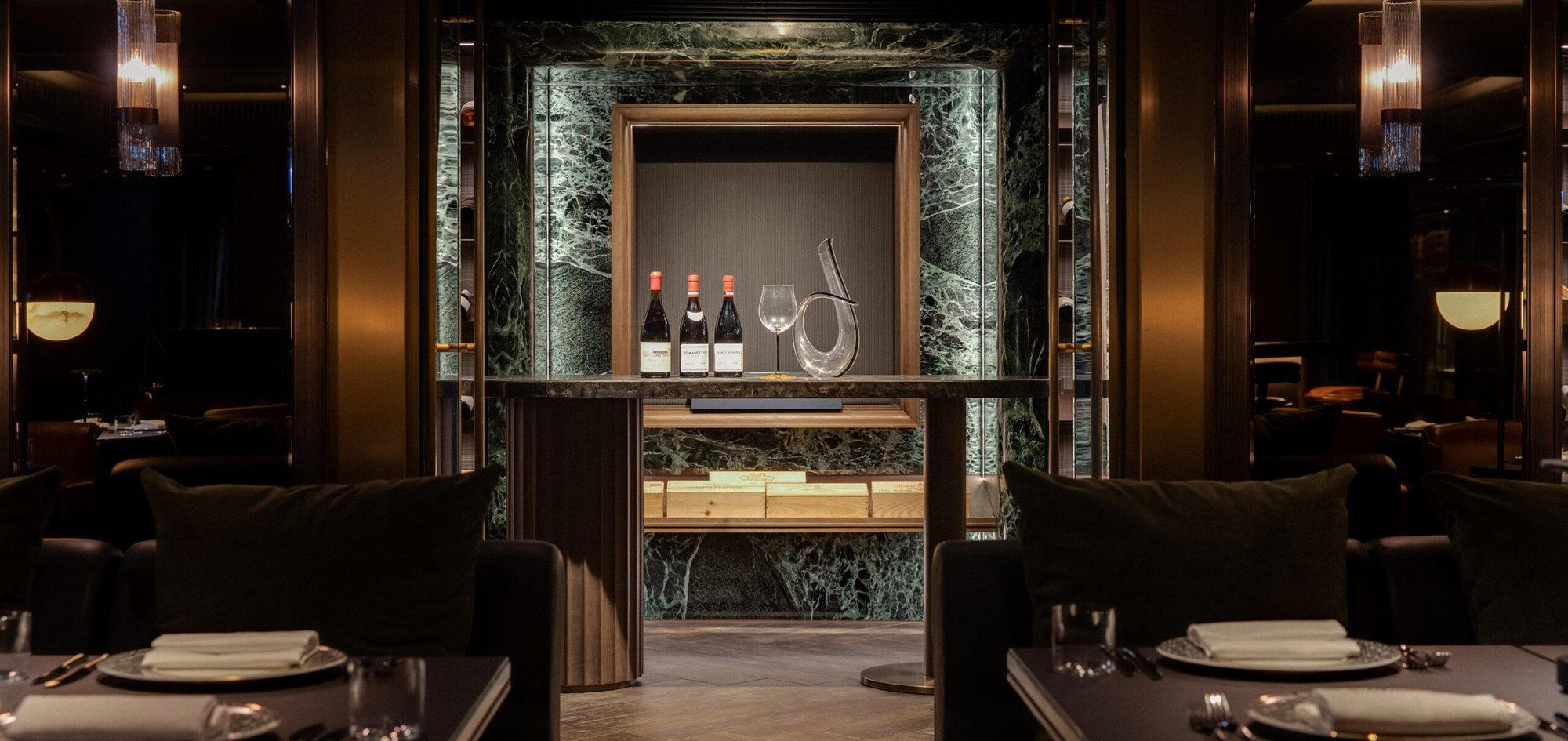
Details
- Romantic
- Elegant
- Modern
- Cozy
- Sophisticated
- Date Night
- Business Dinner
- Group Dining
- Special Occasion
- Open Kitchen
- Private Dining
- Extensive Wine List
- A La Carte
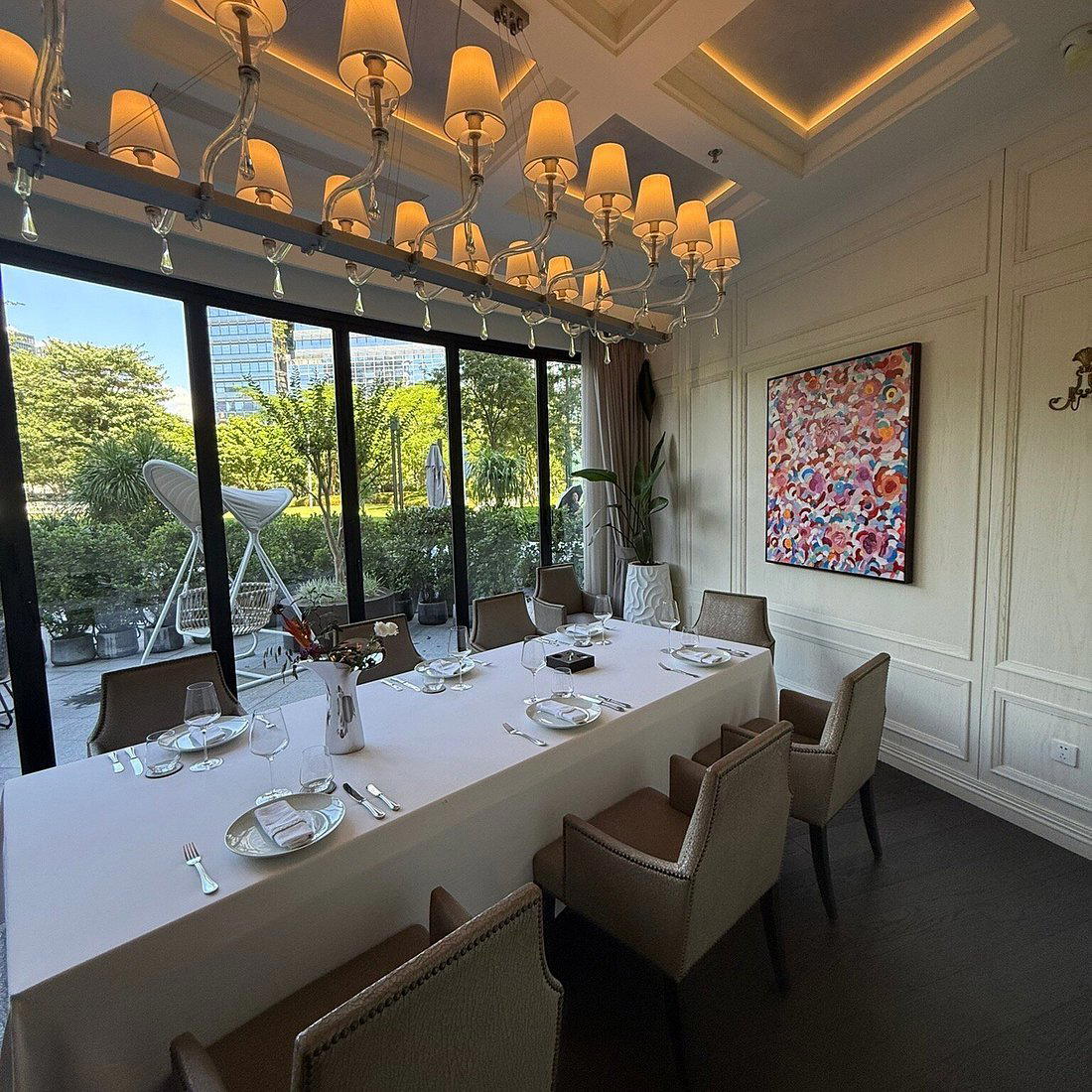
Warm dining room with leather seating, dark wood paneling, measured lighting for privacy, and acoustics supporting conversation.