On the Untere Donaulände, Linz's steakhouse category occupies a specific niche in a city that has developed a more considered dining culture over the past decade. STEAKHOUSE at number 12 sits along the Danube-facing stretch where casual riverside dining and more deliberate meat-focused formats coexist. For visitors and locals working through the city's restaurant options, it represents the dedicated carnivore's reference point on the Linz map.
Pearl is the En Primeur Club membership app — saves, bookings, and concierge access live there. Same editors, same standards.
- Address
- Untere Donaulände 12, 4020 Linz, Austria
- Phone
- +43732770566
- Website
- steakhouse.co.at
- Directions
- Get directions
 Saves & bookings on Pearl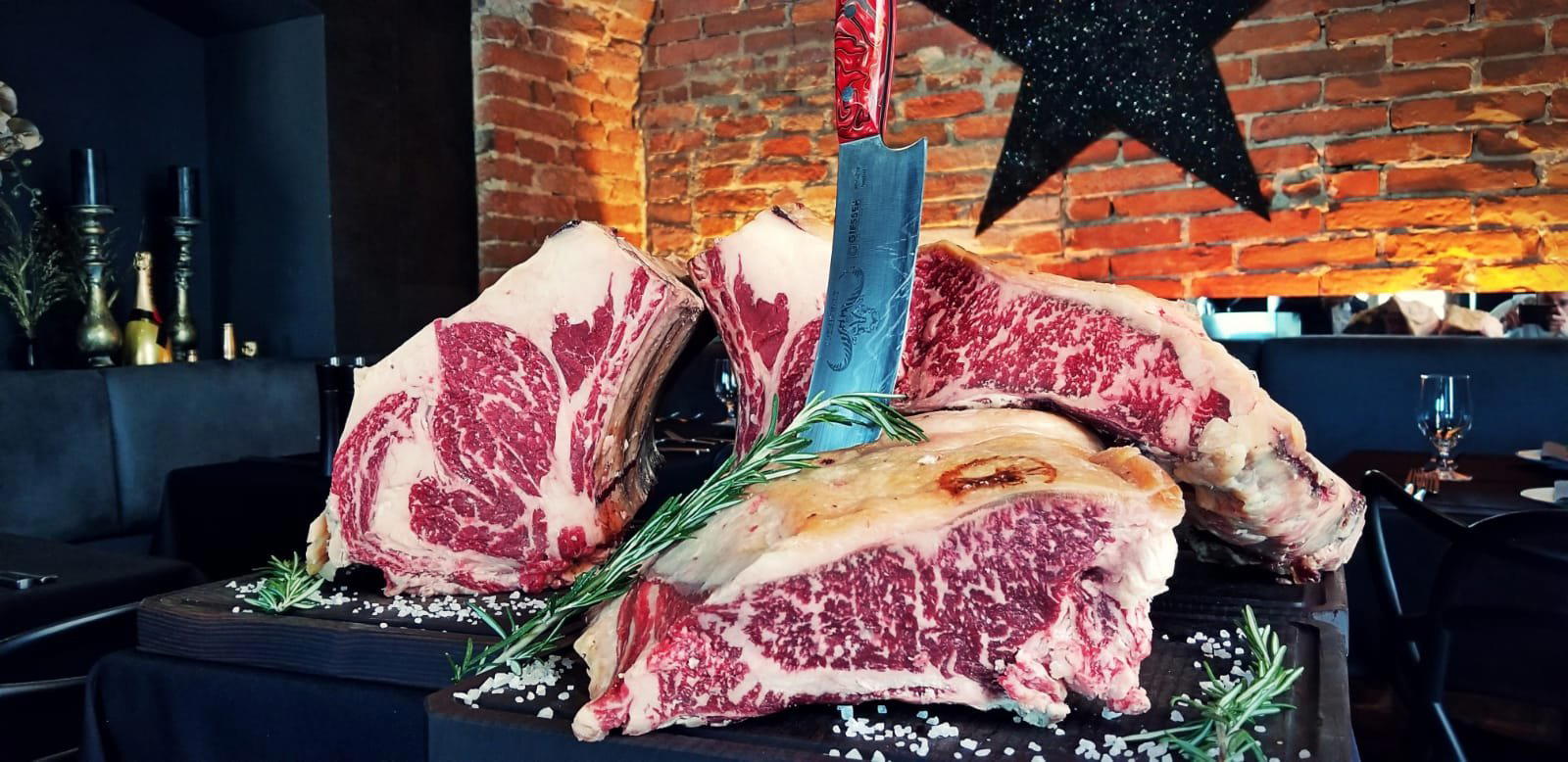
Where Linz Eats Meat: The Steakhouse Format in an Austrian River City
STEAKHOUSE is a steakhouse in Linz, Austria, at Untere Donaulände 12. STEAKHOUSE, at Untere Donaulände 12, occupies that specific slot in Linz's current restaurant picture.
The address itself carries context. The Untere Donaulände is the lower Danube embankment, a stretch where the river defines the eastern edge of the city centre. Restaurants along this corridor tend to draw a dual audience: locals who use the waterfront as a leisure spine, and visitors arriving from the nearby Hauptbahnhof or moving between the old city and the Lentos Kunstmuseum. It is not the concentrated fine-dining block of, say, Mozartplatz in Salzburg, but it is a location with genuine foot traffic and a view that changes the mood of an evening meal.
Lunch and Dinner: How the Two Services Read Differently
The steakhouse format in European cities tends to bifurcate more sharply between lunch and dinner than, for example, a bistro or a modern cuisine restaurant. At lunch, the emphasis shifts toward business trade and the working meal, shorter visits, the possibility of a single cut rather than a full sequence, and a price sensitivity that evening service rarely demands. Dinner at a dedicated steakhouse operates differently: the table turns more slowly, the beef becomes the occasion rather than the refuel, and the room takes on a different social register entirely.
In Linz specifically, this divide matters because the city's dining culture is still consolidating its evening fine-dining identity. Addresses like Rossbarth, operating at the €€€€ tier with a modern cuisine approach, and Verdi at the international €€€ level, anchor the upper end of the market and set the benchmark against which other serious restaurants are measured. A steakhouse operating in this environment positions itself slightly differently: the protein is the architecture, and the question for a dinner visit is whether the sourcing and execution justify the evening commitment over a broader-menu alternative.
Lunch at STEAKHOUSE, by contrast, draws on the Donaulände's natural midday rhythm. The riverside location makes it a logical stop for those moving through that part of the city, and the format, focused, meat-centred, without the expectation of multi-course progression, suits the compressed hour of a working lunch more readily than a tasting-menu restaurant would. In Austrian cities, the Mittagsmenü tradition still carries weight, and a steakhouse that reads the lunch service as a distinct proposition rather than a discounted replica of dinner will capture a different, broader audience.
The Wider Austrian Steakhouse Context
To understand where a Linz steakhouse sits in the national picture, it helps to map the broader range. At the apex, Austria's fine-dining scene is anchored by addresses with serious international recognition: Steirereck im Stadtpark in Vienna and Döllerer in Golling an der Salzach operate in the Michelin-starred tier, drawing from regional produce traditions but with ambitions that extend well beyond the domestic market. Further west, addresses like Griggeler Stuba in Lech and Gourmetrestaurant Tannenhof in Sankt Anton am Arlberg serve a winter-sports affluent clientele with correspondingly high expectations. Ikarus in Salzburg operates a rotating guest-chef model that keeps it in the international conversation year-round.
A dedicated steakhouse in Linz does not compete in that register, nor should it try to. Its comparable set is the city's mid-to-upper casual market, where Aroy Thai and Be Right Back represent the casual end of the spectrum, and where the question for a meat-focused address is whether the quality of the primary ingredient creates enough of a point of difference to compete with the broader-menu options at similar price points. Across Austria, regional addresses like Landhaus Bacher in Mautern an der Donau, Obauer in Werfen, and Ois in Neufelden demonstrate that serious food outside Vienna and Salzburg is increasingly the norm rather than the exception, which raises the baseline expectation for any format operating in a secondary city.
For context on what protein-focused formats can achieve at the summit of the market internationally, the comparison is instructive: Le Bernardin in New York City built a decades-long reputation around the discipline of reducing a menu to a single dominant category and executing it with obsessive consistency. In a different register, Atomix in New York City demonstrates that rigorous focus, on technique, on sourcing, on format, rather than breadth of menu is increasingly the marker of a serious restaurant. The parallel for a steakhouse is that the beef itself becomes the editorial statement.
Linz's Dining Scene: The Neighbourhood Frame
Linz has been underestimated as a dining city for most of the past two decades, with cultural attention defaulting to its music calendar (the Brucknerhaus, the Ars Electronica festival) and its industrial heritage. Bruckner's im Brucknerhaus represents the intersection of cultural venue and dining destination that the city has developed along the Danube edge. The restaurant scene has grown alongside that cultural identity, with formats ranging from the market-driven modern cuisine of Rossbarth to the international bracket covered by Verdi. For a full picture of what the city currently offers, the EP Club Linz restaurants guide maps the range across formats and price tiers.
Within that frame, STEAKHOUSE on the Untere Donaulände represents a clear format commitment in a city that has historically been more comfortable with broad-menu Gasthof dining than with single-protein specialisation. Whether that format is delivered at a level that justifies the evening spend, and whether the lunch service reads as a genuine proposition rather than a secondary afterthought, are the questions a visit is designed to answer. The address is fixed. The Danube is outside. The format declares itself in the name.
Planning Your Visit
STEAKHOUSE is located at Untere Donaulände 12, 4020 Linz, on the lower Danube embankment in the city centre. The address is walkable from both the Hauptbahnhof and the old city core.
What It’s Closest To
Comparable venues nearby, for context on price, style, and recognition.
| Venue | Cuisine | Price | Notes |
|---|---|---|---|
| STEAKHOUSEThis venue — the venue you are viewing | Steakhouse | $$$ | Not listed |
| Bruckner's im Brucknerhaus Linz | Modern Austrian with International Influences | $$$ | Danube Park |
| Tante Kaethe | Mediterranean & Austrian Classics | $$$ | Danube Park |
| Da Giulio Linz | Authentic Italian Pizza and Pasta | $$$ | Urfahr |
| Lentos Restaurant | Modern Austrian with river views | $$ | Donaulände |
| Burgerista | Fresh Burger Grill | $$ | Volksgartenviertel |
Continue exploring
More in Linz
Restaurants in Linz
Browse all →
Bars in Linz
Browse all →

Hotels in Linz
Browse all →

At a Glance
- Classic
- Dinner
Current opening hours
- Monday
- 11 AM–2 PM, 5–11 PM
- Tuesday
- 11 AM–2 PM, 5–11 PM
- Wednesday
- 11 AM–2 PM, 5–11 PM
- Thursday
- 11 AM–2 PM, 5–11 PM
- Friday
- 11 AM–2 PM, 5–11 PM
- Saturday
- 11 AM–2 PM, 5–11 PM
- Sunday
- 11 AM–2 PM, 5–11 PM
Hours can change for holidays and private events. Last verified .
Nice atmosphere.