Tabelog 100 #20
Our verdict
Osaka’s steak and teppanyaki tier is not only about luxury beef; it is about menu control, counter pacing, and how much room a restaurant gives itself to move between Japanese meat cookery and Western technique. STEAK HOUSE NARIKIYO sits in that narrower bracket, with Tabelog 100 Steak / Teppanyaki WEST 2025 recognition and a small-room format that makes the meal feel closer to a specialist counter than a hotel steakhouse.

Pearl is the En Primeur Club membership app — saves, bookings, and concierge access live there. Same editors, same standards.
The menu
What to order
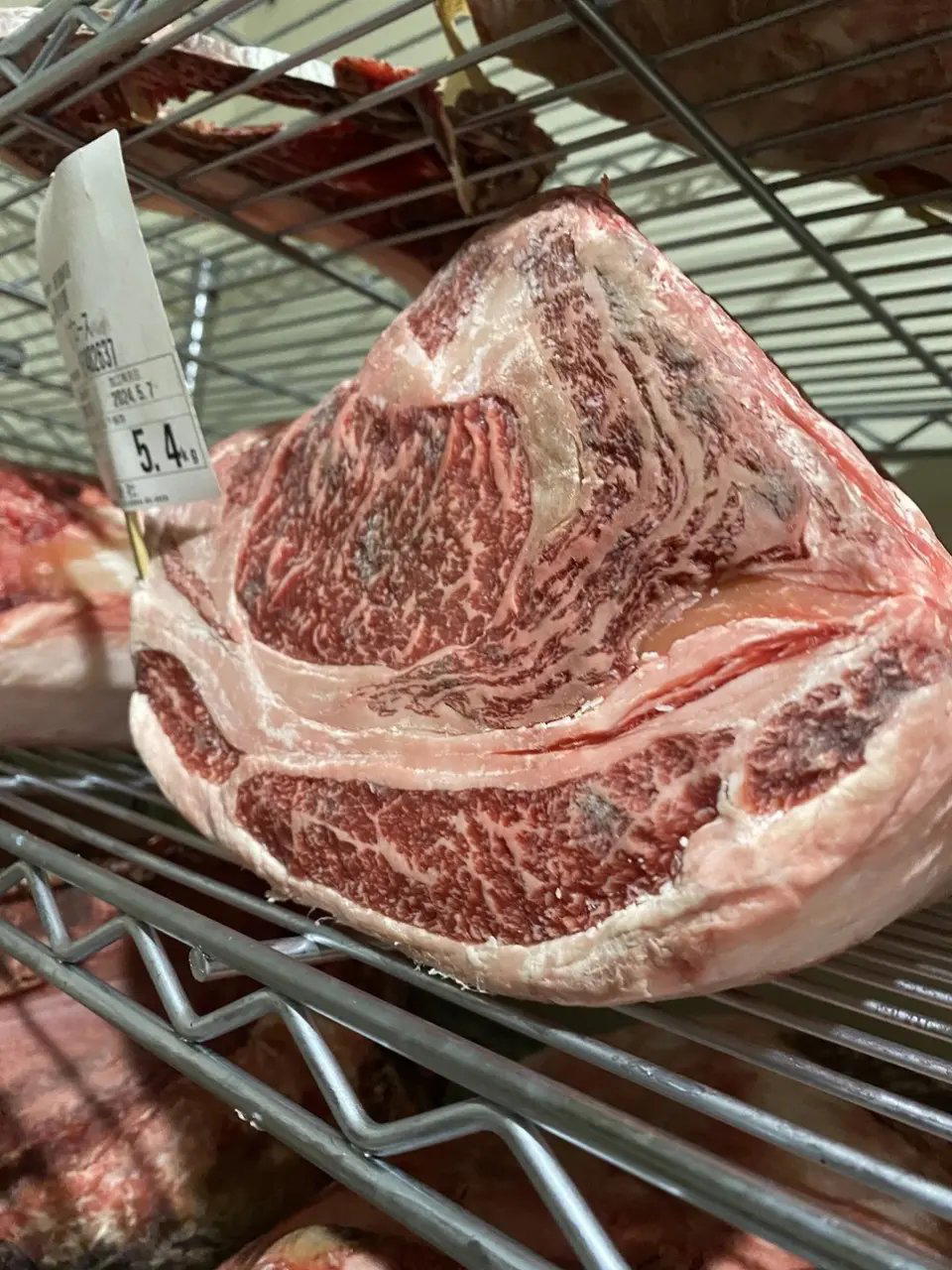
- Chateaubriand Steak Course (200g thick cut)
- Special Sirloin & Filet Steak Course
- STANDARD Steak Course (omakase-style)
- Beef tartare
- Charcoal-grilled Japanese Black Wagyu filet
Osaka shifts the rhythm before dinner starts. Away from the city’s louder commercial corridors, restaurants can operate without theatre. Here, steak reads less as spectacle than controlled sequencing. STEAK HOUSE NARIKIYO belongs to Osaka’s meat-led dining scene, where meal structure matters as much as the cut.
Osaka has long handled beef in many registers: sukiyaki, yakiniku, Western-style grills, meat-led courses, and dining built around pacing rather than abundance. The sharper restaurants often narrow choice architecture. Instead of sprawling menus for groups with competing appetites, they guide diners toward a focused decision and build timing around it. Here, the appeal is a room less interested in listing every luxury option than in making texture, richness, and progression easy to read.
A steak menu built around controlled choice
A focused steak format says plenty about contemporary dining in Japan. Some diners privilege tenderness and restraint; others want more fat, aroma, and a richer meal arc. Keeping the kitchen’s argument legible matters. For travellers used to steakhouse menus built around weight, breed, sauce, and sides, this feels closer to Japanese set-course logic: choose the meal’s spine, then let the sequence work.
The listed categories, steak, Italian, and meat dishes, also place the restaurant beyond a single rigid label. Osaka’s more interesting meat-focused restaurants can borrow Western technique without becoming conventional European restaurants. Plated courses and grill work can sit beside Japanese portion control and clean pacing. This is not fusion as slogan, but menu architecture that keeps beef central without exhausting the table.
Tabelog’s 2025 recognition gives the room a useful external marker. Inclusion places it in a field of serious Japanese dining rooms where consistency and execution matter. Its Tabelog score of 3.64 also matters in a category where Japanese diners often reward value at the stated tier, focus, and reliable cooking over publicity. Awards do not replace taste, but they help separate a focused steak restaurant from Osaka’s many mid-market grills.
For readers mapping Osaka by category, the contrast is instructive. Burgerlion and Akira Curry sit in a more everyday dining conversation, while Ghar is also a casual reference point. Daidokoro Kamiya belongs to a different Osaka dining grammar, and Nishino occupies Japanese fine dining. This steak room is a different decision: not a snack stop, many-dish drinking meal, or full kappo evening, but a narrower proposition built around meat and pacing.
Osaka's quieter dining logic suits a meat-led room
Osaka suits restaurants that do not need constant spectacle to make their case. The city supports business dinners, planned meals, and destination dining in rooms where the evening is considered rather than improvised. That matters for steak. In a loud entertainment setting, a heavy meal can feel like fuel; in a more focused Osaka dining room, it reads as a deliberate evening.
The focused-room logic reinforces that. A controlled format changes the economics of attention, limits how much the kitchen can hide behind volume, and makes pacing visible: when meat is served, a table is left to talk, or the next plate interrupts. The stronger editorial argument is not size for its own sake but the controlled rhythm of a meat-led room. Osaka does this well because its dining culture is comfortable with intimacy without stiffness.
There is also a distinction between steakhouse abundance and steak-course discipline. Large-format steakhouses often perform luxury through size: bigger rooms, longer lists, more add-ons. More edited Japanese meat specialists perform it through focus. The presence of steak, Italian, and meat-dish categories makes the restaurant feel broader than a plain grill. Nothing suggests a generic casual stop; the better comparison is a meat-led room where dining is intentional.
Travellers building a wider Osaka itinerary should avoid treating steak as an isolated splurge. The city is better read through contrasts: casual everyday dining, curry, burgers, izakaya-style meals, and Japanese fine dining all frame appetite differently. Within that wider map, STEAK HOUSE NARIKIYO occupies the meat-focused lane. The broader itinerary can be filled with other Osaka dining, bars, hotels, and experiences according to the pace of the trip.
Who should choose this over a broader Osaka dinner
This suits diners who want beef to define the evening, not appear as one course in a long Japanese menu. The 2025 Tabelog recognition places it in the current conversation rather than leaving it as an anonymous steak address. That timing matters: Osaka’s premium dining scene is not frozen around older names, and meat-focused rooms can enter the conversation when format is clear and execution earns local attention.
The better guest is not chasing excess. Diners wanting endless choice or a lively group-style meal may find the format too edited. Those who understand the difference between restrained and richer steak experiences will get more from the central decision-making. The value is that clarity: an Osaka steak room using limited choice to make the meal easier to read.
For broader context, Japan’s meat and casual-dining spectrum is wide, from beef-focused formats to charcoal cooking, seafood-led counters, curry specialists, and compact dining rooms that simplify a larger culinary idea. Regional contrast comes through in how each city edits appetite and service. Against that field, STEAK HOUSE NARIKIYO is firmly Osaka: focused, edited, and confident enough to let a meat-led proposition carry the night.
Frequently asked questions
What's the price range at STEAK HOUSE NARIKIYO?
Pricing at STEAK HOUSE NARIKIYO is listed as JPY 10,000 - JPY 14,999 JPY 10,000 - JPY 14,999.
What part of town is STEAK HOUSE NARIKIYO in?
Osaka.
Do I need a reservation for STEAK HOUSE NARIKIYO?
Planning ahead is a sensible choice for an Osaka dinner in this price range, especially for diners considering a focused steak meal.
What is STEAK HOUSE NARIKIYO known for?
STEAK HOUSE NARIKIYO is known as an Osaka restaurant listed for steak, Italian, and meat dishes, with 2025 Tabelog recognition and a Tabelog score of 3.64.
Snapshot
Comparable venues at similar price and category levels.
| Venue | Cuisine | Price | Awards | Notes |
|---|---|---|---|---|
| STEAK HOUSE NARIKIYOThis venue (the venue you are viewing) | Charcoal-Grilled Wagyu Steakhouse with Counter Dining | $100–150 | Tabelog 100 #20 | Not listed |
| Pineapple | Teppanyaki Kuroge Wagyu Steakhouse | $50–100 | Tabelog 100 #31 | Kita |
| Kuroge Wagyu Steak House Morikawa | Kuroge Wagyu Teppanyaki Steakhouse | $150–200 | Tabelog 100 #39 | Kita |
| Kamayaki Steak Fukuda | Kiln-grilled Wagyu Steakhouse (Kitashinchi) | $150–200 | Tabelog 100 #90 | Kita |
| WINE Shokudo Ono | Modern Italian Wine Bistro with Awaji Island Ingredients | $150–200 | Tabelog 100 #1 | Kita |
| il PePe | Seasonal Omakase Italian | $100–150 | Tabelog 100 #64 | Kita |
Recognition history
Dated appearances from independent guides and award organizations, with the underlying list record or original source where available.
Tabelog 100 #20 · No. 20
Tabelog · Tabelog 100 - Steak / Teppanyaki - WEST - 2025