
Tabelog 100 #45
Our verdict
An eight-seat counter in Susukino frames Sapporo’s yoshoku appetite at close range: hamburger steak, steak and teppanyaki served in a compact room where the grill is part of the point. STEAK&HAMBURG HIGE Sapporo minami 5 jou honten carries Tabelog 100 Yoshoku EAST 2025 recognition, placing it among Japan’s notable Japanese-style Western rooms rather than ordinary late-night steak counters.

Pearl is the En Primeur Club membership app, where members save venues, book tables and use the concierge.
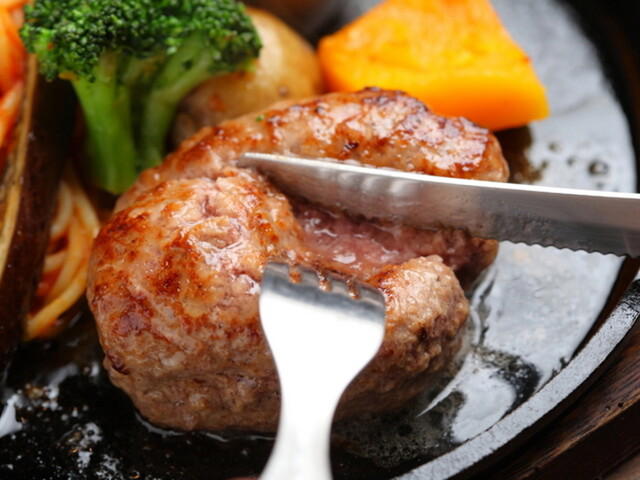
Sapporo’s dining scene rewards focused restaurants. The city is built for snow-season efficiency: short walks between transit points, compact nights out, and restaurants where a clear specialty often matters more than a sprawling menu. In that setting, STEAK&HAMBURG HIGE Sapporo minami 5 jou honten is best read through the facts that are publicly attached to it: hamburger steak, steak and teppanyaki, with a Tabelog Hyakumeiten recognition in 2025. The appeal is direct rather than decorative.
That matters in Sapporo because yoshoku occupies a different register from the city’s better-known seafood, ramen and curry circuits. Japanese-style Western cooking is not imitation Western food; it is a domestic genre with its own expectations around hamburger steak, sauce, rice, hot plates and everyday satisfaction. STEAK&HAMBURG HIGE Sapporo minami 5 jou honten sits inside that lineage, with categories listed as hamburger steak, steak and teppanyaki. The recognition that sharpens the case is its 2025 Tabelog Hyakumeiten listing, a useful signal in a category where comfort cooking can otherwise look deceptively casual.
An intimate counter turns yoshoku into close-quarters theatre
The restaurant’s editorial value comes from its focus rather than from any claim of grandeur. In a steak and hamburger-steak format, the essential questions are simple: heat, timing, texture, sauce and the way the meal holds together as a satisfying Sapporo stop. Teppanyaki as a category naturally draws attention to cooking and immediacy, but the point here is not spectacle for its own sake. It is the clarity of a place whose listed categories tell diners exactly what kind of meal they are choosing.
This is where HIGE can be placed against several Sapporo options without forcing it into the same lane. Higebozu, Menya Suzuran, Sushi Natsume Honten and Local Chinese Food Shifan all belong to the city’s wider dining map, but HIGE’s case is more specific: hamburger steak, steak and teppanyaki, recognised by Tabelog Hyakumeiten in 2025. Its listed budget also keeps it in accessible territory, with dinner at JPY 2,000 - JPY 2,999 and lunch at JPY 1,000 - JPY 1,999, closer in logic to everyday Sapporo dining than to formal destination dining.
The focus is not a limitation in this context. It clarifies the offer. Diners know they are coming for a meat-led yoshoku meal rather than a long tasting structure or a broad, unfocused menu. The restaurant is better read as a compact piece of Sapporo’s food landscape: a place where appetite for hamburger steak, steak and teppanyaki meets the Japanese habit of treating specialised restaurants with seriousness.
Why the award matters in a comfort-food category
Tabelog’s Hyakumeiten lists carry particular weight for genres that rarely receive the same international attention as sushi or kaiseki. Yoshoku is one of those genres. Its appeal often lies in familiarity, but familiarity can blur distinctions. A 2025 Tabelog Hyakumeiten selection gives the restaurant a clearer competitive frame: not luxury by default, and not merely inexpensive comfort food, but a recognised address in a field where consistency and familiar forms matter. Its listed Tabelog score is 3.64, which adds another concrete signal for readers comparing Sapporo options.
The category also explains why the experience travels well for visitors who already understand Sapporo through ramen and seafood. The city’s dining identity is not only crab, miso ramen and market breakfasts. It is also a cold-climate capital with a strong appetite for hearty Western-inflected Japanese cooking. Hamburger steak, steak and teppanyaki fit that climate without needing a long tasting-menu structure. The decision is less about chasing novelty than choosing a restaurant where a narrow format is treated with discipline.
For broader mapping, Our full Sapporo restaurants guide places this address alongside other local specialisms, from noodle-focused meals to other Sapporo dining. Planning a Sapporo trip also means checking Our full Sapporo hotels guide, Our full Sapporo bars guide, Our full Sapporo wineries guide and Our full Sapporo experiences guide. For readers building a wider Japan food route, compare the beef focus here with other grill-led formats, casual urban rooms and more specialised restaurants, while keeping HIGE’s appeal grounded in Sapporo: hamburger steak, steak and teppanyaki, recognised by Tabelog Hyakumeiten in 2025.
How to read the room before choosing it
The restaurant is a sharper choice for diners who want a focused, meat-led meal rather than a broad survey of Sapporo cooking. It is not being presented here as a long, hushed progression of courses, and the available facts do not require treating it as a formal luxury address. The attraction is more direct: a Sapporo restaurant listed for hamburger steak, steak and teppanyaki, with a 2025 Tabelog Hyakumeiten recognition and an approachable published budget.
The practical reading is simple. The restaurant belongs in a Sapporo night rather than a white-tablecloth itinerary, and its recognition changes the planning calculation. Places with clear categories, accessible pricing and public recognition can draw attention, especially when the category is familiar and the city is already built around eating well. The strongest reason to go is not that it is a grand steak destination. It is that Sapporo’s yoshoku tradition becomes easy to understand here: hamburger steak, steak, teppanyaki and the reliable appeal of a recognised local specialist.
Frequently asked questions
Is STEAK&HAMBURG HIGE Sapporo minami 5 jou honten child-friendly?
The venue is a focused restaurant in Sapporo, so it may suit children who are comfortable with a meat-led yoshoku meal. With lunch listed at JPY 1,000–JPY 1,999 and dinner at JPY 2,000–JPY 2,999, it is priced like a casual stop rather than a formal outing.
Is STEAK&HAMBURG HIGE Sapporo minami 5 jou honten better for a quiet night or a lively one?
The listed categories point toward a direct, grill-focused meal built around hamburger steak, steak and teppanyaki. Tabelog’s 2025 Hyakumeiten recognition also signals a place with local pull, not a private fine-dining narrative.
How much does it cost to eat at STEAK&HAMBURG HIGE Sapporo minami 5 jou honten?
Pricing at STEAK&HAMBURG HIGE Sapporo minami 5 jou honten is listed as dinner JPY 2,000 - JPY 2,999 and lunch JPY 1,000 - JPY 1,999.
What are STEAK&HAMBURG HIGE Sapporo minami 5 jou honten's hours?
Hours for STEAK&HAMBURG HIGE Sapporo minami 5 jou honten are not specified here; confirm current opening times before visiting.
How do I find STEAK&HAMBURG HIGE Sapporo minami 5 jou honten?
Sapporo.
What's the defining dish or idea at STEAK&HAMBURG HIGE Sapporo minami 5 jou honten?
The defining idea is yoshoku done through hamburger steak, steak, and teppanyaki in Sapporo. That format matches its Tabelog Hyakumeiten 2025 recognition and keeps the focus on the grill rather than a long menu narrative.
Peers Worth Knowing
Comparable venues for orientation by cuisine and category.
| Venue | Cuisine | Price | Awards | Notes |
|---|---|---|---|---|
| STEAK&HAMBURG HIGE Sapporo minami 5 jou hontenThis venue (the venue you are viewing) | Hamburg steak & steak teppanyaki | $20–30 | Tabelog 100 #45 | Not listed |
| Higebozu | Premium Yakitori | $300–500 | Tabelog Bronze #108 | Not listed |
| Isono Kazuo | Late‑night Sapporo Black Ramen | $10–20 | Tabelog 100 #95 | JPY 999 |
| Local Chinese Food Shifan | Spicy Chinese (Sapporo Susukino) | $30–50 | Tabelog 100 #98 | JPY 5,000 - JPY 5,999 JPY 4,000 - JPY 4,999 |
| Sushi Natsume Honten | Traditional Sushi Omakase | $100–150 | Tabelog 100 #14 | JPY 20,000 - JPY 29,999 |
| Menya Suzuran | Sapporo ramen & soup curry-style ramen | $10–20 | Tabelog 100 #71 | JPY 1,000 - JPY 1,999 |
Recognition history
Dated appearances from independent guides and award organizations, with the underlying list record or original source where available.
Tabelog 100 #45 · No. 45
Tabelog · Tabelog 100 - Yoshoku - EAST - 2025
Continue exploring
More in Sapporo
Restaurants in Sapporo
All restaurants in Sapporo →
Bars in Sapporo
All bars in Sapporo →
Details
- Cozy
- Lively
- Intimate
- Solo
- Casual Hangout
- Late Night
- Date Night
- After Work
- Chefs Counter
- Open Kitchen
- Standalone
- Local Sourcing
- A La Carte
- Counter Dining
Current opening hours
- Monday
- 11 AM–3:30 PM, 5:30 PM–3 AM
- Tuesday
- 11 AM–3:30 PM, 5:30 PM–3 AM
- Wednesday
- 11 AM–3:30 PM, 5:30 PM–3 AM
- Thursday
- 11 AM–3:30 PM, 5:30 PM–3 AM
- Friday
- 11 AM–3:30 PM, 5:30 PM–3 AM
- Saturday
- 11 AM–3:30 PM, 5:30 PM–3 AM
- Sunday
- 11 AM–3:30 PM, 5:30–9 PM
Hours can change for holidays and private events. Hours as of .
A compact, counter-only teppanyaki space with a casual, bustling feel where guests sit close to the grill and watch hamburger steaks and steaks cooked right in front of them.