
Tabelog 100 #77
Our verdict
Stand Totonoi puts Tokyo’s tachinomi tradition into a compact Itabashi frame: seven seats, sake focus, cash-only payment, and a 2025 Tabelog 100 selection for stand-up bars. The appeal is less about ceremony than sequence, with a low-spend format that lets the night move from first glass to final bite without the pacing of a formal tasting menu.

Pearl is the En Primeur Club membership app, where members save venues, book tables and use the concierge.
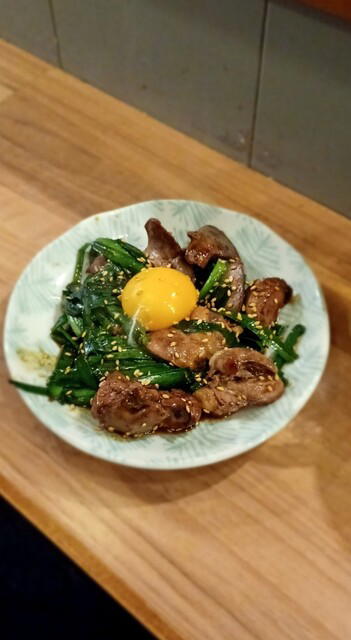
Approaching a serious tachinomi counter in Tokyo differs from entering a linen-and-reservation restaurant. The room compresses fast: coats, glasses, counter edge, next pour. In Tokyo, that compression is the point. Stand-up drinking rewards momentum, and stronger rooms let a night progress without pretending to be a tasting menu.
Tokyo’s dining hierarchy often sends visitors toward sushi counters, kappo rooms, and reservation-only omakase, but smaller drinking formats tell another story. Tachinomi runs on short arcs: one drink to settle in, a small plate to anchor it, another pour if the room works, then out before the evening becomes a full restaurant sitting. Stand Totonoi fits that compact register: a stand-up bar closer to a specialist drinking counter than a casual pub stop.
A compact tachinomi frame built around counter pacing
Read the format through sequence. A large izakaya can absorb indecision; a compact stand-up bar cannot. Scale forces focus, and the counter becomes the organizing principle rather than an accessory. In Tokyo, where standing bars range from highly specialized rooms to looser neighborhood stops, the category here is explicit: stand-up bar.
That changes how food is judged. In a tasting-menu restaurant, each course carries narrative pressure. In tachinomi, food marks time, supports the glass, and keeps the tempo from becoming simple drinking. The progression is practical, not theatrical: a first order sets rhythm, a second extends the stay, and the final choice should justify the small-room commitment. The reward is concentration, not breadth.
The 2025 Tabelog 100 selection gives Stand Totonoi a public credential in a category that rarely travels well in English-language dining talk. Standing bars are hard to rank from outside because their appeal depends on capacity, flow, drink handling, and counter social physics. A Tabelog 100 listing signals more than neighborhood convenience: it places the bar within a closely watched Tokyo standing-bar conversation.
Price sharpens the position. At JPY 2,000 to JPY 2,999, it sits in an accessible drinking bracket while still reading as a purposeful stop rather than a generic casual fallback. On the same broad city map, Asahi Chonai Kai, Pinocchio, Teuchi Soba Kikutani Sugamo honten, King Seimen, and Shinkirow offer useful planning reference points without replacing the specific appeal here. The gap is useful: this is a drink-led evening with specialist intent, not a substitute for a full restaurant blowout.
Tokyo gives the format a local tempo, not a luxury script
Location resets expectations. Tokyo is not only polished dining rooms where entry often includes ceremony, foreign-language ease, and a performance of scarcity. The city’s smaller drinking culture can be more functional, more regular-driven, and less concerned with exporting a brand image. That makes this small tachinomi editorially relevant: it shows Tokyo drinking culture embedded in daily use rather than luxury tourism.
The compact format is not decorative. It controls how long to linger, how much to order, how quickly the room turns, and how exposed a solo drinker feels. Small Tokyo counters often suit one or two guests because they remove the burden of a full table; larger groups alter the balance. For travelers used to hotel bars or reservations, it is a reminder that some strong Tokyo food-and-drink experiences operate on designed restraint.
The useful point is not age or pedigree, but format discipline. Recent casual drinking in Tokyo has had to compete with convenience-store alcohol, chain izakaya pricing, and renewed attention on small-format standing bars. A compact tachinomi counter earning a 2025 category selection participates in that sorting process, where recognition comes from how clearly the room handles pace, price, and purpose.
For Tokyo planning, use the contrast. A polished restaurant night might sit alongside other Tokyo dining rooms, while a looser day could include unnamed casual stops elsewhere in the city. Stand Totonoi is the drinking-format counterpoint: short, specific, and rooted in everyday standing-bar culture.
How to place it in a wider Japan drinking itinerary
The smartest use of a tachinomi stop is not to overload it. Treat it as a defined chapter, not the whole book. Tokyo rewards sequencing: coffee, a casual meal, a counter stop, then a late train through the city. The meal arc becomes modular, and the standing bar supplies the hinge between food and drink.
That modular approach separates Tokyo from cities where bars function mainly before or after dinner. Here, a specialist standing bar can carry culinary weight without becoming formal. The appeal is in the editing: tight capacity, straightforward pacing, and a clear format that gives the visit a reason beyond proximity.
For broader planning, use Stand Totonoi as one marker in a larger map of Japanese casual dining and drinking. Compare Tokyo’s density through a full Tokyo restaurants guide, then widen the lens with Tokyo bars, hotels, wineries, and experiences guides. Outside the capital, the casual spectrum shifts again: unnamed dining rooms in other Japanese cities show how local context reshapes low-ceremony eating.
For travelers from outside Japan, the comparison is international but best kept broad. Overseas bars and casual Japanese formats can translate parts of the culture for different audiences. Tokyo’s advantage is density: a compact counter in Tokyo can hold a tighter cultural signal than a larger room designed to explain itself.
The verdict is simple: this is a small tachinomi address for travelers who know Tokyo’s drinking culture is not only cocktail bars and grand izakaya. The draw is controlled scale, low-spend progression, and credibility from a 2025 Tabelog 100 selection. Go for a short, intentional chapter, not a long formal dinner.
Cuisine Context
Comparable venues at the same tier.
| Venue | Cuisine | Price | Awards | Notes |
|---|---|---|---|---|
| Stand TotonoiThis venue (the venue you are viewing) | Japanese stand-up horumon-yaki bar | $20–30 | Tabelog 100 #77 | Not listed |
| Kitchen Nankai (キッチン南海) | Japanese Yoshoku | $1–10 | Tabelog 100 #88 | Jimbocho |
| Kaeru Shokudo | Japanese Curry Counter | $10–20 | Tabelog 100 #5 | Toshima |
| CURRY UP | Japanese curry house by NIGO in Harajuku | $10–20 | Tabelog 100 #48 | Shibuya |
| 月 | japanese | Not listed | Not listed | Minato |
| Sanfuku Tei | Yoshoku cafeteria & tonkatsu | $10–20 | Tabelog 100 #84 | Chūō |
Recognition history
Dated appearances from independent guides and award organizations, with the underlying list record or original source where available.
Tabelog 100 #77 · No. 77
Tabelog · Tabelog 100 - Tachinomi - 2025
Continue exploring
More in Tokyo
Restaurants in Tokyo
All restaurants in Tokyo →


Bars in Tokyo
All bars in Tokyo →






Details
- Lively
- Energetic
- Cozy
- Solo
- After Work
- Casual Hangout
- Late Night
- Standalone
- Sake Program
- Beer Program
- A La Carte
- Small Plates
- Counter Dining
- Sake
- Beer
A compact, no-seat standing bar with a casual, energetic atmosphere, where guests squeeze in around the counter for quick drinks and grilled bites in a cozy alleyway setting.