Spina
Our verdict
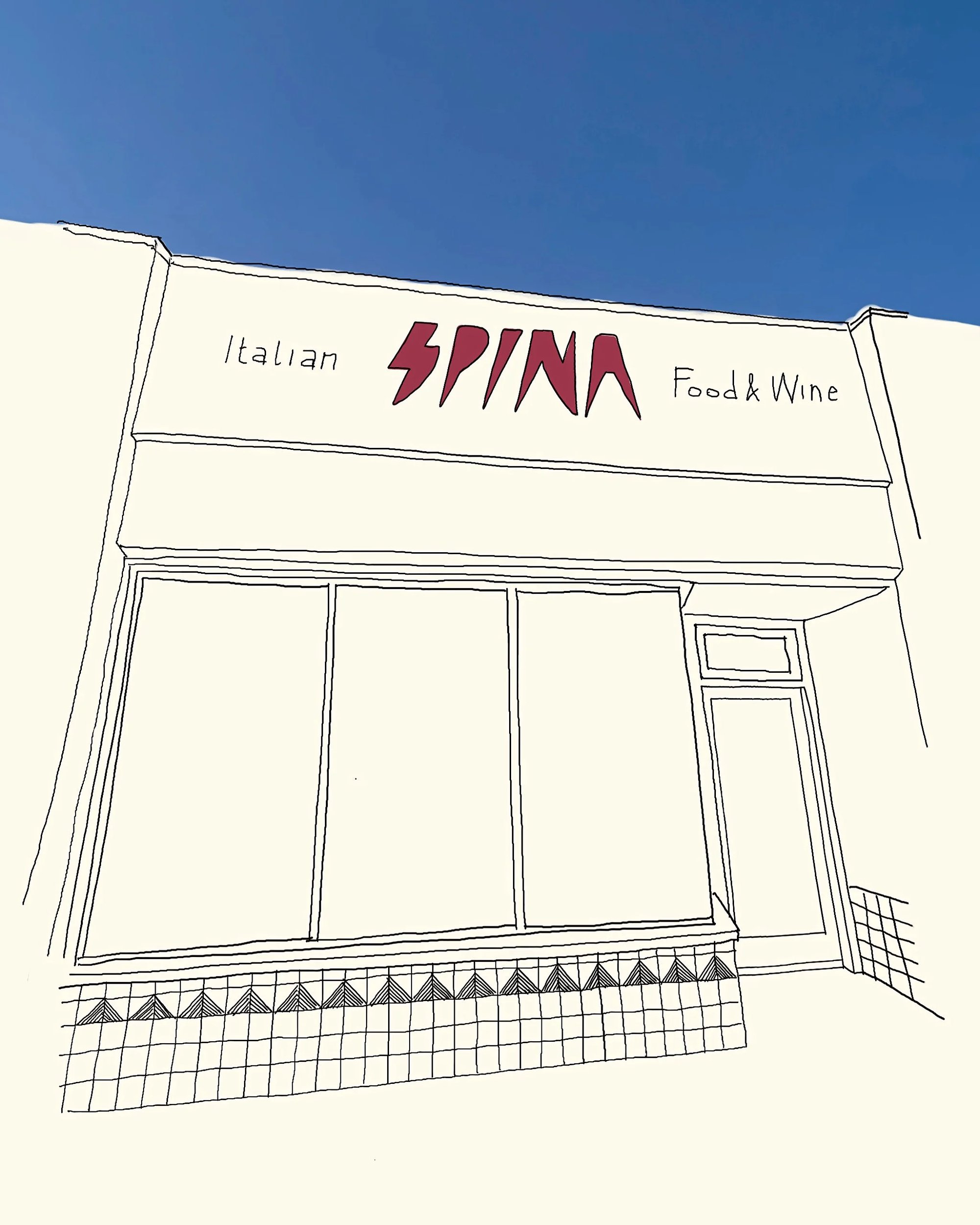
On Glendale Boulevard in Atwater Village, Spina occupies a corner of Los Angeles's less-trafficked Italian dining conversation — a neighbourhood spot that earns its following through consistency rather than spectacle. The address places it outside the city's more visible restaurant corridors, which has shaped both its clientele and its approach to the kind of daily-rotation menu structure that defines serious Italian-American cooking in this tier.

Pearl is the En Primeur Club membership app — saves, bookings, and concierge access live there. Same editors, same standards.
- Address
- 3193 Glendale Blvd, Los Angeles, CA 90039
- Hours
- Daily 12–10 PM
- Website
- spina-losangeles.com
- Directions
- Get directions
The menu
What to order
- Cacio e Pepe
- Squid Ink Linguine
- Ravioli Verdi di Spinaci e Ricotta
Atwater Village and the Quieter Side of L.A.'s Italian Dining Scene
Los Angeles has a complicated relationship with Italian food. On one end sits the high-profile, reservation-wars tier occupied by places like Osteria Mozza, where the pasta program anchors a broader argument about Italian cooking as serious restaurant cuisine. On the other end, the city has always had a working stratum of neighbourhood trattorias that operate outside the media cycle — places that build a local following over years rather than weeks. Spina, at 3193 Glendale Boulevard in Atwater Village, belongs to that second category, and has developed accordingly.
Atwater Village sits between Los Feliz and Glendale in a stretch that doesn't attract the same density of press attention as Silver Lake or Larchmont. That geographic position has its own logic: the neighbourhood draws residents rather than tourists, which tends to produce a more stable dining culture. Restaurants here earn their regulars differently than venues in the city's more photographed corridors, and the menus that succeed tend to reflect that — less concept-led, more iteration-led.
Menu Architecture as a Statement of Intent
The way a restaurant structures its menu reveals more about its philosophy than any mission statement. At the Italian-American neighbourhood level in L.A. there's a persistent tension between the fixed, brand-legible format and the more fluid daily-rotation approach. The latter requires kitchen confidence: if the menu changes with availability and season, there's no safety net of signature dishes to anchor the experience for new guests. It demands that the cooking be consistently compelling rather than occasionally exceptional.
Spina's positioning on Glendale Boulevard places it in a neighbourhood context where that kind of consistency matters more than novelty. The restaurants in this tier that build multi-year reputations typically do so through the discipline of repetition: the same well-executed pasta, the same reliable antipasto rotation, the same considered wine list that doesn't change dramatically with fashion. Across American cities, the Italian restaurants that last, from Bacchanalia's farm-driven approach in Atlanta to the produce-led tasting formats at Single Thread Farm in Healdsburg, tend to anchor their identity in the discipline of sourcing and kitchen process rather than theatrical presentation.
That approach sits within a broader American dining shift. Across the country, the restaurants commanding sustained critical attention have moved away from maximalist tasting menus toward more approachable formats that still reflect genuine craft. You see it in the stripped-back rigor at Lazy Bear in San Francisco, in the menu restraint that defines Hayato's kaiseki approach in L.A. and in the seasonal precision that anchors Blue Hill at Stone Barns in New York. Spina operates in a different price tier than those venues, but the underlying logic, menu structure as an expression of sourcing discipline, runs parallel.
Where Spina Sits in L.A.'s Broader Dining Conversation
Los Angeles has developed a serious fine dining tier over the past decade, built around venues like Providence in seafood and Kato in New Taiwanese, restaurants that have attracted national awards attention and placed the city in conversation with New York, Chicago, and San Francisco as a destination for ambitious cooking. That tier also includes Somni's molecular precision and the kind of conceptual intensity that defines Alinea in Chicago or Atomix in New York City.
Spina doesn't compete in that tier, and doesn't need to. The neighbourhood Italian restaurant plays a different and arguably more demanding role in a city's dining ecology: it has to justify a repeat visit from locals who already know the menu, rather than a single visit from someone working through a list. That calculus produces a different kind of cooking pressure. Venues in the same city that command the highest price points, like The French Laundry in Napa or Le Bernardin in New York City, are judged on execution of an elaborate, choreographed experience. A neighbourhood trattoria is judged on whether the food is better on the tenth visit than the first.
In the context of our full Los Angeles restaurants guide, Spina represents the less-discussed but consistently important middle stratum, the kind of address you end up at because a neighbour recommended it rather than because it appeared on an awards shortlist. That mode of discovery, increasingly rare as restaurant media concentrates on the high-concept and the highly decorated, is its own form of credibility.
Practical Considerations for Visiting
Spina's Atwater Village address at 3193 Glendale Boulevard means arriving by car is the most practical option for most Angelenos; the neighbourhood sits close enough to the 5 freeway to be accessible from a wide radius, but lacks the density of public transit connections that make Silver Lake or Downtown more walkable propositions. The surrounding blocks have the low-key commercial character typical of Atwater Village, independent businesses, some foot traffic in the evenings, but without the crowds that come with higher-profile dining corridors. That context shapes the experience: dinner here feels local in a way that venues in more touristed areas don't, and the pacing tends to reflect it.
For readers assessing where Spina fits relative to L.A.'s broader Italian options, the relevant comparison set is less the high-end Italian tier and more the neighbourhood-driven Italian-American restaurants that have built loyal followings in similar residential corridors. Venues like Addison in San Diego operate in an adjacent Southern California dining culture, while Emeril's in New Orleans and The Inn at Little Washington represent the kind of sustained, reputation-driven longevity that neighbourhood-focused restaurants can achieve when the cooking holds its level over time. 8½ Otto e Mezzo Bombana in Hong Kong demonstrates how Italian cuisine can sustain Michelin recognition internationally when execution is rigorous enough, a benchmark that illustrates, by contrast, the different but equally legitimate work that a neighbourhood trattoria does.
The question for any restaurant at Spina's address and positioning is whether the food is worth the specific effort of getting there rather than defaulting to something closer or more convenient. In Atwater Village, the answer to that question gets tested every service, which is, in its own way, a more demanding accountability than any awards cycle.
Frequently asked questions
What part of town is Spina in?
Spina is located at 3193 Glendale Blvd, Los Angeles, CA 90039.
How does Spina compare to other Italian restaurants in the Atwater Village and Silver Lake area?
Atwater Village and the adjacent Silver Lake corridor have developed a quiet concentration of neighbourhood-driven Italian and Italian-American kitchens that operate below the radar of LA's downtown and Westside fine dining circuit. For Los Angeles diners working eastward from the city's more publicised dining clusters, this stretch of Glendale Boulevard represents a different register entirely.
What do regulars order at Spina?
Ask staff about the day's offerings when you arrive.
What's the best way to book Spina?
Contact the restaurant directly for current availability and booking details.
Do they accommodate allergies at Spina?
Contact the restaurant directly before your visit to discuss dietary requirements.
How Spina Los Angeles compares with similar nearby venues.
| Venue | Cuisine | Price |
|---|---|---|
| SpinaThis venue — the venue you are viewing | Modern Italian Pasta Bar | $50–100 |
| Hail Mary Pizza | LA-Style Sourdough Pizza | $20–30 |
| Bon Vivant Market Cafe | Eclectic French and Californian | $20–30 |
| Tacos Villa Corona | Mexican Taqueria | $10–20 |
| All'Acqua | Pan-Italian Trattoria | $50–100 |
| Link N Hops | German Craft Beer & Sausage House | $20–30 |
Continue exploring
More in Los Angeles
Restaurants in Los Angeles
Browse all →
Bars in Los Angeles
Browse all →

Hotels in Los Angeles
Browse all →
Wineries in Los Angeles
Browse all →
Details
- Cozy
- Trendy
- Modern
- Date Night
- Casual Hangout
- Open Kitchen
- Extensive Wine List
- A La Carte
Current opening hours
- Monday
- 12–10 PM
- Tuesday
- 12–10 PM
- Wednesday
- 12–10 PM
- Thursday
- 12–10 PM
- Friday
- 12–10 PM
- Saturday
- 12–10 PM
- Sunday
- 12–10 PM
Hours can change for holidays and private events. Last verified .
Cozy casual atmosphere with modern Italian fare.