All'Acqua
Our verdict
All'Acqua occupies a quiet stretch of Glendale Boulevard in Atwater Village, operating in a part of Los Angeles where neighborhood-scale Italian dining has room to breathe outside the noise of Westside restaurant culture. The address places it within a concentrated pocket of thoughtful independent restaurants that have made the Silver Lake corridor increasingly worth crossing the city for.

Pearl is the En Primeur Club membership app — saves, bookings, and concierge access live there. Same editors, same standards.
- Address
- 3280 Glendale Blvd, Los Angeles, CA 90039
- Phone
- (323) 663-3280
- Hours
- Mon–Thu 11:30 AM–2:30 PM, 5–9 PMFri 11:30 AM–2:30 PM, 5–10 PMSat 11 AM–2:30 PM, 5–10 PMSun 11 AM–2:30 PM, 5–9 PM
- Website
- allacquarestaurant.com
- Directions
- Get directions
- Booking
- Book on Resy
The menu
What to order
- Bucatini Cacio e Pepe
- Lobster Linguine
- Clam Pizza
- Grilled Octopus Salad
- Limoncello Budino
- Strozzapreti with Lamb Ragu
Atwater Village and the Quiet Case for Neighborhood Italian
Glendale Boulevard through Atwater Village has a particular quality at the start of an evening: the traffic thins just past the Los Angeles River bridge, the storefronts get smaller, and the restaurants that line the street tend to draw from the immediate neighborhood rather than from reservation apps and destination-dining circuits. All'Acqua, at 3280 Glendale Blvd, sits in that register. Italian-American dining in Los Angeles tends to split between the Westside institutions, large and well-financed, and the smaller neighborhood rooms that have carved out followings without the same infrastructure. Atwater Village belongs to the second category, and it has spent the last several years building a dining identity that rewards the detour.
For context on how Los Angeles Italian operates at its most formal tier, Osteria Mozza sets the reference point: Nancy Silverton's Hollywood address, a specific and well-documented wine program, and a booking window that functions like a timed allocation. All'Acqua operates at a different scale and in a different register, which is precisely what makes the comparison instructive. The city has room for both, and the question for any Italian room at the neighborhood level is whether it can sustain a culinary point of view rather than defaulting to comfort-food familiarity.
How the Meal Moves
Italian dining at its most considered follows a sequencing logic that predates modern tasting-menu culture by several centuries: the aperitivo, the antipasto, the progression through pasta and secondi, and then the cheese or dessert that closes the arc. That structure is not ornamental. It exists because the flavors of an Italian meal are designed to build — acidity and cured salt early, fat and starch in the middle, sweetness or bitterness at the close. Restaurants that understand this tend to pace their rooms accordingly, slowing service between courses to allow the logic to register.
The leading Italian rooms in Los Angeles hold that pacing discipline without making it feel formal. Kato, which operates a tasting format in a different culinary tradition, demonstrates how Los Angeles diners have become comfortable with sequenced, deliberate progression when the room earns the patience. The Italian version of that contract is older and arguably more accessible: familiar reference points at each course, but depth in the sourcing and technique that separates a considered meal from a routine one.
For All'Acqua, the address and neighborhood context suggest a room built for the rhythm of a full Italian dinner rather than a quick plate. Atwater Village's restaurant density is high enough to draw a self-selecting audience willing to commit to an evening, rather than diners grabbing something fast between obligations.
Where All'Acqua Sits in the Los Angeles Italian Conversation
Los Angeles Italian dining has never had the singular anchor that New York's scene does. The city's geography works against it: there is no Little Italy, no one neighborhood that carries a generational weight of red-sauce culture. What Los Angeles has instead is a dispersed set of rooms operating at different price points and with different reference points — Northern Italian, Sicilian, Italian-American, and the contemporary farm-to-table inflection that arrived in the 2010s and never entirely left.
The Silver Lake and Atwater corridor has become a viable cluster within that dispersed map. Its restaurants tend toward the independent and the ingredient-focused, which aligns naturally with what a neighborhood Italian room can do well when it is not trying to compete with the Westside on scale or ambiance spend. Diners who work through our full Los Angeles restaurants guide will find that the city's most interesting dining is often happening in exactly these kinds of mid-scale neighborhood rooms, where the kitchen has a defined identity and the economics favor quality over theatre.
Nationally, the comparison tier for serious neighborhood Italian includes rooms like Frasca Food & Wine in Boulder, which built a regional reputation through Friulian specificity rather than broad Italian familiarity, and Smyth in Chicago, which demonstrates how a mid-size room can sustain a culinary identity independent of a large-city institution's support. The lesson both rooms offer is that neighborhood-scale dining succeeds when it is specific enough to teach the diner something, without requiring the investment level of a destination-tier tasting room.
At the far end of the American fine-dining spectrum, rooms like The French Laundry in Napa, Le Bernardin in New York City, and Providence in Los Angeles itself represent a different proposition entirely, multi-course, high-commitment, award-documented. All'Acqua's Atwater Village address places it at a meaningful remove from that tier, which is not a criticism. The city needs its neighborhood rooms, and the Glendale Boulevard stretch is building a case for itself as the kind of address that earns local loyalty first and broader recognition later.
Planning a Visit
Atwater Village is accessible from Silver Lake, Los Feliz, and Glendale by car with direct parking along the boulevard and side streets. The neighborhood's dining cluster is walkable once you arrive, making it a reasonable starting or ending point for an evening that moves between a drink and a full dinner. As with most independent Los Angeles restaurants operating without a major reservations infrastructure, checking directly with the restaurant for current hours and booking is the practical approach; the address at 3280 Glendale Blvd is the confirmed anchor. Diners planning a broader evening in the city's northeast neighborhoods might note that the Atwater-Silver Lake corridor rewards a slower pace, these are not rooms designed for a quick turn.
Frequently asked questions
Where do I go for All'Acqua?
All'Acqua is located at 3280 Glendale Blvd, Los Angeles, CA 90039, Los Angeles.
How does All'Acqua fit into the broader Atwater Village dining scene?
Atwater Village has shifted over the past decade from a quiet residential corridor into one of northeast Los Angeles's more consistent stretches for serious independent restaurants. All'Acqua at 3280 Glendale Blvd sits within that context: a street-level Italian room in a neighborhood that now draws diners from Silver Lake, Los Feliz, and Glendale who are looking for something with a local footing rather than a citywide profile.
What should I eat at All'Acqua?
The most reliable approach at a restaurant like All'Acqua, operating at 3280 Glendale Blvd in Atwater Village, is to ask what is driving the kitchen on the night you visit. Italian menus in this format tend to shift with season and supplier, so a conversation with your server about what arrived that week will point you toward the dishes that are most alive at that moment.
How far ahead should I plan for All'Acqua?
Atwater Village independents at this level generally require less lead time than destination rooms in other parts of Los Angeles. A few days to a week ahead is a reasonable working assumption, though Friday and Saturday evenings on Glendale Blvd tend to fill faster than the mid-week equivalent. Calling directly remains the most accurate way to gauge current availability.
What has All'Acqua built its reputation on?
All'Acqua operates in a part of Los Angeles where reputations accumulate through neighborhood regulars rather than award cycles or media launches. Atwater Village, positioned between Silver Lake, Los Feliz, and Glendale, has developed a concentration of ingredient-focused independent restaurants over the past decade, and venues that hold their ground in that corridor tend to do so through consistency rather than novelty.
Is All'Acqua allergy-friendly?
Italian menus characteristically involve gluten, dairy, and tree nuts across multiple courses, so contacting All'Acqua at 3280 Glendale Blvd directly before your visit is the most practical step if dietary restrictions apply. Most independent kitchens in Los Angeles at this level are willing to accommodate with advance notice, but the specifics depend on what the menu is doing on a given week.
Recognition, Side-by-Side
Comparable options at a glance, pulled from our tracked venues.
| Venue | Cuisine | Price | Awards | Notes |
|---|---|---|---|---|
| All'AcquaThis venue — the venue you are viewing | Pan-Italian Trattoria | $50–100 | Not listed | Not listed |
| Kato | Modern Taiwanese Fine Dining | $300–500 | 2 Michelin Stars · World's 50 Best #49 | New Taiwanese, Asian |
| Hayato | Traditional Japanese Kaiseki | $300–500 | 2 Michelin Stars · La Liste Top Restaurants | Japanese |
| Vespertine | Avant-Garde Tasting Menu | $200–300 | 2 Michelin Stars · La Liste Top Restaurants | Progressive, Contemporary |
| Holbox | Modern Mexican Seafood | $30–50 | 1 Michelin Star · World's 50 Best #26 | Mexican Seafood, Mexican |
| Sushi Kaneyoshi | Edomae Omakase | $300–500 | 1 Michelin Star · LA Times 101 Best Restaurants #24 | Sushi, Japanese |
Continue exploring
More in Los Angeles
Restaurants in Los Angeles
Browse all →
Bars in Los Angeles
Browse all →

Hotels in Los Angeles
Browse all →
Wineries in Los Angeles
Browse all →
Details
- Romantic
- Cozy
- Rustic
- Modern
- Lively
- Date Night
- Group Dining
- Casual Hangout
- Brunch
- Open Kitchen
- Standalone
- Terrace
- Craft Cocktails
- Beer Program
- Extensive Wine List
- Farm To Table
- Local Sourcing
- A La Carte
- Family Style
- Craft Cocktails
- Wine
- Beer
- Vegetarian Friendly
- Pescatarian Friendly
Current opening hours
- Monday
- 11:30 AM–2:30 PM, 5–9 PM
- Tuesday
- 11:30 AM–2:30 PM, 5–9 PM
- Wednesday
- 11:30 AM–2:30 PM, 5–9 PM
- Thursday
- 11:30 AM–2:30 PM, 5–9 PM
- Friday
- 11:30 AM–2:30 PM, 5–10 PM
- Saturday
- 11 AM–2:30 PM, 5–10 PM
- Sunday
- 11 AM–2:30 PM, 5–9 PM
Hours can change for holidays and private events. Last verified .
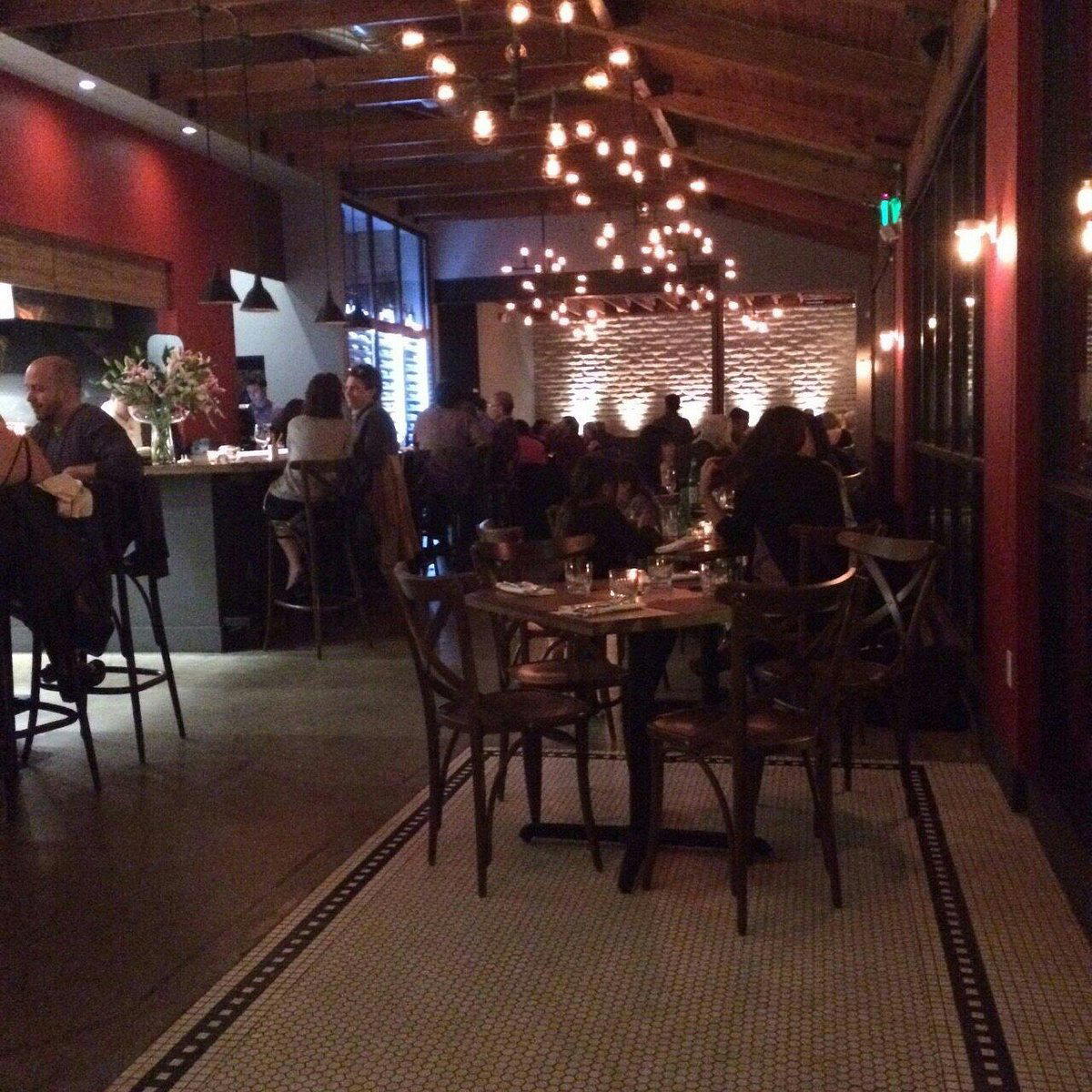
Warm and inviting with brushed wood tabletops, caged Edison light chandeliers, high-pitched wood-beamed ceilings, dramatically-lit walls, and abundant concrete and massive windows creating a comfortable yet scene-y atmosphere.