Spiga D'oro
Spiga D'oro sits on the Leuvensesteenweg in Boortmeerbeek, a small Flemish municipality positioned between Leuven and Mechelen where Italian-inflected cooking has quietly built a local following. The name, meaning 'golden ear of wheat,' signals a kitchen oriented around core ingredients rather than novelty. For the wider Belgian fine dining circuit, see our full Boortmeerbeek restaurants guide.
Pearl is the En Primeur Club membership app — saves, bookings, and concierge access live there. Same editors, same standards.
- Address
- Leuvensesteenweg 43, 3191 Boortmeerbeek, Belgium
- Phone
- +3215520535
- Website
- spigadoro.be
- Directions
- Get directions
 Saves & bookings on Pearl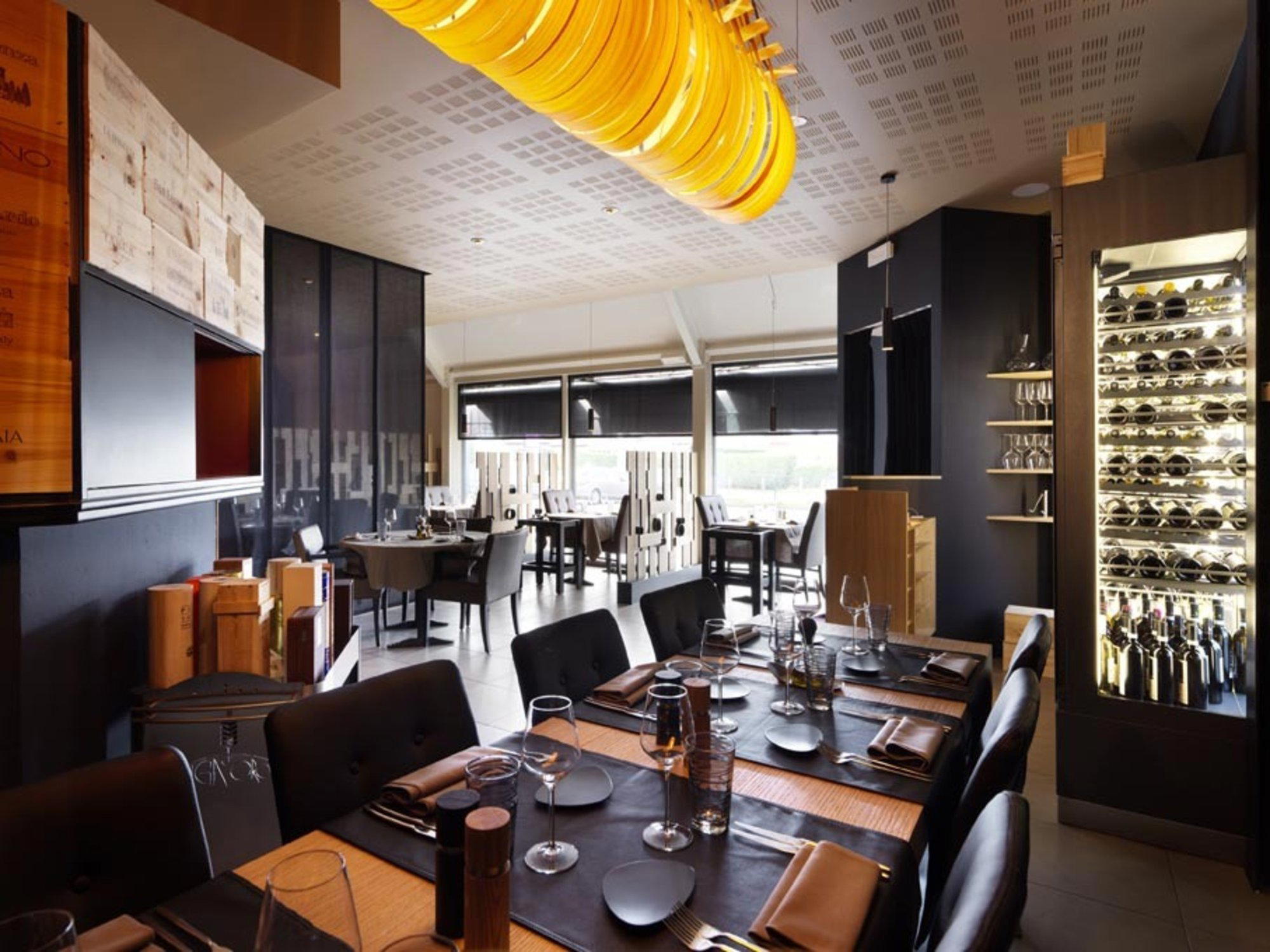
The Flemish Countryside and the Case for Ingredient-Led Italian
In Brussels, Antwerp, or Ghent, a restaurant competes on reputation, critical visibility, and the density of a dining public already habituated to serious cooking. In a municipality like Boortmeerbeek, on the Leuvensesteenweg corridor between Leuven and Mechelen, the proposition is quieter and in some ways more demanding: the kitchen must justify a deliberate journey. Spiga D'oro is an Italian restaurant in Boortmeerbeek. Its name translates from Italian as 'golden ear of wheat,' a reference that places grain, provenance, and elemental ingredients at the centre of its identity before a single dish arrives.
This part of Flemish Brabant is agricultural country in the older sense. The flat land between the Dijle and the wider Leuven axis has historically supported mixed farming, and the produce culture that feeds serious kitchens in the region draws from that base. The better restaurants in this corridor, including Silo's and The Table in the same municipality, tend to reflect a cooking sensibility shaped as much by what grows nearby as by international culinary fashion. Spiga D'oro fits that pattern, with an Italian-rooted kitchen vocabulary applied to a Flemish supply context.
What Ingredient Sourcing Means in This Context
The Italian culinary tradition has always treated sourcing as doctrine rather than marketing. The logic of a specific flour for a specific pasta, a particular olive oil pressed from a particular grove, or a cheese tied to a defined zone is not incidental to the cooking, it is the cooking. When that tradition travels to Belgium, something interesting happens: the framework of ingredient specificity meets a northern European supply chain that is, in its own way, equally serious about provenance. Belgian butter, Flemish endive, North Sea fish, and regional cheeses carry their own geographic logic. Kitchens that understand both traditions can draw from each without flattening either.
Spiga D'oro's name makes the wheat argument explicit. In the Italian context, grain quality determines pasta texture, bread character, and the baseline of any flour-dependent preparation. The golden ear is not a decorative symbol, it is a statement of priority. Whether that translates to house-milled flour, imported Sicilian semolina, or partnerships with local Belgian grain producers is a detail the kitchen controls, but the orientation is clear: the raw material comes first, and the technique follows. This is the inverse of kitchens where technique is the headline and sourcing is an afterthought.
For comparison, the broader Belgian fine dining circuit has moved decisively in an ingredient-led direction over the past decade. Boury in Roeselare operates within a Modern Flemish and Creative French framework at the €€€€ tier, with sourcing specificity as a central editorial argument. Castor in Beveren works in Modern European and Modern French registers with equivalent price positioning. De Jonkman in Sint-Kruis applies Modern Flemish and Creative approaches within the same competitive tier. Spiga D'oro, in a smaller municipality and with Italian rather than Franco-Flemish roots, occupies a distinct niche within that broader movement.
The Setting on Leuvensesteenweg
The address at Leuvensesteenweg 43 places the restaurant on one of the main arterial roads running through Boortmeerbeek, the kind of location common to serious Belgian restaurants that have no interest in urban theatre. The building reads as a destination rather than a discovery, you arrive because you chose to, not because you happened past. This is a characteristic of provincial Belgian dining that distinguishes it from the neighbourhood-restaurant logic of a city like Brussels, where proximity and foot traffic are part of the operating model.
The physical approach along the steenweg, a direct Flemish road running through low-density development and agricultural land, sets expectations correctly. There is no spectacle in the approach, which means the room and the plate carry the full weight of the experience. In this format, the table itself becomes the event, and the sourcing story that restaurant's name implies has to deliver without the support of an atmospheric neighbourhood or a landmark address.
Boortmeerbeek in the Belgian Dining Map
Boortmeerbeek does not appear in the Belgian Michelin Guide's principal clusters, which tend to concentrate around Ghent, the West Flemish coast, Brussels, and Liège. The serious restaurants that operate in smaller Flemish municipalities often do so outside the metropolitan critical gaze, building a clientele through local reputation and word of mouth rather than annual guide recognition. This is not a disadvantage, venues like Willem Hiele in Oudenburg and Bartholomeus in Heist have demonstrated that coastal and rural Flemish locations can sustain cooking at the highest tier. The question for any restaurant in this position is whether the kitchen's ambitions are matched by a local market willing to support them.
The restaurant's Italian register is also worth contextualising within the Belgian scene. French-Belgian and Modern Flemish cooking dominate the country's fine dining conversation, venues like Le Chalet de la Forêt in Uccle, Bozar Restaurant in Brussels, and Hof van Cleve in Kruishoutem anchor the country's critical canon. Italian-rooted cooking at a serious level is a smaller niche in this environment, which creates both a gap and an opportunity. The risk is that Belgian diners with Italian reference points will compare against restaurant Italy rather than against local peers. The opportunity is that a kitchen doing this well is operating with limited direct competition within its region. Internationally, venues like Le Bernardin in New York City and Atomix in New York City illustrate how cuisine-specific identity, when executed with precision, builds a loyal following that transcends geography.
Planning a Visit
Boortmeerbeek is accessible by car from Brussels in approximately 25 minutes via the E40, or from Leuven in under ten minutes. The municipality is also served by the Mechelen-Leuven rail line, with the Boortmeerbeek station a short distance from the Leuvensesteenweg address, making the restaurant reachable without a car for visitors travelling from either city. The restaurant is recommended for reservations and is open Monday 6 to 10 PM, Thursday 12 to 2 PM and 6 to 10 PM, Friday 12 to 3 PM and 6 to 10:30 PM, Saturday 6 to 11 PM, and Sunday 12 to 3 PM and 6 to 10 PM.
Comparable regional destinations for the same trip include L'air du Temps in Liernu, La Durée in Izegem, La Table de Maxime in Our, and d'Eugénie à Emilie in Baudour, each operating in smaller Belgian municipalities with kitchens that have built serious reputations outside the metropolitan centres.
Comparison Snapshot
Comparable venues nearby, for context on price, style, and recognition.
| Venue | Cuisine | Price | Awards | Notes |
|---|---|---|---|---|
| Spiga D'oroThis venue — the venue you are viewing | Authentic Italian Slow Food | $$$ | Not listed | Not listed |
| Silo's | Brasserie | $$$ | Michelin Plate | Boortmeerbeek |
| The Table | Classical French-Belgian Fine Dining | $$$$ | Not listed | Boortmeerbeek |
| Cavalieri | Modern Italian | $$$ | Not listed | Mortsel |
| Trentanove | Modern Italian | $$$ | Not listed | Quartier Bleu |
| La Terrazza | Authentic Italian & Mediterranean | $$$ | Not listed | Wilrijk |
Continue exploring
More in Boortmeerbeek
Restaurants in Boortmeerbeek
Browse all →
Bars in Boortmeerbeek
Browse all →


At a Glance
- Elegant
- Classic
- Intimate
- Romantic
- Date Night
- Business Dinner
- Special Occasion
- Celebration
- Standalone
- Extensive Wine List
- Sommelier Led
- Farm To Table
- Local Sourcing
Current opening hours
- Monday
- 6–10 PM
- Tuesday
- Closed
- Wednesday
- Closed
- Thursday
- 12–2 PM, 6–10 PM
- Friday
- 12–3 PM, 6–10:30 PM
- Saturday
- 6–11 PM
- Sunday
- 12–3 PM, 6–10 PM
Hours can change for holidays and private events. Last verified .
Warm and welcoming fine dining atmosphere with professional, good-humoured service in a comfortable setting that reflects authentic Italian gastronomy.