Silo's


Set inside a converted annex of the Boortmeerbeek malting house, Silo's has earned consecutive Michelin Plate recognition in 2024 and 2025 for its traditional cuisine approach. Chef Dieter Fleurinck leads the kitchen while sommelier Dimitri Cuypers and host Dries Van Dijck anchor the floor. At the €€€ price point, it occupies a distinct position among Flemish Brabant's serious dining options, grounded in regional produce, relaxed in register.
Pearl is the En Primeur Club membership app — saves, bookings, and concierge access live there. Same editors, same standards.
- Address
- Leuvensesteenweg 350, 3190 Boortmeerbeek, Belgium
- Phone
- +32 15 51 11 11
- Website
- silos.be
- Directions
- Get directions
 Saves & bookings on Pearl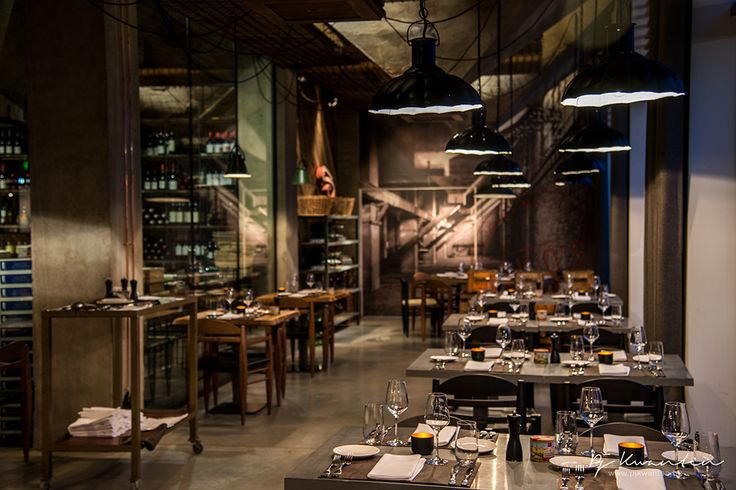
A Malting House Made for Eating
The building does the first work. The malting house on Leuvensesteenweg has the kind of industrial bones that resist decoration: wide eaves, raw masonry, the particular silence of a structure built around process rather than appearance. When a characterful annex of that complex was converted into a brasserie, the transformation was selective rather than total. The result reads as a working space repurposed for pleasure, not a heritage project dressed in exposed brick, but a room that feels continuous with what stood here before.
That connection between structure and substance matters at Silo's because the kitchen draws its authority from a similar principle: the food should reflect where it comes from, and the setting should reflect where it is. Boortmeerbeek sits in Flemish Brabant's agricultural corridor between Brussels and Leuven, and the traditional cuisine format here treats that proximity not as a postcard but as a practical resource.
What Ingredient Sourcing Looks Like in Practice
Belgian traditional cuisine at the serious end of the market, the €€€€ tier occupied by houses like Boury in Roeselare or Willem Hiele in Oudenburg, tends to resolve sourcing questions through elaborate tasting menus that foreground the chef's relationships with specific producers. Silo's positions itself differently. At €€€, the format is brasserie rather than progression, which means the sourcing logic plays out in simpler constructions: fewer components per plate, more weight on what each ingredient actually contributes.
This is, in practice, a harder test. When there is no multi-element composition to carry a dish, the quality of the raw material becomes the argument. Flemish Brabant has the agricultural density to support that argument: the region supplies grain, root vegetables, dairy, and river produce to a network of kitchens that extends from Brussels to Antwerp. A malting house address reinforces that lineage, grain processing, fermentation, and the transformation of agricultural surplus into storable, tradeable goods are all part of the same regional economy that feeds a kitchen like this one.
For readers interested in how Belgian traditional cuisine distributes itself across the country, d'Eugénie à Emilie in Baudour, L'Eau Vive in Arbre, and Ralf Berendsen in Neerharen each represent the Walloon and eastern Flemish variants of the same tradition, with different terroir relationships. The Flemish Brabant version has its own character, shaped partly by proximity to Belgium's academic and administrative centre and partly by the particular grain-and-dairy identity of the Dijle valley.
The Team and What It Signals
Belgium's most reliably good mid-tier restaurants are rarely solo operations. The kitchen-floor division that Silo's operates under, Chef Dieter Fleurinck in the kitchen, sommelier Dimitri Cuypers managing the wine program, host Dries Van Dijck running the room, reflects a deliberate allocation of expertise. A dedicated sommelier at the €€€ level suggests a wine list with enough depth to reward attention, and a named host points toward floor service that treats the guest experience as a discipline rather than an afterthought.
Michelin's Plate distinction sits below the star threshold but above the noise. In the Michelin framework, a Plate signals good cooking in a well-run establishment: it is an assessment of consistent quality rather than notable ambition. For a brasserie operating in a converted industrial building in a Flemish commune of modest scale, consecutive Plate recognition is an argument that the kitchen is doing something worth a deliberate visit rather than a casual detour. Among Belgian Plate-level venues, the consistency of the recognition across two consecutive years carries more signal than a single year's inclusion. Comparable Michelin-recognised addresses in Belgium at higher price points, Zilte in Antwerp or Hof van Cleve in Kruishoutem, operate in different categories, but the shared Michelin framework means that recognition at any tier is assessed against a consistent standard of kitchen execution.
Where Silo's Sits in the Regional Picture
Flemish Brabant is underrepresented in Belgian dining coverage relative to Brussels, Antwerp, and the coastal strip. The capital's restaurants command most of the editorial attention, Bozar Restaurant in Brussels among them, while the province's serious kitchens operate in quieter circumstances. Silo's benefits from this: a dining room in a converted malting house in Boortmeerbeek does not attract the same foot traffic as a city-centre address, which means the kitchen can be consistent without managing the volume pressures that affect urban brasseries.
The €€€ price point places Silo's in a bracket that, in Belgium, covers a range from ambitious bistros to more formal dining. At the lower end of that bracket, the brasserie format reads as accessible; at the upper end, it competes with creative kitchens that have stronger tasting-menu identities. Silo's occupies the middle of that range, where the traditional cuisine classification and the lively brasserie atmosphere set expectations appropriately.
For context on how similar price points operate across Belgian traditional and French-Belgian kitchens, Sir Kwinten in Sint-Kwintens-Lennik and La Durée in Izegem provide useful reference points. Both operate in semi-rural Flemish settings with similar commitments to regional sourcing, and both sit within the same Michelin-recognised tier. The comparison also extends beyond Belgium: Auberge Grand'Maison in Mûr-de-Bretagne and Auga in Gijón represent how traditional cuisine in converted rural settings functions in France and northern Spain, where the relationship between architecture and culinary identity follows similar logic.
Planning a Visit
Silo's sits at Leuvensesteenweg 350, 3190 Boortmeerbeek, on the main road running northeast from Leuven, accessible by car within 20 minutes from the centre of Leuven and roughly 30 minutes from Brussels via the E40/N26 corridor. The brasserie format and lively room suggest that the space accommodates groups and families without the formality that surrounds starred restaurants: children are not an anomaly here, and the atmosphere is built for conversation rather than silence. The €€€ pricing means a full meal with wine sits above casual restaurant territory, this is a deliberate evening out rather than a quick lunch stop, but it does not require the kind of advance planning that Flanders' starred houses demand. Reservations are advisable given the venue's recognition and the modest scale of the malting house annex.
At-a-Glance Comparison
Comparable venues nearby, for context on price, style, and recognition.
| Venue | Cuisine | Price | Awards | Notes |
|---|---|---|---|---|
| Silo'sThis venue — the venue you are viewing | Brasserie | $$$ | Michelin Plate | Not listed |
| Spiga D'oro | Authentic Italian Slow Food | $$$ | Not listed | Boortmeerbeek |
| The Table | Classical French-Belgian Fine Dining | $$$$ | Not listed | Boortmeerbeek |
| L'O à la Bouche | French Bistronomic | $$$ | Michelin Plate | Wépion |
| De l'Ogenblik | Classic French-Belgian Brasserie | $$$ | Michelin Plate | Pl. de Brouckere |
| Quartz | Contemporary French Bistro | $$$ | Michelin Plate | Ixelles |
Recognition history
Dated appearances from independent guides and award organizations, with the underlying list record or original source where available.
Michelin Plate
Michelin
Star Wine List
Star Wine List
Michelin Plate
Michelin
Michelin Plate
Michelin
Continue exploring
More in Boortmeerbeek
Restaurants in Boortmeerbeek
Browse all →
Bars in Boortmeerbeek
Browse all →


At a Glance
Current opening hours
- Monday
- 12–2 PM, 6–10 PM
- Tuesday
- 12–2 PM, 6–10 PM
- Wednesday
- 12–2 PM, 6–10 PM
- Thursday
- 12–2 PM, 6–10 PM
- Friday
- 12–2 PM, 6–10 PM
- Saturday
- 6–10 PM
- Sunday
- Closed
Hours can change for holidays and private events.