
Tabelog 100 #44
Our verdict
Spice&mill belongs to Sapporo’s soup curry culture, a local genre where spice, broth, vegetables, and casual counter dining carry more weight than formality. Its Tabelog Curry EAST 100 selections in 2019, 2020, 2023, and 2024 give it a clear credential within Japan’s curry circuit, while the compact room and no-reservations format keep the experience grounded in everyday Hokkaido dining.

Pearl is the En Primeur Club membership app, where members save venues, book tables and use the concierge.

The menu
What to order
- Roast chicken soup curry
- Chicken vegetable soup curry
Sapporo here is not only the city of glossy hotel lobbies and neon. The approach feels more everyday: local traffic, compact storefronts, and the rhythm of a city where lunch can matter as much as dinner. That setting suits soup curry. Sapporo’s contribution to Japan’s curry canon is not built around the thick, rice-hugging roux found across the country, but around a looser broth, spice layering, vegetables, and a format that moves easily between solo meals, casual tables, and low-friction dining. Spice&mill sits inside that tradition rather than above it.
The useful way to read this address is through Sapporo’s broader curry culture. Soup curry grew in Hokkaido as a local answer to Japanese curry’s heavier national template, borrowing the comfort logic of curry rice while giving the bowl more air, broth, and vegetable presence. That has made the genre unusually flexible: casual enough for weekday eating, serious enough to support specialist shops, and distinct enough to travel poorly outside its home city. In that context, a Sapporo curry room with Tabelog Hyakumeiten recognition in 2024 is not an incidental listing. It signals recognition in a category where regional identity matters.
Sapporo soup curry, read at neighbourhood scale
Soup curry in Sapporo rewards precision without behaving like formal dining. The category is judged less by ceremony than by balance: spice structure, broth depth, vegetable handling, rice pairing, and the ability to stay satisfying without collapsing into weight. The city has long supported curry specialists across different registers, from spice-led casual rooms to soup curry counters with local followings. In the EP Club Sapporo orbit, other Sapporo dining rooms point toward different curry lineages, while the city also supports specialist curry rooms beyond the soup curry lane.
Spice&mill is useful because it keeps the frame tight. The format belongs to the everyday end of the city’s serious dining spectrum, where the meal can be practical without feeling generic. That matters in Sapporo, where category credibility is not limited to expensive counters. Kuriya, listed in the comparison set at a different spend level, belongs to another dining decision entirely; Magic Spice Sapporo honten and Ichimonji Curry Ten sit closer to the same casual curry economy. The comparison clarifies the point: soup curry’s cultural weight in Sapporo does not depend on luxury signals.
A Tabelog score of 3.64 gives another, more Japan-specific cue. Tabelog numbers tend to compress; a mid-three rating at a specialised local shop can carry more significance than international diners expect. The 2024 Tabelog Hyakumeiten recognition adds the stronger signal, because it places the restaurant inside a watched curry category rather than a generic popularity contest. For travellers using Sapporo as a food city, that combination is more useful than a long menu description. It says the shop belongs to the city’s serious curry conversation.
Casual format, serious category signals
The practical character also shapes the editorial read. Spice&mill sits in the walk-in-feeling tradition of Japanese casual specialists rather than the reservation theatre of high-end dining. Its category signals are clear: soup curry, cafe, and curry, with pricing listed in the everyday JPY 1,000 - JPY 1,999 range for both lunch and dinner. This is the kind of place that can make sense for a straightforward Sapporo meal, a curry-focused detour, or a casual stop between larger itinerary anchors.
That mixed audience is part of soup curry’s staying power. Sapporo has fine dining, hotel dining, ramen tourism, seafood counters, and bakery culture, but soup curry remains one of the city’s clearest local signatures because it does not require translation into luxury language. For a broader city map, Our full Sapporo restaurants guide places it alongside ramen, sushi, izakaya, and specialist cafés; travellers building a full itinerary can pair that with Our full Sapporo hotels guide, Our full Sapporo bars guide, Our full Sapporo wineries guide, and Our full Sapporo experiences guide.
The better comparison may be with other compact Japanese specialists rather than with grand restaurants. Sapporo also embraces spice through noodles, while the region’s wider food culture includes many focused craft formats outside curry. Across Japan, the same logic appears in small-format specialists of many kinds: narrow focus, everyday access, and a category that locals understand without explanation.
For international travellers, the editorial case is simple. Sapporo dining is often reduced to ramen, crab, beer, and winter comfort, but soup curry is one of the city’s clearest living food traditions. Spice&mill gives that tradition a compact, low-friction expression with enough recognition to justify making room for it in a Sapporo plan. It is not a white-tablecloth meal and should not be judged by that grammar. Judge it against Sapporo’s curry specialists, where category recognition, local scale, and casual immediacy are part of the point.
How to fold it into a Japan food itinerary
Travellers moving across Japan often over-index on destination restaurants and miss the local categories that explain how a city actually eats. In that sense, Sapporo soup curry belongs on the same planning shelf as other highly local Japanese dining formats: the point is not luxury for its own sake, but a format that reveals local priorities. For parallel reading, EP Club’s broader restaurant archive includes many casual and specialist venues across Japan and beyond, useful for travellers thinking about food culture through formats rather than only through trophy meals.
The planning decision is therefore not whether this is a grand meal. It is whether a Sapporo itinerary has room for a local genre executed within a recognised specialist tier. For diners who care about Japanese food beyond sushi counters and ramen queues, that answer is usually yes.
Frequently asked questions
Is Spice&mill open every day?
Check current opening days and hours directly before visiting, as schedules for casual Sapporo restaurants can change.
Is Spice&mill expensive?
Pricing at Spice&mill is listed as Dinner: JPY 1,000 - JPY 1,999; Lunch: JPY 1,000 - JPY 1,999.
Where is Spice&mill located?
Sapporo.
What makes Spice&mill worth seeking out?
Its strongest credential is 2024 Tabelog Hyakumeiten recognition, which puts it in a narrowly watched curry field. The JPY 1,000–1,999 lunch and dinner range makes it more of a practical Sapporo curry stop than a formal destination.
Is Spice&mill good for vegetarians?
Spice&mill is listed in the soup curry, cafe, and curry categories. Vegetarian diners should check the current menu carefully before ordering.
Does Spice&mill work for a family meal?
Spice&mill is a casual Sapporo curry option, but families should check the current seating and menu details directly before planning around it.
Cost and Credentials
Comparable options at the same price tier.
| Venue | Cuisine | Price | Awards | Notes |
|---|---|---|---|---|
| Spice&millThis venue (the venue you are viewing) | Japanese Soup Curry | $10–20 | Tabelog 100 #44 | Not listed |
| Sapporo Fujiya | Ramen & Tsukemen Shop | $10–20 | Tabelog 100 #26 | Higashi, Ramen & Tsukemen Shop |
| Ramen Jiro Sapporo ten | Jiro-Style Ramen | $1–10 | Tabelog 100 #98 | Kita, Jiro-Style Ramen |
| Twilight | Yoshoku (Japanese-style Western cuisine) | $10–20 | Tabelog 100 #8 | Kiyota, Yoshoku (Japanese-style Western cuisine) |
| Menya Suzuran | Sapporo ramen & soup curry-style ramen | $10–20 | Tabelog 100 #71 | Chūō, Sapporo ramen & soup curry-style ramen |
| Ramenya Kirita Seimen | Sapporo Ramen Counter | $1–10 | Tabelog 100 #43 | Chūō, Sapporo Ramen Counter |
Recognition history
Dated appearances from independent guides and award organizations, with the underlying list record or original source where available.
Tabelog 100 #44 · No. 44
Tabelog · Tabelog 100 - Curry - EAST - 2024
Continue exploring
More in Sapporo
Restaurants in Sapporo
All restaurants in Sapporo →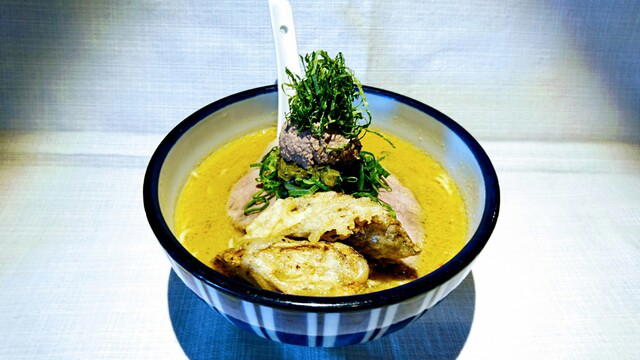
Bars in Sapporo
All bars in Sapporo →





Details
- Cozy
- Casual
- Solo
- Casual Hangout
- Family
- After Work
- Standalone
- A La Carte
- Coffee
- Vegetarian Friendly
Current opening hours
- Monday
- 10:30 AM–3 PM, 5–8:30 PM
- Tuesday
- 10:30 AM–3 PM, 5–8:30 PM
- Wednesday
- Closed
- Thursday
- Closed
- Friday
- 10:30 AM–3 PM, 5–8:30 PM
- Saturday
- 10:30 AM–3 PM, 5–8:30 PM
- Sunday
- 10:30 AM–3 PM, 5–8:30 PM
Hours can change for holidays and private events. Hours as of .