
Tabelog 100 #8
Our verdict
Twilight gives Sapporo’s yoshoku tradition a grounded, old-school reference point: hamburger steak, curry, and Japanese-style Western cooking rather than ceremony. Its 2025 Tabelog 100 Yoshoku EAST selection places it in a serious regional conversation, while the modest spend keeps the experience closer to a neighbourhood meal than a destination tasting counter.

Pearl is the En Primeur Club membership app, where members save venues, book tables and use the concierge.
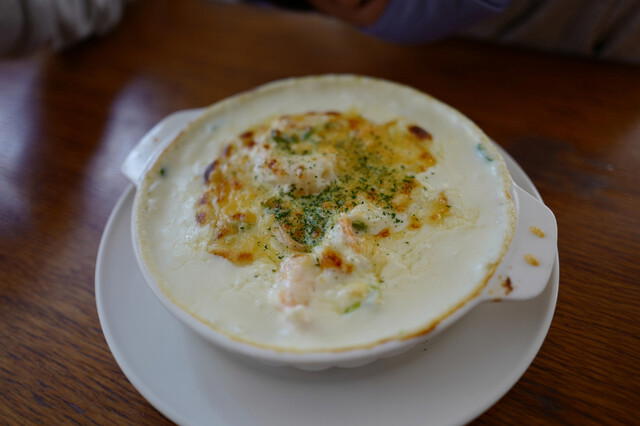
Approaching Twilight means leaving the polished centre of Sapporo’s dining map for a quieter register, where the appeal of yoshoku is not spectacle but sequence: sauce, rice, meat, curry, and the steady comfort of a familiar plate. The room’s house-restaurant identity matters because this style of cooking has always lived between domestic comfort and professional discipline. Sapporo can sell snow-country seafood, miso ramen, and dairy-rich sweets with ease; yoshoku asks for a different kind of attention, one that reads the meal as a series of familiar Western forms translated through Japanese appetite.
That translation is the point. Yoshoku is not a copy of European cooking. It is a Japanese category built around adaptation: hamburger steak rather than a steakhouse cut, curry as a plate of rice and sauce rather than a spice-shop thesis, and other Western-derived dishes in rooms across the country, all calibrated for lunch counters, family tables, and repeat local use. Twilight sits within that practical lineage. Its 2025 Tabelog recognition gives the restaurant a measurable signal in a category that can otherwise be misread by travellers as casual filler between sushi and ramen.
Yoshoku in Sapporo works through rhythm, not ceremony
The meal here is better understood as progression than performance. In high-end Japanese dining, sequence often means a chef-led tasting menu with seasonal chapters. In yoshoku, the arc is plainer and more democratic: a central plate, a starch, a sauce-driven finish, then the question of whether curry or hamburger steak defines the visit. That structure gives the cuisine its grip. It is filling without being blunt, nostalgic without relying on retro décor as its only argument.
Sapporo’s colder climate also sharpens the logic of the category. Rich sauces, browned meat, and curry rice make sense in Hokkaido alongside the city’s other headline comforts. The city’s restaurant culture has room for both: precise noodle shops, curry specialists, and long-running yoshoku rooms that turn Western-derived dishes into local routines. Twilight belongs to the latter camp, with hamburger steak and curry anchoring the format rather than acting as side notes.
The 2025 Tabelog recognition is useful because it separates this kind of restaurant from the mass of everyday yoshoku addresses. A score of 3.56 is not a luxury signal in the Michelin sense, and that distinction matters. It points instead to a Japanese user-review ecosystem where durability, consistency, and category fit carry weight. For yoshoku, that kind of recognition can be more meaningful than a theatrical tasting narrative would be.
Hamburger steak, curry, and the value of an unfussy category
Among Sapporo peers, Twilight can be considered alongside Curry Kibun, Pore Pore, Ichimonji Curry Ten, TORA, and Yoshoku Konoyoshi Kiyotaku kitano ten when travellers are weighing comfort-led meals rather than formal dining. Those comparisons clarify the decision: this is not a splurge meal, and it is not trying to behave like one. The appeal is the confidence of a genre that knows its role in the week, especially for travellers who have spent several days moving between seafood counters, soup curry, ramen, and hotel dining rooms.
That positioning is also why the category rewards repeatability over novelty. A tasting progression here does not need rare ingredients or a named signature dish. It depends on how the plate resolves: the savoury centre, the weight of rice, the pull of curry or sauce, and the practical satisfaction of a meal priced for regular use. The listed JPY 1,000 - JPY 1,999 band reinforces that point, keeping the restaurant aligned with everyday Sapporo dining rather than corporate entertaining or special-occasion ritual.
The category itself is the telling detail. Yoshoku often works because its sauces and browned flavours sit between Japanese home cooking and Western bistro grammar. In Sapporo, where beer, whisky, ramen, and seafood often dominate the casual-dining imagination, a yoshoku room keeps the meal in a softer register. It broadens the city’s food map without turning it into fine dining theatre.
How to place it within a Sapporo food itinerary
Twilight makes the strongest case as a counterweight to Sapporo’s headline genres. Visitors building a food-led stay should not treat yoshoku as a consolation category; it explains how imported forms became Japanese everyday food, and that story is as relevant as ramen broth or seafood markets. For broader planning, start with Our full Sapporo restaurants guide, then use Our full Sapporo hotels guide, Our full Sapporo bars guide, Our full Sapporo wineries guide, and Our full Sapporo experiences guide to shape the rest of the trip.
Within that itinerary, curry specialists provide a useful contrast. Other Sapporo dining rooms frame curry through different local lenses, while the city’s casual-food conversation extends beyond curry and yoshoku into many formats. Travellers continuing through Japan can compare how comfort formats shift by city in other dining rooms across Kamakura, Tokyo, Osaka, Kumamoto, Kawasaki, and Kyoto. Overseas, Japanese drinking and casual dining culture also shows how portable these formats become outside Japan.
The editorial read is simple: choose Twilight when the aim is to understand Sapporo through an everyday genre with award recognition, not to chase a luxury ritual. Its value lies in the way a modest yoshoku meal can still carry history, local rhythm, and a clear place within the city’s dining hierarchy.
Frequently asked questions
What does dinner at Twilight typically cost?
Pricing at Twilight is listed as JPY 1,000 - JPY 1,999.
Where exactly is Twilight?
Twilight is located in Sapporo.
Should I book Twilight in advance?
Plan around Twilight as a casual Sapporo yoshoku meal in the JPY 1,000 - JPY 1,999 price band. Check current operating details directly before going.
What is Twilight known for?
Twilight is known for yoshoku, including hamburger steak and curry, and for its 2025 Tabelog recognition.
Comparable Spots, Quickly
Comparable venues by category and price.
| Venue | Cuisine | Price | Awards | Notes |
|---|---|---|---|---|
| TwilightThis venue (the venue you are viewing) | Yoshoku (Japanese-style Western cuisine) | $10–20 | Tabelog 100 #8 | Not listed |
| Yamaarashi Honten | Japanese Ramen | $1–10 | Tabelog 100 #50 | Toyohira |
| Curry SAVoY | Japanese Soup Curry | $1–10 | Tabelog 100 #94 | Kita |
| MATALE Maruyama ten | Hokkaido soup curry | $10–20 | Tabelog 100 #71 | Chūō |
| Ramen Yoshi | Sapporo ramen shop | $10–20 | Tabelog 100 #6 | Toyohira |
| Pore Pore | Sapporo soup curry | $10–20 | Tabelog 100 #12 | Shiroishi |
Recognition history
Dated appearances from independent guides and award organizations, with the underlying list record or original source where available.
Tabelog 100 #8 · No. 8
Tabelog · Tabelog 100 - Yoshoku - EAST - 2025
Continue exploring
More in Sapporo
Restaurants in Sapporo
All restaurants in Sapporo →
Bars in Sapporo
All bars in Sapporo →
Details
- Cozy
- Classic
- Lively
- Family
- Casual Hangout
- Group Dining
- Solo
- After Work
- Standalone
- A La Carte
Casual, family-friendly house-restaurant with simple classic decor, a mix of counter and table seating, and a relaxed neighborhood feel suited to both solo diners and families.