
Tabelog 100 #43
Our verdict
Ramenya Kirita Seimen sits in Sapporo’s compact, counter-driven ramen culture, where noodle texture and local wheat identity matter as much as broth style. Its Tabelog Ramen HOKKAIDO 100 selection in 2024 and 2025 places it among the city’s closely watched ramen addresses, with a small counter format that suits solo diners and focused meals.

Pearl is the En Primeur Club membership app, where members save venues, book tables and use the concierge.
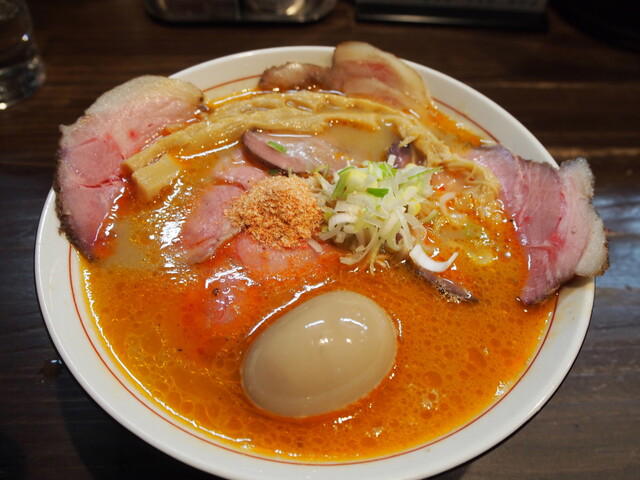
The menu
What to order
- Jet black shoyu ramen
- Black soy sauce ramen
- Shrimp miso ramen
- Salt ramen
Compact ramen rooms have a particular rhythm in Sapporo: street noise drops away, the room tightens, and the meal becomes a study in speed, steam, and precision. Ramenya Kirita Seimen belongs to that focused urban category, a counter-led shop where the experience is less about ceremony than concentration. In a city often associated with ramen and cold-weather appetite, its name signals the point of attention before the bowl arrives: seimen, noodle-making, and the texture decisions that separate a routine lunch from a shop serious enough to be selected for Tabelog Ramen HOKKAIDO 100 in 2025.
Sapporo’s ramen culture is not a single style. The city’s tourist shorthand can flatten it into a few familiar images, but the working scene is broader: central counters, lunch shops, late meals, and specialist rooms that build identity through broth weight, wheat choice, noodle cut, or tare balance. That is why a small ramen counter in Sapporo can matter. It participates in a local conversation where sourcing is not decorative language; Hokkaido’s agricultural base gives noodle shops a credible reason to talk about flour, chew, and structure rather than treating noodles as a neutral carrier for soup.
Hokkaido ramen judged through the noodle, not only the broth
The ingredient story in Sapporo ramen starts with climate and agriculture. Hokkaido is widely associated with wheat production, and that context shapes how serious ramen shops are read locally. A bowl may be judged first by aroma and broth, but the second judgment comes quickly: how the noodle holds heat, how it grips soup, how much resistance it offers, and whether the texture remains coherent through the final third of the meal. A shop with seimen in its name invites that scrutiny.
Ramenya Kirita Seimen’s public profile gives no chef mythology to lean on, which is useful. It keeps attention on the format and the category. The shop’s Tabelog 100 recognition puts it inside Hokkaido’s crowded ramen field rather than in a luxury dining frame, and that distinction matters for travelers planning meals in Sapporo. This is the kind of address where value is measured in execution, turnover, and specificity, not tablecloths or a long beverage list.
Within the city, the comparison set cuts across styles and budgets. Other Sapporo dining rooms speak to the city’s appetite for focused casual meals, while curry, sushi, dim sum, and bar-led specialists show how the city’s casual dining strength extends beyond noodles. For a broader sweep of the city’s tables, use Our full Sapporo restaurants guide; the point is not to rank lunch stops against sushi counters or dining rooms, but to read each meal at the correct scale.
A small counter in Sapporo's everyday dining circuit
Sapporo is a useful base for this kind of ramen because the city supports office lunch traffic, shopping routes, and evening dining in close proximity. The area rewards restaurants that make decisions quickly and clearly: focused menus, compact formats, and meals that work for one person as easily as for two. In that context, a counter-led room is not a limitation so much as a statement of pace. It suits the ramen tradition, where the kitchen and customer share the same narrow field of action.
That scale also changes how to think about recognition. A Tabelog 100 listing in the ramen category does not turn a counter shop into a formal destination restaurant; it marks a venue that has earned attention within a high-volume, highly competitive everyday genre. The practical implication is simple: treat it as a serious casual meal. It belongs in an itinerary beside markets, parks, and transit-heavy days, not as the anchor for a long evening built around wine service.
Sapporo’s stronger food days often mix formats rather than chase a single prestige category. A visitor might pair ramen with another casual stop, then shift later toward sushi, izakaya cooking, or a bar crawl. For that wider planning frame, Our full Sapporo hotels guide, Our full Sapporo bars guide, Our full Sapporo wineries guide, and Our full Sapporo experiences guide help place the meal inside the city rather than treating it as an isolated stop.
How to read the choice against other Japanese casual specialists
Japan’s casual dining strength lies in narrow specialization. The same logic that makes a ramen counter compelling also applies to other focused Japanese formats, from sushi counters to tea-led rooms, bars, and casual kitchens. The useful question is not which venue is grander; it is whether the format gives enough evidence of focus. A counter, a defined category, and local recognition provide that evidence here.
For travelers building a Japan-wide food map, compare the specialization rather than the cuisine: focused casual specialists make more sense when judged by how tightly they execute their chosen lane. The same applies when Japanese formats travel, where clarity of purpose is what keeps a concept from becoming generic. Ramenya Kirita Seimen should be read through that lens: a specific format, a specific category, and a narrow experience that does not need to behave like a destination dining room.
Ramenya Kirita Seimen is compelling for a specific reason: it reflects Sapporo’s everyday seriousness about noodles at a scale that leaves little room for distraction. The award history supplies the external signal; the category supplies the context. For a traveler, the appeal is not luxury, but a concise encounter with Hokkaido ramen culture through the part of the bowl that too many visitors treat as secondary.
Frequently asked questions
Is Ramenya Kirita Seimen formal or casual?
It reads as casual dining in Sapporo, with a format built for ramen service rather than a formal meal.
What price level is Ramenya Kirita Seimen?
Pricing at Ramenya Kirita Seimen is listed as - JPY 999 - JPY 999.
Where is Ramenya Kirita Seimen located?
Sapporo.
Can I walk in to Ramenya Kirita Seimen?
Plan for a casual ramen-shop visit in Sapporo and check current operating details before you go.
How It Stacks Up
Comparable venues to calibrate price, style, and recognition.
| Venue | Cuisine | Price | Awards | Notes |
|---|---|---|---|---|
| Ramenya Kirita SeimenThis venue (the venue you are viewing) | Sapporo Ramen Counter | $1–10 | Tabelog 100 #43 | Not listed |
| Saera | Japanese kissaten & sandwich shop | $10–20 | Tabelog 100 | Chūō |
| Go Maru Do | Japanese Soup Curry | $10–20 | Tabelog 100 #66 | Chūō |
| Koku Ichiban Ramen Midoriya | Ramen shop | $1–10 | Tabelog 100 #65 | Chūō |
| Spice&mill | Japanese Soup Curry | $10–20 | Tabelog 100 #44 | Shiroishi |
| Sumire Sapporo susukino ten | Japanese Ramen | $10–20 | Tabelog 100 #1 | Chūō |
Recognition history
Dated appearances from independent guides and award organizations, with the underlying list record or original source where available.
Tabelog 100 #43 · No. 43
Tabelog · Tabelog 100 - Ramen - HOKKAIDO - 2025
Continue exploring
More in Sapporo
Restaurants in Sapporo
All restaurants in Sapporo →
Bars in Sapporo
All bars in Sapporo →
Details
- Cozy
- Intimate
- Solo
- Family
- Casual Hangout
- After Work
- Chefs Counter
- Standalone
- A La Carte
- Counter Dining
Tiny basement-level counter shop with just nine seats, non-smoking and casual, creating a cozy, focused ramen experience suited to solo diners and small parties.