
sou brings Sendai’s yakitori conversation into a tighter, more ingredient-led register: Ashizuri chicken, counter seating, and a drinks program that reaches sake, shochu, and wine. Its selection for Tabelog 100 Yakitori EAST 2025 places it among the region’s more closely watched grill counters, with a format that rewards diners who care about provenance as much as charcoal technique.
Pearl is the En Primeur Club membership app — saves, bookings, and concierge access live there. Same editors, same standards.
- Address
- 宮城県仙台市青葉区一番町1-1-8 青葉パークビル B1F
- Phone
- +81227973899
- Website
- tabelog.com
 Saves & bookings on Pearl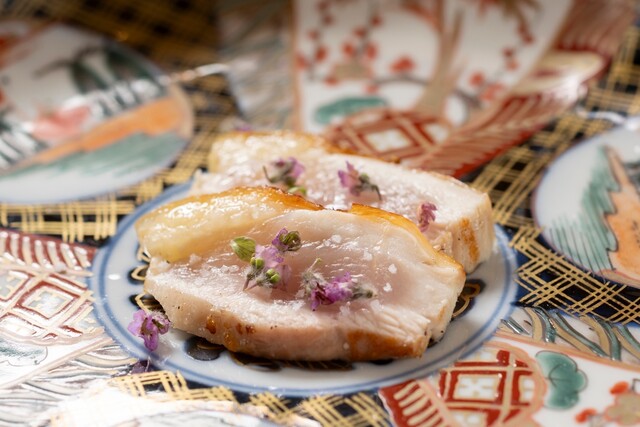
The room announces its priorities before the first skewer reaches the grill: a basement counter, a compact audience, and a pace built around watching heat do disciplined work. Sendai has plenty of casual chicken-and-drinks cooking, but the city’s more serious yakitori counters operate by a different logic. Ingredient choice, cut sequence, seasoning restraint, and drink pairing matter as much as the glow of charcoal. sou belongs in that smaller category, using Ashizuri chicken as its central argument rather than treating yakitori as a generic late-night format.
That matters because yakitori is often misunderstood outside Japan as a simple skewer genre. At the higher end, it is closer to a butcher’s tasting menu: breast, thigh, skin, cartilage, liver, gizzard, and other parts move through heat at different speeds, and the counter format makes timing visible. The stronger houses do not need theatrical plating. They need control, procurement, and a room small enough for the grill to set the rhythm. Selection for Tabelog 100 Yakitori EAST 2025 gives sou a clear external signal inside that regional conversation, especially for a Sendai address rather than a Tokyo one.
Ashizuri chicken puts provenance at the centre of the grill
Ingredient-led yakitori depends on the bird before it depends on the cook. Ashizuri chicken gives this counter a defined point of origin, which is important in a category where many restaurants talk about charcoal but fewer make provenance legible. For diners used to Tokyo’s prestige yakitori circuit, the draw here is not imitation of the capital. It is a Sendai counter using a named chicken and a compact service model to push the meal into a more precise tier.
The distinction is useful when comparing across Sendai’s dining range. ankoya Ekimae ten speaks to the city’s local comfort-food habits, while Baisaou points toward tea, sweets, and daytime ritual. achaar, Ademain, and Ako broaden the map in other directions. Yakitori at this level occupies a narrower lane: not banquet dining, not izakaya grazing, and not the seafood-led luxury that shapes much of northern Japan’s reputation.
Price also frames the decision. In the Sendai comparison set, Sushi Yui operates in a higher dinner bracket at JPY 20,000 to JPY 29,999, while Sendai Gyuu Yakiniku Hana Gyuu sits in the same JPY 10,000 to JPY 14,999 dinner range as sou. That makes yakitori here less about budget substitution and more about category preference. The reader choosing between sushi, yakiniku, and grill-counter chicken is choosing a different kind of attention: knife work and rice temperature, beef marbling and smoke, or the sequence of poultry parts over live heat.
The counter format makes restraint the point
An eight-seat counter changes the social contract. There is no large-room anonymity and little room for late decision-making. The meal depends on the concentration of a small group and a steady progression from the grill. This is why serious yakitori rooms tend to be stricter about scent, smoke, and pace than broader izakaya formats. Strong perfume can interfere with aroma; excessive drinking can disrupt a format where the audience is effectively sitting inside the cooking space. The policies read less like ceremony than practical protection of the meal.
The drinks list also signals where the restaurant places itself. Sake and shochu are expected in this category; wine is the more revealing detail. Wine at a yakitori counter is not automatically persuasive, but it shows an ambition to treat chicken fat, tare, salt, smoke, and offal textures as pairing material rather than bar snacks. In Japan, this is part of a broader movement away from purely casual skewers toward grill counters that compete with tasting-menu restaurants for attention, while keeping the essential grammar of yakitori intact.
Sendai gives that grammar a useful setting. The city’s dining culture is shaped by Tohoku produce, station-area eating, beef, seafood, and compact specialist rooms rather than a single dominant luxury narrative. That makes a focused yakitori counter feel less like an outlier and more like part of the city’s appetite for precise, ingredient-aware formats. For a wider read on the city, Our full Sendai restaurants guide is the natural companion, with Our full Sendai hotels guide, Our full Sendai bars guide, Our full Sendai wineries guide, and Our full Sendai experiences guide covering the rest of the trip.
How it fits into a Japan-wide eating itinerary
Travelers building a broader Japan route should read sou as a specialist stop rather than a general Sendai dinner slot. It belongs beside other narrowly defined venues across the country, not because the cuisines match, but because the editorial question is similar: what does a small-format restaurant reveal about local appetite and craft? A Kamakura beef specialist such as -Grilled beef Sukiyaki- KAMAKURA TANUKIAN 鎌倉 たぬき庵 in Kamakura answers through beef and sukiyaki culture;. 鮪と炭火焼き うお炭 秋葉原店 in Tokyo through tuna and charcoal;.cafe in Osaka through café culture;.know in Kumamoto through a regional urban lens; (Shoku) Vietnam in Kawasaki through Vietnamese cooking in a Japanese city context; and [Curry Senmon Ten] Maruyama Kyoju. in Sapporo through curry specialization.
For readers linking Japan with trans-Pacific Japanese dining, Jōdo Saké Bar in Los Angeles and Onigiri Time in Pasadena show how formats mutate abroad. Sendai’s yakitori counter offers the opposite lesson: small scale, named chicken, and regional recognition can carry enough weight without expanding into spectacle. The appeal is precise rather than broad, and that is exactly the point.
At-a-Glance Comparison
Comparable venues by cuisine and price in the same metro.
| Venue | Cuisine | Price | Awards | Notes |
|---|---|---|---|---|
| souThis venue — the venue you are viewing | Yakitori Omakase with Japanese Wine Pairing | $$$ | , | |
| Sushi Yui | Traditional Sushi Omakase | $$$ | , | Aoba-ku |
| Sushi Mino | Sushi Omakase | $$$ | , | Kokubuncho |
| Tempura Azumi | Seasonal Tempura Omakase Counter | $$$ | , | Kokubuncho, Aoba Ward |
| Senrei Zushi JR sendai eki 3 kai ten | Standing sushi counter with Sanriku seafood | $$ | , | Aoba-ku |
| Hiro-zushi | Traditional Edomae Sushi | $$$ | , | Atago Bashi / Nagamachi area |
At a Glance
- Cozy
- Elegant
- Hidden Gem
- Intimate
- Modern
- Sophisticated
- Date Night
- Special Occasion
- Business Dinner
- After Work
- Solo
- Chefs Counter
- Standalone
- Design Destination
- Extensive Wine List
- Sake Program
- Natural Wine
- Local Sourcing
A tranquil, adult-oriented hideaway with only eight counter seats, stylish and relaxing interiors, spacious-feeling counter layout, and a calm, focused atmosphere suited to quietly savoring a coordinated omakase course.