
Sendai’s ramen culture rewards broth discipline as much as regional appetite, and DASHIRO Sendai minamimachidoori honten sits in that conversation with Tabelog Ramen EAST 100 selections in 2024 and 2025 plus a Michelin Plate mention. The draw is a compact, everyday format rather than a luxury ritual: a dashi-focused ramen address in Ichibancho with counter seating, take-out, and a low-cost bracket that keeps the decision refreshingly direct.
Pearl is the En Primeur Club membership app — saves, bookings, and concierge access live there. Same editors, same standards.
- Address
- Japan, 〒980-0811 Miyagi, Sendai, Aoba Ward, Ichibancho, 2 Chome−2−11 TKビル 1階
- Phone
- +81 22-204-4890
- Website
- dashiro.com
 Saves & bookings on Pearl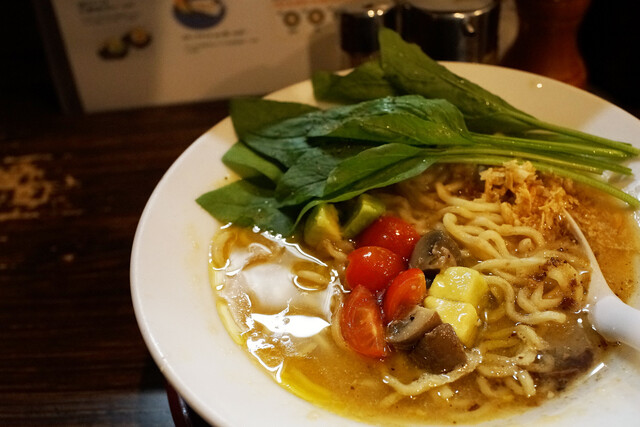
Approaching the Ichibancho stretch around Minamimachidori, the dining rhythm shifts from department-store browsing to quick, purposeful meals. Sendai eats ramen seriously without making every bowl ceremonial: office workers, students, solo diners, and weekend shoppers fold noodle shops into the day. DASHIRO Sendai minamimachidoori honten fits a category Japan does exceptionally well: inexpensive, tightly formatted cooking where broth carries the argument.
Read this address as part of Sendai’s broth culture, not spectacle. Ramen in Tohoku competes with the region’s broader food identity, from seafood to beef tongue to winter cooking, so a bowl needs clear purpose. Public signals point to a dashi-led ramen house rather than a heavy luxury counter. Selection for Tabelog Ramen EAST 100 in both 2024 and 2025 places it within a competitive eastern-Japan ramen field, while the Michelin Plate mention adds outside recognition without turning the meal into fine dining theater.
Broth is the point in Sendai's everyday ramen tier
Ramen shops built around dashi ask for different attention. Tonkotsu announces itself through weight and fat; miso can lead with sweetness, fermentation, and regional heft. A dashi-oriented format shifts the center toward extraction, salinity, and balance. In Sendai, where everyday dining has no shortage of strong flavors, a ramen counter earns repeat visits through precision rather than novelty.
DASHIRO Sendai minamimachidoori honten is useful for travelers because it shows how much serious Japanese food culture happens below the tasting-menu tier. Its budget bracket sits far below Sendai reservation-led restaurants such as sou and hou, both in the JPY 10,000 to JPY 14,999 range, and well below Koban Zushi’s dinner bracket. This is not hierarchy, but meal choice: a ramen stop can carry local texture in half an hour while a formal dinner takes the evening.
In ramen, sourcing begins with stock. Dashi is a system, not one ingredient: dried fish, kombu, shellfish, chicken, pork, vegetables, or other components can build structure. Without a published ingredient ledger, the safer reading is categorical rather than forensic. The house identity points to broth as the primary signature, and the awards history suggests execution has registered beyond neighborhood traffic. In a city where many restaurants trade on regional produce or specialization, that recognition matters because ramen evaluation is brutally comparative.
Sendai’s dining map is broader than ramen. For a compact itinerary, nearby categories help calibrate appetite: achaar, Ademain, Ako, ankoya Ekimae ten, and Baisaou show how the city moves between casual precision, sweets, cafés, and regional eating. For the wider dining map, Our full Sendai restaurants guide gives the broader frame.
A compact counter meal, not a drawn-out restaurant performance
The room format tells you how to use the place. There are 26 seats, including an eight-seat counter, four four-seat tables, and one two-seat table. That layout sits between classic solo ramen counter and small-group neighborhood shop. It is not for long-form dining, private-room negotiation, or ceremony; it is built for turnover, clarity, and close-range eating where the kitchen’s pacing is visible.
That makes it practical for solo dining, reinforced by the public occasion tags. Solo ramen in Japan is not a fallback; it is one of the country’s great dining formats. The counter removes awkwardness solo travelers can feel in formal rooms, and the limited footprint keeps the experience focused. In Sendai, where travelers may move between the station, shopping arcades, and Aoba-dori, this meal has tactical value: between museum time, hotel check-in, or an evening bar plan, without becoming the whole schedule.
The recognition profile needs careful parsing. Tabelog’s Ramen EAST 100 is a selection list, not a formal ranking order, so the value is inclusion in a competitive group rather than a numbered claim. The 3.73 Tabelog score adds a second signal, especially in a category where diners compare shops intensely and scores move slowly. The Michelin Plate note should be read at the correct scale: a guide mention for good cooking, not a star. Together, those signals position DASHIRO Sendai minamimachidoori honten as a serious everyday ramen address, not a luxury restaurant in miniature.
For visitors comparing meals across Japan, Sendai’s value is clear. A low-cost bowl with guide recognition plays a different role from beef sukiyaki in Kamakura, Tokyo charcoal-grill dining, Osaka café culture, Kumamoto drinking-food hybrids, Kawasaki Vietnamese cooking, Sapporo curry specialization, Los Angeles sake-bar formats, or Pasadena onigiri counters. Those contrasts help when planning across cities: -Grilled beef Sukiyaki- KAMAKURA TANUKIAN 鎌倉 たぬき庵 in Kamakura,. 鮪と炭火焼き うお炭 秋葉原店 in Tokyo,.cafe in Osaka,.know in Kumamoto, (Shoku) Vietnam in Kawasaki, [Curry Senmon Ten] Maruyama Kyoju. in Sapporo, Jōdo Saké Bar in Los Angeles, and Onigiri Time in Pasadena each occupy a different dining register.
How to place it in a Sendai itinerary
The case for this stop is strongest when the day needs a focused meal rather than a reservation anchor. Sendai has enough formal dining to justify advance planning, but ramen should stay flexible when possible. A counter-led shop with take-out available and no private-room structure belongs in the practical middle of a trip: lunch between city errands, an early evening bowl before drinks, or a quick solo meal when longer dinner would feel excessive.
There is useful neighborhood logic. Ichibancho and the station-side corridors concentrate shopping, transit, and casual dining, so ramen here reads as part of the city’s daily machinery rather than an isolated pilgrimage. Some ramen shops demand a special detour; this one works as a high-confidence choice inside an area many visitors already pass through.
EP Club’s broader Sendai coverage can help build the rest of the day: Our full Sendai hotels guide for where to base, Our full Sendai bars guide for the evening, Our full Sendai wineries guide for regional drinking context, and Our full Sendai experiences guide for what to do between meals. Within that wider plan, DASHIRO works because it does not ask travelers to overthink the occasion. It offers a recognized ramen format in the city’s everyday dining band, with broth as the reason to pay attention.
A Quick Peer Check
Comparable venues by cuisine and price in the same metro.
| Venue | Cuisine | Price | Awards | Notes |
|---|---|---|---|---|
| DASHIRO Sendai minamimachidoori hontenThis venue — the venue you are viewing | Traditional Japanese ramen focused on dashi | $ | , | |
| Tai Kichi Nakakechou ten | Japanese Taiyaki & Obanyaki Shop | $ | , | Aoba Ward |
| Kanmidokoro Hikoichi | Traditional Japanese sweets cafe (kanmidokoro) | $ | , | Aoba Ward |
| Baisaou | Traditional Japanese wagashi & kakigori shop | $ | , | Aoba Ward |
| Una Ki | Traditional Japanese Unagi | $$ | , | Kokubuncho |
| Sumibi Yakiniku Gura Sendai asaichi ekimae ten | Japanese Yakiniku BBQ | $$ | , | Aoba-ku |
At a Glance
- Cozy
- Lively
- Solo
- Casual Hangout
- After Work
- Standalone
Compact non‑smoking ramen shop with counter and a few small tables, bright and functional rather than decorative, geared toward quick solo or small‑group meals in a busy central Sendai setting.