
Sendai’s sushi culture rewards compact counters, measured pacing, and seafood fluency rather than spectacle. Sushi Mino sits in that register: a 12-seat Kokubuncho sushi room with counter and tatami seating, recognized in Tabelog’s Sushi EAST 100 for 2025 and previously in 2021 and 2022, making it a serious address for travelers reading Sendai through its sushi ritual.
Pearl is the En Primeur Club membership app — saves, bookings, and concierge access live there. Same editors, same standards.
- Address
- 宮城県仙台市青葉区国分町2-12-19
- Phone
- +81227147147
- Website
- tabelog.com
 Saves & bookings on Pearl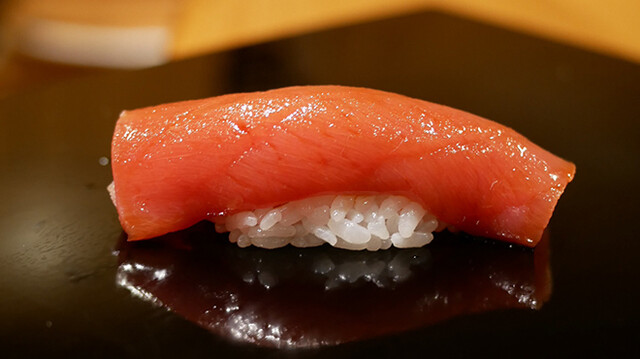
Kokubuncho changes character after dark: office blocks give way to narrow dining rooms, quiet signs, and the low murmur of small counters preparing for evening service. In Sendai, sushi at this level is less about theatrical luxury than calibration. The room, the pacing, the exchange across the counter, and the choice to let the meal unfold without excess explanation all matter. Sushi Mino belongs to that compact Japanese format where the counter is not decoration; it is the operating system.
The useful way to read the restaurant is through ritual. A sushi counter asks diners to accept sequence, temperature, timing, and restraint as part of the meal. That is different from ordering across a broad à la carte menu, and it changes the etiquette: arrive ready to eat at the pace set by the room, keep conversation in proportion to the small space, and treat the counter as a working stage rather than a private dining table. In a city better known internationally for beef tongue, sake, and Tohoku produce, a serious sushi counter gives another view of Sendai: coastal access, regional discipline, and a dining culture that does not need Tokyo scale to carry authority.
A 12-seat counter culture in Kokubuncho
Small-capacity sushi rooms create their own hierarchy. With 12 seats, including 8 at the counter and 4 on a raised platform, the experience sits closer to a controlled evening than a flexible restaurant booking. That matters because sushi service depends on compression: fewer guests, fewer distractions, and a direct line between preparation and eating. The raised-platform seating adds a second register for those who want privacy, but the counter remains the format’s critical seat, where the meal’s rhythm is easiest to read.
This is also where Sendai’s dining geography becomes useful. Kokubuncho is not a sterile luxury district; it is a night-economy neighborhood with bars, izakaya, and restaurants layered into compact streets. That setting gives high-end sushi a different charge from the polished hotel-dining model. The meal is formal in pace but urban in context, surrounded by a district built for moving from dinner to drinks rather than retreating to a destination resort environment. For a broader map of the city’s dining range, Our full Sendai restaurants guide is the better starting point; for the wider trip architecture, pair it with Our full Sendai hotels guide, Our full Sendai bars guide, Our full Sendai wineries guide, and Our full Sendai experiences guide.
Recognition places the meal in the serious regional tier
Tabelog’s Sushi EAST 100 selection for 2025 is the cleanest external signal here, especially because the listing is not isolated: the restaurant was also selected for the same sushi category in 2021 and 2022, and received a Tabelog Award Bronze in 2021. In Japan, where user platforms and specialist lists heavily influence dining decisions, that pattern indicates sustained attention rather than a single-year spike. The listed score of 3.67 is another signal to read in context; on Tabelog, sushi counters with serious followings often sit in narrow score bands, and repeat category selection can matter more than a headline number.
The price tier places the restaurant above many casual Sendai meals and into a bracket where diners should expect a composed sushi evening rather than a snack counter. Compared with local comparison points such as Ako and Tempura Azumi, both listed in lower dinner brackets, Sushi Mino occupies a more expensive sushi-specific tier; compared with Sendai cocktail addresses such as BAR arcenciel and LE BAR KAWAGOE, it serves a different kind of night, one built around a fixed dining cadence before any second stop. Yoi Tei Yocchan sits in a more casual spend band, which makes the contrast useful: the decision is less “where to eat in Sendai” than what kind of evening the traveler wants to structure.
That structure also explains why drinks matter without needing to dominate the story. The listed drinks category includes sake and shochu, a natural pairing language for sushi in Tohoku. The point is not to chase novelty; it is to keep the meal aligned with the ingredients and the pacing of the counter. At this level, over-ordering drinks can interrupt the quiet arithmetic of rice, fish, and timing. The sharper play is to let the restaurant’s format carry the evening and use drinks as support, not spectacle.
How to fit it into a Sendai dining trip
Sushi Mino works strongest as the anchor meal of a Sendai night rather than as one stop in an overpacked itinerary. The city has range, and the internal links between its dining genres are worth using deliberately: compare modern regional cooking at achaar, French-leaning dining at Ademain, and the local restaurant frame around Ako. For casual Sendai specificity, ankoya Ekimae ten and Baisaou show how the city can move from snack-scale precision to tea and sweets with equal seriousness.
Travelers building a broader Japan file can use the contrast profitably. Beef and sukiyaki traditions read differently at -Grilled beef Sukiyaki- KAMAKURA TANUKIAN 鎌倉 たぬき庵 in Kamakura; urban seafood and grill formats shift again at. 鮪と炭火焼き うお炭 秋葉原店 in Tokyo. Osaka’s café register appears at.cafe in Osaka, while Kyushu’s contemporary dining mix comes through.know in Kumamoto. For other Japanese and Japanese-adjacent formats, compare (Shoku) Vietnam in Kawasaki, [Curry Senmon Ten] Maruyama Kyoju. in Sapporo, Jōdo Saké Bar in Los Angeles, and Onigiri Time in Pasadena.
The editorial verdict is simple: this is a meal for diners who understand that sushi’s luxury is often procedural. The room is small, the recognition is meaningful, and the format rewards guests who come for pacing rather than performance. In Sendai, that makes it a strong counterpoint to the city’s louder food associations and a precise way to read Tohoku through sushi.
Cuisine-First Comparison
Side-by-side context: comparable cuisine and price.
| Venue | Cuisine | Price | Awards | Notes |
|---|---|---|---|---|
| Sushi MinoThis venue — the venue you are viewing | Sushi Omakase | $$$ | , | |
| Ako | Seasonal Charcoal-Grilled Japanese Izakaya | $$$ | , | Kokubuncho, Aoba-ku |
| Hiro-zushi | Traditional Edomae Sushi | $$$ | , | Atago Bashi / Nagamachi area |
| Yonezawa Gyuu Yakiniku Kotora Sendai ekimae ten | Premium Yonezawa Wagyu Yakiniku | $$$ | , | Aoba-ku Chuo (Sendai Station area) |
| Yoru no Yakizakana Chocho Musubi | Seafood-focused Japanese Izakaya | $$ | , | Aoba Ward |
| Daikoshou | Japanese Steakhouse | $$$ | , | Aoba-ku |
At a Glance
- Intimate
- Sophisticated
- Classic
- Hidden Gem
- Date Night
- Business Dinner
- Solo
- Special Occasion
- Chefs Counter
- Private Dining
- Standalone
- Sake Program
- Local Sourcing
Clean, tidy, and refined, with a quiet counter-focused atmosphere that feels private and carefully maintained.