Soparnik Country: What a Roadside Stop in Tugare Tells You About Dalmatian Farming Culture The village of Tugare sits in the Omiš hinterland, in the Poljica region that rises sharply from the Cetina River gorge into a karst plateau where fig...
Pearl is the En Primeur Club membership app — saves, bookings, and concierge access live there. Same editors, same standards.
- Address
- Put Čažina doca 1, 21252, Tugare, Croatia
- Phone
- +385921889146
- Website
- soparnik.eu
- Directions
- Get directions
 Saves & bookings on Pearl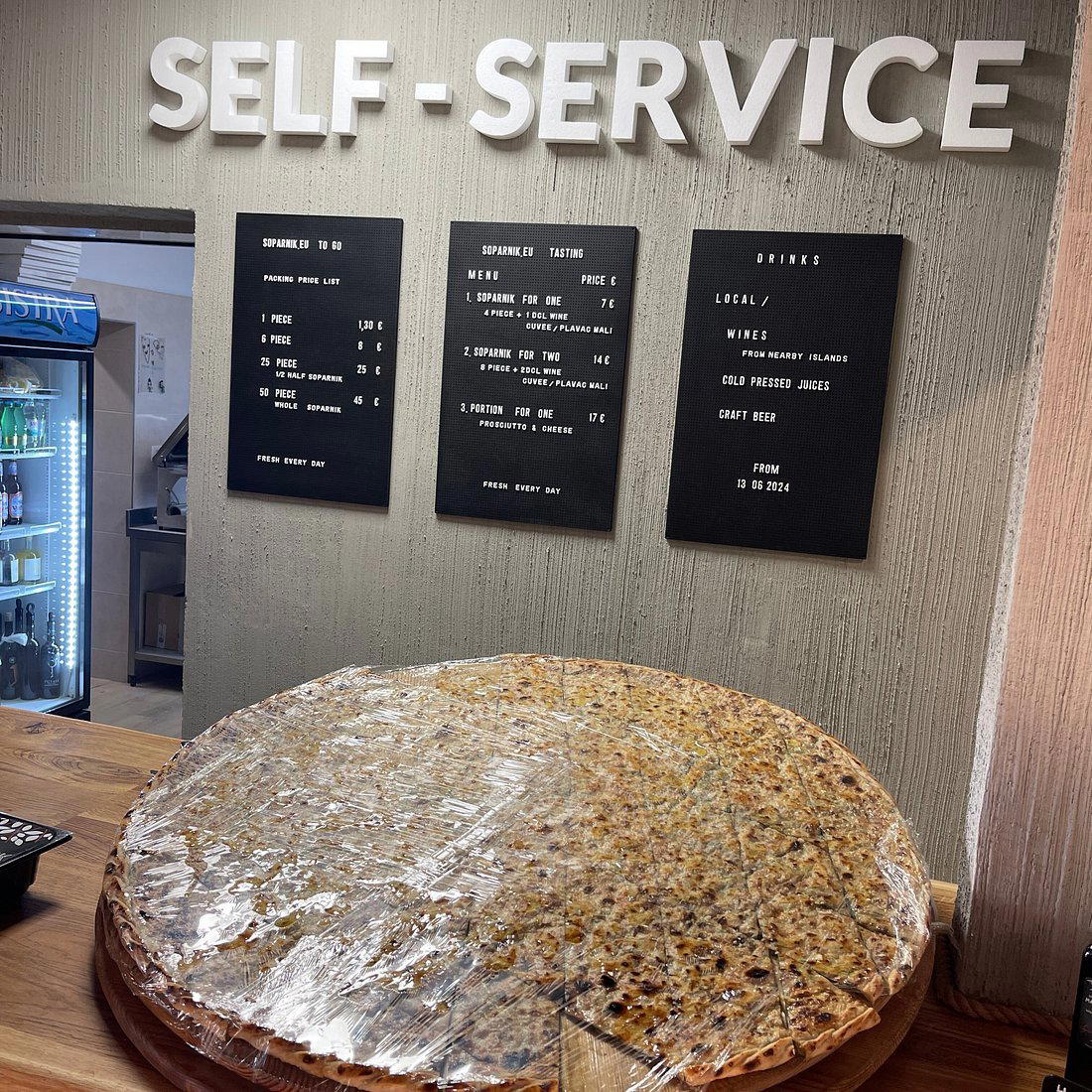
Soparnik Country: What a Roadside Stop in Tugare Tells You About Dalmatian Farming Culture
The village of Tugare sits in the Omiš hinterland, in the Poljica region that rises sharply from the Cetina River gorge into a karst plateau where fig trees grow from limestone and Swiss chard volunteers in every garden. Approaching along the Put Čažina doca road, the terrain does more explaining than any menu could. This is the part of Dalmatia where subsistence agriculture never fully gave way to tourism, and where the flatbread called soparnik has long been made from thin unleavened dough, Swiss chard, olive oil, garlic, and occasionally parsley. SOPARNIK.eu To Go in Tugare sits at the practical end of that tradition, operating as a takeaway point rather than a sit-down restaurant, and placing itself directly inside the story of where this dish actually comes from.
The Ingredient Logic of Soparnik
Soparnik is, at its core, a dish defined by what the Poljica plateau produces rather than what a chef decides to buy. Swiss chard grows without much encouragement in this part of the Dalmatian interior. Olive oil from the coastal belt around Omiš has historically been accessible but not cheap, which is why traditional soparnik used it sparingly, finishing the flatbread with a brush of oil after cooking on an open hearth rather than incorporating it into the dough in quantity. Garlic from the same garden plots ties the filling together. The dish is a record of agricultural constraint turned into something that has lasted long enough to receive protected status: soparnik from the Poljica region holds Croatian intangible cultural heritage recognition, and the dish was inscribed on UNESCO's Representative List of the Intangible Cultural Heritage of Humanity in 2016. That heritage status anchors the sourcing question, because the designation keeps production tied to the region's materials and methods.
This matters when you compare soparnik to the trajectory of other traditional Dalmatian dishes, many of which have been reinterpreted into fine-dining formats at restaurants like Pelegrini in Sibenik or LD Restaurant in Korčula. Both of those kitchens work with regional ingredients but within a contemporary cooking frame that adds technique, refinement, and significant price uplift. Soparnik, by contrast, resists that transformation. Its integrity is inseparable from simplicity, and the to-go format at a village address in Tugare makes a point of keeping it that way.
Takeaway as Editorial Statement
Across the Adriatic coast, the premium travel circuit tends to funnel visitors toward waterfront tables, tasting menus, and cellar lists assembled with considerable care. That is a legitimate circuit, and places like Restaurant 360 in Dubrovnik or Agli Amici Rovinj in Rovinj earn their position in it. But Dalmatian food culture has always run in parallel registers, and the village flatbread stop is not a lesser version of the restaurant. It is a different category entirely, one where the question of authenticity carries more weight than the question of presentation.
A takeaway operation in Tugare, at a rural address rather than a tourist square, is positioned for the visitor willing to drive inland from Omiš and engage with the Poljica landscape rather than photograph it from the coast. That drive is short, roughly ten to fifteen minutes from Omiš town depending on your route, but the setting shift is substantial. The karst interior looks nothing like the coast, and that visual contrast is part of what gives the stop its context. You are not eating soparnik as a heritage-branded tourist product. You are eating it where it is still made because the ingredients are there.
Soparnik in Croatia's Broader Culinary Geography
Croatia's dining conversation at the premium tier tends to concentrate on a handful of cities and islands. Zagreb has restaurants like Dubravkin Put and Korak in Jastrebarsko that represent contemporary Croatian cooking at its most considered. The islands have properties like Boskinac in Novalja and Bodulo in Pag connecting local agriculture and winemaking with serious kitchen programs. On the Kvarner coast, Nebo by Deni Srdoč in Rijeka and Alfred Keller in Mali Lošinj represent different expressions of what northern Croatian seafood and produce can do at a technical level. Against all of that, the Tugare soparnik stop occupies a position that none of those venues can replicate: it is where the dish with UNESCO status is made in its home territory, without any translation into restaurant format.
Closer to Omiš, Arsana Tasting House represents a more composed approach to Dalmatian ingredients, and the contrast between the two is instructive. The island of Brač just offshore has its own food culture documented at BioMania Bistro Bol in Bol, leaning on organic and local sourcing in a bistro format. These are different answers to the same underlying question about what Dalmatian ingredients can anchor. Soparnik's answer is especially minimal: the fewest possible steps between the field and the finished product.
Planning a Visit from Omiš
The address, Put Čažina doca 1 in Tugare, places this stop in the Omiš hinterland rather than in the coastal town itself. Visitors based in Omiš or passing through on the coastal route between Split and Makarska can reach Tugare by car via the inland road that climbs through the Poljica villages. The operation runs as a to-go format, meaning there is no table service, no reservations framework, and no extended stay implied. Come, collect, and eat in the landscape if the weather allows. The stop operates Monday and Thursday from 10 AM to 8 PM, Tuesday from 10 AM to 8 PM, Wednesday and Sunday from 9 AM to 8 PM, and Friday and Saturday from 10 AM to 9 PM. It is walk-in friendly.
For the visitor who has already covered the obvious stops on Croatia's culinary geography, whether that includes Krug in Split or Cantilly Garden Restaurant in Samobor or the Adriatic seafood canon at Burin in Crikvenica, the Tugare detour offers something that fine-dining itineraries rarely do: a dish that cannot be improved by adding a second technique, because its point is already made with four ingredients and a hearth.
Quick Comparison
Comparable venues nearby, for context on price, style, and recognition.
| Venue | Cuisine | Price | Notes |
|---|---|---|---|
| SOPARNIK.eu To Go - TugareThis venue — the venue you are viewing | Traditional Croatian Soparnik | $$ | Not listed |
| Arsana Tasting House | Modern Dalmatian Croatian | $$$ | Cetvrt Kralja Slavca |
| BioMania Bistro Bol | Organic Vegan Mediterranean Bistro | $$ | Town centre |
| Antonijo | Traditional Croatian Seafood | $$ | historical part of Rogoznica |
| Restoran Agape | Mediterranean Seafood & Grill | $$ | Primosten old town |
| Stina Winery | Croatian Winery Tasting Room | $$ | Bol |
Continue exploring
More in Omis
Restaurants in Omis
Browse all →
Bars in Omis
Browse all →
Hotels in Omis
Browse all →

At a Glance
- Rustic
- Cozy
- Casual Hangout
- Family
- Open Kitchen
- Local Sourcing
Current opening hours
- Monday
- 10 AM–8 PM
- Tuesday
- 10 AM–8 PM
- Wednesday
- 9 AM–8 PM
- Thursday
- 10 AM–8 PM
- Friday
- 10 AM–9 PM
- Saturday
- 10 AM–9 PM
- Sunday
- 9 AM–8 PM
Hours can change for holidays and private events. Last verified .
Rustic and authentic with live preparation demonstrations evoking traditional Croatian village atmosphere.