Soo Korean Restaurant occupies the second floor of the Vozara Hotel on Gandhi Street in Tehran, placing Korean cuisine inside one of the city's established hospitality addresses. In a capital where international dining options are growing but East Asian representation remains limited, Soo holds a particular position for those seeking the structured rituals of Korean table culture outside Seoul.
 Discover on Pearl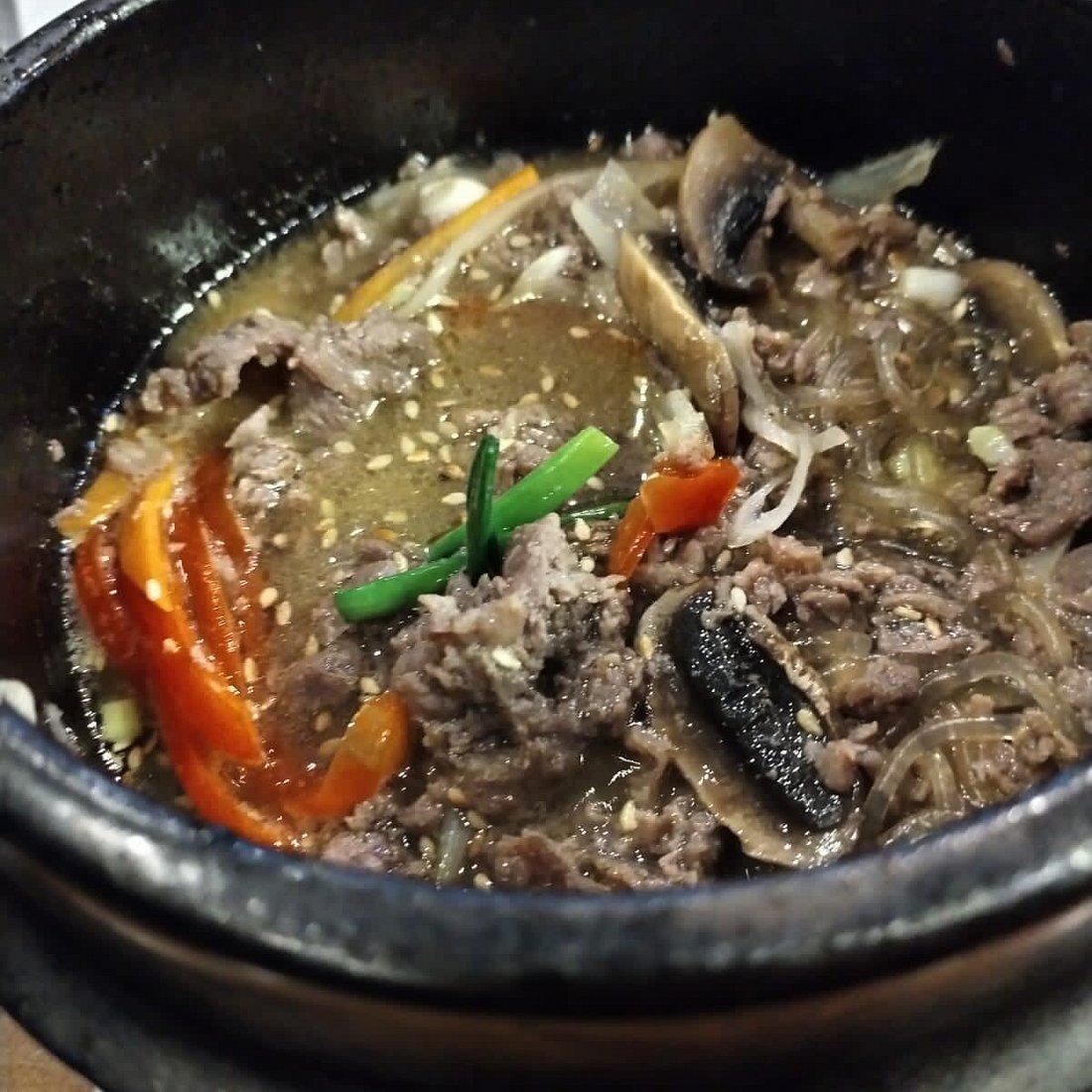
Korean Table Culture on Gandhi Street
The second floor of a hotel dining room is rarely where you expect to find a cuisine with its own elaborate grammar of service and sharing. Yet in Tehran, where Korean restaurants occupy a narrow slice of the international dining scene, Soo Korean Restaurant at the Vozara Hotel on Gandhi Street operates in a space that carries more significance than its address might initially suggest. The building itself anchors the venue in one of the city's better-connected commercial corridors, and the hotel context provides a degree of operational consistency that standalone international kitchens in Tehran do not always maintain.
Korean dining, at its core, is a ritual of simultaneity. Unlike the sequential courses that define French or Persian formal dining, a Korean meal arrives as a field: the central protein or stew flanked by banchan, the small side dishes that accumulate across the table and are replenished without charge. That format asks something of the diner. You are expected to move between plates, to share without ceremony, to treat the table as a communal surface rather than individual territory. In cities with established Korean communities, that grammar is assumed. In Tehran, where Korean food culture is less embedded in daily life, a restaurant that maintains those conventions rather than softening them for an unfamiliar audience is making a deliberate choice about what kind of experience it is offering.
The shortlist, unlocked.
Hard-to-book tables, cellar releases, and concierge-planned trips.
Get Exclusive Access →The Position of Korean Food in Tehran's International Dining Scene
Tehran's restaurant scene has diversified steadily over the past decade, with international cuisines finding footholds across the city's northern districts and hotel corridors. East Asian representation has grown, but it remains uneven: Japanese and Chinese formats have more established precedents, while Korean dining occupies a smaller, more specialist tier. Venues like Kenzo (كنزو) and Döner Garden (دونر گاردن) illustrate the range of international dining that has taken root in the capital, from Turkish-influenced formats to Japanese-adjacent concepts. Korean, by contrast, tends to attract a more deliberate diner: someone who knows the cuisine, or someone genuinely curious about it rather than defaulting to a familiar option.
That smaller peer set means Soo competes less with the volume of choices and more with the quality of execution within a niche. For context, Korean dining at the upper end of the global spectrum operates in a fundamentally different register: Atomix in New York City, which holds two Michelin stars and consistently appears on the World's 50 Best list, demonstrates how Korean culinary tradition can be reframed through fine-dining architecture without losing its essential character. Soo does not operate in that tier, nor would it claim to. Its role in Tehran is more foundational: to make Korean table conventions accessible in a city where they are not yet widely understood.
How the Meal Unfolds
The ritual logic of a Korean meal is worth understanding before you sit down. Banchan arrive first or alongside the main dishes, and the expectation is that you eat across the table rather than through a fixed sequence. Soups and stews in Korean dining are not starters; they are concurrent elements, often served in individual clay pots that retain heat through the meal. Grilled proteins, where present, may arrive at the table raw and cook on an integrated grill surface, requiring the diner to participate in the preparation. This is not performance for its own sake: it is a practical mechanism for controlling doneness and for keeping food at the right temperature across a meal that may last considerably longer than a Western two-course format.
The pacing of Korean dining is also distinct. There is no rush toward a dessert course or a final check. The table is a space that contracts and expands as dishes are cleared and added, and the meal ends when the food is finished rather than when a predetermined sequence concludes. For diners accustomed to Persian hospitality, which shares some of this generosity of portion and table, the transition is less jarring than it might be for someone arriving from a strictly sequential dining culture.
Hotel Context and Practical Considerations
Vozara Hotel setting on Gandhi Street places Soo within a part of Tehran that has reasonable access from the city's commercial and diplomatic zones. Hotel-based restaurants in Tehran generally maintain more stable operating schedules than independent venues, and the second-floor location separates the dining room from lobby foot traffic in a way that supports a more focused experience. For those visiting Tehran and wanting to map the city's broader dining options, our full Tehran restaurants guide covers the range from traditional Persian formats to international dining across price tiers.
Iran's dining scene beyond Tehran offers its own depth. Baastan Restaurant in Isfahan and the Anar Caravanserai in Anar demonstrate how traditional Persian hospitality is maintained outside the capital. Regional options like Koohpayeh Restaurant in Tehran and seafood-focused venues such as Khorsand Seafood in Bandar Abbas and Mr Fish in Bandar Abbas illustrate the geographic range of serious dining available across the country. Further afield, Good Fish Restaurant in Tabriz, Laneh Tavoos in Marv Dasht, Eghbali Restaurant in Qazvin, Bozorgi Restaurant in Qom, Caesar Italian Restaurant in Yazd, Croll in Qeshm, and Jijian Classic Kabab in Qeshm all represent the expanding map of considered dining across Iran. For a global benchmark on how international cuisine operates at the highest institutional level, Le Bernardin in New York City and 哈三秘制脆皮烤鸭餐厅 德黑兰店 illustrate the range of reference points worth understanding when assessing any international dining offer.
Frequently Asked Questions
- Is Soo Korean Restaurant a family-friendly restaurant?
- By the standards of Tehran's hotel dining tier, Soo's setting at the Vozara Hotel on Gandhi Street makes it a reasonable option for families, though Korean table-sharing formats work leading when everyone at the table is willing to engage with communal dining rather than ordering individually.
- What's the vibe at Soo Korean Restaurant?
- If you are arriving expecting a casual street-food atmosphere, adjust your expectations: a hotel second-floor dining room in Tehran tends toward the composed end of the spectrum. The experience will suit diners who want a settled, unhurried meal rather than high energy or open-kitchen theatre.
- What should I eat at Soo Korean Restaurant?
- Approach the menu through the lens of banchan variety and a central stew or grilled protein, which is how Korean meals are designed to function. Ordering individual dishes without the shared context tends to miss the structural logic of the cuisine.
- What's the leading way to book Soo Korean Restaurant?
- Hotel-based restaurants in Tehran generally accept walk-ins during quieter periods, but given the limited availability of Korean dining in the city, calling ahead through the Vozara Hotel is the more reliable approach, particularly for groups larger than four.
- What's the standout thing about Soo Korean Restaurant?
- Within Tehran's international dining options, Korean table culture is among the least represented, which gives Soo a particular position: it is one of the few venues in the city where the full ritual of banchan, shared proteins, and concurrent courses can be experienced in a stable hotel setting rather than a pop-up or informal format.
- Is Soo Korean Restaurant one of the few places in Tehran to experience authentic Korean dining ritual?
- Korean cuisine in Tehran occupies a considerably smaller niche than Chinese or Japanese formats, meaning venues that maintain the full structure of Korean table service, including banchan replenishment and communal sharing conventions, are rare. Soo's position inside the Vozara Hotel on Gandhi Street suggests an operational stability that supports consistent execution of that format, though diners should approach with the curiosity of someone engaging with an unfamiliar dining tradition rather than a simplified international adaptation.
Cuisine and Credentials
These are the closest comparables we have in our database for quick context.
| Venue | Cuisine | Awards | Notes |
|---|---|---|---|
| Soo Korean Restaurant | This venue | ||
| Koohpayeh Restaurant (رستوران کوهپایه) | |||
| Döner Garden (دونر گاردن) | |||
| Kenzo (كنزو) | |||
| 哈三秘制脆皮烤鸭餐厅 德黑兰店 |
Need a table?
Our members enjoy priority alerts and concierge-led booking support for the world's most difficult tables.
Get Exclusive AccessThe shortlist, unlocked.
Hard-to-book tables, cellar releases, and concierge-planned trips.
Get Exclusive Access →