Our verdict
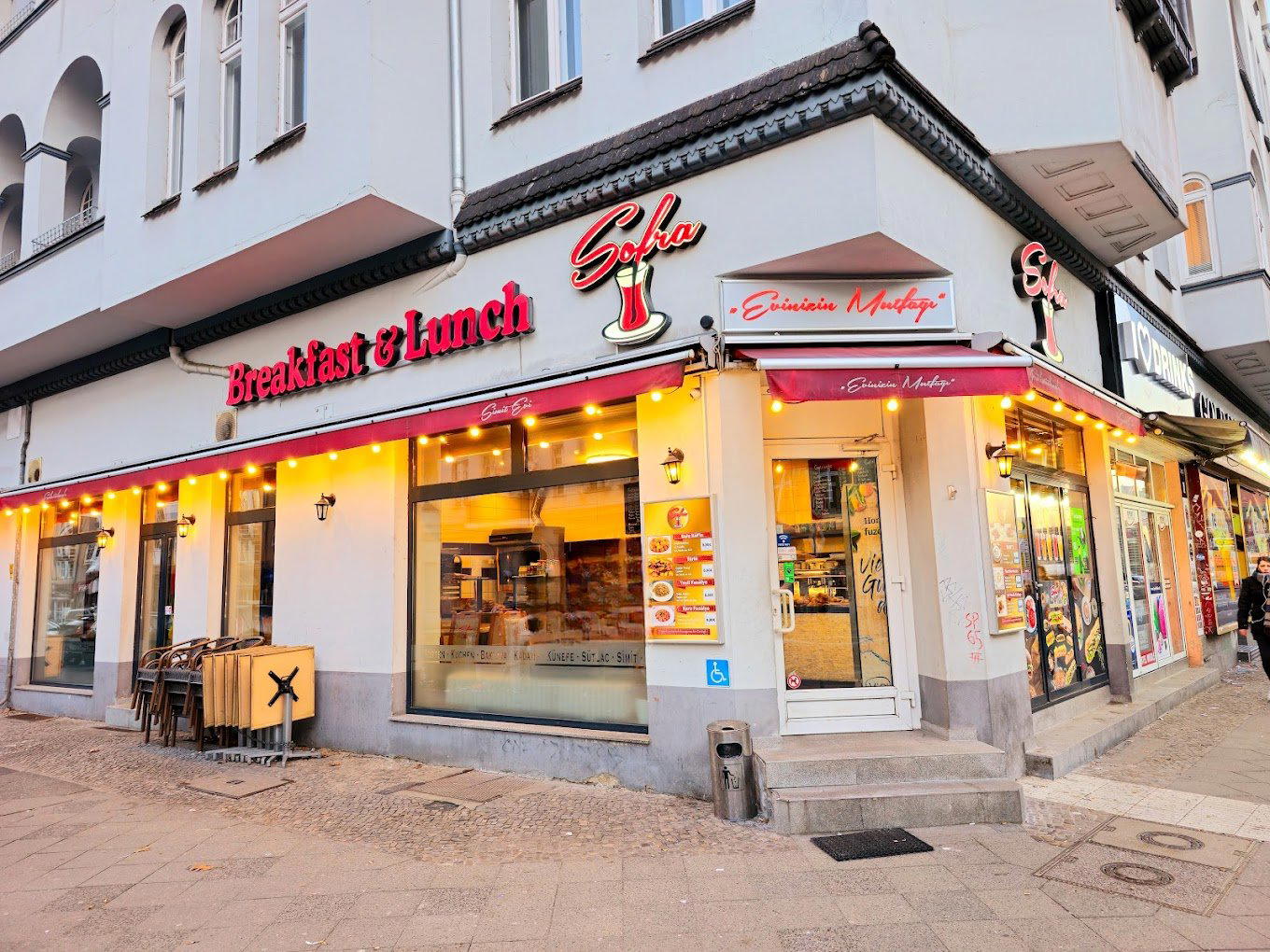
Sofra sits on Bellermannstraße in Berlin's Wedding district, a neighbourhood where Turkish and Arab diaspora communities have shaped the local food culture for decades. The address places it in a working-class corridor that operates largely outside the city's fine-dining circuit, where the measure of a restaurant is daily habit rather than seasonal hype.

Pearl is the En Primeur Club membership app — saves, bookings, and concierge access live there. Same editors, same standards.
- Address
- Bellermannstraße 99, 13357 Berlin, Germany
- Phone
- +4949304947036
- Hours
- Daily 7 AM–10 PM
- Directions
- Get directions
The menu
What to order
- Mantis
- Adana Kebab
- Tavuk Kanat
- Tavuk Şiş
Wedding's Table: What the Bellermannstraße Address Actually Means
There is a version of Berlin dining that appears in international food media — the Michelin-starred counters of Mitte, the tasting menus running at Nobelhart & Schmutzig, the dessert-forward ambition of CODA Dessert Dining, the precision at FACIL and Rutz — and then there is a parallel city that rarely makes those lists. Wedding is part of that parallel city. The district running north of Mitte and Prenzlauer Berg has long been one of Berlin's most ethnically mixed neighbourhoods, shaped by waves of migration that brought Turkish, Lebanese, and Arab communities into streets that gentrification has touched only lightly. Bellermannstraße sits inside that zone, and any restaurant that puts down roots here is making a statement about audience and intent.
Sofra is an address on Bellermannstraße 99, and the word itself carries meaning before you even consider the food. In Turkish and Arabic domestic tradition, a sofra is the low table around which a family gathers, it implies hospitality as a structural condition rather than a service offering. Restaurants that take the name are, in effect, declaring an alignment with a communal eating culture that predates the modern restaurant format entirely. That context matters in Wedding, where the community the name references is not an abstraction but a physical presence on the street outside.
The Neighbourhood as Context
Wedding spent much of the post-reunification period in a kind of administrative limbo, absorbed into the Mitte borough in 2001 but culturally distinct from it, too far north to catch the creative wave that transformed Prenzlauer Berg and Mitte from the 1990s onward. What it retained was density and diversity. The stretch around Osloer Straße and Gesundbrunnen is one of the most concentrated areas of Turkish and Arab-run food businesses in the city, from wholesale grocers and halal butchers to small restaurants operating on daily lunch specials and regulars who arrive without consulting a menu.
Bellermannstraße feeds into that network. Sofra's position here places it in a food culture that operates on different rhythms from the tasting-menu circuit, closer to the logic of a neighbourhood trattoria in Naples or a family-run canteen in Istanbul's Fatih district than to the reservation-led, occasion-dining model that defines restaurants like Restaurant Tim Raue or the Michelin-starred establishments spread across Germany's dining belt, from Aqua in Wolfsburg to Schwarzwaldstube in Baiersbronn. Those restaurants are institutions of a certain type; Sofra belongs to a different institutional tradition, one measured by repeat custom and community function.
What the Format Suggests
In Berlin's Turkish and Middle Eastern dining scene, the sofra format generally implies shared dishes, meze-style abundance, and a sequencing that resists the European appetiser-main-dessert structure. Where a tasting menu at JAN in Munich or Vendôme in Bergisch Gladbach controls the pace and portion with precision, a sofra table works on accumulation, plates arriving as they are ready, diners building their own meal from what lands in front of them. The rhythm is social first, gastronomic second.
This matters because it shapes what you should expect arriving at Bellermannstraße 99. The experience is not calibrated around a single composed dish or a chef's narrative arc. It is calibrated around the table as a unit. That distinction puts Sofra in a category that German food media tends to undercover relative to its fine-dining tier, venues like Victor's Fine Dining by Christian Bau in Perl or Schanz in Piesport accumulate press attention and award recognition in a way that community-anchored neighbourhood restaurants rarely do, even when those neighbourhood restaurants represent a deeper and older hospitality tradition.
Placing Sofra in Berlin's Broader Dining Map
Berlin has one of the most heterogeneous food cities in Europe, with a Turkish community that numbers over 200,000 and has been shaping the city's street food and restaurant culture since the 1960s. The döner kebab, now exported globally and consumed in versions ranging from fast food to fine-dining riffs, was developed and popularised in Berlin, a fact that points to the depth of Turkish culinary influence here. Sofra operates downstream of that history, in a neighbourhood where that influence is not a novelty or a trend but a condition of the local food supply chain.
That context makes Wedding an interesting counterpoint to the concentration of high-investment dining in Mitte and Charlottenburg. Visitors who move between Restaurant Haerlin in Hamburg and Berlin's Michelin circuit may find the Bellermannstraße end of Wedding disorienting in its ordinariness, but that ordinariness is also the point. The appeal is not spectacle. It is the specific weight of a neighbourhood that has been feeding itself this way for a generation. Our full Berlin restaurants guide maps the broader dining spread across the city's districts, which helps to calibrate where Wedding fits relative to the fine-dining belt and the more internationally positioned restaurants further south.
For comparison points further afield, the community-rooted dining tradition Sofra represents has parallels in Turkish neighbourhoods across European cities, but few cities have the geographic concentration and historical depth that Wedding provides. The address is specific in a way that cannot be relocated without changing the meaning of what is on offer.
Planning Your Visit
Sofra is located at Bellermannstraße 99, 13357 Berlin, accessible via the U-Bahn at Gesundbrunnen or Osloer Straße, both within walking distance. Reservations: Dress: No code applies; the neighbourhood and format are casual by default. Budget: Community-focused restaurants in this corridor operate at a price point well below the city's fine-dining tier, expect to spend modestly by Berlin dining standards. Timing: Evenings and weekend afternoons tend to draw families and larger groups for whom the communal sofra format is a routine rather than an occasion. Arriving earlier in the service shifts gives a calmer experience if the table-as-gathering dynamic is unfamiliar.
Frequently asked questions
What is the atmosphere like at Sofra?
Sofra sits in Wedding, one of Berlin's most community-driven districts, and the atmosphere reflects that. Expect a neighbourhood register, casual, locally oriented, built around repeat custom rather than occasion dining. The gap between Sofra's address and the city's high-end tasting-menu venues like FACIL or Rutz is not just geographic; it represents a different set of priorities around what a meal is for.
What is the standout dish at Sofra?
What the sofra format and Turkish-Arabic culinary tradition associated with the name generally implies is a meze-centred approach, shared plates, dips, grilled proteins, rather than a single composed signature dish. For venues where the menu is the primary editorial focus, restaurants with published tasting menus such as Nobelhart & Schmutzig offer a more documentable point of comparison.
Do I need a reservation at Sofra?
Wedding neighbourhood restaurants in this category typically operate on a walk-in basis, with tables turning over through regular lunch and dinner service. Demand is unlikely to match the booking windows required at award-recognised Berlin venues; arriving without a booking is a reasonable approach, particularly at off-peak hours.
What is the standout thing about Sofra?
The address itself is the clearest editorial signal. Bellermannstraße 99 in Wedding is not a destination dining street in the way that sections of Mitte or Charlottenburg are. A restaurant in this location is answering to a community rather than to a food media audience, and that distinction shapes everything from the price point to the pace of service. Among German restaurants receiving sustained critical attention, from Waldhotel Sonnora in Dreis to ES:SENZ in Grassau, Sofra belongs to an entirely different register, one defined by neighbourhood function rather than award accumulation.
How does Sofra handle allergies?
Wedding's community restaurants typically work with a small and consistent ingredient set drawn from Turkish and Middle Eastern pantries, which means the kitchen should have clear visibility into what is in each dish, but confirming specifics in person is the only reliable route when pre-visit communication channels are unclear.
Is Sofra in Wedding worth visiting if I am already planning a Berlin itinerary around fine dining?
Sofra and the fine-dining circuit represented by venues such as Restaurant Tim Raue or Bagatelle in Trier serve different functions in a travel itinerary. Sofra's value is in what Wedding represents as a neighbourhood, a sustained Turkish and Arab food culture with a depth of community presence that the city's more internationally positioned restaurants do not replicate. If that context interests you as a parallel to the formal dining programme, the Bellermannstraße address makes a logical half-day detour from central Berlin, with the U-Bahn at Gesundbrunnen providing a direct connection. For a broader orientation to what Berlin's dining offers across all tiers and neighbourhoods, the EP Club Berlin guide covers the full range, including international reference points like Le Bernardin and Atomix for readers calibrating Berlin against global dining cities.
Credentials Lens
Comparable venues nearby, for context on price, style, and recognition.
| Venue | Cuisine | Price | Notes |
|---|---|---|---|
| Sofra Grill GrillThis venue — the venue you are viewing | Traditional Turkish Breakfast & Grill | $10–20 | Not listed |
| Oggi's Gemüsekebab | Turkish Gemüsekebab | $10–20 | Moabit |
| Aspendos | Turkish Döner & Grill | $10–20 | Schöneberg |
| Imren Grill | Traditional Turkish Döner Kebab | $1–10 | Kreuzberg |
| Hisar fresh food | Turkish Döner Kebab | $10–20 | Kreuzberg |
| Mustafa's Gemüse Kebap | Turkish Gemüse Kebap | $10–20 | Kreuzberg |
Continue exploring
More in Berlin
Restaurants in Berlin
Browse all →
Bars in Berlin
Browse all →
Hotels in Berlin
Browse all →

Details
- Casual
- Rustic
- Cozy
- Casual Hangout
- Brunch
- Family
- Terrace
- A La Carte
- Turkish Tea
- Coffee
- Vegetarian Friendly
Current opening hours
- Monday
- 7 AM–10 PM
- Tuesday
- 7 AM–10 PM
- Wednesday
- 7 AM–10 PM
- Thursday
- 7 AM–10 PM
- Friday
- 7 AM–10 PM
- Saturday
- 7 AM–10 PM
- Sunday
- 7 AM–10 PM
Hours can change for holidays and private events. Last verified .
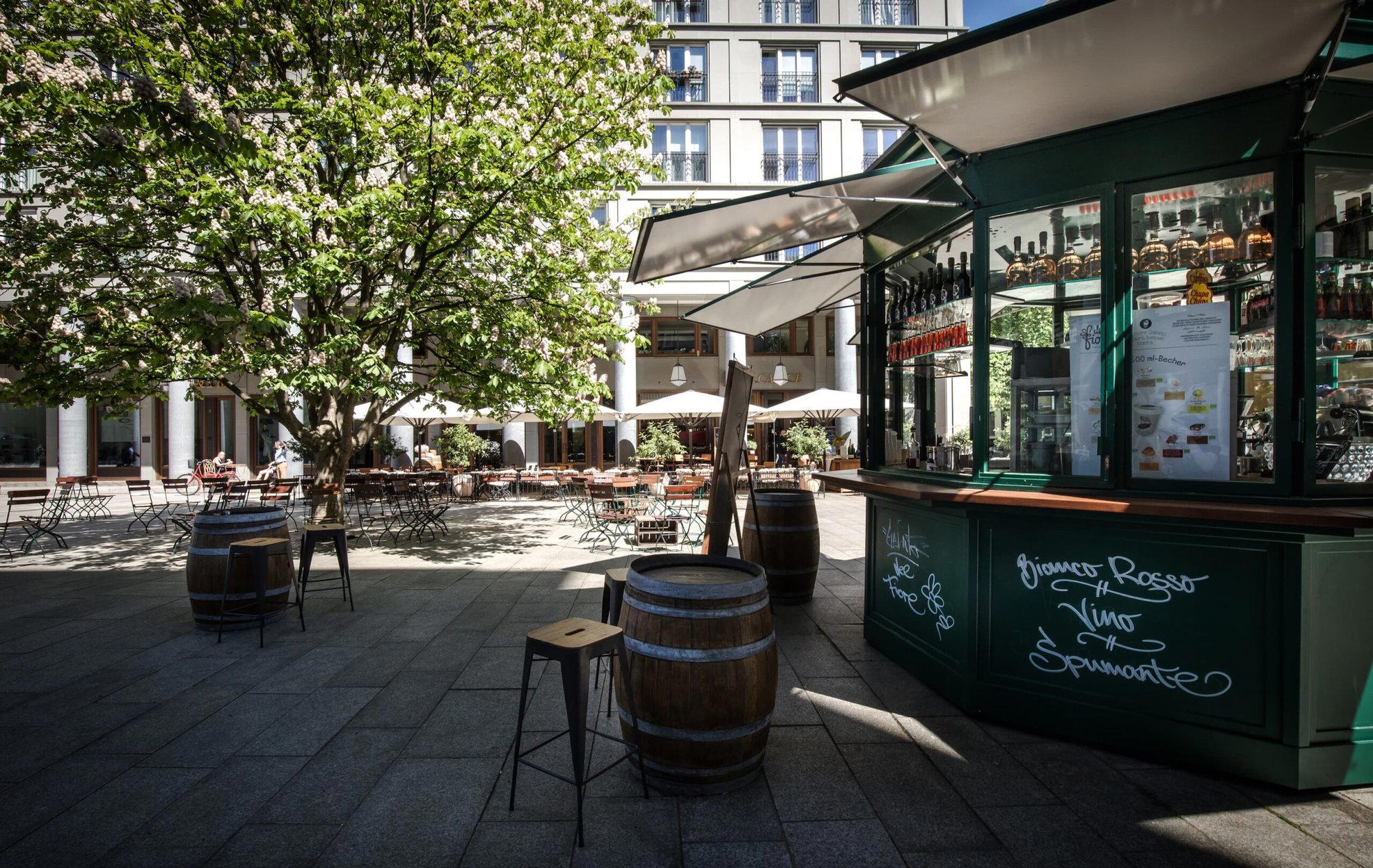
Simple, inviting casual space with fresh, well-lit interior and a nice patio for summer dining.