
Our verdict
The queue outside this Kreuzberg counter is one of Berlin's most reliable street-food rituals, built around a vegetable-forward döner format that has defined its own category in the city's fast-food canon.

Pearl is the En Primeur Club membership app, where members save venues, book tables and use the concierge.
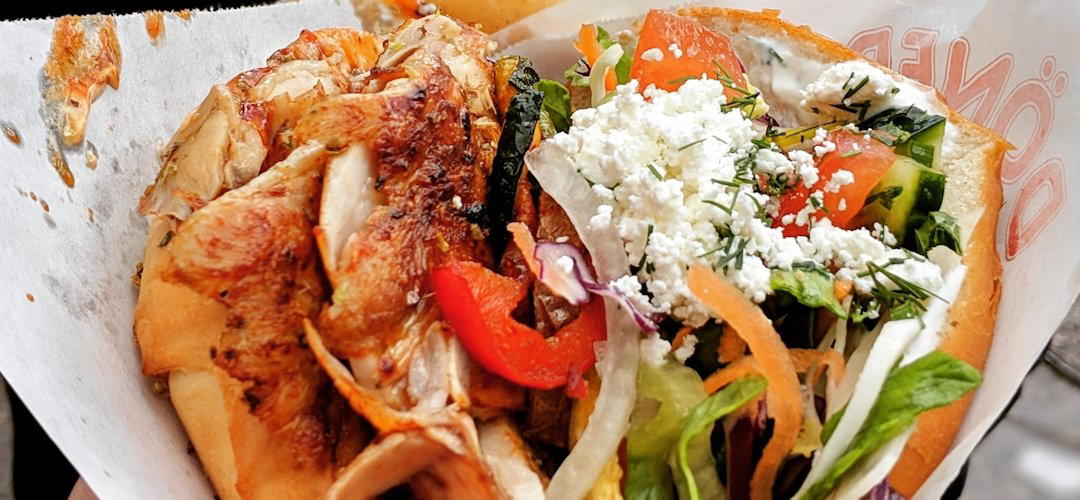
The Queue as Urban Ritual
On Mehringdamm, a few minutes south of Mehringdamm U-Bahn station, the pavement outside number 33 operates on its own logic. Most evenings, a line forms well before hunger peaks, and on weekends it stretches past neighbouring storefronts. The physical act of waiting here has become part of the experience in a way that is specific to Berlin's street-food culture: unhurried, cross-demographic, and oddly social. The crowd is not a tourist queue in any direct sense, though visitors are well represented. It is the kind of line that forms when a city has collectively decided something is worth the wait.
Berlin's döner economy is enormous. The city has more döner shops than any other in Europe, and the kebab itself has a documented history in Germany stretching back to the early 1970s, when Turkish immigrant communities in West Berlin began adapting the meat-on-spit format for a fast-food market. Decades later, the category has fractured into everything from budget high-street chains to craft operations with sourced ingredients. Mustafa's Gemüse Kebap sits at the far end of that spectrum, where the queue itself functions as a quality signal and the format is specific enough to have generated genuine critical attention.
Vegetable-Forward, Specifically
The distinguishing characteristic of the format here is the emphasis on vegetables rather than meat as the structural centre of the kebab. The gemüse (vegetable) component is not a side note to a meat-heavy wrap; it is the point. This is not the norm across Berlin's döner counters, where the meat-to-vegetable ratio tends to skew heavily toward the former. The vegetable-forward approach aligns Mustafa's with a strand of street food thinking that has been gaining ground across European cities, where plant-based formats are no longer positioned as alternatives but as independent categories with their own logic and following.
That shift matters as context. When Opinionated About Dining, one of the more data-driven critical platforms covering European dining, ranked Mustafa's Gemüse Kebap at #30 on its Cheap Eats in Europe list in 2023, it was making a statement about the category as much as the individual counter. The subsequent rankings, #55 in 2024 and #75 in 2025, reflect the natural movement of a competitive list rather than any decline in standing. Across three consecutive years, appearing in the top 75 European cheap eats represents a consistency of critical recognition that few street-food operations anywhere in Germany can match.
Kreuzberg as Context
The address, Mehringdamm 33 in the 10961 postcode, places the counter squarely in Kreuzberg, the district that has carried Berlin's Turkish-German cultural identity longer than any other. The concentration of Turkish businesses, community institutions, and food culture in this part of the city is not incidental to the kebab tradition; it is its origin. Kreuzberg is where the Berlin döner developed its character, and the neighbourhood's food culture remains shaped by that history even as gentrification has pushed new restaurant formats into adjacent streets.
The broader dining picture in Berlin spans a considerable range. The city holds multiple Michelin-starred restaurants, among them Restaurant Tim Raue and Rutz, alongside creative tasting-menu formats like CODA Dessert Dining, Nobelhart & Schmutzig, and FACIL. What Mustafa's occupies is the other end of the city's dining spectrum: a counter with no reservations, no tasting menu, and no cover charge, where the credentialling comes entirely from accumulated public response and external critical rankings. See our full Berlin restaurants guide for the complete picture across price tiers.
Mustafa Demir and the Single-Product Model
Mustafa Demir's operation is not built around classical training or a series of kitchen stages at named restaurants; it is built around a single product refined through sustained public scrutiny. The single-product model, where a cook or team commits entirely to one format and iterates relentlessly within its constraints, has produced some of the most credentialled street-food operations globally. In Berlin's case, the gemüse döner as a distinct category owes a measurable part of its current visibility to the attention this counter has attracted.
Operational hours reflect a format that serves different parts of the day differently. Monday through Thursday, the counter runs from 10 am to 1 am. Friday extends to 3 am, serving the late-night corridor that Kreuzberg's nightlife economy generates. Saturday and Sunday run to 2 am. For context, Germany's kebab operations at this end of the market typically extend into late-night hours as a function of foot traffic rather than lifestyle positioning, but the Friday 3 am close is notable even by that standard.
Where Mustafa's Sits Among Peers
Comparisons within the kebab category tend to be geographically specific. For a European perspective, Jasmino in Tel Aviv represents a different tradition within the broader Middle Eastern kebab canon. Berlin's own scene has no direct equivalent to the Mustafa's format in terms of critical recognition: the three consecutive OAD Cheap Eats rankings place it in a tier that the city's other döner counters, however well regarded locally, have not reached on equivalent platforms.
Germany's wider fine-dining and recognised dining map is covered in depth elsewhere on EP Club, including JAN in Munich, Schwarzwaldstube in Baiersbronn, Aqua in Wolfsburg, Vendôme in Bergisch Gladbach, ES:SENZ in Grassau, and Restaurant Haerlin in Hamburg. And for those planning a broader Berlin visit, our Berlin hotels guide, bars guide, wineries guide, and experiences guide cover the full spectrum. For a point of contrast at the opposite end of price and format, Le Bernardin in New York illustrates how differently critical recognition operates across categories.
Know Before You Go
- Address: Mehringdamm 33, 10961 Berlin, Germany
- Hours: Mon–Thu 10 am–1 am; Fri 2 pm–3 am; Sat 10 am–2 am; Sun 10 am–2 am
- Nearest transit: Mehringdamm (U6, U7)
- Booking: No reservations; walk-in queue only
- Awards: OAD Cheap Eats in Europe #75 (2025), #55 (2024), #30 (2023)
- Timing tip: Friday and Saturday nights see the longest queues; weekday mid-morning or early afternoon tends to move faster
Frequently asked questions
What's the overall feel of Mustafa's Gemüse Kebap?
Counter-service street food with no seating, no reservations, and a queue that forms regardless of hour or weather. The operation at Mehringdamm 33 has been ranked by Opinionated About Dining's Cheap Eats Europe list three consecutive years running, which partly explains the pavement-level demand. Expect to stand, order at the counter, and eat on your feet.
What's Mustafa's Gemüse Kebap's location?
Mustafa's Gemüse Kebap is located at Mehringdamm 33, 10961 Berlin, Germany, Berlin.
What's Mustafa's Gemüse Kebap known for in terms of accolades?
Mustafa's Gemüse Kebap has received recognition including: Opinionated About Dining Cheap Eats in Europe Ranked #75 (2025); Opinionated About Dining Cheap Eats in Europe Ranked #55 (2024); Opinionated About Dining Cheap Eats in Europe Ranked #30 (2023).
What dish is Mustafa's Gemüse Kebap famous for?
The gemüse kebap, a vegetable döner format in which vegetables hold the structural centre of the wrap rather than serving as garnish alongside meat. This approach sets it apart from the standard Berlin döner, and it is the reason the counter has placed on the Opinionated About Dining Cheap Eats Europe list in 2023, 2024, and 2025.
A Tight Comparison
A short peer table to compare basics side-by-side.
| Venue | Cuisine | Price | Awards | Notes |
|---|---|---|---|---|
| Mustafa's Gemüse KebapThis venue (the venue you are viewing) | Turkish Gemüse Kebap | $10–20 | Not listed | Not listed |
| CODA Dessert Dining | Dessert-Inspired Fine Dining | $200–300 | 2 Michelin Stars · World's 50 Best #79 | Creative |
| Rutz | Modern German Fine Dining | $200–300 | 3 Michelin Stars · La Liste Top Restaurants | Modern European, Modern Cuisine |
| Nobelhart & Schmutzig | Hyper-Local Modern German Fine Dining | $100–150 | 1 Michelin Star · World's 50 Best #59 | Modern German, Creative |
| FACIL | Modern Fusion Fine Dining | $200–300 | 2 Michelin Stars · La Liste Top Restaurants | Contemporary European, Creative |
| Horváth | Modern Austrian Vegetable Cuisine | $200–300 | 2 Michelin Stars · La Liste Top Restaurants | Modern Austrian, Creative |
Recognition history
Dated appearances from independent guides and award organizations, with the underlying list record or original source where available.
Opinionated About Dining Cheap Eats in Europe Ranked #101
Opinionated About Dining
Full recognition history (4 entries)
Opinionated About Dining Cheap Eats in Europe Ranked #75
Opinionated About Dining
Opinionated About Dining Cheap Eats in Europe Ranked #55
Opinionated About Dining
Opinionated About Dining Cheap Eats in Europe Ranked #30
Opinionated About Dining
Continue exploring
More in Berlin
Restaurants in Berlin
All restaurants in Berlin →
Bars in Berlin
All bars in Berlin →


Details
- Lively
- Casual Hangout
- Late Night
- Standalone
- Street Scene
- A La Carte
- Vegetarian Friendly
Current opening hours
- Monday
- 10 AM–11:30 PM
- Tuesday
- 10 AM–11:30 PM
- Wednesday
- 10 AM–11:30 PM
- Thursday
- 10 AM–11:30 PM
- Friday
- 1 PM–1:30 AM
- Saturday
- 10 AM–1:30 AM
- Sunday
- 10 AM–11:30 PM
Hours can change for holidays and private events. Hours as of .
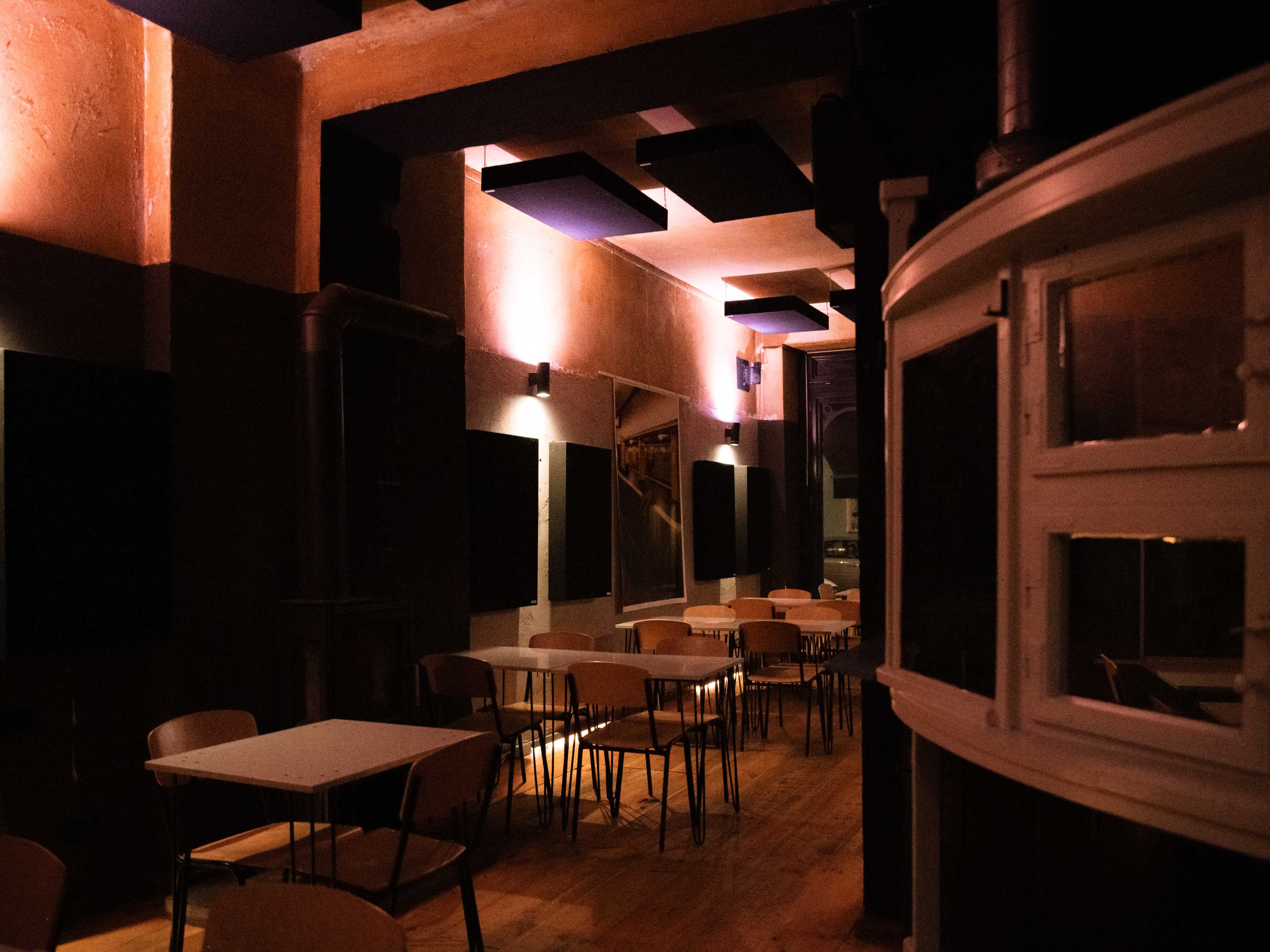
Casual street-side eatery with a bustling, energetic atmosphere from constant crowds and queues, offering simple indoor and outdoor seating amid urban hustle.