
Soba Kura Tomi gives Gifu’s soba culture a tightly edited counter format: buckwheat noodles and tempura, a compact room, and a pace built around the meal rather than turnover. Its selection for Tabelog 100 - Soba - EAST - 2025 puts it in a serious regional conversation while keeping the experience grounded in everyday noodle-shop pricing.
Pearl is the En Primeur Club membership app — saves, bookings, and concierge access live there. Same editors, same standards.
- Address
- 岐阜県岐阜市金町2-8
- Phone
- +817016313210
- Website
- aun-web.jp
 Saves & bookings on Pearl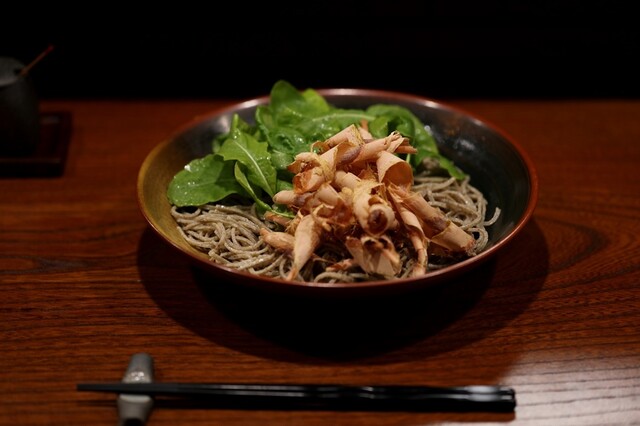
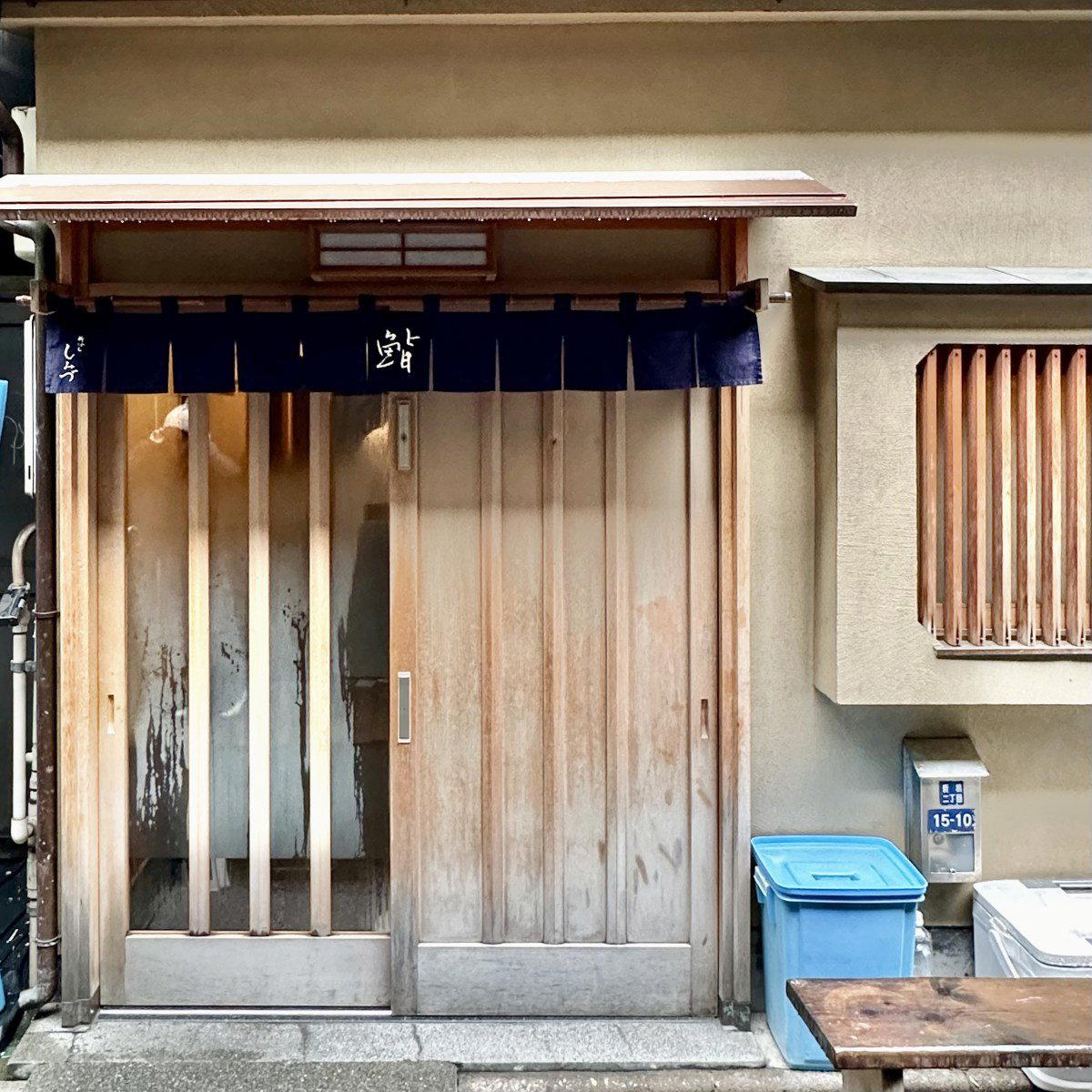
Kanamachi’s quieter blocks put the room before the reputation: counter seats, no table theatrics, and the kind of lunch rhythm that rewards diners who are not trying to compress soba into a quick stop. In Gifu, where old merchant streets, station-side eating, and Yanagase’s central-city grain still shape the dining map, a small soba counter reads differently from a destination tasting room. It belongs to a Japanese tradition where restraint is not an aesthetic pose but a working system: buckwheat, water, timing, and a kitchen that does not rush seated diners for the sake of the queue.
Soba Kura Tomi is useful because it clarifies what serious regional soba can be in 2026. The category has never depended on luxury signals in the way sushi or kaiseki often do. Its hierarchy is built through flour choice, noodle handling, dipping broth balance, tempura discipline, and service tempo. Selection for Tabelog 100 - Soba - EAST - 2025 gives this Gifu counter a measurable credential, but the more telling point is the format: soba and tempura, drinks that include sake, shochu and wine, and a compact setting that asks for patience rather than spectacle.
Gifu soba, judged by flour, water and restraint
Soba’s seriousness comes from sourcing before technique becomes visible. Buckwheat is a fragile ingredient compared with wheat: aroma fades, texture shifts quickly, and small changes in milling or hydration alter the final noodle. That is why good soba shops often feel more like grain specialists than noodle vendors. The diner is not only paying for a bowl; the value sits in the handling of a crop with a short aromatic window and a cuisine that exposes weak decisions immediately.
That ingredient logic matters in Gifu. The prefecture sits between mountain foodways and central Japan’s urban circuits, so the better meals often have a rural ingredient sensibility without rural isolation. Soba fits that middle ground. It can be austere without being severe, and it can absorb tempura, sake or shochu without losing its main argument. At Soba Kura Tomi, the Tabelog score of 3.80 and the 2025 Soba EAST selection place the counter in a recognized bracket, but the category itself keeps the experience grounded: the drama is in freshness, cut, chew and the quiet confidence of not overloading the table.
The comparison inside Gifu is instructive. Tsubameya Yanagase honten operates in a similarly accessible price band, while Benten Do sits below that level; Takumi Hirano belongs to a far higher spend tier. Those contrasts make clear that Soba Kura Tomi is not competing with formal fine dining. It occupies the small-shop specialist lane, where the decision is less about ceremony and more about whether the diner wants a precise, grain-led meal with little tolerance for impatience.
A seven-seat counter changes the social contract
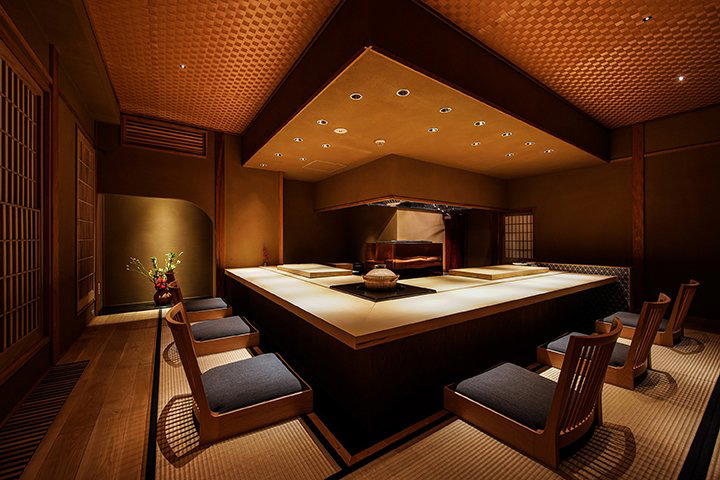
The counter-only setup gives the meal its discipline. Seven seats make volume a poor metric and patience a practical requirement. This is not the Japanese equivalent of fast casual soba, despite the modest spend. The operating language is explicit: diners in a hurry are the wrong audience, additional orders are not discouraged, and seated guests are not rushed even when others are waiting. That position says more about the meal than a long menu description would.
For solo diners, the format makes particular sense. Counter soba has always been one of Japan’s great individual dining modes: focused, affordable, and free of the awkwardness that can attach to solo meals in more formal rooms. The absence of private rooms and table seating is not a defect here; it keeps attention on the kitchen’s pacing and the bowl in front of each guest. Families with young children, however, are not the intended fit, and the house rules around age and outside food reinforce that the counter is designed for diners who can sit, order and wait.
Tempura adds the second axis. In soba shops, it can either support the noodles or smother the point. The stronger version treats fried items as contrast: heat against cool noodles, crispness against buckwheat texture, richness against dipping broth. Without needing elaborate plating, the pairing tells the reader whether a shop understands proportion. Drinks matter in the same way. Sake, shochu and wine point to a meal that can stretch beyond a single bowl without turning into a long-form tasting menu.
How to place it in a Gifu eating day
Gifu rewards diners who split the day by mood rather than checklist. A soba lunch in Kanamachi can sit between river walks, Yanagase browsing and a more formal dinner elsewhere, but the key is not to stack it against a tight schedule. The counter’s value comes from accepting the shop’s tempo. In return, the diner gets a concentrated expression of regional Japanese craft at a level of spend that remains unusually democratic for a nationally recognized specialist.
Readers mapping the city more broadly can use Our full Gifu restaurants guide for the wider dining field, then cross-check nearby moods through Our full Gifu hotels guide, Our full Gifu bars guide, Our full Gifu wineries guide and Our full Gifu experiences guide. In the city’s restaurant mix, Aka Renga, Akane Ya, BAR-BAROSSA, BAROSSA cocktailier and Belle Equipe (French) sketch a useful contrast between noodles, drinks and Western dining.
For readers comparing specialist Japanese formats beyond Gifu, the broader archive runs from -Grilled beef Sukiyaki- KAMAKURA TANUKIAN 鎌倉 たぬき庵 in Kamakura and. 鮪と炭火焼き うお炭 秋葉原店 in Tokyo to.cafe in Osaka.know in Kumamoto, (Shoku) Vietnam in Kawasaki and [Curry Senmon Ten] Maruyama Kyoju. in Sapporo. The overseas Japanese-drinking and casual-food conversation continues at Jōdo Saké Bar in Los Angeles and Onigiri Time in Pasadena.
The editorial case for the restaurant is therefore narrow and strong. Choose it when the point of the meal is soba as craft, not comfort food as convenience. The recognition is useful; the counter’s refusal to behave like a high-speed noodle stop is the sharper signal.
Snapshot
Comparable venues by cuisine and price in the same metro.
| Venue | Cuisine | Price | Notes |
|---|---|---|---|
| Soba Kura TomiThis venue — the venue you are viewing | Traditional Japanese Soba | $$ | Not listed |
| Tsubameya Yanagase honten | Japanese Confectionery | $ | Yanagase |
| Akane Ya | Yakiniku & Chinese Grill | $$$ | Mitonocho |
| Benten Do | Traditional Japanese Wagashi & Western Sweets Shop | $ | Kandamachi |
| Takumi Hirano | Traditional Japanese Kaiseki | $$$ | Yanagase / Onamicho |
| Chaya Akawani | Japanese shaved ice & sweets cafe | $ | Hachimancho |
Recognition history
Dated appearances from independent guides and award organizations, with the underlying list record or original source where available.
Tabelog 100 #55 · No. 55
Tabelog · Tabelog 100 - Soba - EAST - 2025
Continue exploring
More in Gifu
Restaurants in Gifu
Browse all →
At a Glance
- Quiet
- Classic
- Intimate
- Sophisticated
- Solo
- Casual Hangout
- Chefs Counter
- Open Kitchen
- Standalone
- Local Sourcing
- Street Scene
Calm, elegant, and luxurious-feeling despite the small footprint, with a refined counter-dining atmosphere centered on the kitchen.