
Tabelog 100 #48
Our verdict
Benten Do places Gifu’s wagashi culture in a low-cost, take-out format rather than a restaurant setting. The Kandamachi shop is listed in Tabelog’s 2023 Hyakumeiten selection for Japanese traditional sweets and sweets cafés in East Japan, with a sub-¥999 spend band, no seating, and a practical city-centre position near Meitetsu Gifu Station.

Pearl is the En Primeur Club membership app, where members save venues, book tables and use the concierge.
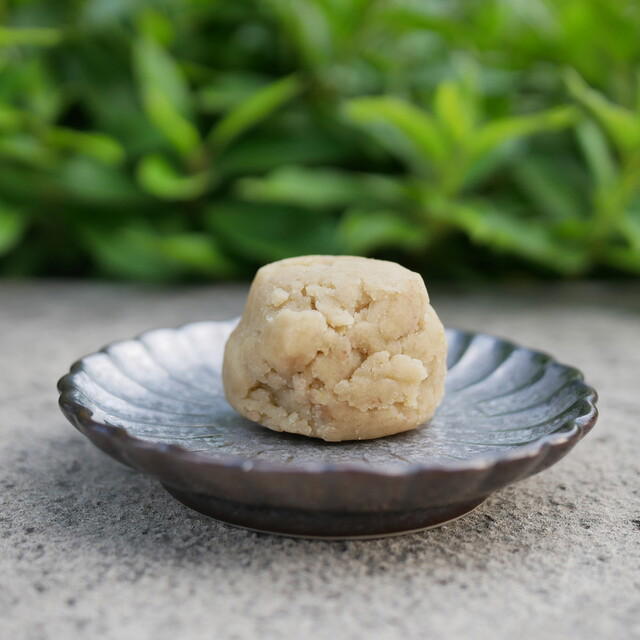
The menu
What to order
- 栗粉餅 (kurikomocha / chestnut rice cake)
- 栗きんとん (kuri kinton / chestnut sweet)
- あんみつ (anmitsu with white or black syrup)
- プリン (custard pudding)
Kandamachi’s central shopping streets give Gifu’s sweets culture a practical setting: shutters, shopfront counters, commuters, and small errands folded into the day rather than ceremony staged for visitors. In that context, wagashi is not dessert in the Western restaurant sense. It is a craft category tied to tea, gifting, seasonality, and local habit, often sold through compact specialists where the purchase matters more than the room.
Benten Do belongs to that older grammar of Japanese confectionery. The format is take-out only, the price band sits below JPY 999, and reservations are not part of the experience. That combination tells the reader more than a decorative description would: this is not a tasting-menu sweet counter or a café built for lingering. It is a focused wagashi stop in Gifu’s everyday city centre, carrying enough recognition to be selected for Tabelog’s 2023 Hyakumeiten list for Japanese traditional sweets and sweets cafés in East Japan.
Gifu wagashi without the café ritual
Japanese traditional sweets operate on a different tempo from restaurant dining. They are often bought for home, office, tea, train journeys, and seasonal exchange, which is why the category rewards precision, repetition, and trust. A shop with no seats can sit closer to the core of the tradition than a photogenic café, because the transaction is direct: choose, pay, carry away.
The take-out structure at Benten Do sharpens that point. There is no dining room to evaluate, no drinks pairing, no chef performance, and no long stay to justify. The cultural weight sits in the craft category itself. Wagashi has always balanced modest scale with formal codes: sweetness calibrated for tea, presentation shaped by season, and textures that can range from soft rice-based forms to bean-paste confections. Specific items should be checked at the counter rather than assumed, but the shop’s category and award placement put it squarely inside Gifu’s traditional sweets conversation.
The sub-¥999 spend band also matters. In Japan, not every serious food stop is expensive; some of the country’s strongest craft categories remain accessible because they are built around repetition and neighbourhood demand. This price tier separates Benten Do from Gifu’s higher-spend dining circuit, where places such as Takumi Hirano operate in a JPY 15,000 to JPY 19,999 bracket and Akane Ya sits around JPY 8,000 to JPY 9,999. The comparison is not about cuisine parity. It is about how Gifu rewards different forms of specialization, from formal meals to quick sweets purchases.
What the Hyakumeiten selection signals
Tabelog’s Hyakumeiten lists are useful because they separate category specialists from generic popularity. The 2023 East Japan selection for Japanese traditional sweets and sweets cafés gives Benten Do a clear trust signal in a field where visitors can struggle to distinguish long-running craft from souvenir-floor convenience. A Tabelog score of 3.63 adds another objective marker, but the category selection carries greater editorial weight because it places the shop among recognized wagashi addresses rather than among general restaurants.
That recognition should be read with the format in mind. A take-out sweets shop does not need the performance markers that define omakase counters, kaiseki rooms, or cocktail bars. The absence of seats is not a limitation; it is part of the operating model. For travellers building a Gifu day around food, this makes the stop more flexible than a booked meal, while also more dependent on timing and stock on the day.
Gifu’s broader dining map helps frame the choice. The city has restaurants and bars with different registers, from Aka Renga and Belle Equipe (French) to cocktail addresses such as BAR-BAROSSA and BAROSSA cocktailier. Against that range, wagashi functions as a quieter but culturally specific layer: a purchase that can sit between lunch and a bar, or before a rail departure, without turning into a full itinerary anchor.
How to use it in a Gifu food day
The practical appeal is strongest for travellers already moving through central Gifu. The shop is listed in Kandamachi, with access noted from JR Gifu Station and Meitetsu Gifu Station, and the nearest station identified as Meitetsu Gifu. Hours run from late morning to early evening across the week, with irregular closures flagged, so it works better as a planned daytime stop than an after-dinner idea.
Payment is another detail that changes the visit. Credit cards, electronic money, and QR code payments are not accepted, so cash is the sensible default. Parking is unavailable, which reinforces the urban-errand character of the place: approach on foot from the station area rather than treating it like a drive-up destination.
For a city with limited international shorthand, Gifu rewards this kind of granular planning. A strong day might combine one serious seated meal, one bar, and one traditional sweets stop, rather than trying to force every address into the same category. Benten Do earns attention because it represents a local craft format with recognized standing, not because it behaves like a destination restaurant. For broader planning, compare the city’s range through Our full Gifu restaurants guide, Our full Gifu bars guide, Our full Gifu hotels guide, Our full Gifu wineries guide, and Our full Gifu experiences guide.
Travellers extending the same food-first lens beyond Gifu can use contrast productively: regional specialists such as -Grilled beef Sukiyaki- KAMAKURA TANUKIAN 鎌倉 たぬき庵 in Kamakura. 鮪と炭火焼き うお炭 秋葉原店 in Tokyo.cafe in Osaka.know in Kumamoto, (Shoku) Vietnam in Kawasaki, [Curry Senmon Ten] Maruyama Kyoju. in Sapporo, Jōdo Saké Bar in Los Angeles, and Onigiri Time in Pasadena show how tightly formatted food experiences can matter without needing the conventions of a full-service restaurant.
Frequently asked questions
Is Benten Do child-friendly?
The setup is take-out only, with no seats and no private rooms, so it works as a quick stop rather than a linger-over tea shop. Its Gifu location in Kandamachi and daily 10:30 AM–6:00 PM hours make it easy to fit into a family day out.
How would you describe the vibe at Benten Do?
Think compact, practical, and built around take-out rather than table service. The shop sits in Kandamachi, Gifu, near Meitetsu Gifu Station, and the Tabelog 100 2023 selection signals a serious local following for Japanese traditional sweets.
Is Benten Do expensive?
Pricing at Benten Do is listed as - JPY 999 View spending breakdown.
When is Benten Do open?
Hours at Benten Do: Mon: 10:30 AM–6 PM; Tue: 10:30 AM–6 PM; Wed: 10:30 AM–6 PM; Thu: 10:30 AM–6 PM; Fri: 10:30 AM–6 PM; Sat: 10:30 AM–6 PM; Sun: 10:30 AM–6 PM.
How do I find Benten Do?
Benten Do is located in Gifu.
What's the signature at Benten Do?
Those details are not published. Its clear identity is Japanese traditional sweets sold as take-out in Gifu, with a 2023 Tabelog 100 selection in the Japanese traditional sweets / Japanese sweets cafe category. Check the venue's official channels for the latest details.
A Pricing-First Comparison
Side-by-side context: comparable cuisine and price.
| Venue | Cuisine | Price | Awards | Notes |
|---|---|---|---|---|
| Benten DoThis venue (the venue you are viewing) | Traditional Japanese Wagashi & Western Sweets Shop | $1–10 | Tabelog 100 #48 | Not listed |
| Tsubameya Yanagase honten | Japanese Confectionery | $1–10 | Tabelog 100 #86 | Yanagase, Japanese Confectionery |
| Chaya Akawani | Japanese shaved ice & sweets cafe | $1–10 | Tabelog 100 #30 | Hachimancho, Japanese shaved ice & sweets cafe |
| Soba Kura Tomi | Traditional Japanese Soba | $20–30 | Tabelog 100 #55 | Yanagase area, Traditional Japanese Soba |
| Yakiniku Shun Yasai Fanbogi | Aged Wagyu Yakiniku | $50–100 | Tabelog 100 #6 | Sumidamachi, Gifu City, Aged Wagyu Yakiniku |
| Takumi Hirano | Traditional Japanese Kaiseki | $100–150 | Tabelog 100 #99 | Yanagase / Onamicho, Traditional Japanese Kaiseki |
Recognition history
Dated appearances from independent guides and award organizations, with the underlying list record or original source where available.
Tabelog 100 #48 · No. 48
Tabelog · Tabelog 100 - Japanese traditional sweets / Japanese sweets cafe - EAST - 2023
Continue exploring
More in Gifu
Restaurants in Gifu
All restaurants in Gifu →


Details
- Classic
- Cozy
- Solo
- Family
- Casual Hangout
- Historic Building
- Standalone
- Local Sourcing
- A La Carte
Current opening hours
- Monday
- 10:30 AM–6 PM
- Tuesday
- 10:30 AM–6 PM
- Wednesday
- 10:30 AM–6 PM
- Thursday
- 10:30 AM–6 PM
- Friday
- 10:30 AM–6 PM
- Saturday
- 10:30 AM–6 PM
- Sunday
- 10:30 AM–6 PM
Hours can change for holidays and private events. Hours as of .
A small, traditional Japanese sweets shop atmosphere with a nostalgic, homely feel focused on takeaway rather than sit-down dining.