Siskul Grill occupies a address on Provstegade in central Randers, placing it within a Danish provincial dining scene that has quietly grown more sophisticated over the past decade. The grill format connects to a broader regional tradition of unpretentious, product-led cooking that sits apart from the New Nordic orthodoxy dominating Copenhagen's conversation. For visitors to Randers, it represents a grounded local option worth understanding in context.
Pearl is the En Primeur Club membership app — saves, bookings, and concierge access live there. Same editors, same standards.
- Address
- Provstegade 9, 8900 Randers C, Denmark
- Phone
- +4571675882
- Website
- siskulgrill.dk
- Directions
- Get directions
 Saves & bookings on Pearl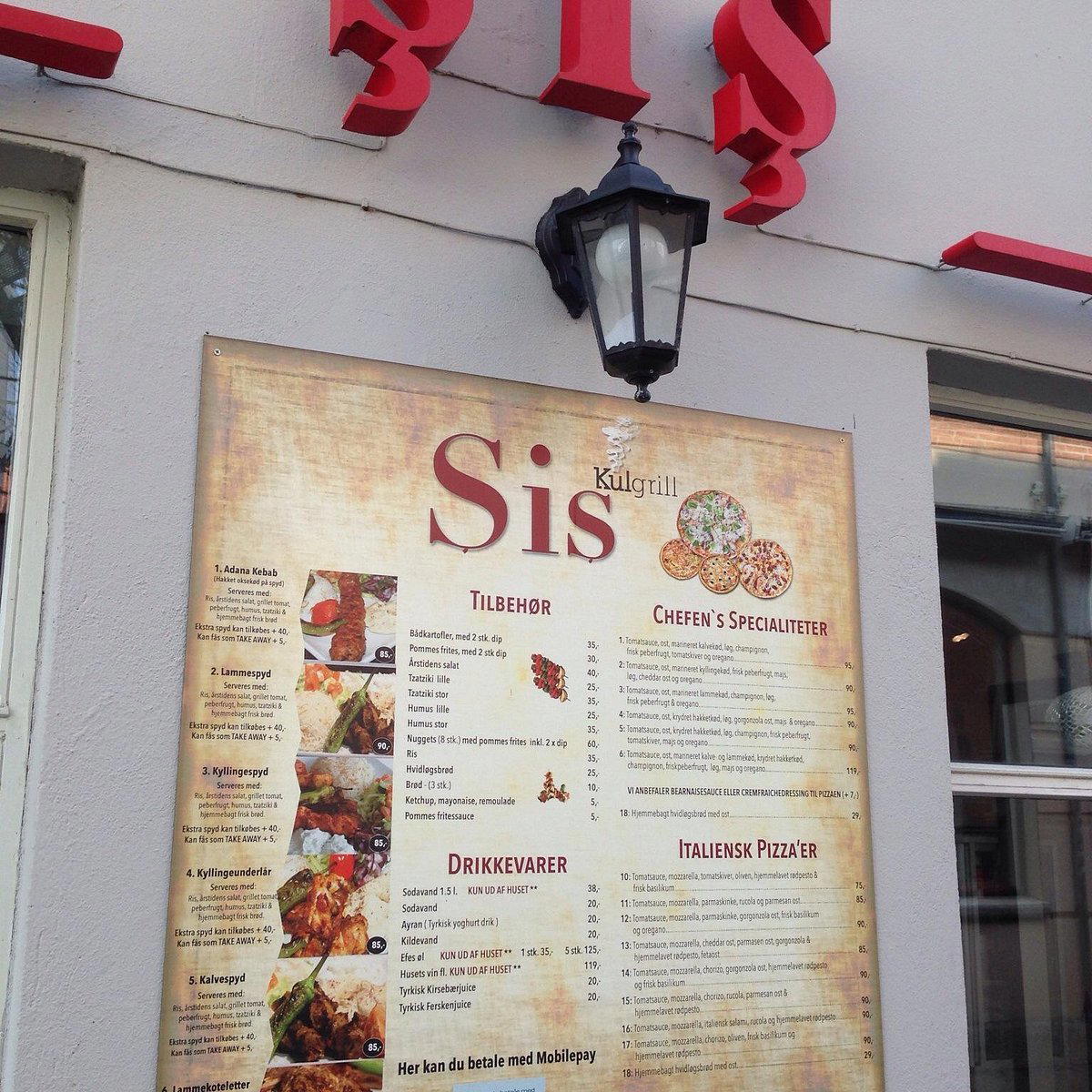
Randers at the Table: Provincial Dining Beyond the Capital's Shadow
Denmark's restaurant conversation tilts heavily toward Copenhagen, where Geranium and Jordnær in Gentofte set the critical benchmark, and where the New Nordic movement calcified into near-doctrine over the course of a decade. But the provinces have always operated by a different logic. In Jutland and across Denmark's mid-sized cities, the dining room tends to be more direct: fewer foraged garnishes, more open fire, fewer twelve-course constructions, more direct service built on familiarity rather than theater. Siskul Grill, located at Provstegade 9 in central Randers, belongs to this provincial tradition rather than the capital's archival-technique school.
Randers sits roughly 40 kilometres north of Aarhus along the Gudenå river, and the city's food scene reflects its character: mid-scale, locally rooted, resistant to trend-chasing. The grill format that Siskul represents has deep roots in Danish everyday eating, predating the New Nordic moment entirely. Where restaurants like Frederikshøj in Aarhus push toward technical complexity, the provincial grill operates on a different contract with its guests: heat, quality protein, and a room that functions as a neighbourhood anchor rather than a destination in the tourist sense.
The Address and What It Signals
Provstegade sits close to Randers' central pedestrian zone, which means foot traffic, accessibility by public transport from Aarhus (roughly 40 minutes by regional train), and the kind of street-level presence that makes a restaurant legible to both regulars and first-time visitors. In smaller Danish cities, location on or near a main commercial street carries different weight than it would in Copenhagen, where the signal is often the opposite: the harder to find, the more serious the intent.
The grill category in Denmark spans a wide range, from fast-casual kebab-adjacent formats to sit-down operations with considered wine lists and seasoned front-of-house teams. Understanding where Siskul Grill sits within that range requires looking at the surrounding competitive set in Randers. Options like Bistroteket, Bone's, Cafe Hugo, Banana Leaf, and Atami Sushi Restaurant together sketch the breadth of the city's current offering, ranging from French-inflected bistro formats to pan-Asian cooking. Siskul Grill's positioning within this set depends on format and execution rather than category alone.
The Team Dynamic in a Provincial Room
In Denmark's smaller cities, the collaboration between kitchen, floor, and bar often operates with less formal separation than in Copenhagen's highly professionalized scene. At venues like Alimentum in Aalborg or ARO in Odense, the front-of-house carries considerable editorial weight in communicating what the kitchen is doing and why. The sommelier or drinks lead, where one exists, often doubles as the primary guide to a menu that does not over-explain itself.
In a grill-format operation, this team dynamic expresses itself differently. The cook's relationship to fire and timing is immediate and physical in a way that multi-component tasting menus are not. The server's job becomes less about translating technique and more about reading the table: who wants pace, who wants to linger, which cut of meat is performing particularly well on a given evening. This relational intelligence is harder to systematize than a scripted tasting-menu service, and it is often what separates a grill room that feels alive from one that feels mechanical.
The provinces also tend to reward longevity differently. A team that has worked together across multiple seasons in a mid-sized city builds a kind of local fluency, a knowledge of the regular guest and the neighbourhood rhythm, that does not exist in the high-turnover environment of many Copenhagen kitchens. Whether Siskul Grill has that accumulated team depth is not something the available record confirms, but it is the right frame through which to evaluate any serious provincial grill operation in Denmark.
Denmark's Grill Tradition in a Wider Frame
The open-fire or grill format has gained credibility across Scandinavia in ways that would have seemed improbable fifteen years ago. Internationally, the conversation around restaurants like Le Bernardin in New York City centers on precision and technique; fire-driven cooking at that level is about control of an inherently unpredictable element. The same logic applies at smaller scale. A grill kitchen that takes its product sourcing seriously and manages heat with discipline can produce cooking that is more demanding than it looks from the outside.
In Denmark's provincial cities, this tradition connects to summer grilling culture, to the open-air hyggelig cookout, but in a sit-down restaurant context it requires a different level of consistency. The comparison is not with Dragsholm Slot Gourmet in Hørve or Henne Kirkeby Kro in Henne, both of which operate in the destination-country-house register with correspondingly elaborate kitchens. The reference set for a city grill is more local: the quality of the sourcing, the calibration of the grill itself, and the ability of the kitchen to deliver consistent results across a full service.
For a broader view of what Denmark's regional dining scene offers outside Copenhagen, LYST in Vejle, Domæne in Herning, and Frederiksminde in Præstø each represent different takes on serious provincial cooking, worth studying as context for what the category can achieve. Internationally, the progression from tasting-menu dominance toward more informal, fire-centered formats is visible in cities as different as Seoul, where Atomix in New York City has helped reframe Korean fine dining, and in New York itself.
Planning a Visit
Randers is accessible by direct regional train from Aarhus (roughly 35 to 40 minutes) and by road via the E45 motorway. The city centre, where Provstegade is located, is walkable from the train station in under ten minutes. For visitors arriving from outside Denmark, Aarhus Airport connects the region to select European routes, while Copenhagen Airport is approximately two and a half hours by train. Our full Randers restaurants guide covers the city's wider dining options for those spending more than a single meal in the city.
Continue exploring
More in Randers
Restaurants in Randers
Browse all →
Bars in Randers
Browse all →
Hotels in Randers
Browse all →
Wineries in Randers
Browse all →

At a Glance
- Cozy
- Casual Hangout
- Group Dining
Current opening hours
- Monday
- Closed
- Tuesday
- 3–10 PM
- Wednesday
- 3–10 PM
- Thursday
- 3–10 PM
- Friday
- 3–10 PM
- Saturday
- 3–10 PM
- Sunday
- 3–10 PM
Hours can change for holidays and private events. Last verified .
Inviting and welcoming atmosphere ideal for enjoying hearty meals.
Know Before You Go
- Getting there
- Provstegade 9, 8900 Randers C, Denmark