Our verdict
Restaurant Anatolia brings the flavours of Turkish and broader Anatolian cooking to Randers, a mid-sized Danish city where international cuisine operates in a tighter competitive field than Copenhagen or Aarhus. Positioned on Lucernevej in the city's residential fringe, it serves a neighbourhood that has limited alternatives for this style of cooking, making it a meaningful addition to the local dining spread.

Pearl is the En Primeur Club membership app, where members save venues, book tables and use the concierge.
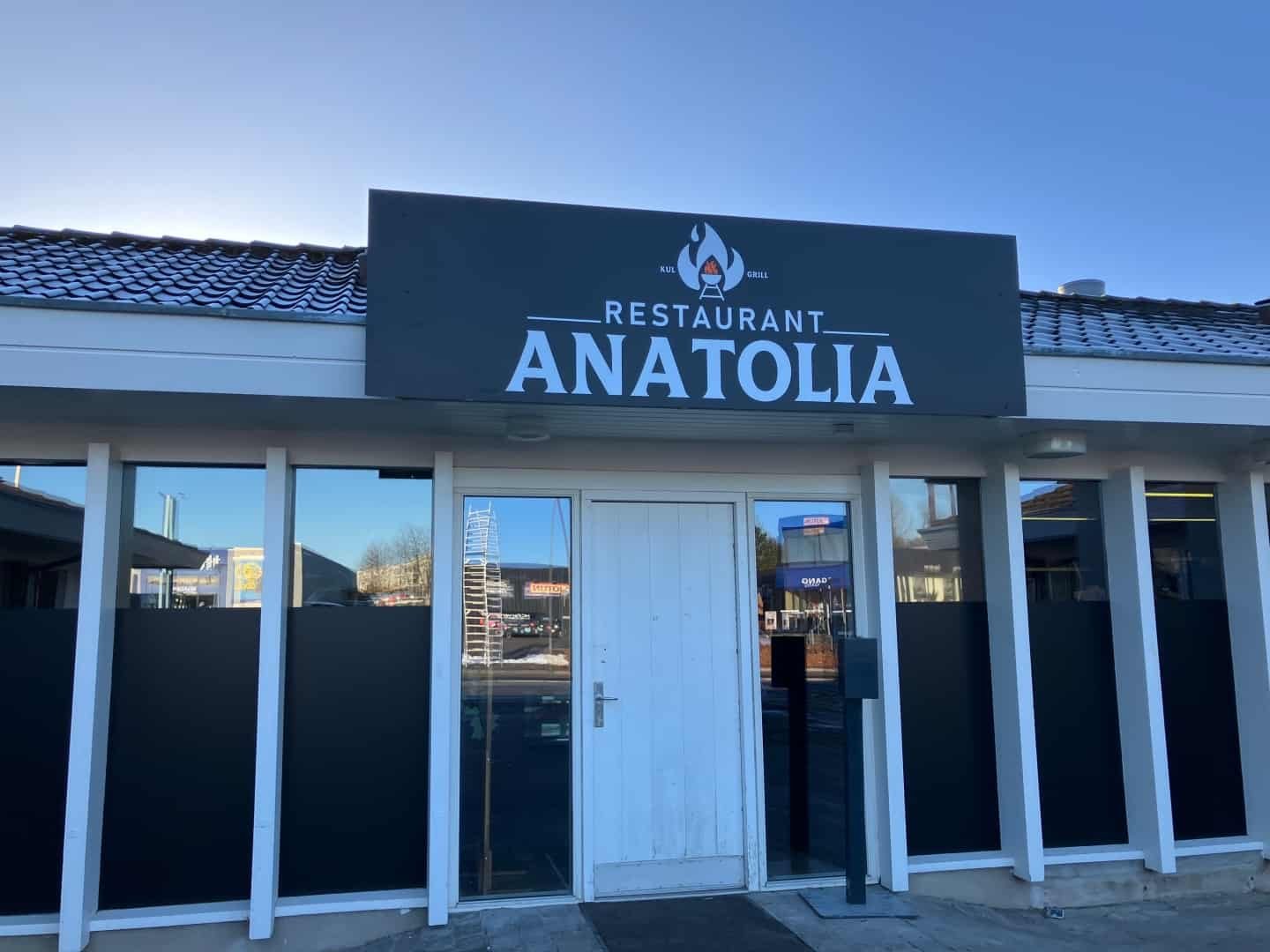
Where Anatolia Meets the Danish Interior
Randers sits roughly midway between Aarhus and Aalborg on the Jutland peninsula, a city of around 100,000 people whose restaurant scene reflects its scale: a core of reliable neighbourhood spots, a handful of ambitious kitchens, and a thin but growing layer of international cuisine. In that context, a restaurant drawing on the culinary traditions of Anatolia, the broad geographical region spanning modern Turkey, with cooking that pulls from Central Asia, the Levant, and the Aegean, occupies a distinct position. There are few direct competitors in the immediate area, and the style of cooking itself carries enough depth to reward a focused kitchen.
Turkish and Anatolian cooking is often reduced, in European minds, to its most portable formats: donor kebab, pide, baklava. The actual breadth of the tradition is considerably wider, covering slow-braised meats, legume-heavy mezze, wood-fire breads, and a spice vocabulary that sits closer to the eastern Mediterranean than to the Middle East. A restaurant that works seriously within that tradition, rather than defaulting to its most commercial expressions, occupies a different category entirely from the standard takeaway format that dominates Turkish food in Scandinavia.
The Physical Setting on Lucernevej
Restaurant Anatolia's address on Lucernevej 60 places it in a quieter part of Randers, away from the central pedestrian zones and waterfront areas that anchor the city's more visible dining. This kind of positioning is common for neighbourhood restaurants that rely on repeat local custom rather than tourist footfall, and it shapes the physical experience of arrival. You approach through residential streets rather than a commercial strip, which tends to produce a particular kind of dining room: rooms built for regulars, not for first impressions.
In many Turkish and Anatolian restaurants across Scandinavia, the interior design follows a predictable grammar, warm terracotta tones, patterned tiles, arched details that gesture toward Ottoman architecture. The seat count, pricing, and hours are not in the public record we hold, so specific capacity and scheduling details should be confirmed directly before visiting.
Anatolian Cooking in a Danish City: The Broader Pattern
The Danish dining conversation tends to concentrate on a handful of cities. Geranium in Copenhagen and Jordnær in Gentofte define the national ceiling for fine dining; Frederikshøj in Aarhus anchors the Jutland end of that conversation. Outside those reference points, the provincial Danish dining scene is more varied and less documented than its quality sometimes warrants. Randers itself has a range of options, Bistroteket and Bone's serve different ends of the market, and Cafe Hugo holds a consistent position in the casual dining segment, but international cuisine with genuine regional specificity remains comparatively scarce.
That scarcity gives a kitchen like Restaurant Anatolia a different kind of significance than it might have in Aarhus or Copenhagen. In a city with multiple Turkish restaurants, the competitive pressure pushes quality upward and pushes menus toward differentiation. In a city with few, the restaurant becomes the primary reference point for an entire culinary tradition, which is both an opportunity and a responsibility. For diners, it means the comparison set is not local: you are not choosing between two Anatolian kitchens, you are deciding whether the style of cooking itself is what you want that evening.
For broader context on what the provincial Danish restaurant scene looks like at its most ambitious, Alimentum in Aalborg and LYST in Vejle offer useful reference points, as do Dragsholm Slot Gourmet in Hørve and Frederiksminde in Præstø for those willing to travel within Denmark for a particular experience. Further afield in the Nordic fine dining frame, ARO in Odense and Domæne in Herning complete the picture of how serious cooking distributes itself across the Jutland and Funen regions. Henne Kirkeby Kro in Henne remains the benchmark for destination dining outside the major urban centres.
Randers' International Dining Mix
Randers has developed a modest but genuine international dining spread. Atami Sushi Restaurant covers the Japanese end of the spectrum; Banana Leaf handles Southeast Asian cooking. Restaurant Anatolia completes a triangle of non-European culinary traditions that collectively give the city's diners more range than its population size might suggest. See our full Randers restaurants guide for a complete overview of where the city's dining sits across categories and price points.
For diners used to the density of international options in Copenhagen or in major international cities, those who benchmark against something like Le Bernardin in New York City or Atomix in New York City, the provincial Danish dining scene operates at a different register. That is not a limitation so much as a different set of terms. The value in a restaurant like Restaurant Anatolia is not that it competes with destination kitchens; it is that it brings a coherent culinary tradition to a city that would otherwise have no serious version of it.
Planning Your Visit
Lucernevej 60 is accessible by car from the Randers city centre in a short drive. Given the residential location and the absence of a large walk-in tourist trade, booking ahead is advisable, though the appropriate lead time will depend on the day and season.
Frequently asked questions
What's Restaurant Anatolia's location?
Restaurant Anatolia is located at Lucernevej 60, 8920 Randers, Denmark, Randers.
Is Restaurant Anatolia the only Turkish or Anatolian restaurant in Randers?
Based on available dining records for Randers, Restaurant Anatolia on Lucernevej 60 occupies a position as the primary address for Anatolian and Turkish cuisine in the city. Randers has developed a modest international dining spread, including Japanese and other European options, but dedicated Anatolian kitchens remain rare at this scale in Jutland outside Aarhus. That scarcity is a practical reason to plan ahead rather than treat it as a walk-in fallback.
What's the must-try dish at Restaurant Anatolia?
Anatolian cooking at its most serious rewards orders from the slow-cooked or wood-fire sections of the menu, where patience and technique separate a competent kitchen from a committed one. Dishes in these categories, braised lamb, spiced stews, or charcoal-grilled proteins, tend to reflect the Anatolian tradition most faithfully.
How far ahead should I plan for Restaurant Anatolia?
Restaurant Anatolia sits in a residential part of Randers with a local rather than tourist-driven customer base, which generally means walk-in availability is more realistic here than at high-profile city-centre addresses. That said, weekend evenings and group bookings at Lucernevej 60 may still fill quickly given the limited number of comparable kitchens in Randers covering this culinary tradition. Contacting the restaurant in advance is the safer approach for parties of three or more.
What is Restaurant Anatolia known for?
Restaurant Anatolia is Randers' primary kitchen representing Anatolian and Turkish culinary traditions, a cooking style built around slow-cooked meats, wood-fire technique, layered spicing, and shared mezze formats. Its address on Lucernevej 60 places it in a residential quarter of the city, serving a predominantly local customer base rather than a tourist circuit. In a city of around 100,000 people where the dining scene skews toward familiar formats, it occupies a distinct position as the go-to address for this regional tradition.
Can Restaurant Anatolia handle vegetarian requests?
Anatolian cooking has a well-documented tradition of vegetable-forward and legume-based dishes, aubergine preparations, stuffed peppers, lentil soups, and cold mezze plates that require no adaptation for vegetarians. These are not afterthoughts in the cuisine but structurally central to the Anatolian table.
The Short List
Comparable venues nearby, for context on price, style, and recognition.
| Venue | Cuisine | Price | Notes |
|---|---|---|---|
| Restaurant AnatoliaThis venue (the venue you are viewing) | Not listed | Not listed | Not listed |
| Banana Leaf | Authentic Northern Indian | $20–30 | Central Randers, Authentic Northern Indian |
| Bone's | American BBQ | $20–30 | Randers SØ, American BBQ |
| Restaurant Skovbakken | Traditional Danish | Not listed | Randers C, Traditional Danish |
| Restaurant Flammen Randers | Grill Buffet | $20–30 | Randers C, Grill Buffet |
| MUNN Breakfast and Lunch | Contemporary Breakfast and Brunch | $20–30 | Rådhus, Contemporary Breakfast and Brunch |
Continue exploring
More in Randers
Restaurants in Randers
All restaurants in Randers →
Bars in Randers
Browse all →
Hotels in Randers
Browse all →
Wineries in Randers
Browse all →

Details
Current opening hours
- Monday
- 4–9 PM
- Tuesday
- 4–9 PM
- Wednesday
- 4–9 PM
- Thursday
- 4–9 PM
- Friday
- 4–9 PM
- Saturday
- 4–9 PM
- Sunday
- 4–9 PM
Hours can change for holidays and private events. Hours as of .