.png)
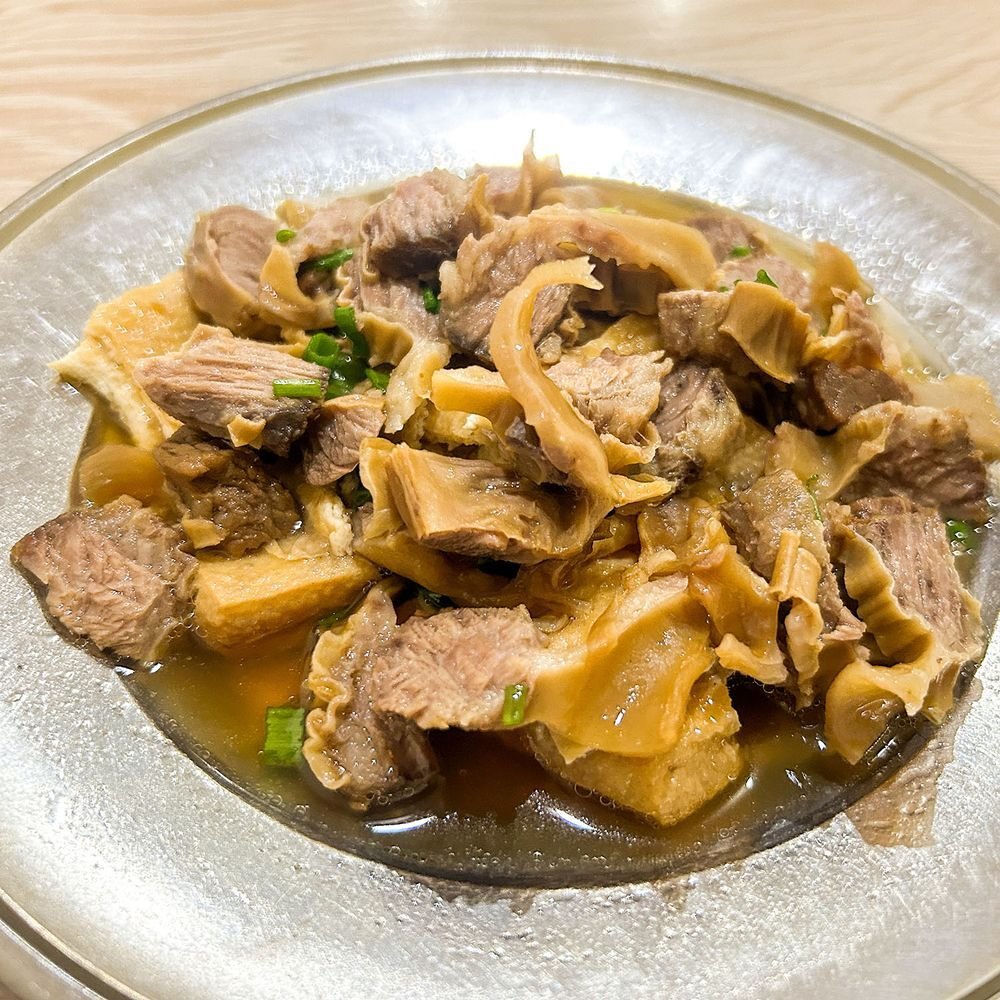
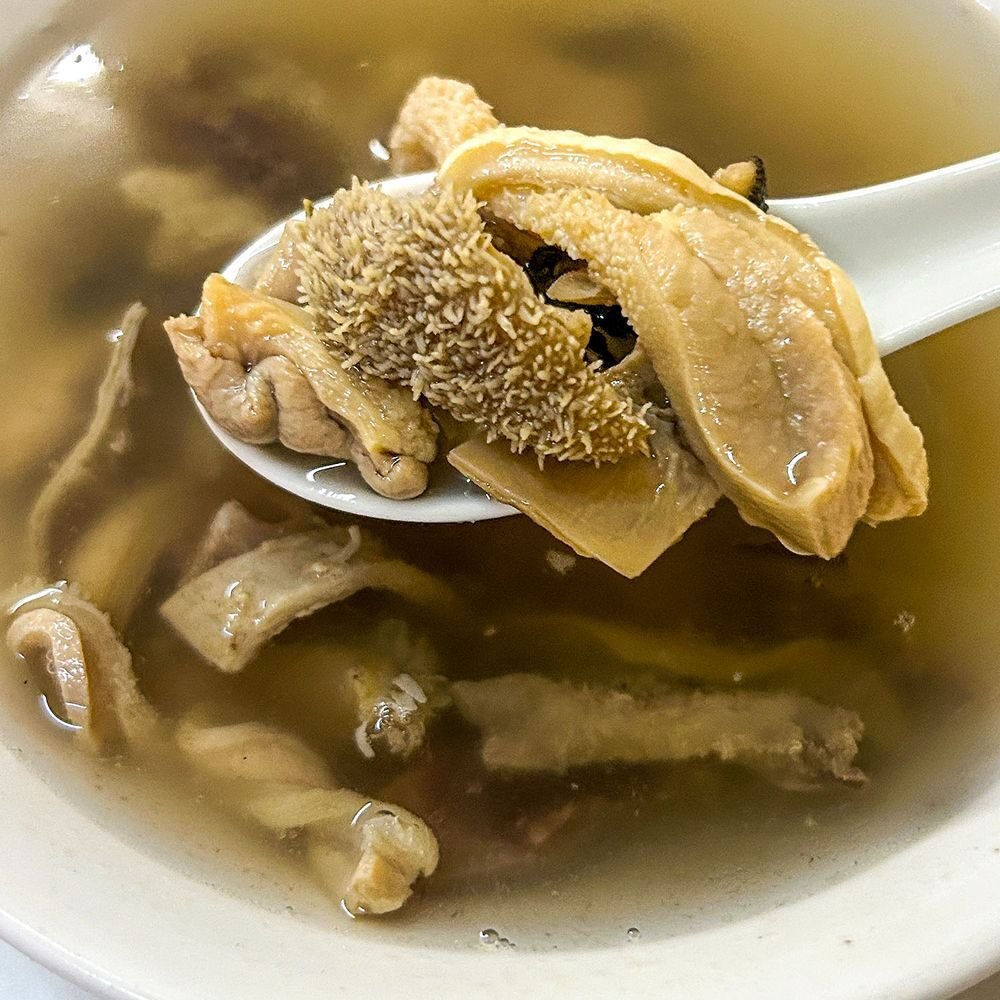
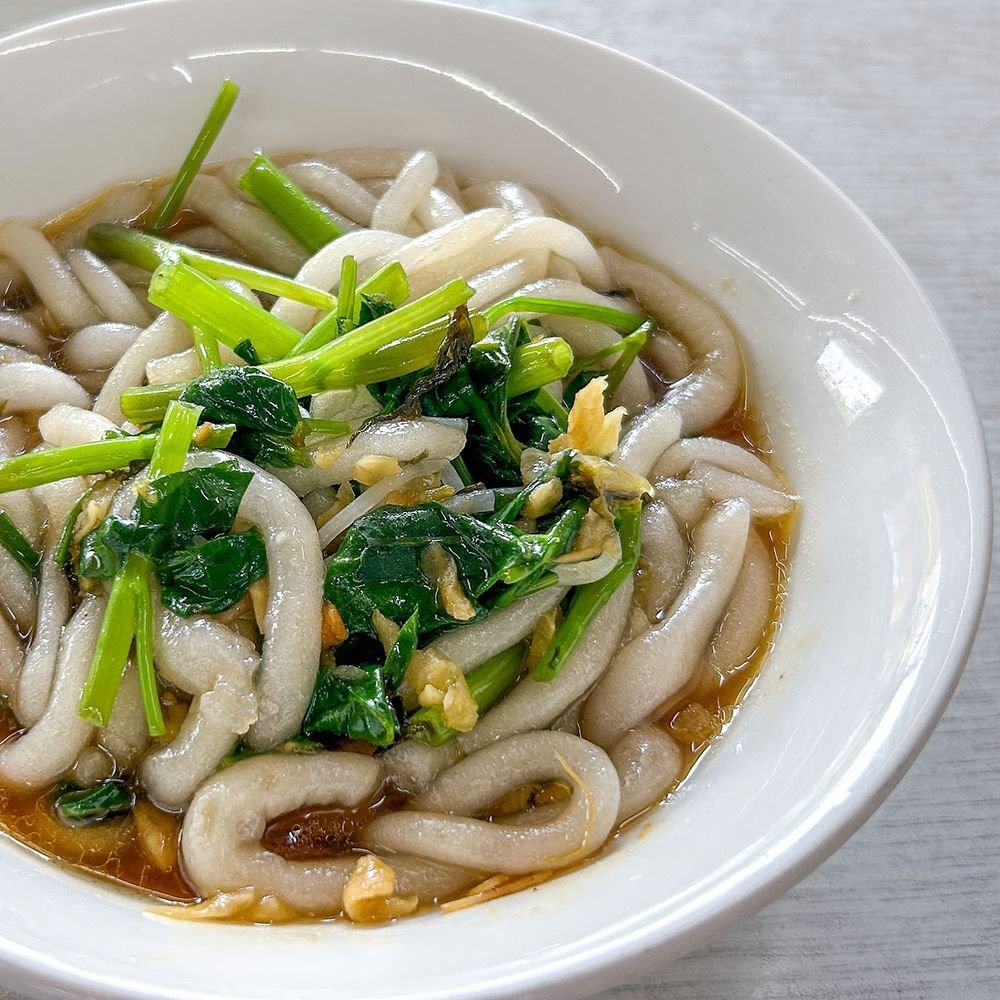
A husband-and-wife counter in Ningde's Jiaoqi Road neighbourhood, Shou Ning Mi Gao draws a loyal local following for its steamed rice noodle rolls — mi gao — filled with ground pork and vegetables and finished with spiced soy marinade. The Fuding pork slices in sour-spicy soup, made from hand-chopped pork, round out a short, focused menu that reflects the everyday eating traditions of coastal Fujian.
 Discover on Pearl
Pearl is the En Primeur Club membership app — saves, bookings, and concierge access live there. Same editors, same standards.
Jiaoqi Road and the Grammar of a Fujian Morning
Ningde's Jiaoqi Road neighbourhood runs through the commercial and residential fabric of Jiaocheng District with the unhurried rhythm of a city that has not yet recalibrated its mealtimes for tourism. The streets here function on a local clock: early risers collecting breakfast from counters that open before the city fully wakes, shared tables filling with neighbours who know one another by order rather than name. It is in this context that Shou Ning Mi Gao operates — not as a destination restaurant but as a fixed point in the daily routine of the surrounding community. The distinction matters. Venues that serve locals rather than visitors tend to price and portion for repetition, and the discipline that comes from a returning customer base often produces more consistent food than ambition alone can sustain.
The address on Yuan Gang Road (院岗路 3号3幢101) places it squarely inside a residential-commercial block typical of Fujian provincial cities: ground-floor retail units beneath mid-rise housing, foot traffic determined by proximity rather than profile. This is not the kind of location that appears in inter-city dining guides or draws visitors from Fuzhou or Xiamen. It draws Ningde. That insularity is, in this case, a form of quality control.
Mi Gao: What the Dish Is and Why It Matters Here
Steamed rice noodle rolls — mi gao , are one of the foundational formats of Fujianese street-level eating, closely related to the cheung fun tradition of Guangdong but differentiated by filling choices and the soy-based sauces used to finish the dish. In Fujian, regional variation is pronounced: the same format can taste entirely different a few kilometres apart depending on the marinade composition, the rice batter hydration, and the type of filling used. Shou Ning Mi Gao's version uses ground pork and vegetables as the primary filling, with the spiced soy marinade , available in extra measure on request , doing the work that chilli oil or sesame paste might do elsewhere.
The plain mi gao without filling, which the venue recommends alongside the stuffed version, is a test of the rice batter itself: its texture when steamed, the way it holds together on the chopstick without tearing, and whether it carries the marinade without becoming saturated. That the plain version is explicitly recommended is a signal that the kitchen is confident in the fundamentals rather than relying on filling to carry the dish. Across the broader category of Fujianese rice noodle preparations , and in comparison with counters like Xiao Dong Men Niu Rou Shui Fen Lao Dian, which focuses on a different rice noodle format, or Ning Chuan Zu Yao Yu Wan, which centres on fish balls , Shou Ning Mi Gao occupies a specific niche: the rice roll as primary subject rather than accompaniment.
The Second Dish: Fuding Pork in Sour-Spicy Soup
Fuding is a county-level city in the northern reaches of Ningde prefecture, and its culinary identity extends well beyond its more famous white tea. The Fuding pork slice preparation found at this counter reflects a broader northern Fujian tradition of hand-chopped rather than machine-minced pork, which produces a coarser, springier texture that behaves differently in hot broth. The sour-spicy soup base here is not the Sichuan-style hot-and-sour of northern Chinese cooking but a Fujianese interpretation: lighter in body, with sourness that comes from fermented or pickled elements rather than vinegar alone, and heat that registers as warmth rather than fire.
The hand-chopping technique is worth noting because it is increasingly rare in small-format eateries where labour efficiency drives preparation choices. That it persists here is consistent with the profile of a family-run counter where the same two people control both production and service, and where techniques are maintained because they produce a better result rather than because they serve a marketing story. Comparable pork preparations in northern Fujian can be found at Fu Ding Zheng Zong Bian Rou (Jianxin Road) and Hu Yu Zhong Wu Qu Bian Rou, both of which approach the bian rou format with similar regional sourcing logic.
The Married-Couple Counter as a Format
In Chinese provincial cities, the husband-and-wife breakfast counter represents a specific operational model: low overhead, high consistency, deep local loyalty, and near-zero marketing. These counters typically survive on volume and repetition rather than average spend, which means the financial logic depends on keeping regulars rather than converting visitors. The consequence for the occasional traveller is a dining environment calibrated for efficiency and familiarity rather than explanation or accommodation , menus are often unwritten or assumed, ordering is fast, and the expectation is that you know what you want before you reach the counter.
At mealtimes, shared tables are standard. This is not a design choice or a hospitality concept; it is the physical reality of a small room serving a high volume of local customers on a compressed schedule. Visitors from cities where table-sharing has been reintroduced as a fashionable communal format will find the dynamic here altogether different: functional, unsentimental, and efficient in a way that high-end communal dining rooms rarely manage. For context on how different the register can be at the formal end of Chinese regional cuisine, the contrast with venues like Xin Rong Ji (Xinyuan South Road) in Beijing or Imperial Treasure Fine Chinese Cuisine in Guangzhou is instructive. Both ends of the spectrum are legitimate; they are simply answering different questions.
The same dynamic, at varying price points and registers, plays out across Chinese cities. Ru Yuan in Hangzhou, Xin Rong Ji in Chengdu, and 102 House in Shanghai each represent a different tier of the same broad category of regionally grounded Chinese cooking. Further afield, venues like Chef Tam's Seasons in Macau and Dai Yuet Heen in Nanjing show how Cantonese and regional Chinese traditions translate into fine-dining formats. And for readers curious about how technique and precision operate at the very leading of the international scale, Le Bernardin in New York City and Atomix in New York City provide a useful comparative frame. Shou Ning Mi Gao is at the opposite end of the formality axis from all of them , and no less precise in its own terms.
Planning a Visit
Shou Ning Mi Gao operates at Yuan Gang Road, Jiaoqi Road, Jiaocheng District, Ningde, Fujian (院岗路 3号3幢101, 邮政编码: 352100). No booking infrastructure exists for a venue of this type; the model is walk-in, with shared tables during the busiest morning and lunchtime periods. Arriving slightly before peak mealtimes reduces the likelihood of a queue, though the turnover rate at counters like this tends to be high. Expect a cash-first environment, and come with a clear idea of your order: the mi gao with ground pork filling, the plain mi gao, and the Fuding pork slice soup cover the recommended range. Ask specifically for an extra ladle of spiced soy marinade with the rice rolls. No website or reservation contact is available through public channels.
For a broader orientation to eating in Ningde, our full Ningde restaurants guide maps the city's dining options across formats and price tiers. Travellers planning a longer stay can also consult our Ningde hotels guide, our Ningde bars guide, our Ningde wineries guide, and our Ningde experiences guide for a complete picture of what the city offers.
Compact Comparison
A fast peer set for context, pulled from similar venues in our database.
Continue exploring
More in Ningde
At a Glance
- Cozy
- Hidden Gem
- Casual Hangout
Casual small shop atmosphere where diners share tables at mealtimes.