.png)
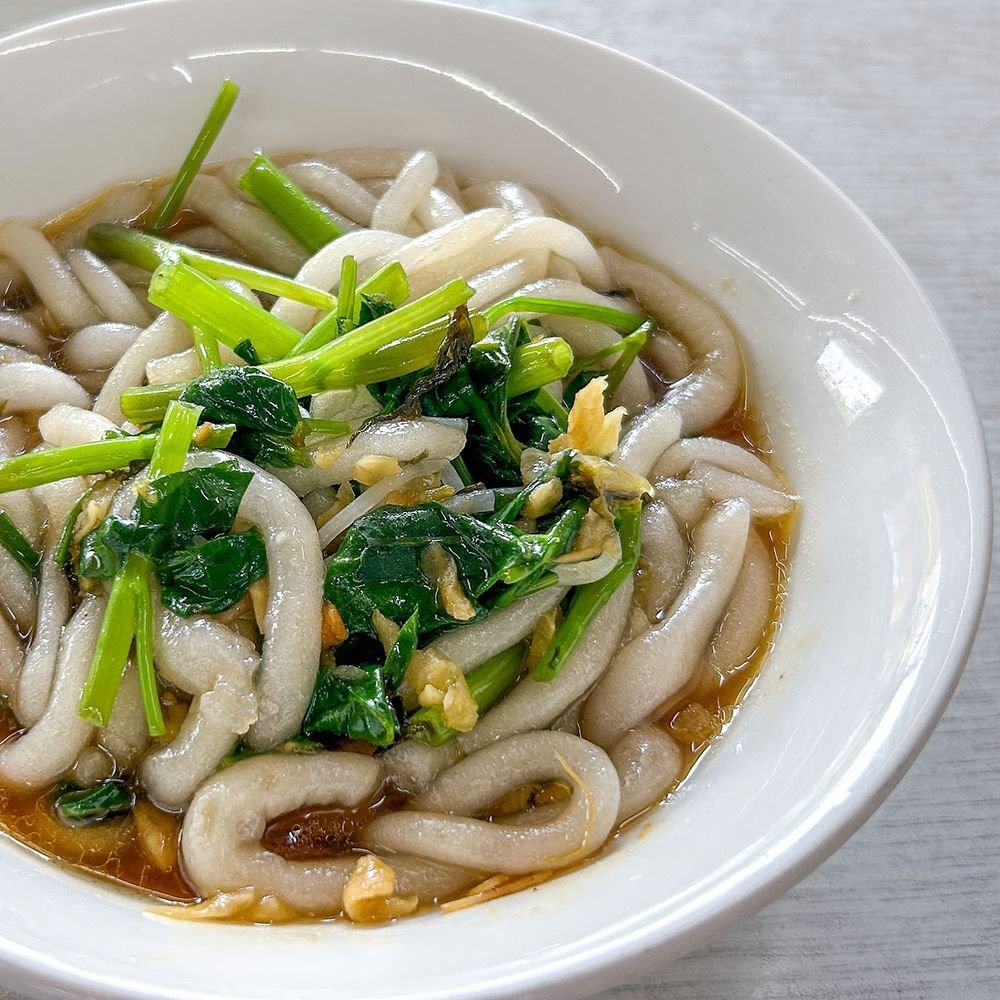
A Fuan institution transplanted to Ningde, this shop has spent over two decades refining the Wuqu approach to bian rou: pork-filled dumplings wrapped in paper-thin translucent skin, served tossed in sauce or floating in clear broth. Alongside the dumplings, dried cuttlefish and pork rib soup and soy-dressed taro noodles complete a tight, uncompromising menu rooted in Fujian coastal tradition.
 Discover on Pearl
Pearl is the En Primeur Club membership app — saves, bookings, and concierge access live there. Same editors, same standards.
Where Wuqu Dumpling Culture Meets the Ningde Table
Fuan County sits in the coastal interior of Fujian Province, and its Wuqu township has long maintained a distinct food dialect within the broader Fujian culinary tradition. The centrepiece of that dialect is bian rou: a dumpling whose wrapper is not made from wheat flour in the conventional sense, but from pounded lean pork, stretched and beaten until it becomes translucent, almost membrane-like. The result is a skin that behaves differently from any wheat or rice wrapper, simultaneously delicate and resilient, and it requires a specific craft that does not transfer easily across kitchens or geographies. When practitioners of this tradition move, as many have done with Fujian's pattern of internal migration, they typically carry the technique with them rather than adapting to local materials. This shop, operating under the Wuqu style for over twenty years and now based in Ningde, is exactly that kind of carrier.
The Craft Behind the Skin
The pounded-pork wrapper is the defining technical challenge of Wuqu-style bian rou, and it separates practitioners in a way that awards and star ratings do not fully capture. The pork must be lean, cold, and worked to a specific consistency before it can be pressed into sheets thin enough to become translucent without tearing. In lesser hands the wrapper becomes opaque, gummy, or thick at the folds. At this Fuan-origin shop, the skin achieves the near-paper quality that defines the tradition at its most exacting: thin enough to let the colour of the pork filling show through, yet structured enough to hold in broth without disintegrating.
The filling itself is seasoned simply, which is consistent with how this style of dumpling operates across Fujian. The pork is kept bouncy rather than dense, a textural quality that depends on fat ratio and mixing technique rather than additives. These are not the soft, yielding dumplings of Shanghai-adjacent traditions, nor the sturdy pleated parcels of northern Chinese cooking. They occupy a narrower niche, prized by those who grew up eating them and often a point of genuine discovery for visitors from outside the Fujian coastal region. For context on how Fujian-origin techniques travel and adapt across China's dining scene, the detailed work being done at establishments like Xin Rong Ji (Xinyuan South Road) in Beijing or Ru Yuan in Hangzhou offers a useful comparative frame, even if those venues operate at a very different price point and register.
Two Preparations, One Tradition
Bian rou at this shop is served in two forms. The broth version places the dumplings in a clear, clean soup where the wrapper's translucency is most visible and the delicacy of the filling reads most clearly. The sauced version tosses the cooked dumplings in a seasoned condiment that adds a layer of flavour without obscuring the wrapper's character. Both preparations are established within the Wuqu tradition rather than being innovations of this particular kitchen. The choice between them is largely a matter of what a diner wants from the meal: the broth version rewards attention and is often considered the purer test of the dumpling itself, while the sauced version is more immediately satisfying and better suited to eating quickly at a communal table.
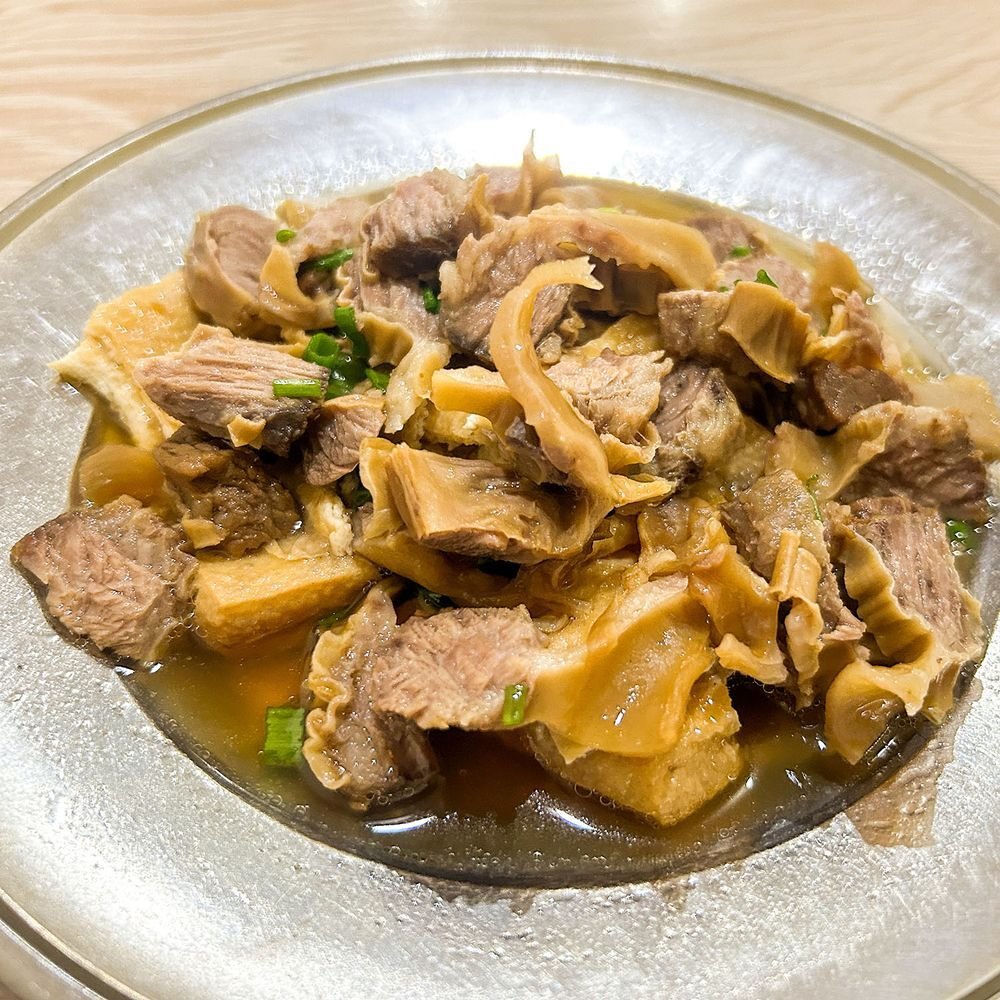
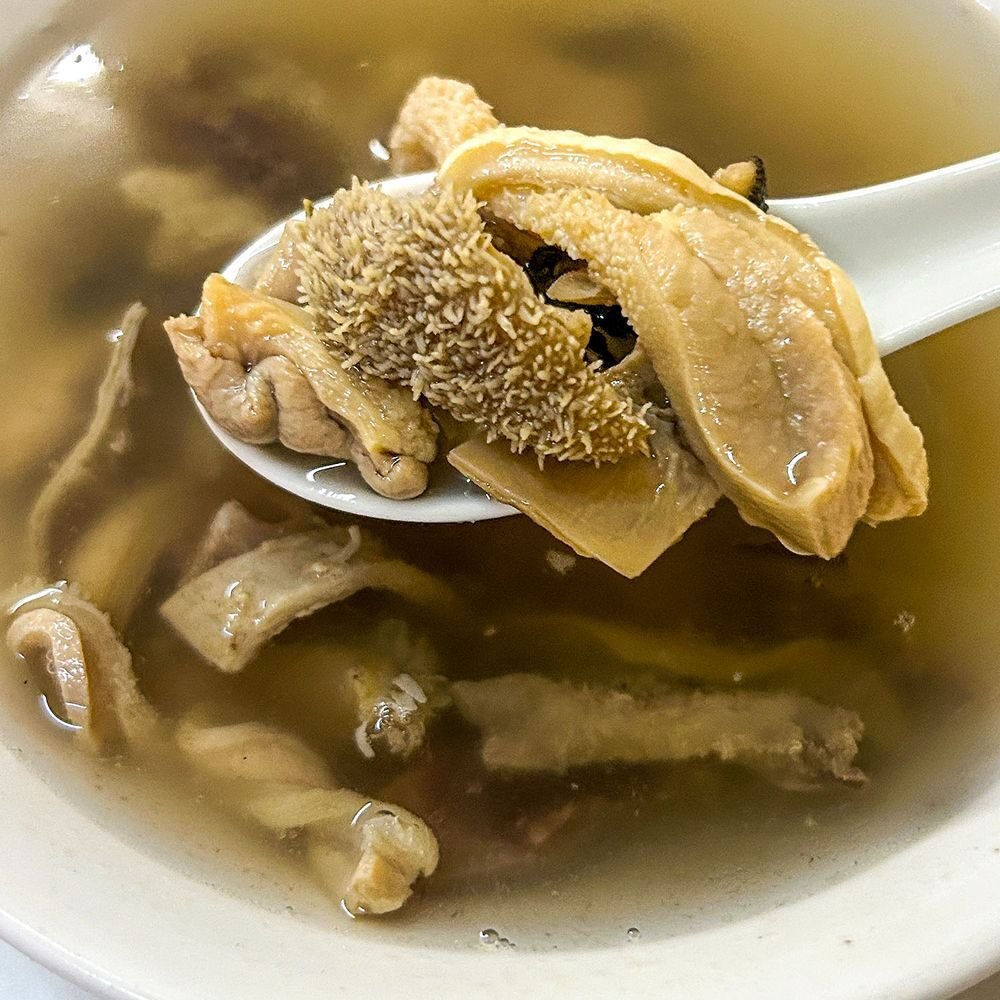
The broader menu extends to dried cuttlefish and pork rib soup, a preparation that draws on Fujian's deep coastal pantry. Dried seafood in Fujian cooking functions as a flavour-building ingredient rather than a primary protein, and cuttlefish specifically adds an umami layer that fresh seafood cannot replicate. When paired with pork rib, which provides fat and body, the result is a soup with layered depth that reads as distinctly regional. Taro noodles dressed in soy sauce and pickles complete the picture, the slippery texture of taro starch contrasting with the acidic sharpness of the pickled accompaniment. These are not decorative additions to a dumpling shop menu; they are independent representatives of the same Fujian coastal-interior cooking tradition.
Twenty Years and a Relocation
Longevity in Chinese street-food and specialty-shop categories carries weight that formal restaurant systems sometimes undervalue. A shop that has maintained a specific regional technique for over two decades, through a geographical move from Fuan to Ningde, is preserving something that institutional kitchens rarely sustain with the same fidelity. The owner's decision to continue working in the Wuqu style rather than adapting to broader Ningde preferences is a form of positioning, whether or not it is described that way. It places the shop in a specific niche: not a general Fujian restaurant, not an adapted local favourite, but a practitioner of one particular county-level tradition operating in a city that has absorbed enough Fuan migrants to sustain an audience for it.
Within Ningde's specialty food scene, comparable examples of this kind of single-tradition depth can be found at Ning Chuan Zu Yao Yu Wan for fish ball traditions, and Shou Ning Mi Gao for Shouning county's rice cake preparations. The pattern across all of them is the same: a practitioner of a specific sub-regional tradition finding a sustainable audience in a larger city without diluting the technique to suit broader tastes. This is how Fujian's internal food diversity maintains itself in an urban context. For those exploring the broader spectrum of Ningde's beef and noodle traditions, Xiao Dong Men Niu Rou Shui Fen Lao Dian operates in a different but equally specific lane. A point of direct comparison for the bian rou tradition specifically is Fu Ding Zheng Zong Bian Rou (Jianxin Road), which brings a Fuding-origin approach to the same dumpling category, giving visitors a useful basis for comparing how county-level variation within Fujian produces meaningfully different results from superficially similar ingredients.
Planning Your Visit
The shop is located at Xinhua Middle Rd, Fuan, Ningde, Fujian, with a Plus Code of 3JRX+JVF for navigation. No phone number or website is listed in available records, which is consistent with the operating model of long-established specialty shops in Chinese county towns: walk-in trade and local word of mouth have sustained the business for two decades without requiring a formal booking infrastructure. Arriving early in the day is advisable for any popular specialty-format shop of this type, as supply of the pounded-pork wrapper is limited by the labour involved in production. No pricing data is available in our records, but Wuqu-style bian rou shops at this tier in Fujian sit firmly in the casual, daily-meal price range rather than the restaurant category. No booking is available; seating is first-come.
For a broader picture of where this shop sits within Ningde's dining options, see our full Ningde restaurants guide. Those building a longer itinerary in the region can also consult our full Ningde hotels guide, our full Ningde bars guide, our full Ningde wineries guide, and our full Ningde experiences guide for context beyond the table. For those approaching Chinese regional cuisine from a fine-dining perspective and wanting to understand the spectrum from street-food craft to formal technique, establishments such as Chef Tam's Seasons in Macau, Imperial Treasure Fine Chinese Cuisine in Guangzhou, or Dai Yuet Heen in Nanjing offer a useful calibration point at the formal end of the scale. The craft at a twenty-year Wuqu dumpling shop and the craft at a Michelin-recognised Cantonese kitchen are not the same tradition, but they share the same underlying logic: technique developed over time within a specific regional inheritance, maintained with fidelity rather than adapted for convenience.
Budget and Context
A quick look at comparable venues, using the data we have on file.
| Venue | Price | Awards | Notes |
|---|---|---|---|
| Hu Yu Zhong Wu Qu Bian Rou | For over 20 years, this shop has been a landmark of the Wuqu food scene. Since i… | This venue | |
| Fu Ding Zheng Zong Bian Rou (Jianxin Road) | |||
| Ning Chuan Zu Yao Yu Wan | |||
| Shou Ning Mi Gao | |||
| Xiao Dong Men Niu Rou Shui Fen Lao Dian |
Continue exploring
More in Ningde
At a Glance
- Classic
- Cozy
- Casual Hangout
Straightforward working kitchen atmosphere with simple counter seating focused on quick, intense meals.