.png)
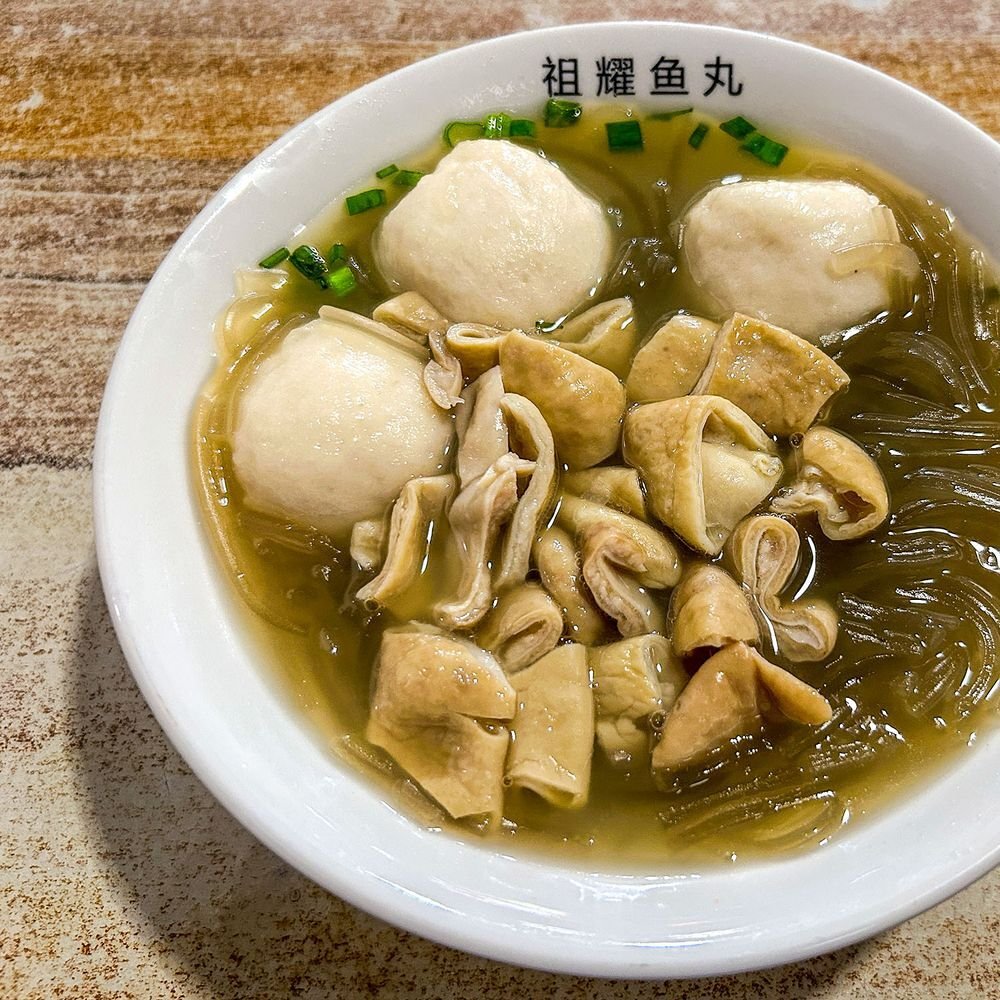
A Fuding institution since the 1990s, Ning Chuan Zu Yao Yu Wan draws regulars for its hand-squeezed fish balls stuffed with pork filling and served in a deeply savory dried-seafood broth. The interior is dated, the hours are short, and the most popular items sell out early — which tells you everything about its standing in the local market.
 Discover on Pearl
Pearl is the En Primeur Club membership app — saves, bookings, and concierge access live there. Same editors, same standards.
A Counter Worth Arriving Early For
There is a particular kind of morning energy in Fuding's older market streets: plastic stools pulled close to low tables, a fog of broth steam rising into cool air, and a queue that forms before most kitchens have lit their stoves. Ning Chuan Zu Yao Yu Wan, on Qingchuan Wan, operates squarely inside this tradition. The interior has not kept pace with the decades since the shop opened in the 1990s — the fittings are functional, the light is flat, the decor is an afterthought. None of that deters the regulars, and understanding why is the more interesting editorial question.
Fuding sits within Ningde prefecture on Fujian's northeastern coast, where proximity to both mountain waterways and open sea has shaped a local food culture that takes fish processing seriously. Fish balls are common across Fujian, but the Fuding variant occupies a specific position in that tradition: denser than the Fuzhou style, with a more pronounced bounce from extended hand-pounding, and typically stuffed rather than left plain. Ning Chuan Zu Yao Yu Wan has been making them by this method since the shop's founding, at a time when machine-formed fish balls were already becoming the default at lower-end operations elsewhere.
The Ritual of the Bowl
The meal here follows a sequence that most regulars observe without discussion. A bowl of fish ball soup is the starting point and, for many, the entire order. The fish is deboned, pounded by hand until the protein structure changes and the paste takes on elasticity, then squeezed into spheres and stuffed with a savoury pork filling before cooking. The broth builds its depth from dried seafood, a technique common in coastal Fujian kitchens that produces a layered umami quality different from stock made with fresh ingredients alone — more concentrated, with a mineral edge that fresh fish cannot replicate.
This kind of preparation is labour-intensive in a way that resists shortcuts. The act of hand-squeezing the fish paste determines the texture of the final ball: too little pressure and the surface is uneven; inconsistent pounding and the interior loses its characteristic resilience. That the shop has maintained this process across several decades, against the economic logic of mechanisation, is the clearest signal of where it positions itself within Fuding's fish ball market.
For a more substantial meal, the standard approach is to add glass noodles and pork intestine to the base bowl. The glass noodles are described as velvety, absorbing the dried-seafood broth without becoming waterlogged; the intestine is noted for a bouncy texture that mirrors the fish balls themselves. Pan-fried buns round out the menu for those wanting something beyond the soup format. This is not a restaurant with a long menu or a changing seasonal program. The appeal is precision within a narrow range, executed consistently.
The dining pace here is fast by design. Bowls arrive quickly, the tables turn over, and the rhythm of the room is set by the kitchen's output rather than the diner's preference. Sitting down, ordering promptly, and eating without ceremony is the expected pattern. It aligns with the broader culture of Fuding's working-morning food stalls, where the transaction between cook and customer is efficient and the quality of the food carries the interaction.
Where This Fits in Ningde's Eating Culture
Ningde's restaurant scene spans from hotel dining rooms to street-level specialists, but its most argued-over food tends to live at the lower end of the price register. Dishes that require craft at low cost , hand-made noodles, slow-braised meats, painstakingly prepared fish products , attract the kind of loyalty that newer, more elaborate operations rarely generate as quickly. Fu Ding Zheng Zong Bian Rou (Jianxin Road) and Hu Yu Zhong Wu Qu Bian Rou operate in adjacent territory, focused on Fuding's bian rou tradition , thin pork-filled wrappers in broth , while Shou Ning Mi Gao and Xiao Dong Men Niu Rou Shui Fen Lao Dian cover the region's rice cake and beef noodle formats respectively. Together, these shops form a loose itinerary of Ningde's specialist breakfast and lunch culture, each anchored to a single product category done with care.
At a different register, the questions that drive Fujian seafood ingredients to fine dining rooms across China are answered at places like Xin Rong Ji (Xinyuan South Road) in Beijing and Xin Rong Ji in Chengdu, both of which use coastal Fujian sourcing as a foundation for upmarket Jiangnan-adjacent cooking. The contrast is instructive: what Ning Chuan Zu Yao Yu Wan does with hand-processing and dried-seafood broth at a street-food price point represents the source tradition from which those more polished expressions draw. For readers exploring that spectrum further, Imperial Treasure Fine Chinese Cuisine in Guangzhou and Chef Tam's Seasons in Macau show where Cantonese and regional Chinese seafood preparation intersects with formal dining conventions. For a contrasting look at how fish is treated in the Western fine dining canon, Le Bernardin in New York City remains the standard reference. Atomix in New York City, 102 House in Shanghai, Ru Yuan in Hangzhou, and Dai Yuet Heen in Nanjing each approach precision craft from different angles and serve as useful comparative reference points for readers thinking about what technical discipline looks like across price tiers.
Planning Your Visit
The shop is located on Qingchuan Wan in Fuding, within Ningde prefecture. A morning visit is the practical requirement rather than a preference: some items , fish balls in particular , sell out as the session progresses, and arriving late substantially narrows the menu. There is no website and no listed phone number, which means walk-in is the only access method. Given the pace of service and the local demand, arriving before a late-morning crowd is the approach that guarantees the full order. For context on where this sits within Ningde's broader food picture, our full Ningde restaurants guide maps the city's eating options across categories and price points. Visitors wanting to plan accommodation, evening drinks, or cultural programming around a Fuding morning should consult our full Ningde hotels guide, our full Ningde bars guide, our full Ningde wineries guide, and our full Ningde experiences guide.
Cuisine and Credentials
A compact peer snapshot based on similar venues we track.
| Venue | Cuisine | Awards | Notes |
|---|---|---|---|
| Ning Chuan Zu Yao Yu Wan | Despite a somewhat dated interior, this shop, founded in the 1990s, remains a hi… | This venue | |
| Fu Ding Zheng Zong Bian Rou (Jianxin Road) | |||
| Hu Yu Zhong Wu Qu Bian Rou | |||
| Shou Ning Mi Gao | |||
| Xiao Dong Men Niu Rou Shui Fen Lao Dian |
Continue exploring
More in Ningde
Restaurants in Ningde
Browse all →
At a Glance
- Classic
- Cozy
- Casual Hangout
- Standalone
Somewhat dated utilitarian interior with efficient lighting, basic tables, and a lively communal atmosphere focused on quick service and food.