
Tabelog 100 #4
Our verdict
Shisen China Hachibee places Sichuan cooking in suburban Nisshin rather than the expected Nagoya dining corridor, with Tabelog Chinese EAST “Tabelog 100” selections in 2021, 2023, 2024, and 2026. The draw is not ceremony but category confidence: Sichuan, Chinese cooking, and tantan-men at a price tier that keeps lunch and dinner within everyday reach.

Pearl is the En Primeur Club membership app, where members save venues, book tables and use the concierge.
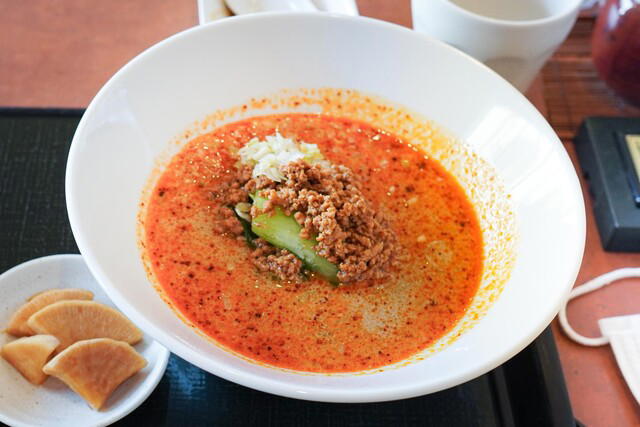
The menu
What to order
- Mapo tofu
- Tantanmen (spicy noodle soup)
Approach in Nisshin and the rhythm is local rather than big-city dining theatre: a room built for regular use rather than spectacle. That matters. Sichuan cooking in Japan often splits between hotel Chinese, specialist noodle shops, and neighborhood restaurants where heat, sesame, fermented bean pastes, and minced-meat sauces enter local eating habits. Shisen China Hachibee belongs to the last category, while its 2026 Tabelog Hyakumeiten recognition gives it a stronger signal than an ordinary local address.
Nisshin dining choices often read differently from the most central destination-restaurant circuits. A restaurant here must work for families, friends, and repeat local traffic before destination diners. That frames the appeal: the cooking is categorized as Sichuan, Chinese, and tantan-men, pointing less to banquet formality than spice, noodles, and accessible Chinese restaurant grammar. For broader planning, Our full Nisshin restaurants guide is the natural companion, while nearby trip structure can be filled through Our full Nisshin hotels guide, Our full Nisshin bars guide, Our full Nisshin wineries guide, and Our full Nisshin experiences guide.
Sichuan heat translated for everyday Nisshin dining
The ingredient story is not luxury sourcing or named producers; it is how Sichuan technique travels into a Japanese neighborhood restaurant format. Tantan-men is the clearest marker. In Japan, it has become its own category, shaped by sesame richness, chilli oil, minced meat, and a soup base calibrated for repeat eating. Here, Sichuan influence is less a fixed replica of Chengdu or Chongqing than a vocabulary of aroma, heat, numbing spice, oil, and texture adapted to local expectations.
That adaptation makes the category interesting. Rather than arriving as pure shock value, Sichuan seasoning can function as a repeatable restaurant language: depth, salt-savour balance, aromatic oil, and controlled heat. Shisen China Hachibee’s presence in the 2026 Tabelog Hyakumeiten selection suggests category-level recognition rather than simple neighborhood visibility. Its Tabelog score is 3.73, meaningful on a platform where small differences matter in heavily reviewed restaurant categories.
The price position reinforces the point. Dinner is JPY 3,000–3,999 and lunch JPY 1,000–1,999, putting the experience in the repeatable bracket rather than the occasion-only tier. In the local comparison group, Shisen Sai Hiro, Shinra Kan Meitou honten, Yakiniku Mizuno, With, and 本郷おけい鮨 give diners other ways to read Nisshin-area eating, from casual specialist rooms to more deliberate meal planning. For travelers, this is not the place to measure against tasting-menu Chinese or beef-focused special-occasion dining. Read it instead against serious regional restaurants where craft appears through seasoning control, category focus, and frequent local return.
A room designed for repeat customers, not performance dining
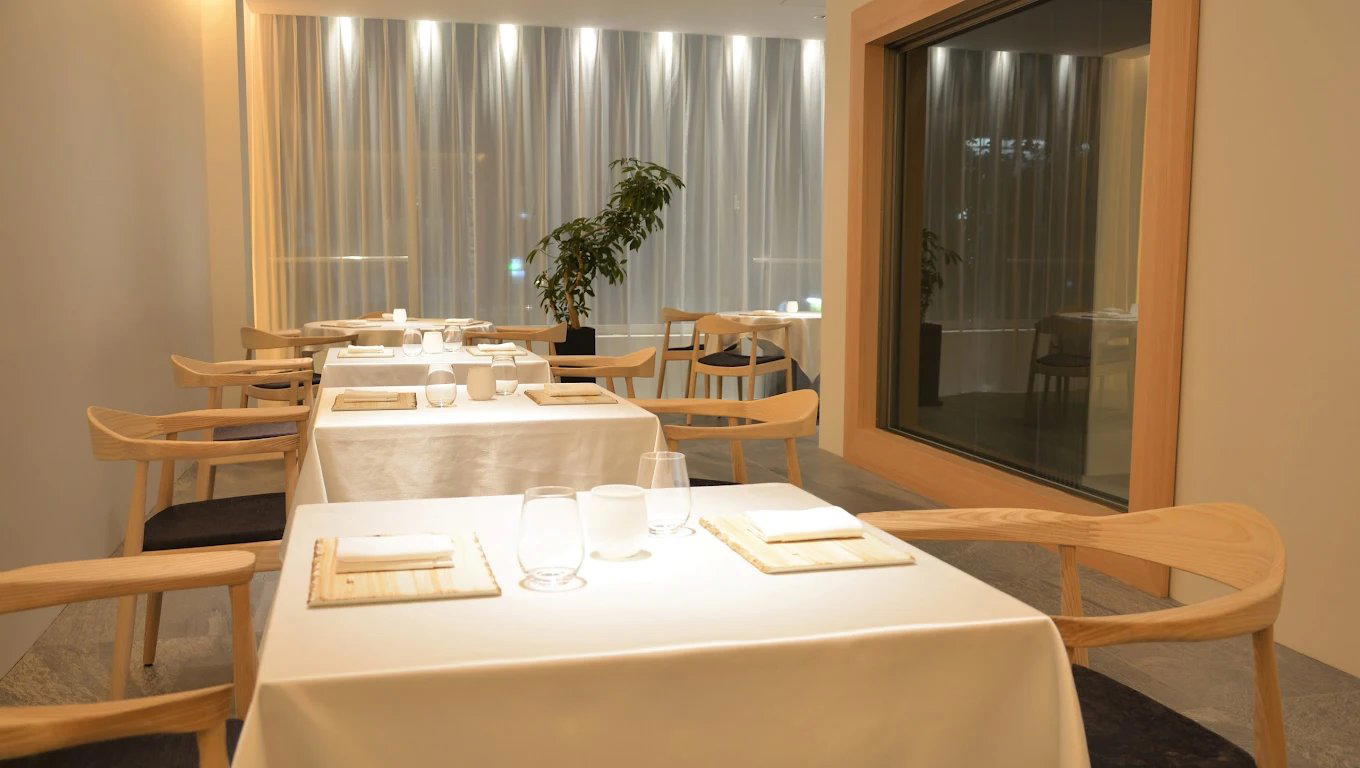
The everyday scale of the restaurant also defines the experience. This is not presented as an access-driven counter where rarity becomes part of the meal, nor as a banquet hall turning Chinese dining into large-party production. The better frame is a flexible Japanese neighborhood-restaurant format, suited to repeat meals, small groups, and practical dining rather than stage-managed luxury.
That format shapes service and pacing. For a traveler, those details matter even when the draw is the cooking. They separate the meal from the more rigid end of Japan’s reservation culture, where counter etiquette and silence can define the evening as much as the food. Here, the stronger read is a serious Chinese kitchen inside a usable neighborhood room, recognized enough to justify a dedicated plan but not so ceremonial that the meal becomes fragile.
Access planning should be handled with the same practical mindset. The venue is in Nisshin, and the listed contact number is +81-561-72-5757. The location suits diners moving through the area or building a relaxed local meal into the day, rather than rushing between unrelated stops. Keep expectations aligned with the category: Sichuan, Chinese, and tantan-men, delivered as a local restaurant experience rather than a destination-dining performance.
How to place it in a Japan dining itinerary
The strongest case for Shisen China Hachibee is not that it replaces destination dining elsewhere in Japan. It gives a different reading of Japan’s Chinese restaurant culture: regional, repeatable, locally useful, and disciplined enough to earn Tabelog Hyakumeiten recognition in its category. Travelers who only chase counters and tasting menus miss this layer of Japanese dining, where imported cuisines become local habits over time.
Within a wider Japan itinerary, it pairs well with category contrast. Nisshin Sichuan cooking can sit beside other dining in Nisshin and elsewhere in Japan, from casual local rooms to more specialist formats. The point is not to rank them; it is to see how Japanese dining becomes more revealing when meals are chosen by format and local function, not just prestige.
For travelers mapping broader casual-to-specialist eating across Japan, the more useful reference is not a list of unrelated names but a sense of function: neighborhood Chinese, noodle-focused meals, family-capable restaurants, and locally repeated favorites all tell a different story from luxury counters. In Nisshin, the better move is simpler: read the Tabelog recognition as a quality signal, then judge the meal as Sichuan-Chinese cooking built for regulars rather than performance.
Frequently asked questions
Would Shisen China Hachibee be comfortable with kids?
Shisen China Hachibee is best understood as a practical neighborhood-style restaurant in Nisshin rather than a formal performance-dining room. For families, the safest approach is to confirm current seating and visit conditions directly with the restaurant.
What's the vibe at Shisen China Hachibee?
This is a Chinese and Sichuan restaurant in Nisshin, not a formal counter or tasting-menu setting. The feel is better read as relaxed and local, with tantan-men among the listed categories.
What's the pricing like at Shisen China Hachibee?
Pricing at Shisen China Hachibee is listed as dinner JPY 3,000 - JPY 3,999 and lunch JPY 1,000 - JPY 1,999.
What is Shisen China Hachibee known for?
Shisen China Hachibee is known for Sichuan, Chinese, and tantan-men in Nisshin, with 2026 Tabelog Hyakumeiten recognition.
Quick Comparison
Comparable venues by cuisine and price in the same metro.
| Venue | Cuisine | Price | Awards | Notes |
|---|---|---|---|---|
| Shisen China HachibeeThis venue (the venue you are viewing) | Sichuan & Chinese comfort food | $20–30 | Tabelog 100 #4 | Not listed |
| SUKEMASA (高辻 亮昌) | Kyoto-style Gyoza Specialty Shop | $10–20 | Tabelog 100 #62 | Shimogyo-ku |
| Chinese Sai Tanaka | Chinese Tantan-men & noodle shop | $10–20 | Tabelog 100 #84 | Midori |
| シャンリー | 本格中華 | Not listed | Not listed | 新栄東 |
| Okei (おけ以) | Traditional Japanese Gyoza | $10–20 | Tabelog 100 #16 | Iidabashi |
| 餃子飯店 | 町中華 餃子専門 | Not listed | Not listed | 大和町 |
Recognition history
Dated appearances from independent guides and award organizations, with the underlying list record or original source where available.
Tabelog 100 #4 · No. 4
Tabelog · Tabelog 100 - Chinese cuisine - EAST - 2026
Continue exploring
More in Nisshin
Restaurants in Nisshin
All restaurants in Nisshin →






Details
- Cozy
- Lively
- Classic
- Family
- Group Dining
- Casual Hangout
- After Work
- Solo
- Standalone
- Private Dining
- A La Carte
- Set Menu