
Tabelog 100 #68
Our verdict
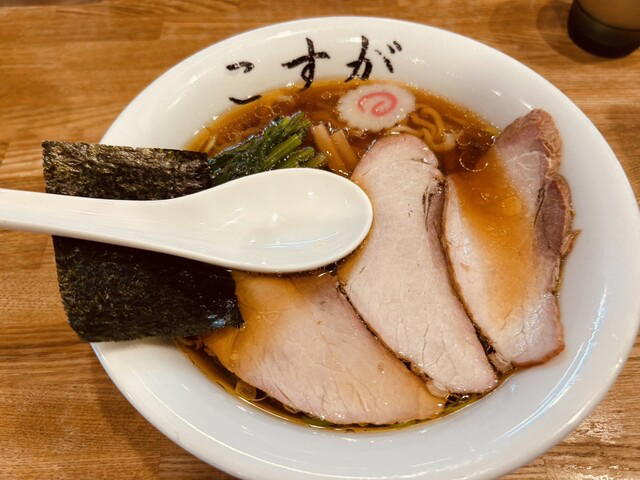
Shirakawa Teuchi Chuka Soba Kosuga brings Shirakawa-style hand-cut chuka soba into Yokohama’s Aoba-ku ramen circuit, with a counter-only format and recognition in Tabelog’s Ramen KANAGAWA 100 for 2024 and 2025. The appeal is precision rather than spectacle: a small room, noodle craft at the center, and a price bracket that keeps the meal within everyday ramen territory.

Pearl is the En Primeur Club membership app, where members save venues, book tables and use the concierge.
The menu
What to order
- Shirakawa teuchi chuka soba
- Chashu wonton noodles
- Roast pork ramen with assorted chashu
Approaching Yokohama ramen, the first signal is focus. This is not the neon-heavy, late-night image exported through station districts and tourist corridors; it is a more local model, where a specialized shop, brisk ramen rhythm, and a bowl built around noodle texture make the case. Shirakawa Teuchi Chuka Soba Kosuga fits that category: ramen, a focused format, and recognition through Tabelog’s Ramen KANAGAWA 100 in 2025.
Yokohama’s noodle map is wider than its familiar shorthand. The city has deep ramen appeal, but its local dining scene rewards less spectacle, more repeat traffic, and shops where the bowl’s structure matters more than a manifesto. In teuchi chuka soba, noodles are not neutral carriers. Irregularity, wheat aroma, and chew can become the center of gravity, with broth and toppings understood around that texture. The genre draws diners who care as much about craft rhythm as richness.
Teuchi chuka soba in a city better known for heavier ramen
Kanagawa ramen is often read through Yokohama’s heavier associations, but the prefecture’s stronger shops work across registers: density, clarity, and, here, noodles as the defining ingredient decision. “Teuchi” matters because it signals labor and variability: the noodle is treated as a made object, not invisible infrastructure. Shirakawa Teuchi Chuka Soba Kosuga therefore reads closer to a craft-noodle stop than a quick refueling option, even while staying in the JPY 1,000 to JPY 1,999 bracket.
The recognition is useful because ramen awards in Japan distinguish serious specialists from merely convenient places. Tabelog’s Hyakumeiten lists are not Michelin-style stars, but selection in a regional ramen category shows local traction among diners comparing bowls across prefectures, not only within one shopping street. A 3.74 Tabelog score, plus the 2025 Kanagawa ramen selection, puts the shop in a competitive field where execution consistency matters more than interior drama.
That matters because ramen is built from compounding choices. Wheat texture affects noodle resistance; seasoning may frame the broth; fat, if present, changes aroma; toppings alter the final balance. Without inventing a producer list or naming a farm, the editorial point is clear: the shop’s identity is anchored in the noodle tradition, where flour handling and cooking shape the meal as directly as stock technique. For travelers used to luxury dining signals, this is the inverse lesson: the spend is modest, the format focused, and the craft concentrated in one bowl.
Yokohama rewards early, focused ramen planning
The location explains the experience. This is Yokohama ramen away from the broadest tourist shorthand, with a local pace rather than a waterfront checklist. A focused ramen shop here lives or dies on regulars, access, and production discipline. The format favors diners who plan ramen rather than treat it as an afterthought. Timing is part of the meal’s economics, especially when the reason to go is a specific bowl rather than a long, flexible menu.
Compared with nearby casual ramen options such as Honoka Azami no and Ramen Garaku, the price remains approachable, though the draw is more about focus than bargain hunting. Against a broader local spread including Ukai-tei Azamino, Atelier UKAI Tama puraaza, and Teuchi Soba Fuurai Kyo, the contrast is sharper: a low-ticket, high-focus ramen stop rather than a full-service restaurant evening. That distinction explains the appeal. In Japanese dining, formality and seriousness are not synonyms. A focused ramen shop can demand as much attention as a longer meal, on a compressed clock.
For visitors building a Yokohama food itinerary, this is where the city becomes more interesting than a waterfront checklist. Pairing a ramen stop with other Yokohama dining rooms shows the local table’s range, from casual counters to more formal restaurants and from quick meals to slower evenings. For a wider scan, use broader Yokohama restaurant, hotel, bar, and experience planning, including Our full Yokohama experiences guide, depending on how much of the city sits around the meal.
How it fits a wider Japan noodle itinerary
The strongest way to read this shop is not as a solitary destination, but as one point in Japan’s regional noodle conversation. Different cities have their own everyday-price specialties, from rich ramen traditions to lighter noodle counters and casual dining rooms. Together, these formats show how Japan’s accessible restaurants can be as specific as its luxury counters, with identity carried by repetition, technique, and local expectation rather than by ceremony.
That specificity extends beyond ramen. A traveler could compare more formal meals, charcoal-driven counters, café formats, and casual regional dining elsewhere in Japan without needing to treat them as the same kind of occasion. Even overseas Japanese dining references sharpen the contrast: outside Japan, format often carries identity; in a Yokohama ramen shop, the noodle itself can carry much of it.
The critical case for Shirakawa Teuchi Chuka Soba Kosuga is narrow and persuasive. It is for diners who want ramen judged by craft, not novelty; by the physical logic of noodles, not luxury cues; and by a regional award history confirming local attention without inflating the experience into ceremony. Yokohama rewards that precision when travelers move beyond the most obvious sightseeing routes.
Frequently asked questions
Where is Shirakawa Teuchi Chuka Soba Kosuga in Yokohama?
Yokohama.
What does dinner at Shirakawa Teuchi Chuka Soba Kosuga typically cost?
Pricing at Shirakawa Teuchi Chuka Soba Kosuga is listed as JPY 1,000 - JPY 1,999 JPY 1,000 - JPY 1,999 View spending breakdown.
What's the best way to book Shirakawa Teuchi Chuka Soba Kosuga?
Use current local listing information before going, and plan timing carefully because focused ramen shops can operate on a brisk, bowl-by-bowl rhythm.
What's the defining dish or idea at Shirakawa Teuchi Chuka Soba Kosuga?
The clue is in the name: teuchi chuka soba points to a noodle-focused ramen identity rather than a broad restaurant concept. The shop was selected for Tabelog 100 - Ramen - KANAGAWA in 2025.
What if I have allergies at Shirakawa Teuchi Chuka Soba Kosuga?
Ramen commonly involves wheat noodles and may include soy-based seasoning, egg, sesame, or seafood elements, so allergies need careful checking. Ask directly before ordering, especially in a focused ramen setting.
In Context: Similar Options
Comparable venues in the metro at similar price points.
| Venue | Cuisine | Price | Awards | Notes |
|---|---|---|---|---|
| Shirakawa Teuchi Chuka Soba KosugaThis venue (the venue you are viewing) | Traditional Shirakawa-style handmade ramen | $10–20 | Tabelog 100 #68 | Not listed |
| Ramen Hoshijirushi | Classic shoyu ramen shop | $10–20 | Tabelog 100 #35 | Kanagawa |
| Ramen Matsushin | Classic Japanese Ramen Shop | $10–20 | Tabelog 100 #86 | Tsurumi |
| Hi, How Are You | Pakistani-style Japanese curry house | $10–20 | Tabelog 100 #92 | Kōhoku |
| Shinachiku Tei | Ramen | $10–20 | Tabelog 100 #39 | Kanagawa |
| Ramen Inoue | Ramen shop | Not listed | Tabelog 100 #66 | Tsurumi |
Recognition history
Dated appearances from independent guides and award organizations, with the underlying list record or original source where available.
Tabelog 100 #68 · No. 68
Tabelog · Tabelog 100 - Ramen - KANAGAWA - 2025
Continue exploring
More in Yokohama
Restaurants in Yokohama
All restaurants in Yokohama →


Bars in Yokohama
Browse all →

Hotels in Yokohama
All hotels in Yokohama →
Wineries in Yokohama
Browse all →
Details
- Cozy
- Quiet
- Classic
- Solo
- Casual Hangout
- After Work
- Standalone
- Chefs Counter
- A La Carte
- Counter Dining
Small, counter-only ramen shop with a simple, classic decor and a calm, focused atmosphere centered on enjoying a carefully prepared bowl; expect a modest, no-frills space that feels cozy rather than crowded.