
Tabelog 100 #39
Our verdict
Shinachiku Tei is a counter-only ramen shop in Yokohama’s Tanmachi area, recognised in Tabelog’s Ramen KANAGAWA 100 selection for 2024 and 2025. The draw is not ceremony but value: a compact room, a focused ramen-tsukemen-tantanmen brief, and the kind of regional credibility that makes a modest bowl carry more weight than its price tier suggests.

Pearl is the En Primeur Club membership app, where members save venues, book tables and use the concierge.
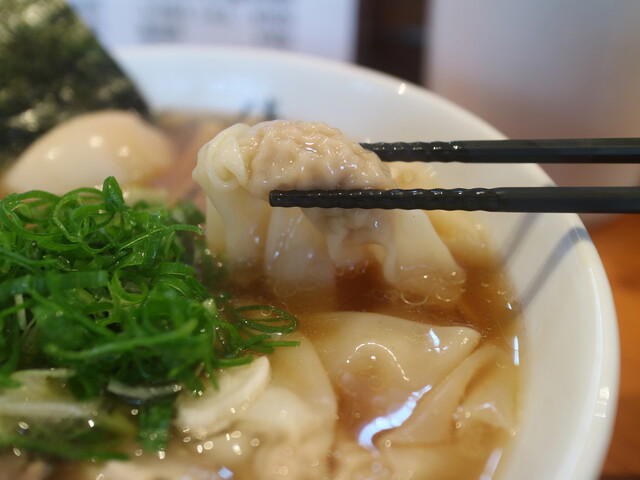
The menu
What to order
- Soy sauce ramen
- Salt ramen
- Tsukemen
- Dandan noodles
Approaching a recognised ramen shop in Yokohama differs from entering the city’s formal dining rooms. The cues are compressed: practical pacing, a short-meal rhythm, and the expectation that the bowl makes its case quickly. Shinachiku Tei belongs to Japan’s practical dining strand, where value is measured less by luxury signals than by category clarity, price discipline, and whether a straightforward noodle stop can hold its place in a crowded local food map.
Yokohama’s restaurant identity is often reduced to Chinatown, waterfront hotels, and polished international rooms, but its stronger daily-eating story also sits in small specialist shops. In Yokohama, a ramen address must compete on repeatability rather than spectacle. Shinachiku Tei’s recognition in Tabelog’s Ramen KANAGAWA 100 selection in 2025 therefore matters: it places the shop in Kanagawa’s serious ramen conversation without pushing it into fine-dining theatre.
Kanagawa ramen value, judged at shop scale
The appeal is the ratio between cost, recognition, and format. Yokohama has many places where spending rises with room design, wine lists, or multi-course pacing; ramen compresses the transaction into one bowl and a short sitting. Shinachiku Tei operates in the ramen, tsukemen, and tantan-men lane, giving diners soup noodle structure, dipping-noodle concentration, and spice-led comfort without a tasting-menu commitment.
That price-to-purpose equation is why ramen remains one of Japan’s sharpest categories for travellers who care about food but do not want every meal to become an occasion. A focused ramen shop puts the focus on the dish and the visit. There is little need for decorative service language, and that is the point. The constraints create the experience: the bowl sets the pace, and decision-making stays narrow enough to keep attention on noodles, broth, and seasoning rather than the trappings around them.
Within Yokohama, that compactness of purpose is useful. Ramen Hoshijirushi works in a similar local ramen conversation, while Raamen Mu and Pain de U occupy other casual-spend territory. At the other end, INACASA shifts into a much higher dining band, where expectations involve longer service and a different allocation of money. Shinachiku Tei is not competing with that tier. Its argument is simpler: in a city with serious dining range, a recognised ramen stop can deliver a credible meal without asking the traveller to surrender an evening.
A concise format with repeat-dining logic
Ramen culture rewards specialisation, but also punishes inconvenience. A shop can have a devoted following and still be a poor fit for a visitor’s schedule if timing or ordering rhythm make the meal fragile to plan. The practical intelligence is clear: a concise ramen occasion profile that suits solo diners, quick meals, and casual groups. That puts the shop closer to everyday utility than destination-only dining.
The short-meal rhythm also shapes the experience. In Japan, that usually means timing matters more than persuasion. Small ramen shops rely on diner flow, and the visitor’s advantage comes from understanding the category rather than over-planning it. Arrive with a flexible window, expect a concise meal, and treat the visit as a focused food stop rather than a lounge. This is not built for long conversation over successive bottles; it is built for people who know what they came to eat.
There is a useful distinction between value and cheapness. Cheapness is a number; value is what the number buys in context. Selection for Tabelog’s Ramen KANAGAWA 100 in 2025 gives Shinachiku Tei a public credibility marker in a crowded prefectural category, while the straightforward format keeps the experience grounded. The result is a better use of a Yokohama lunch or early-evening slot than many higher-spend meals that trade on setting more than substance.
How to place it within a Yokohama eating day
For travellers building a food itinerary, Shinachiku Tei works as a focused ramen stop rather than the centrepiece of a full night out. That is not lesser. Yokohama is better understood through contrast: a ramen bowl in Yokohama, other casual dining around the city, hotel dining, and smaller independent rooms. The city’s appeal lies in moving between those registers without treating every meal as a grand statement.
Readers mapping a broader Yokohama dining route can use Our full Yokohama restaurants guide for the larger field, including casual specialists, neighbourhood dining rooms, curry-focused stops, and other everyday formats. The same trip can widen beyond restaurants through Our full Yokohama hotels guide, Our full Yokohama bars guide, Our full Yokohama wineries guide, and Our full Yokohama experiences guide.
For a wider Japan-and-beyond comparison, the useful lens is not cuisine similarity but format and spend. Other everyday Japanese dining, the region’s casual international range, and higher-ceremony meals each occupy different planning slots. Further afield, unnamed counters, cafés, bars, curry specialists, and quick-service formats underline the same editorial point: modest formats can carry serious food value when the category is tight and expectations are clear.
The critical read is direct. Shinachiku Tei is for travellers who want Yokohama ramen with a recognised local signal, a focused short-meal format, and a meal that keeps cost and time under control. It is less suited to diners seeking a long reservation-led evening or chef-driven narrative. The smarter use is as a precise stop in a broader Yokohama day: arrive ready for ramen, accept the pace of a practical ramen shop, and let value sit where ramen value usually does, in the bowl rather than the room around it.
Frequently asked questions
What are the opening hours for Shinachiku Tei?
Opening hours for Shinachiku Tei are not specified here; check directly before visiting.
What price level is Shinachiku Tei?
Pricing at Shinachiku Tei is listed as JPY 1,000 - JPY 1,999 JPY 1,000 - JPY 1,999.
What's the address for Shinachiku Tei?
Yokohama.
What is Shinachiku Tei known for?
Shinachiku Tei is known for ramen, tsukemen, and tantan-men in Yokohama, plus its Tabelog Ramen KANAGAWA 100 selection in 2025. The practical ramen-shop format keeps the experience tight and focused.
Awards and Standing
Comparable venues to calibrate price, style, and recognition.
| Venue | Cuisine | Price | Awards | Notes |
|---|---|---|---|---|
| Shinachiku TeiThis venue (the venue you are viewing) | Ramen | $10–20 | Tabelog 100 #39 | Not listed |
| Yokohama Chuka Soba Ishin Shoten Honten | Classic ginger shoyu ramen (chuka soba) | $1–10 | Tabelog 100 #74 | Nishi |
| Raamen Mu | Traditional Ramen & Tsukemen Counter | $10–20 | Tabelog 100 #7 | Kanagawa |
| Susurimase nka | Ramen & Tsukemen Shop | $10–20 | Tabelog 100 #62 | Kōnan |
| Mendokoro Niboshi Kaoru Asobiru ten | Niboshi Ramen | Not listed | Tabelog 100 #57 | Nishi |
| Ramen & Curry Senmonten Taigen | Ramen & Curry | Not listed | Tabelog 100 #93 | Naka |
Recognition history
Dated appearances from independent guides and award organizations, with the underlying list record or original source where available.
Tabelog 100 #39 · No. 39
Tabelog · Tabelog 100 - Ramen - KANAGAWA - 2025
Continue exploring
More in Yokohama
Restaurants in Yokohama
All restaurants in Yokohama →



Bars in Yokohama
Browse all →





Details
- Quiet
- Cozy
- Classic
- Solo
- Casual Hangout
- Standalone
- Beer Program
- Local Sourcing
- A La Carte
- Counter Dining
- Beer
Current opening hours
- Monday
- 11 AM–3 PM
- Tuesday
- Closed
- Wednesday
- Closed
- Thursday
- 11 AM–3 PM
- Friday
- 11 AM–3 PM
- Saturday
- 11 AM–3 PM, 5–8 PM
- Sunday
- 11 AM–3 PM, 5–8 PM
Hours can change for holidays and private events. Hours as of .
A modest, low-key ramen shop atmosphere focused on the food rather than decor, with a quiet and unpretentious feel.