Tabelog 100 #79
Our verdict
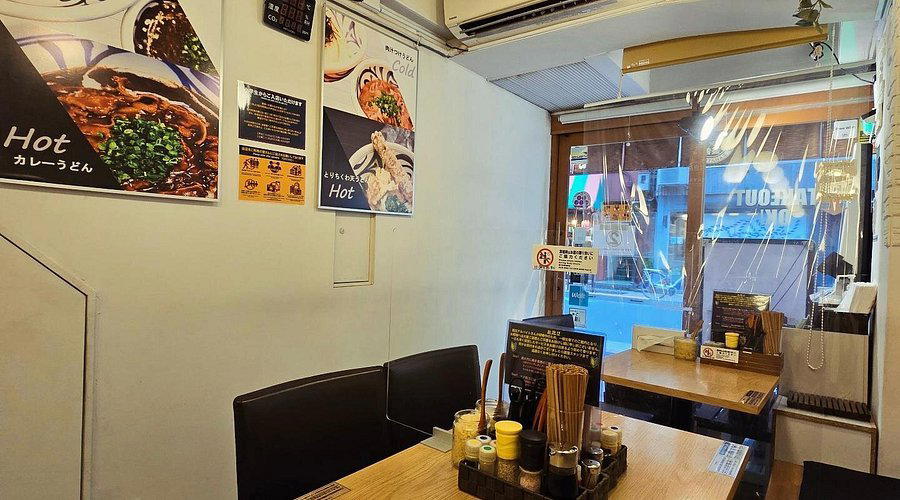
KAMAYOSHI brings Tokyo’s everyday udon culture into a compact Kanda room with counter seating, curry udon, tempura, and a no-reservations rhythm. Its Tabelog 100 Udon EAST 2024 selection and 2020 Tokyo recognition place it in a serious noodle conversation, while the low price band keeps the experience closer to a working-neighbourhood meal than a destination tasting format.

Pearl is the En Primeur Club membership app, where members save venues, book tables and use the concierge.
The menu
What to order
- Chicken Chikuwa Tempura Udon
- Curry Udon
- Today's Udon
Approaching a focused udon shop in Tokyo is a different ritual from entering a polished sushi room or hotel dining room. The cues are practical rather than ceremonial: a direct menu, an everyday pace, and a meal built around wheat noodles. KAMAYOSHI fits the Tokyo category where craft is concentrated in the bowl, not a long sequence of courses.
That matters because Tokyo udon is not one style. The city absorbs noodle traditions and turns them into commuter food, family lunch, and obsessive specialist dining. KAMAYOSHI’s public listing places it in udon, curry udon, and tempura, a useful lens for why Tokyo’s noodle scene rewards texture as much as broth.
Wheat noodles, curry udon, tempura, and the Tokyo udon middle ground
Tokyo’s noodle hierarchy can look ramen-heavy to visitors, but udon has its own demanding audience. Ramen often foregrounds fat, tare, and shop identity; udon asks whether the noodle has spring, whether dipping or soup format suits the flour, and whether tempura or curry supports rather than overwhelms the bowl. KAMAYOSHI’s listed categories, udon, curry udon, and tempura, sit in that everyday-specialist lane.
The ingredient question begins with wheat. Udon is not blank starch: flour choice, hydration, salt, kneading, resting, and cutting determine whether the noodle eats firm, silky, elastic, or soft. A Tokyo shop working in this field is not chasing luxury ingredients. It is extracting character from flour, water, salt, heat, and timing.
Curry udon adds another judgment. In lesser hands, curry camouflages. In serious udon shops, it must cling without smothering texture and justify itself against simpler hot or cold preparations. Tempura is the same test: not decorative edge, but structural contrast. This is why a low-priced udon meal can attract Tokyo diners who also book tasting menus. The technical margin is narrow, and repeat customers know when it is met.
KAMAYOSHI’s Tabelog Hyakumeiten recognition for 2024 gives that craft an external marker, with a listed score of 3.83 and a budget band of - JPY 999 for both lunch and dinner. Tabelog’s Hyakumeiten lists are not luxury awards; they map depth in categories where local diners argue over small differences. For udon, the recognition points less to spectacle than to consistency in a field crowded with inexpensive, high-volume competitors.
Tokyo is the right city for a serious everyday bowl
Tokyo rewards restaurants that can make sense as part of an ordinary day as well as a dedicated food itinerary. This is not long hotel-lunch Tokyo. A meal must work on a weekday, and noodle shops survive by balancing speed with enough distinction to pull people off their usual route. A focused udon room has clear logic: limited distraction, concentrated output, and little room for drift.
The Tokyo comparison set clarifies the category without turning KAMAYOSHI into a generic cheap-eats file. Curry Notoriko, Gin Cock, Fukuo Shoten, Tonkatsu Yamaichi, and SONG KEE JEE FAN all show other casual or specialist directions in the city, while KAMAYOSHI’s udon, curry udon, and tempura listing places it squarely in specialist noodle territory. Its listed pricing keeps it close to the most accessible end of Tokyo dining.
Tokyo value dining can be more interesting than luxury dining. At the high end, price buys privacy, imported ingredients, and extended service. In udon, value is harsher: a shop must repeatedly produce convincing noodles, often under everyday pressure, with a menu customers understand without explanation. KAMAYOSHI’s appeal sits in that discipline, with access defined by a simple format rather than by destination-restaurant theatre.
For a wider Tokyo itinerary, the contrast helps. Seafood counters, casual grills, curry shops, and yakitori rooms answer different appetites across the city. KAMAYOSHI is the noodle corrective: concise, flour-led, and better understood as daily eating culture than set-piece dinner.
How to place it in a Tokyo food itinerary
Use a shop like this to anchor a Tokyo day, not force it into a trophy route. Other dining, shopping, cultural stops, and transit plans can pair easily with a quick noodle meal. The meal belongs to efficient Tokyo dining, so the surrounding plan should respect that tempo.
Travellers comparing Tokyo casual formats should think by category, not fame. Café culture, curry specialist dining, regional Japanese formats, and simple international Japanese-adjacent ideas all show how everyday dining becomes highly specific when a kitchen narrows focus. Simple formats travel, but detail decides whether they matter.
For broader planning, use a full Tokyo restaurants guide to place KAMAYOSHI alongside other dining across the city. Hotel choice affects the rhythm of this kind of meal, especially if short transit windows matter. Drinks-led evenings, winery visits, and broader experiences can be planned separately so the udon stop keeps its proper everyday pace.
The wider Japan map matters too. A diner who understands curry, café culture, contemporary dining, and casual regional cooking in other cities will read KAMAYOSHI more accurately. This is not a grand statement restaurant. It is a Tokyo udon specialist with recognized category credibility, an accessible listed budget, and a format built around the hard work of making wheat noodles worth crossing town for.
Frequently asked questions
What's the price range at KAMAYOSHI?
Pricing at KAMAYOSHI is listed as - JPY 999 - JPY 999.
What's the address for KAMAYOSHI?
Tokyo.
How far ahead should I plan for KAMAYOSHI?
Plan around the rhythm of a low-priced Tokyo udon specialist rather than a long-form destination meal. Specific reservation or seat-count details are not part of the provided listing, so timing and flexibility matter more than assuming a formal booking process.
What has KAMAYOSHI built its reputation on?
Its listed credentials include Tabelog Hyakumeiten recognition in 2024, a score of 3.83, and categories of udon, curry udon, and tempura.
Is KAMAYOSHI allergy-friendly?
The provided listing does not specify allergy accommodations.
Awards and Standing
Comparable venues at the same tier for side-by-side context.
| Venue | Cuisine | Price | Awards | Notes |
|---|---|---|---|---|
| KAMAYOSHIThis venue (the venue you are viewing) | Japanese Udon | $1–10 | Tabelog 100 #79 | Not listed |
| Gyokueido Hikokuro | Traditional Japanese Wagashi & Dorayaki | $1–10 | Tabelog 100 #63 | Chūō |
| 福田家 | Traditional Kaiseki | $300–500 | 2 Michelin Stars | Chiyoda |
| Mitsuru Akebonobashi honten | Japanese neighborhood bakery | $1–10 | Tabelog 100 #43 | Shinjuku |
| Higashi Shinjuku Sanrasa | Japanese Curry | Not listed | Tabelog 100 #13 | Shinjuku |
| CURRY UP | Japanese curry house by NIGO in Harajuku | $10–20 | Tabelog 100 #48 | Shibuya |
Recognition history
Dated appearances from independent guides and award organizations, with the underlying list record or original source where available.
Tabelog 100 #79 · No. 79
Tabelog · Tabelog 100 - Udon - EAST - 2024