Tabelog 100 #99
Our verdict
Shima Ya Honten brings Osaka’s wagashi culture into Abeno’s everyday street rhythm, with roasted sweet potato, daigakuimo, and traditional sweets rather than a formal dining-room script. Its Tabelog 100 selection for Japanese traditional sweets and sweets cafes in WEST 2023 places it within a serious regional category, while the low spend and take-out format keep the experience grounded in local habit.

Pearl is the En Primeur Club membership app, where members save venues, book tables and use the concierge.
The menu
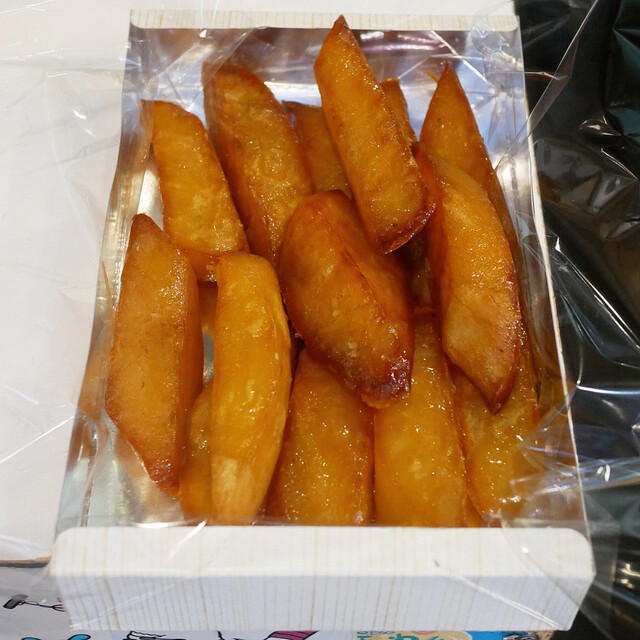
What to order
- Roasted sweet potato
- Daigakuimo (candied sweet potato)
Osaka is not only a city of hushed counters and choreographed tasting menus. It is also a city of errands, department-store traffic, street snacks, and quick decisions, where good food often has to survive daylight scrutiny rather than evening theatre. In that setting, Shima Ya Honten belongs to a tradition that predates the city’s current appetite for reservations and ranking lists: sweet potatoes, daigakuimo, and wagashi sold with the directness of a local shop.
That matters because Osaka’s sweets culture is often overshadowed by its savoury shorthand: okonomiyaki, kushikatsu, takoyaki, and the broader kuidaore habit of eating with intent. Wagashi sits differently. It is tied to season, gift-giving, tea culture, and small purchases made between larger meals. A shop built around roasted sweet potato and daigakuimo speaks to a more domestic register of everyday eating, less performative than a counter dinner and more revealing of how locals actually fold sweets into the day.
Osaka's sweet-shop rhythm, not a tasting-menu performance
The useful comparison in Osaka is not only between restaurants, but between formats. A full-service room such as Restaurant ZK belongs to the planned-evening category. Okonomiyaki Hayashi represents the city’s grilled, filling, lunch-or-dinner grammar. Bien Sur sits closer in spend, but the point here is different: Shima Ya Honten operates in the low-friction world of Japanese sweets, where the measure is not duration, wine pairing, or chef presence, but whether a compact purchase can carry enough craft to justify a detour.
Its 2023 Tabelog Hyakumeiten recognition gives the shop a useful external signal. Tabelog’s Hyakumeiten lists are category-specific, which is important: this is recognition within a defined sweets field, not a catch-all restaurant accolade. The listed categories, roasted sweet potato, daigakuimo, and Japanese traditional sweets, place it in a narrower field than Osaka’s restaurant conversation usually allows.
Daigakuimo has a particular place in Japanese snack memory. The name points to a modern, student-adjacent history, but the appeal is older and simpler: sweet potato treated as both staple and confection. In Osaka, where movement through the city rewards portable food, that category makes sense. It does not need the ceremony of kaiseki or the precision language of sushi to be serious. It needs consistency, texture, and a sweetness level that does not flatten the ingredient.
Why roasted sweet potato reads differently in Osaka
Sweet potato shops reward a different kind of attention from restaurants. The cooking is legible: a root vegetable, heat, sugar, timing. There is little room for menu rhetoric. That is why this genre can be more unforgiving than it looks. Poor versions become heavy or merely sweet; good versions make the potato itself do the work. Shima Ya Honten’s place in 2023 Tabelog Hyakumeiten recognition suggests that the shop is judged against specialists, not against casual dessert counters.
Osaka sharpens that reading. The city draws commuters, shoppers, families, and day-trippers as well as restaurant pilgrims, and a sweets shop functions as part of movement through the city. The experience is closer to buying something precise and leaving with it than settling into a long meal. That makes it a better fit for travellers who understand Osaka through streets and stations, not only through reservation calendars.
For readers mapping a day across the city, the contrast is useful. A bakery stop, a casual Osaka staple, and a sweets purchase each show a different register of everyday eating. More formal or globally inflected formats tell another story: Osaka’s dining scene absorbs outside influences easily, but its local identity still depends on shops that do a narrow thing repeatedly.
How to place it in an Osaka food day
Shima Ya Honten makes the clearest sense as a precision stop rather than the anchor of a long itinerary. Pairing it with Osaka wandering gives the visit context: this is the city at street level, where sweets, snacks, and transport nodes overlap. It also suits travellers who want a low-ceremony counterpoint to higher-commitment dining, especially in a city where the appetite for queues can turn simple food into a competitive sport.
The practical reading is equally plain. This is a sweets specialist, with a listed spend of - JPY 999 - JPY 999, placing it in Osaka’s lower bracket rather than its destination-dining tier. Current payment, stock, and visit details are better checked before arrival, because small Japanese shops do not always behave like international restaurants. The value is not luxury staging; it is access to a category that many visitors under-read until they encounter a specialist with recognised standing.
Use it as a lens on Osaka rather than as a trophy stop. The city’s eating culture is broad enough to include hotel dining, bars, bakeries, sweets counters, and late-night comfort food without forcing them into a single hierarchy. For broader planning, see Our full Osaka restaurants guide, Our full Osaka hotels guide, Our full Osaka bars guide, Our full Osaka wineries guide, and Our full Osaka experiences guide. Readers building a wider Japan food map can also compare how regional formats shift across other cities, where local sweets, snacks, and casual specialists often explain as much as formal restaurants do.
Frequently asked questions
What's the price range at Shima Ya Honten?
Pricing at Shima Ya Honten is listed as - JPY 999 - JPY 999 View spending breakdown.
Where exactly is Shima Ya Honten?
Osaka.
Should I book Shima Ya Honten in advance?
For Shima Ya Honten, check current visit details before you go. The venue is best understood through its listed focus on roasted sweet potato, daigakuimo, and Japanese traditional sweets rather than as a long, table-led dining experience.
What's the defining dish or idea at Shima Ya Honten?
The menu focus is clear: roasted sweet potato, daigakuimo, and Japanese traditional sweets. Shima Ya Honten also has 2023 Tabelog Hyakumeiten recognition, which is the most useful signal here.
Is Shima Ya Honten good for vegetarians?
The listed focus on roasted sweet potato, daigakuimo, and Japanese traditional sweets makes it a plausible stop for vegetarians. The safest approach is to check ingredients directly if any animal-derived additives are a concern.
Reputation First
Comparable venues at the same tier for side-by-side context.
| Venue | Cuisine | Price | Awards | Notes |
|---|---|---|---|---|
| Shima Ya HontenThis venue (the venue you are viewing) | Traditional Japanese sweet potato café | $1–10 | Tabelog 100 #99 | Not listed |
| Curry Ya Dekkao | Sri Lankan-style Curry Shop | $10–20 | Tabelog 100 #45 | Chūō |
| Yatagarasu Udon | Osaka Udon Shop | $10–20 | Tabelog 100 #35 | Chūō |
| Chuka Soba Sen | Japanese Ramen | $10–20 | Tabelog 100 #85 | Sumiyoshi |
| Ebishi | Soba noodle shop | Not listed | Tabelog 100 #61 | Chūō |
| Washington Shokudo | Standing Japanese bar (tachinomi izakaya) | $10–20 | Tabelog 100 #6 | Miyakojima |
Recognition history
Dated appearances from independent guides and award organizations, with the underlying list record or original source where available.
Tabelog 100 #99 · No. 99
Tabelog · Tabelog 100 - Japanese traditional sweets / Japanese sweets cafe - WEST - 2023