Tabelog 100 #61
Our verdict
Ebishi is a compact Kitahama soba address in Osaka, selected for Tabelog 100 Soba WEST in 2024 and 2025. The appeal sits in a precise, low-friction form of Japanese dining: buckwheat noodles, counter-and-table seating, sake and shochu, and a scale small enough to keep the room focused rather than theatrical.

Pearl is the En Primeur Club membership app, where members save venues, book tables and use the concierge.
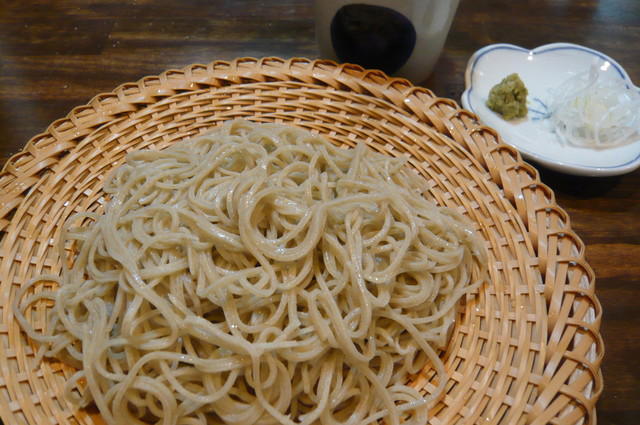
Osaka gives a soba meal a different dining rhythm from the city’s louder entertainment districts. The setting is urban Osaka: office workers moving with purpose at lunch, quieter evening traffic once the desks empty, and a dining culture that can shift quickly from everyday routine to careful craft. In that context, soba has the right temperature. It is not a long-form kaiseki performance or a neon-led drinking crawl; it is a measured meal built around buckwheat noodles, dipping broth, pacing, and restraint.
That is the useful frame for Ebishi. The category is soba rather than a broader washoku menu, and its 2025 recognition in Tabelog’s soba Hyakumeiten places it inside a serious Japanese noodle conversation, where noodle shops are judged by precision, consistency, and the ability to make a modest format feel complete. Osaka has stronger global recognition for takoyaki, okonomiyaki, kushikatsu, and late-night drinking food, but the city’s quieter noodle rooms often reveal more about how locals actually eat between work, errands, and evenings out.
Osaka soba, read through texture, quiet, and restraint
Soba culture rewards attention to small variables: the cut of the noodle, the snap at the bite, the balance between aroma and sauce, and the way a meal moves without drama. The better rooms do not need heavy design language. A focused noodle counter or small dining room changes the soundscape: chopsticks, water, kitchen movement, and low conversation carry more weight than music or spectacle. In Osaka, where dining can be loud, generous, and socially outward-facing, this form of soba offers a narrower lens on pleasure.
Ebishi belongs to that lens. The known category is specific, and the appeal sits between quick meal and evening table. That middle position matters. A diner can treat soba as lunch, or let it stretch into a slower sequence, without entering the price or ceremony bracket of formal Japanese dining. The listed budget also keeps it in the realm of accessible specialist dining: dinner is noted at JPY 2,000 - JPY 2,999, with lunch at JPY 1,000 - JPY 1,999.
Within the local comparison set, the point is not that soba replaces Osaka’s other casual strengths. It does something different. Other Osaka dining rooms speak to the city’s comfort-food identity, daytime coffee-and-bread circuit, and international formats that have become normal parts of the local restaurant map. Soba asks for a narrower kind of attention. It is less about novelty than calibration, less about spectacle than the quiet satisfaction of a format that depends on fundamentals.
Why a small noodle room can carry serious award weight
Tabelog’s Hyakumeiten lists are useful for categories where the Michelin lens can miss everyday excellence. Soba is one of those categories. A shop does not need a grand dining room or a chef narrative to matter; selection in a soba list signals that the fundamentals are being taken seriously by an audience that has many alternatives. The category scope also matters, because soba competes across places with strong local eating cultures rather than inside a single luxury-dining lane.
The scale of a soba-focused restaurant sharpens the experience. A restrained format changes expectations before any food arrives: the meal is not built for sprawling menus or theatrical hospitality. It is built for concentration. That can be more demanding for visitors than a showier restaurant, because the cues are quieter. The room, the noodle, and the pace carry the argument, and Ebishi’s Tabelog score of 3.66 gives another useful public marker for readers comparing specialist addresses.
Osaka also shapes the decision. Compared with tourist-heavy dining districts, the city rewards meals that can pass as local routine while holding enough craft to justify a detour. Nearby comparison points in the allowed Osaka set, such as Taniguchi Curry and Columbia8 Kitahama honten, sit in the affordable, high-identity lunch orbit, while yacipoci and Rasa Bojun point to Osaka’s range of casual specialist rooms. Ebishi occupies the Japanese noodle side of that same urban pattern: compact, specific, and better understood as part of a working-city dining map than as a destination staged for visitors.
How to place it within an Osaka itinerary
The right way to use a soba address in Osaka is to resist overloading it. Pair it with a calmer part of the city or a day that already includes heavier food elsewhere. Soba has a cleansing role in Japanese dining, not in a wellness sense but in a structural one: it gives the day a reset between richer meals, bars, bakeries, and department-store grazing.
For a broader city edit, start with Our full Osaka restaurants guide, then build around category rather than rank. Hotels affect dining movement in Osaka more than visitors expect, so Our full Osaka hotels guide is useful for deciding whether Ebishi is a natural stop or a cross-town move. Evening plans can extend through Our full Osaka bars guide, while Our full Osaka experiences guide helps connect food with architecture, markets, and neighbourhood pacing. Our full Osaka wineries guide is the wider drinks reference, though soba’s closest traditional partners are usually treated as part of the wider Japanese drinks conversation.
Readers mapping Japan more broadly can use this meal as a counterpoint to other specialist formats across the country and abroad. The lesson is not that every focused restaurant should feel the same, but that small formats can carry serious intent when the core product is handled with care. In Osaka, that makes Ebishi useful as a pause between bigger, louder meals: a place to think about noodles, pacing, and the way a simple category can become a complete dining decision.
The editorial case is clear: this is not the Osaka meal for diners seeking spectacle. It is the meal for reading the city at a smaller volume. In a food city often summarized by batter, sauce, smoke, and crowds, Ebishi points to a quieter Osaka, where a bowl of soba can carry enough precision to anchor an afternoon or an evening without raising its voice.
Frequently asked questions
Where is Ebishi located?
Osaka.
What does dinner at Ebishi typically cost?
Dinner at Ebishi is listed at JPY 2,000 - JPY 2,999; lunch is listed at JPY 1,000 - JPY 1,999.
What are the operating hours at Ebishi?
Specific operating hours are not provided here; confirm directly with Ebishi before visiting.
What's Ebishi best at?
Ebishi is strongest on soba, and Tabelog selected it for the Soba Hyakumeiten list in 2025.
Is Ebishi allergy-friendly?
Ebishi centers on soba, so buckwheat is the key ingredient to consider. Diners with severe allergies should call +81-6-6232-3733 before visiting.
Booking and Cost Snapshot
Comparable venues for orientation by cuisine and category.
| Venue | Cuisine | Price | Awards | Notes |
|---|---|---|---|---|
| EbishiThis venue (the venue you are viewing) | Soba noodle shop | Not listed | Tabelog 100 #61 | Not listed |
| Dahl | Japanese curry house | $10–20 | Tabelog 100 #27 | Chūō, Japanese curry house |
| Osama no Spoon | Osaka curry & soup curry shop | $10–20 | Tabelog 100 #81 | Kita, Osaka curry & soup curry shop |
| Saboten Shokudo | Japanese curry house with European and spice curries | $10–20 | Tabelog 100 #20 | Nishi, Japanese curry house with European and spice curries |
| Raku Nijin | Niboshi-focused ramen & tsukemen shop | $10–20 | Tabelog 100 #16 | Kita, Niboshi-focused ramen & tsukemen shop |
| Kokoro ni Amai Anpanya Umeda ten | Japanese Anpan Bakery | $1–10 | Tabelog 100 #67 | Kita, Japanese Anpan Bakery |
Recognition history
Dated appearances from independent guides and award organizations, with the underlying list record or original source where available.
Tabelog 100 #61 · No. 61
Tabelog · Tabelog 100 - Soba - WEST - 2025