Shields Tavern
Our verdict
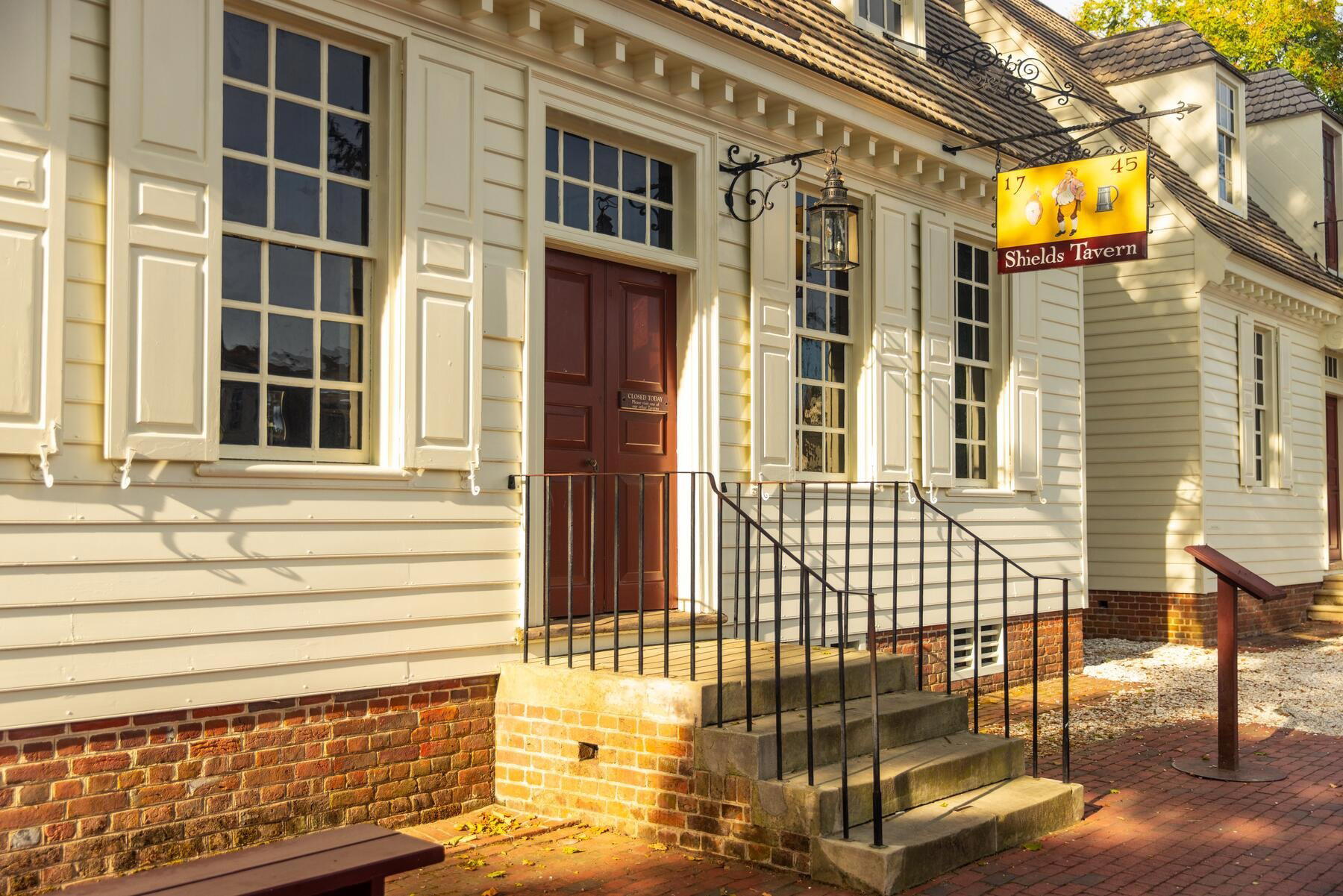
Shields Tavern occupies a prominent address on Duke of Gloucester Street in Colonial Williamsburg, positioning it within a cluster of period taverns that anchor the Historic Area's dining tradition. The venue draws a loyal crowd of repeat visitors who return for the living-history atmosphere and Colonial-era food formats that define this tier of Williamsburg dining. For anyone planning time in the Historic Area, it sits alongside King's Arms Tavern and Christiana Campbell's Tavern as a core reference point for the scene.

Pearl is the En Primeur Club membership app — saves, bookings, and concierge access live there. Same editors, same standards.
- Address
- 422 E Duke of Gloucester St, Williamsburg, VA 23185
- Phone
- (855) 268-7220
- Hours
- Mon ClosedTue–Sat 11 AM–2 PMSun Closed
- Website
- colonialwilliamsburg.org
- Directions
- Get directions
- Booking
- Book on OpenTable
The menu
What to order
- Fry Chicken
- Grand Sallet
- Beef Olives
Duke of Gloucester Street and the Tavern Tradition
Colonial Williamsburg's Historic Area operates on a different logic than most American dining destinations. The taverns along Duke of Gloucester Street are not restaurants that happen to occupy old buildings; they are interpretive venues where the food format, the room, the service style, and the physical environment are collectively the product. Shields Tavern, at 422 E Duke of Gloucester Street, sits within that tradition and is measured against it. Regulars who return season after season are not chasing a chef's latest menu or a newly awarded star — they are returning to a format that holds its shape deliberately, a consistency that most contemporary restaurants would find difficult to maintain and that this category of venue treats as a point of discipline.
Christiana Campbell's Tavern draws the seafood-oriented crowd; Berret's Restaurant operates just outside the Historic Area with a more contemporary register. Shields Tavern occupies its own position within that cluster, shaped by its address, its period format, and the kind of visitor — and returning local, it consistently attracts. Across the broader Williamsburg dining picture, from Amber Ox Public House to Cochon on 2nd and Craft 31, the Historic Area taverns represent a distinct category that the city's newer openings do not attempt to replicate. Our full Williamsburg restaurants guide maps the full range.
What Keeps the Regulars Returning
The clearest signal that a venue has built genuine loyalty rather than tourist throughput is the presence of visitors who have been before and came back with a purpose. At Shields Tavern, that cohort tends to be Colonial Williamsburg's repeat visitors: families with a history of annual trips to the Historic Area, retired couples from the mid-Atlantic states, school groups with accompanying adults who remember the tavern from their own childhood visits. These are not passive guests. They have opinions about the seating arrangements, they know which dishes are period-appropriate and which represent concessions to modern palates, and they often arrive with specific orders in mind before they have seen the menu.
This dynamic, the informed regular as the room's real curator, is common to living-history dining formats across the United States, but it plays out with particular intensity in Colonial Williamsburg because the Historic Area rewards repeat visits in a way that a single-restaurant destination does not. Shields Tavern benefits from that ecosystem. A guest who has spent two days in the Historic Area absorbing the interpretive programming arrives at dinner with a frame of reference that changes how they read the room, the costumed staff, and the food on the plate. That layered engagement is the product the tavern delivers most effectively, and it is the reason guests who understand that context return when they could, on a later trip, simply choose one of Williamsburg's more contemporary options.
The Historic Format and Its Demands
Living-history dining formats place constraints on a kitchen that a conventional restaurant does not face. The commitment to period plausibility, in presentation, in the general register of the menu, in the behavior of staff operating within an interpretive frame, creates a ceiling on the kind of culinary experimentation that drives press coverage at restaurants like Lazy Bear in San Francisco or Alinea in Chicago. The comparison is not a criticism; it is a clarification of what this category of venue is actually doing and what measures of success apply to it.
At the opposite end of the American dining register, venues like The French Laundry in Napa, Le Bernardin in New York City, or Blue Hill at Stone Barns in Tarrytown are evaluated on the forward motion of their menus, the precision of their sourcing, the density of their press files. The Colonial Williamsburg taverns are evaluated on fidelity, atmosphere, and the coherence of the interpretive experience they deliver. Shields Tavern competes within that frame, alongside Christiana Campbell's Tavern and the King's Arms Tavern, not against fine-dining destinations in Richmond or Washington. That distinction matters when deciding where to place an evening on a Historic Area itinerary.
For the right visitor, one already committed to the Colonial Williamsburg experience rather than simply passing through, the format's constraints are the point. The period setting, the interpretive service, and the general register of the food deliver something that Providence in Los Angeles, Addison in San Diego, or Atomix in New York City cannot: a meal that is explicitly a document of a historical moment, however stylized, rather than an expression of a contemporary chef's point of view.
Placing Shields Tavern on a Williamsburg Itinerary
Williamsburg's Historic Area taverns function leading when they are planned rather than improvised. The Colonial Williamsburg Foundation manages dining across the Historic Area, and the taverns, Shields included, tend to fill during peak travel periods: summer, spring break, and the autumn colonial programming season. Guests who approach Shields Tavern as a walk-in option during July or October will likely find it at capacity or with significant waits. Booking ahead, through the Colonial Williamsburg Foundation's reservation infrastructure, is the standard practice among guests who know the area. The Inn at Little Washington and Single Thread Farm in Healdsburg represent the far end of the advance-booking discipline required at the country's most demand-constrained tables; Shields Tavern operates at a more accessible level, but the principle of planning still applies during the Historic Area's busiest windows.
The address on Duke of Gloucester Street places Shields Tavern at the center of the Historic Area's pedestrian spine, walkable from the main visitor destinations and the other taverns in the Colonial Williamsburg cluster. Guests staying at Colonial Williamsburg's own hotels have the easiest access; those staying in the broader Williamsburg corridor will find the Historic Area's parking infrastructure the most practical approach. Dining at Shields Tavern is most coherent as part of a full Historic Area day rather than as a standalone evening destination disconnected from the interpretive programming around it, a point that the regulars, who build their Williamsburg trips around the Foundation's calendar, understand instinctively.
Compared with venues like Emeril's in New Orleans or 8 1/2 Otto e Mezzo Bombana in Hong Kong, where the draw is concentrated in the kitchen's output and a chef's public profile, Shields Tavern's authority rests on institutional continuity and the coherence of the Colonial Williamsburg ecosystem it inhabits. That is a different kind of trust signal, but for the guest who reads it correctly, it is a reliable one.
Frequently asked questions
What's the address for Shields Tavern?
Shields Tavern is located at 422 E Duke of Gloucester St, Williamsburg, VA 23185, Williamsburg.
Is Shields Tavern suitable for families with children visiting Colonial Williamsburg?
Shields Tavern's position on Duke of Gloucester Street places it at the centre of Colonial Williamsburg's Historic Area, making it a logical dining stop for families moving through the site. The living-history format — costumed staff, period-appropriate presentation — gives younger visitors a contextual experience that aligns with the broader educational character of the Williamsburg destination. As with all Foundation-managed venues in Williamsburg, VA, confirming children's menu availability and seating arrangements directly with the reservation team before arrival is advisable.
What do people recommend at Shields Tavern?
Shields Tavern sits on Duke of Gloucester Street inside Colonial Williamsburg's Historic Area, where the kitchen operates within a living-history format — meaning the menu reflects period plausibility rather than contemporary trends. Returning visitors consistently point to the tavern-format dishes rooted in colonial American tradition as the reason they come back. Because specific menu items are managed by the Colonial Williamsburg Foundation and change periodically, checking directly with the Foundation before your visit is the most reliable way to confirm current offerings.
Do I need a reservation for Shields Tavern?
Dining in Colonial Williamsburg's Historic Area is best treated as a planned commitment rather than a walk-in decision. The Colonial Williamsburg Foundation manages reservations across its tavern properties, and Shields Tavern at 422 E Duke of Gloucester St draws both repeat visitors and first-time guests, particularly during peak travel periods. Booking in advance through the Foundation's reservation channels reduces the risk of being turned away, especially on weekends and during summer and holiday seasons.
Category Peers
Comparable venues nearby, for context on price, style, and recognition.
| Venue | Cuisine | Price | Notes |
|---|---|---|---|
| Shields TavernThis venue — the venue you are viewing | Colonial American Tavern | $20–30 | Not listed |
| Old Chickahominy House | Southern Comfort American | Not listed | Jamestown Road |
| Traditions | Contemporary American Breakfast | $20–30 | Colonial Williamsburg |
| Sweet Tea & Barley | Modern Southern Gastropub | $30–50 | Williamsburg Lodge |
| Gabriel Archer Tavern | Farm-to-Table American Gastropub | $30–50 | Williamsburg Winery |
| Cochon on 2nd | New American Grill | $50–100 | Williamsburg |
Continue exploring
More in Williamsburg
Restaurants in Williamsburg
Browse all →
Bars in Williamsburg
Browse all →
Hotels in Williamsburg
Browse all →

Details
- Historic
- Cozy
- Classic
- Family
- Casual Hangout
- Special Occasion
- Historic Building
- Live Music
- Family Style
- Set Menu
- Vegetarian Friendly
- Gluten Free Options
Current opening hours
- Monday
- Closed
- Tuesday
- 11 AM–2 PM
- Wednesday
- 11 AM–2 PM
- Thursday
- 11 AM–2 PM
- Friday
- 11 AM–2 PM
- Saturday
- 11 AM–2 PM
- Sunday
- Closed
Hours can change for holidays and private events. Last verified .
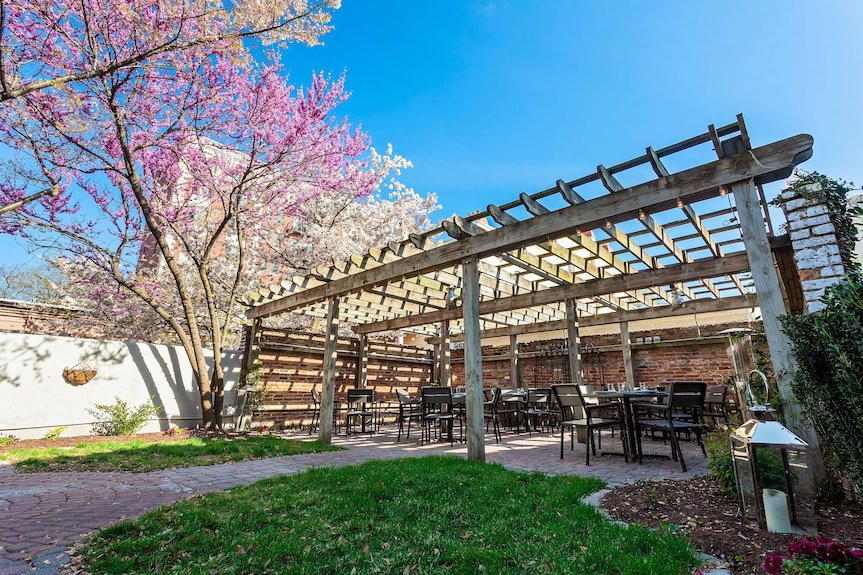
Candlelit dining rooms with exposed brick or weathered wood walls, featuring strolling musicians playing 18th-century instruments.